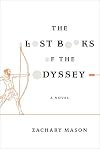
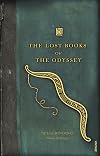
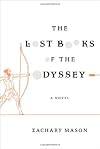
The Lost Books of The Odyssey
by Zachary Mason
On This Page
Description
A brilliant and beguiling reimagining of Homer's classic story about the hero Odysseus and his long journey home after the fall of Troy.Tags
Recommendations









Member Recommendations

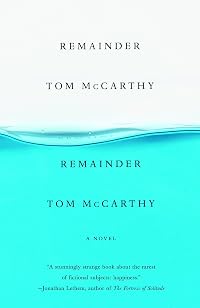
wandering_star Like The Lost Books Of The Odyssey, Sum uses very short pieces to explore different facets of the same idea - in this case, the afterlife.
11
Member Reviews
The Lost Books of the Odyssey is a fascinating and seductive debut book. It retells the traditional Homeric tale of the hero Odysseus and his arduous return trip following the fall of Troy. In it the Trojan War is retold alongside flashbacks as Odysseus travels from Troy to Ithaca. The chapters flow with witty turns or neat bows, more in the style of a short story writer.
The book is a deft and subtle translation of Greek literature for the present day. Personhood, storytelling, memory, and self-awareness are some of the subjects it examines. According to how much light the story decides to shed, Mason's characters can change shape and become elusive, just like the ones in Homer's original.
The traditional Homer stories are transformed show more into new episodes, fragments, and revisions using beautiful prose, a vivid imagination, and stunning literary skill. When read as a whole, these additions expose the timeless Greek epic to countless resonant interpretations. The Lost Books of the Odyssey is It is laced with wonderful wit, elegance, and playfulness.
I found that it was worthwhile, but only for those who have already read Homer's original epic saga. show less
The book is a deft and subtle translation of Greek literature for the present day. Personhood, storytelling, memory, and self-awareness are some of the subjects it examines. According to how much light the story decides to shed, Mason's characters can change shape and become elusive, just like the ones in Homer's original.
The traditional Homer stories are transformed show more into new episodes, fragments, and revisions using beautiful prose, a vivid imagination, and stunning literary skill. When read as a whole, these additions expose the timeless Greek epic to countless resonant interpretations. The Lost Books of the Odyssey is It is laced with wonderful wit, elegance, and playfulness.
I found that it was worthwhile, but only for those who have already read Homer's original epic saga. show less
Imagine Robert Graves' "Homer's Daughter" reduced to 5 pages. Now imagine 43 variants along the same lines with 20 of them written Calvino (including one on returning to Troy to discover it has been turned into a cheap tourist destination), 20 of them written by Borges (including several in which Odysseus is a character is his own or someone else's story), two by Vidal (one in which cyclops was basically decent and after he was tricked by Odysseus who then flees, the cyclops fantasizes stories of his wandering for the next decade, not wanting to kill him in his fantasies but to string out the revenge), and a final one by Lewis Carroll (in which the Iliad and the Odyssey are both manuals for strange forms of chess that have morphed and show more been corrupted over time).
If you cannot imagine all of those, then you should just read the book -- about 35 of the 44 inversions/reimaginations/retellings of aspects of the Odyssey are amazing, both in the way they are told and the new worlds they open up. And the effect of the book as a whole is powerful, reinforcing certain themes over and over again (like Odysseus basic character) while varying others (like the cause and resolution of the Trojan War). show less
If you cannot imagine all of those, then you should just read the book -- about 35 of the 44 inversions/reimaginations/retellings of aspects of the Odyssey are amazing, both in the way they are told and the new worlds they open up. And the effect of the book as a whole is powerful, reinforcing certain themes over and over again (like Odysseus basic character) while varying others (like the cause and resolution of the Trojan War). show less
I loved this. What if there were other elements to the Odyssey that didn't make it into the text we know. What if Odysseus was a coward? Penelope remarried? Or what if Odysseus never made it back to Ithaca? What if Athena proposed to Odysseus? What would he say? Each chapter is its own separate story and taken together they are a lovely meditation on a well-known text.
If you've ever been in a shop and come across a brand of snack or box of chocolate that you enjoyed as a kid but haven't thought about in years, and then bought them and gorged on them and realised they are every bit as good as you remember, then you might understand, if you forgive the strangeness of the analogy, how I felt when I read Zachary Mason's The Lost Books of the Odyssey. As someone who loves Greek mythology, but who had neglected to read any for a long while, Mason's book was for me a smorgasbord of treats.
Curiously described by some as a 'novel', Mason's book is a collection of short stories, varying in length from a few paragraphs to about ten pages, that expand, subvert, provoke and play with the stories of Greek show more mythology. Focusing, as the title suggests, on alternate takes on Homer's Odyssey, Mason's book also adopts elements of the Iliad and provides truly entertaining, inventive and original stories in the very welcome tradition of Jorge Luis Borges. In one story, Odysseus returns home to find Penelope married, and determines this Ithaca a false one, a trick by the gods, for his Penelope would never lose faith. In another, he arrives to find Penelope dead and follows her to the underworld. In one, Odysseus is a coward who flees the battlefield of Troy and roams the land as a storyteller, becoming the semi-mythic Homer who tells the story of the wily and courageous Odysseus. In another, a clever appropriation of the Cyclops story, it is Polyphemus who becomes Homer: a man is blinded by a ship's captain who enters his cave, and goes on to make his living as a blind storyteller inventing all sorts of vengeful trials – storms, witches, sea monsters – that he wishes the ship captain to endure. In another, perhaps the most exquisitely Borgesian, the Odyssey and the Iliad begin as manuals of chess that are sublimated into their current Homeric form.
There are forty-four such stories in Mason's book, and each one is a treat. Homer's Odyssey is the original Hero's Journey, one of the most influential stories of human civilization, and ripe with allegorical possibilities – and, in The Lost Books of the Odyssey, Zachary Mason has proved worthy of it. The stories are well-written, with a deceptively simple Homeric sobriety, touching on both major mechanics and minor details of the Greek original. Some readers might not see the appeal, as Mason's stories cannot survive much as stories without the reader's foreknowledge of the classics, but their fragility only makes them more cherishable for those of us who are able to appreciate them. show less
Curiously described by some as a 'novel', Mason's book is a collection of short stories, varying in length from a few paragraphs to about ten pages, that expand, subvert, provoke and play with the stories of Greek show more mythology. Focusing, as the title suggests, on alternate takes on Homer's Odyssey, Mason's book also adopts elements of the Iliad and provides truly entertaining, inventive and original stories in the very welcome tradition of Jorge Luis Borges. In one story, Odysseus returns home to find Penelope married, and determines this Ithaca a false one, a trick by the gods, for his Penelope would never lose faith. In another, he arrives to find Penelope dead and follows her to the underworld. In one, Odysseus is a coward who flees the battlefield of Troy and roams the land as a storyteller, becoming the semi-mythic Homer who tells the story of the wily and courageous Odysseus. In another, a clever appropriation of the Cyclops story, it is Polyphemus who becomes Homer: a man is blinded by a ship's captain who enters his cave, and goes on to make his living as a blind storyteller inventing all sorts of vengeful trials – storms, witches, sea monsters – that he wishes the ship captain to endure. In another, perhaps the most exquisitely Borgesian, the Odyssey and the Iliad begin as manuals of chess that are sublimated into their current Homeric form.
There are forty-four such stories in Mason's book, and each one is a treat. Homer's Odyssey is the original Hero's Journey, one of the most influential stories of human civilization, and ripe with allegorical possibilities – and, in The Lost Books of the Odyssey, Zachary Mason has proved worthy of it. The stories are well-written, with a deceptively simple Homeric sobriety, touching on both major mechanics and minor details of the Greek original. Some readers might not see the appeal, as Mason's stories cannot survive much as stories without the reader's foreknowledge of the classics, but their fragility only makes them more cherishable for those of us who are able to appreciate them. show less
This book consists of 44 chapters in which the events of The Odyssey are pulled apart and put back together again in different ways. We get new views of Polyphemus, Calypso, Circe, Penelope, Telemachus, Pallas Athena, and more as the story changes from the familiar narrative: Penelope is dead, Penelope has remarried, the Trojan War runs on repeat for infinity, and so on. It is a book to warm up to; the first couple of chapters take some getting used to, but overall I enjoyed this retelling a great deal. Some of them had particularly good twists. And now I think I’m going to have to re-read The Odyssey to see what “actually” happened.
A very pleasant weekend activity in Edinburgh: browsing the shelves of the Central Library, filling up my library card with new books, crossing the road to the National Library of Scotland, then drinking tea in the café there while reading a just-borrowed book. Today this was the book and I greatly enjoyed it. I love the Iliad and Odyssey, so gravitate towards re-tellings and variations upon them. This one is unusual as it takes the form of 44 little vignettes, some of which are barely more than a paragraph with a punchline. Amongst these ‘lost books’ are possible explanations for how the Odyssey was composed, tales that weave it into other mythologies (Eygptian, Hindu), and versions set at different times in history. The overall show more effect is somewhat Borgesian, as you feel rather like you’re pulling books off the Odyssey shelf of [b:The Library of Babel|172366|The Library of Babel|Jorge Luis Borges|https://images.gr-assets.com/books/1213638002s/172366.jpg|2235183] and reading a few pages of each. Inevitably, some chapters were more compelling than others, although the whole hung together very well. My favourites did something fresh with the Iliad rather than the Odyssey as such; I have always preferred the former. I particularly liked the variation in which Achilles was a golem. Also memorable were the re-tellings from unexpected points of view: Medusa, for instance, gets a very neat little vignette. Others were slightly too abstract, although all were deftly and fluidly written.
As ever, I was left yearning to re-read the Iliad and thinking about the lasting appeal of Homer's tales. I recently tried to articulate this to a friend and it’s difficult. There is a universality related to the emotions of the characters, I think, combined with a mythic nobility. Thus even modern readers can make some connection with these figures, whilst also seeing their stories as metaphors. But what do I know? Literary analysis is not my academic discipline. Nonetheless, I have noticed that Odysseus seems to be a popular figure for modern re-tellings of ancient Greek stories to focus on - although I can never remember their bloody titles, overshadowed as they are by Homer. In the Iliad, Odysseus seems perhaps more comprehensible and less alien to the modern sensibility. Compared to his fellow warriors, he is less concerned with honour, or at least more willing to interpret it flexibly. He is distinctive for his intelligence and cunning, rather than reckless disregard for his own safety in pursuit of glory. The latter is harder to comprehend today, although it still retains an appealing aura. ‘The Lost Books of The Odyssey’ make Odysseus a liminal figure, more symbol than man. The cultural significance of Homer’s epics supplies the book’s backbone and the central question that it asks: how did Odysseus' story come to have such significance, and why? show less
As ever, I was left yearning to re-read the Iliad and thinking about the lasting appeal of Homer's tales. I recently tried to articulate this to a friend and it’s difficult. There is a universality related to the emotions of the characters, I think, combined with a mythic nobility. Thus even modern readers can make some connection with these figures, whilst also seeing their stories as metaphors. But what do I know? Literary analysis is not my academic discipline. Nonetheless, I have noticed that Odysseus seems to be a popular figure for modern re-tellings of ancient Greek stories to focus on - although I can never remember their bloody titles, overshadowed as they are by Homer. In the Iliad, Odysseus seems perhaps more comprehensible and less alien to the modern sensibility. Compared to his fellow warriors, he is less concerned with honour, or at least more willing to interpret it flexibly. He is distinctive for his intelligence and cunning, rather than reckless disregard for his own safety in pursuit of glory. The latter is harder to comprehend today, although it still retains an appealing aura. ‘The Lost Books of The Odyssey’ make Odysseus a liminal figure, more symbol than man. The cultural significance of Homer’s epics supplies the book’s backbone and the central question that it asks: how did Odysseus' story come to have such significance, and why? show less
This was a remarkable book, one of the few I've read by the heirs of Borges to really stand on its own.
It's a collection of short stories that uses the familiar overarching narrative of the Odyssey to tell alternate versions of its events, explore the action from the perspective of other characters, or draw parallels between these scenes and others in Greek mythology and history. Its Borgesian influence is strong - short, often abstract or philosophical stories; playful, occasionally self-referential footnotes; recurring motifs of labyrinths and mirrors, though no tigers - but paradoxically the fact that every story is tied into the Odyssey makes this book feel more like something to be taken on its own terms than Robert Bolaño's Nazi show more Literature In the Americas or Italo Calvino's Invisible Cities, two other books I've read semi-recently that had a strong Borges tinge to them. I think Mason's book having a stronger impression on me is due to two main factors: firstly that Mason is a stronger writer in the sense of having a clearer idea of what he wanted to achieve, and secondly that the Odyssey is such a great collection of stories that even a simple retread (which this book definitely isn't) would have been enjoyable, in the same way that the Nth retelling of a Shakespeare play is usually still pretty good based on the sheer strength of the original material.
To the first point, where Mason's work is most effective in my mind is in bringing out the melancholy of the Odyssey, which while on one level is one of, if not the greatest adventure stories ever told, on another level is the story of a guy who's been kept away from his home for 20 years and has had his entire crew killed, ships sank, and treasure lost thanks to the whims of the implacable and capricious gods. Many of the stories have a dreamlike quality to them, as the various iterations of Odysseus come to terms with the bleak and lonely nature of their wandering. Odysseus is alternately brave, clever, cowardly, loyal, duplicitous, and many other qualities in the stories, which you could label post-modern if you were so inclined.
To the second point, each time Mason makes use of the settings of the real-life Odyssey in these stories, his own literary flair helps deepen and enrich what by all rights should be an impossibly over-exposed store of material. Even if you somehow have never read the Odyssey, its images have become iconic, and in these alternative takes on the material Mason always evokes the spirit of the original. Here are some of the stories that stood out to me:
- Agamemnon and the Word. Agamemnon commands that the "negative image of a palace" be dug in the sand outside Troy so that during the interminable siege he can descend into a very Borgesian madness of demanding that his wise men deliver the knowledge of the world to him encoded into a single word.
- Fugitive. The war has been won, but after seemingly drowning Odysseus discovers that it has truly only begun, and after discovering a copy of "a book called the Iliad" learns that he's merely been playing out a part in a war that the gods have already documented.
- The Iliad of Odysseus. Odysseus, a coward who deserted the battle when it appeared the Trojans had routed the Greeks, begins a new life as a traveling bard, where he invented the now-familiar stories of his own journeys, until he is able to finally reach home and listen to his own fictions with satisfaction.
- Odysseus In Hell. A man is forced to walk an infinite tightrope as punishment for his mortal crimes, until we learn at the conclusion that this has been the Sisyphus/Tantalus-esque fate of a man once known as Odysseus.
- The Long Way Back. A retelling of the story of Theseus and the minotaur, where a seemingly successful and happy marriage of Thesus to Ariadne is revealed to be a dream; we learn that one of Ariadne's names after being marooned on her island was Calypso.
- Record of a Game. Chatarang, an Indian progenitor of what we know as chess, is contrasted philosophically with the Greek version; the Iliad is really an elaborate dramatization of the rules of Greek chess, while the Odyssey is a parody of a chess manual, with Odysseus himself one of the few remaining pieces after an especially costly game.
A full comparison of this book to Ulysses, an obvious point of reference, is beyond me, but the use of multiple perspectives here will remind you somewhat of James Joyce's work, though there's far fewer overt literary techniques and much less of a sense of someone trying to blow the reader away. Mason is quiet, understated, and precise - he's created a really enjoyable book that makes you appreciate the original while still being rewarding on its own. show less
It's a collection of short stories that uses the familiar overarching narrative of the Odyssey to tell alternate versions of its events, explore the action from the perspective of other characters, or draw parallels between these scenes and others in Greek mythology and history. Its Borgesian influence is strong - short, often abstract or philosophical stories; playful, occasionally self-referential footnotes; recurring motifs of labyrinths and mirrors, though no tigers - but paradoxically the fact that every story is tied into the Odyssey makes this book feel more like something to be taken on its own terms than Robert Bolaño's Nazi show more Literature In the Americas or Italo Calvino's Invisible Cities, two other books I've read semi-recently that had a strong Borges tinge to them. I think Mason's book having a stronger impression on me is due to two main factors: firstly that Mason is a stronger writer in the sense of having a clearer idea of what he wanted to achieve, and secondly that the Odyssey is such a great collection of stories that even a simple retread (which this book definitely isn't) would have been enjoyable, in the same way that the Nth retelling of a Shakespeare play is usually still pretty good based on the sheer strength of the original material.
To the first point, where Mason's work is most effective in my mind is in bringing out the melancholy of the Odyssey, which while on one level is one of, if not the greatest adventure stories ever told, on another level is the story of a guy who's been kept away from his home for 20 years and has had his entire crew killed, ships sank, and treasure lost thanks to the whims of the implacable and capricious gods. Many of the stories have a dreamlike quality to them, as the various iterations of Odysseus come to terms with the bleak and lonely nature of their wandering. Odysseus is alternately brave, clever, cowardly, loyal, duplicitous, and many other qualities in the stories, which you could label post-modern if you were so inclined.
To the second point, each time Mason makes use of the settings of the real-life Odyssey in these stories, his own literary flair helps deepen and enrich what by all rights should be an impossibly over-exposed store of material. Even if you somehow have never read the Odyssey, its images have become iconic, and in these alternative takes on the material Mason always evokes the spirit of the original. Here are some of the stories that stood out to me:
- Agamemnon and the Word. Agamemnon commands that the "negative image of a palace" be dug in the sand outside Troy so that during the interminable siege he can descend into a very Borgesian madness of demanding that his wise men deliver the knowledge of the world to him encoded into a single word.
- Fugitive. The war has been won, but after seemingly drowning Odysseus discovers that it has truly only begun, and after discovering a copy of "a book called the Iliad" learns that he's merely been playing out a part in a war that the gods have already documented.
- The Iliad of Odysseus. Odysseus, a coward who deserted the battle when it appeared the Trojans had routed the Greeks, begins a new life as a traveling bard, where he invented the now-familiar stories of his own journeys, until he is able to finally reach home and listen to his own fictions with satisfaction.
- Odysseus In Hell. A man is forced to walk an infinite tightrope as punishment for his mortal crimes, until we learn at the conclusion that this has been the Sisyphus/Tantalus-esque fate of a man once known as Odysseus.
- The Long Way Back. A retelling of the story of Theseus and the minotaur, where a seemingly successful and happy marriage of Thesus to Ariadne is revealed to be a dream; we learn that one of Ariadne's names after being marooned on her island was Calypso.
- Record of a Game. Chatarang, an Indian progenitor of what we know as chess, is contrasted philosophically with the Greek version; the Iliad is really an elaborate dramatization of the rules of Greek chess, while the Odyssey is a parody of a chess manual, with Odysseus himself one of the few remaining pieces after an especially costly game.
A full comparison of this book to Ulysses, an obvious point of reference, is beyond me, but the use of multiple perspectives here will remind you somewhat of James Joyce's work, though there's far fewer overt literary techniques and much less of a sense of someone trying to blow the reader away. Mason is quiet, understated, and precise - he's created a really enjoyable book that makes you appreciate the original while still being rewarding on its own. show less
Members
- Recently Added By
Published Reviews
ThingScore 94
Yet in The Lost Books of the Odyssey, Zachary Mason has achieved something remarkable. He's written a first novel that is not just vibrantly original but also an insightful commentary on Homer's epic and its lasting hold on our imagination.
added by jlelliott
"Mr. Mason's clean and engaging prose ensures that his variations on the Odyssey never feel like sterile experiments."
added by bookfitz
In “The Lost Books of the Odyssey” Mr. Mason — who is identified on the book jacket as a computer scientist specializing in artificial intelligence, as well as a finalist for the 2009 New York Public Library Young Lions Fiction Award, given to writers under 35 — has written a series of jazzy, post-modernist variations on “The Odyssey,” and in doing so he’s created an ingeniously show more Borgesian novel that’s witty, playful, moving and tirelessly inventive. show less
added by jlelliott
Lists

Top Five Books of 2014
1,064 works; 398 members

Variations on a theme
8 works; 2 members

Myth (Reuse and Retelling)
188 works; 24 members

The wanderings of Odysseus
61 works; 6 members

KayStJ's to-read list
1,616 works; 11 members

Rethinking Myths and Fairy Tales
13 works; 1 member

naturallogg's 2025 in Books
50 works; 1 member
Author Information

4+ Works 1,504 Members
Zachary Mason is currently the John Shade Professor of Archaeocryptography and Paleomathematics at Magdalen College, Oxford.
Some Editions
Awards and Honors
Awards
Work Relationships
Was inspired by
The Odyssey by Homer
Common Knowledge
- Canonical title
- The Lost Books of The Odyssey
- Original publication date
- 2010
- People/Characters
- Odysseus; Penelope; Telemachus
- Important places
- Ancient Greece; Troy; Ithaca, Greece
- Important events
- Trojan War
- First words
- Odysseus comes back to Ithaca in a little boat on a clear day.
- Last words
- (Click to show. Warning: May contain spoilers.)She was grateful that his eyes were not as sharp as they had been and that the light had been flattering but not too bright and he had not noticed that the workmanship of the shield was crude, the figures awkward, that there had been countless other shields just like it for sale cheap among the stalls in Troy's ruins.
- Blurbers
- Banville, John; Armitage, Simon; Maso, Carole; Mathews, Harry
Classifications
Statistics
- Members
- 997
- Popularity
- 26,195
- Reviews
- 42
- Rating
- (4.01)
- Languages
- 7 — Czech, English, French, German, Italian, Portuguese, Turkish
- Media
- Paper, Audiobook, Ebook
- ISBNs
- 19
- ASINs
- 9