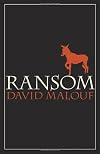
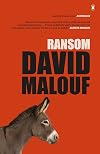
Ransom
by David Malouf
On This Page
Description
A tale of suffering, sorrow, and redemption, "Ransom" is a retelling of one of the most famous stories in all of literature--Achilles's slaughter and desecration of Hector, and Priam's attempt to ransom his son's body in Homer's "The Iliad."Tags
Recommendations

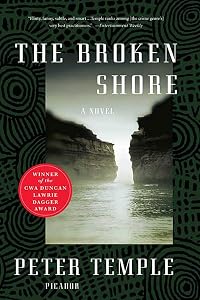
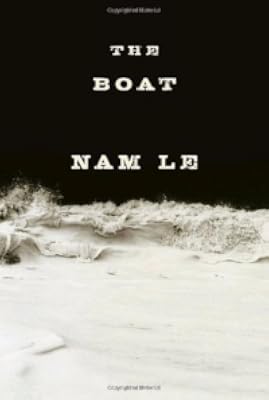

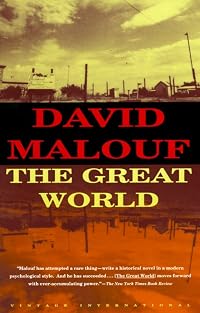


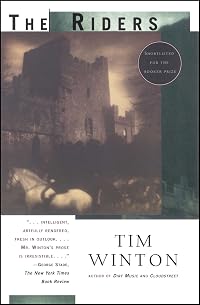


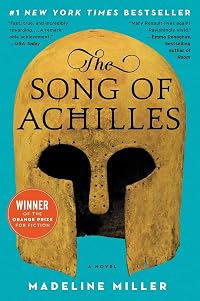
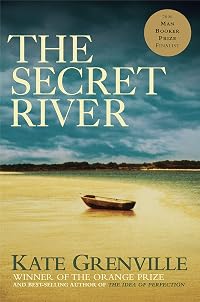
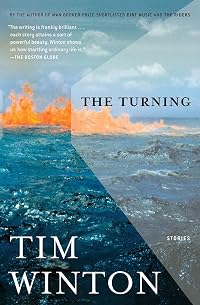

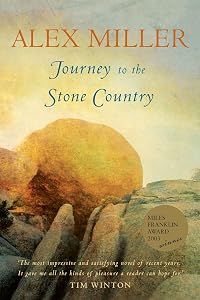














Member Recommendations

Member Reviews
Perhaps I sold this book short by reading it swiftly and thus superficially. Nonetheless, like every other book I’ve read based on [b:The Iliad|1371|The Iliad|Homer|https://images.gr-assets.com/books/1388188509s/1371.jpg|3293141] ([b:The Song of Achilles|11250317|The Song of Achilles|Madeline Miller|https://images.gr-assets.com/books/1331154660s/11250317.jpg|16176791], [b:The Rage of Achilles|7037030|The Rage of Achilles|Terence Hawkins|https://images.gr-assets.com/books/1347494613s/7037030.jpg|7285693], [b:Ilium|3973|Ilium (Ilium, #1)|Dan Simmons|https://images.gr-assets.com/books/1390894862s/3973.jpg|3185401], etc) it mostly awoke the desire to re-read the Iliad again. I was introduced to Homer’s poem at school when I was 16 and I show more loved it. (To some extent I think that’s a tribute to my teacher, as another class successfully put me off Shakespeare for many years.) No modern re-telling has ever quite captured the magic I find in the original. For one thing, modern re-tellings never seem to be long enough.
This one effectively concentrates on a single key incident: King Priam travelling to the Achaean camp to retrieve the body of his son Hector, killed by Achilles and dragged around Troy by chariot. The account of Priam’s decision to risk an appeal to Achilles and his journey there and back is beautifully told. The writing is lyrical and flows elegantly. My favourite element was the meditation on Priam’s role as a symbol (in fact, it reminded me of all the Lacanian stuff in [b:Living in the End Times|7324538|Living in the End Times|Slavoj Žižek|https://images.gr-assets.com/books/1310044208s/7324538.jpg|8913774] about the Symbolic and the Real). The intervention of gods was also well depicted. Overall, though, it is a pretty little book dwarfed by the poem it pays tribute to. Quite possibly this is deliberate and Malouf is trying to humanise an epic tale by focusing on it in microcosm. There is probably a reason why I find such re-tellings strangely forgettable, though. show less
This one effectively concentrates on a single key incident: King Priam travelling to the Achaean camp to retrieve the body of his son Hector, killed by Achilles and dragged around Troy by chariot. The account of Priam’s decision to risk an appeal to Achilles and his journey there and back is beautifully told. The writing is lyrical and flows elegantly. My favourite element was the meditation on Priam’s role as a symbol (in fact, it reminded me of all the Lacanian stuff in [b:Living in the End Times|7324538|Living in the End Times|Slavoj Žižek|https://images.gr-assets.com/books/1310044208s/7324538.jpg|8913774] about the Symbolic and the Real). The intervention of gods was also well depicted. Overall, though, it is a pretty little book dwarfed by the poem it pays tribute to. Quite possibly this is deliberate and Malouf is trying to humanise an epic tale by focusing on it in microcosm. There is probably a reason why I find such re-tellings strangely forgettable, though. show less
'Ransom' is a story inspired by an event from 'The Iliad', King Priam’s decision to beg the dreaded Achilles to return his son, exchanging the treasures of Troy for Hector’s body. It’s a meeting of two legends so its perhaps slightly surprisingly that the meeting itself doesn’t take up much more space. Rather 'Ransom' is really more a character study of Priam, showing us the man behind the royal mask. He knows full well that his is merely a ceremonial role but he realises that only by doing what has never been done before can he hope to succeed.
Perhaps the most pleasing aspect of this book is the wonderful (invented) character of Somax the carter, the only escort Priam will allow on his quest. This short journey outside the show more walls of Troy allows the king to experience another side of life. Priam discovers the simple joys of the wider world that he usually simply ignores. Malouf’ elegant prose builds up a picture of a man who knows the end is not too far away, musing on the nature of mortality:
“Only we humans can know, endowed as we are with mortality, but also with consciousness, what it is to be aware each day of the fading in us of freshness and youth;"
Even if the book is based on "The Iliad", I don't believe that its neccessay to have read Homer’s classic to enjoy this one. This is my first book by Malouf and I must say that I really enjoyed his simple yet elegant prose, but perhaps the only thing I felt was missing from the story was a little more of Achilles, who very much plays a supporting role here. All the same the meeting is a touching moment in the midst of a great war. The two men are able, for a brief moment, to shed their public roles and embrace their own private grief only too aware of their own death is merely a matter of time. show less
Perhaps the most pleasing aspect of this book is the wonderful (invented) character of Somax the carter, the only escort Priam will allow on his quest. This short journey outside the show more walls of Troy allows the king to experience another side of life. Priam discovers the simple joys of the wider world that he usually simply ignores. Malouf’ elegant prose builds up a picture of a man who knows the end is not too far away, musing on the nature of mortality:
“Only we humans can know, endowed as we are with mortality, but also with consciousness, what it is to be aware each day of the fading in us of freshness and youth;"
Even if the book is based on "The Iliad", I don't believe that its neccessay to have read Homer’s classic to enjoy this one. This is my first book by Malouf and I must say that I really enjoyed his simple yet elegant prose, but perhaps the only thing I felt was missing from the story was a little more of Achilles, who very much plays a supporting role here. All the same the meeting is a touching moment in the midst of a great war. The two men are able, for a brief moment, to shed their public roles and embrace their own private grief only too aware of their own death is merely a matter of time. show less
This slim book is a lyrically written story that zooms in on one small portion of The Iliad. It focuses on the episode in which Achilles kills Hector in battle after Hector has killed Achilles’ beloved friend Patroclus. Malouf has constructed a detailed story around King Priam’s journey from Troy to Achilles’ camp to retrieve Hector’s body, which is only mentioned in a few lines of The Iliad. It illuminates storytelling – the way stories are told, repeated, and linger in memory. I particularly enjoyed the characterization of the carter and his mules. It emphasizes our common humanity no matter our differences. To fully appreciate it, the reader may want to be at least familiar with the story of Achilles. I found it a beautiful show more story of grief and redemption, and will be checking out Malouf’s catalogue. show less
This slender novel retells and reimagines portions of The Iliad in spare, lean, very poetic prose. It briefly covers the story of Achilles, Patroclus, and Hector -- including hints of the backstory. But the focus of the book, as featured in its title, is King Priam traveling to Achilles' camp to beg for the body of his son Hector in exchange for a generous ransom.
David Malouf inhabits and expands on the psychology of Priam as he experiences grief, exerts his independence in a way he never had as king, bonds with a "simple carter" named Somax, pleads with Achilles and returns with the body. The passages on not knowing his sons -- he believes there are fifty princes who are his sons but is not sure -- contrasted with his pain at Hector's show more death are very moving.
Ransom was one of the best novels to make barely if any "Best of 2010" lists. Even better in that category is The Lost Books of Odyssey by Zachary Mason. show less
David Malouf inhabits and expands on the psychology of Priam as he experiences grief, exerts his independence in a way he never had as king, bonds with a "simple carter" named Somax, pleads with Achilles and returns with the body. The passages on not knowing his sons -- he believes there are fifty princes who are his sons but is not sure -- contrasted with his pain at Hector's show more death are very moving.
Ransom was one of the best novels to make barely if any "Best of 2010" lists. Even better in that category is The Lost Books of Odyssey by Zachary Mason. show less
This book has been on my to-read list for a very long time. Such anticipation can lead to disappointment if a novel fails to meet expectations; but this one turned out to be well worth the wait. Simple and yet deeply poetic, it tells the story of an old man – Priam, King of Troy – who sets out to ransom back his son Hector’s body from the man who has killed him – Achilles, the ruthless warrior par excellence. Malouf’s book goes beyond the story as related in the Iliad, probing questions of majesty, nobility and, most importantly of all, humanity. Elegant and poignant, it centres on a moment of unforeseen compassion in the heat of war and breathes new life into its two famous protagonists...
For the full review, please see my show more blog:
https://theidlewoman.net/2018/06/03/ransom-david-malouf/ show less
For the full review, please see my show more blog:
https://theidlewoman.net/2018/06/03/ransom-david-malouf/ show less
Gorgeous retelling of the poignant episode in the Iliad of Priam's seeking the body of his son, Hector, from Achilles. The plot device of a simple carter, Somax, who drives Priam to the Greek camp is added. This serves to make Priam a more human, accessible character. Novel explores simple joys, grief, sorrow and emotional pain in all classes of characters and shows these feelings are universal; on a rest stop, the carter reveals his family life and death of his own son while trying to help another. Priam, innocent of the joys of a commoner's life, responds to Somax's telling of his family and the carter's pain. Achilles suffers his own pain at the death of his dear friend and thinks of his son when he is speaking with Priam. Backstory show more of how Achilles and Patroclus meet and become friends; an incident in Priam's childhood in which he escapes slavery; and the death of Patroclus are also given. Written in beautiful prose. A modern classic. show less
Reading the Iliad, one sees nothing out of place about Priam begging Achilles to release the body of his son, Hector. But in Malouf's hands, this episode expands into a tale of its own, partly built upon the realization that what Priam does is something totally new in this culture - a king (nearly a god in the eyes of his people) becoming quite human in a desperate gambit to regain his son's body from the near-mad Achilles. Malouf observes that, had Priam followed tradition, he would have earned hardly a word in Homer's epic.
Malouf uses his efficient but beautiful language, along with a few invented characters of his own, to pull the reader into this alien world during a most human moment. Ransom reads like a long prose-poem. Read this show more in one or two long sittings, where you can let the world of the Trojans and Greeks, and their gods, carry you along. An enthralling read.
Os. show less
Malouf uses his efficient but beautiful language, along with a few invented characters of his own, to pull the reader into this alien world during a most human moment. Ransom reads like a long prose-poem. Read this show more in one or two long sittings, where you can let the world of the Trojans and Greeks, and their gods, carry you along. An enthralling read.
Os. show less
Members
- Recently Added By
Published Reviews
ThingScore 75
"While Malouf can write brilliantly in the "low" register of a Somax or describe nature with a Wordsworthian attentiveness, he is equally convincing in suggesting the grave diction of epic, as when Priam reflects on what the immortal gods can never experience -- the sweetness inherent in our transient human lives, but also the sorrow..."
added by bookfitz
That this tender novel lingers so long and hauntingly in the mind is a testament both to Malouf’s poetry and to his reverence for the endless power of myth.
added by bongiovi
"As it is, Ransom falls between the two stools: neither true enough to Homer, nor sufficiently untrue to him either."
added by bookfitz
Lists

Best 21st Century Books (So Far)
670 works; 86 members
International IMPAC Dublin Literary Award
179 works; 6 members

The Trojan War
109 works; 13 members

Booktopia's 50 Must Read Australian Novels
50 works; 5 members

Best Australian Books of the 21st Century
88 works; 2 members
Author Information

69+ Works 5,946 Members
David Malouf was born in Brisbane, Australia on March 20, 1934. He received a B.A. with honours from the University of Queensland in 1954. He lived and worked in Europe from 1959 to 1968, then taught English at the University of Sydney until 1977. After 1977 he became a full-time poet and novelist. His collections of poetry include Bicycle and show more Other Poems, Neighbours in a Thicket, Wild Lemons, First Things Last, Typewriter Music, and An Open Book. He received the Kenneth Slessor Prize for Poetry for Earth Hour. His novels include Johnno, Ransom, An Imaginary Life, Child's Play, Fly Away Peter, Harland's Half Acre, Dream Stuff, Every Move You Make, and The Conversations at Curlow Creek. He received the Commonwealth Writers' Prize and the Prix Femina Etranger for The Great World and the IMPAC Dublin Literary Award for Remembering Babylon. His collections of short stories include Antipodes, Untold Tales, Dream Stuff, and Every Move You Make. His Collected Stories won the 2008 Australia-Asia Literary Award. His essays collections include A First Place and The Writing Life. He also wrote the libretto for Richard Meale's opera Voss. He won the 2016 Australia Council Award for Lifetime Achievement in Literature. (Bowker Author Biography) show less
Awards and Honors
Awards
Work Relationships
Common Knowledge
- Canonical title
- Ransom
- Original title
- Ransom
- Original publication date
- 2009
- People/Characters
- Achilles; Priam; Hector; Patroclus
- Important places
- Troy; Ancient Greece
- Important events
- Trojan War
- First words
- The sea has many voices.
- Last words
- (Click to show. Warning: May contain spoilers.)A charming creature, big-eyed and sleek, she bore the name of Beauty -- and very appropriately too, it seems, which is not always the case.
- Blurbers
- Dirda, Michael; Coates, Steven; White, Edmund; Manguel, Alberto
- Original language
- English
Classifications
- Genres
- General Fiction, Fiction and Literature, Historical Fiction
- DDC/MDS
- 823.914 — Literature & rhetoric English & Old English literatures English fiction 1900- 1901-1999 1945-1999
- LCC
- PR9619.3 .M265 .R36 — Language and Literature English English Literature English literature: Provincial, local, etc.
- BISAC
Statistics
- Members
- 852
- Popularity
- 32,049
- Reviews
- 48
- Rating
- (4.07)
- Languages
- 7 — English, French, German, Greek, Italian, Portuguese, Spanish
- Media
- Paper, Audiobook, Ebook
- ISBNs
- 26
- ASINs
- 6