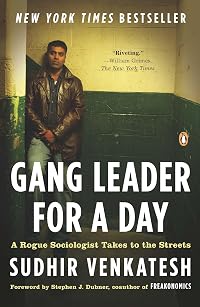
Gang Leader for a Day: A Rogue Sociologist Takes to the Streets
by Sudhir Venkatesh
On This Page
Description
The story of the young sociologist who studied a Chicago crack-dealing gang from the inside captured the world's attention when it was first described in Freakonomics. This is the full story of how Venkatesh managed to gain entrée into the gang, what he learned, and how his method revolutionized the academic establishment. When first-year grad student Venkatesh walked into one of Chicago's most notorious housing projects, he was looking for people to take a survey on urban poverty. He never show more imagined that he would befriend a gang leader and spend the better part of a decade inside the projects under his protection. He got to know the neighborhood dealers, crackheads, squatters, prostitutes, pimps, activists, cops, organizers, and officials. From his position of unprecedented access, he observed the gang as they operated their crack-selling business and rose or fell within the ranks of the gang's complex organizational structure.--From publisher description. show lessTags
Recommendations


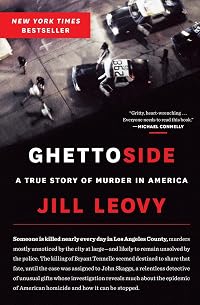
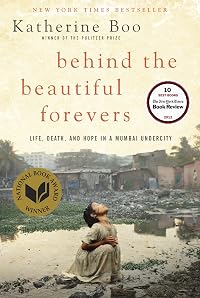
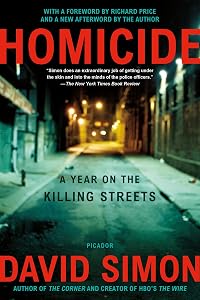
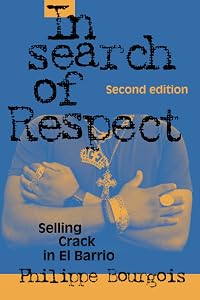






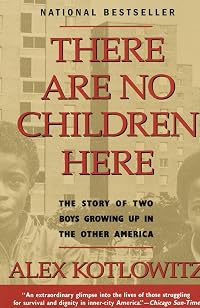

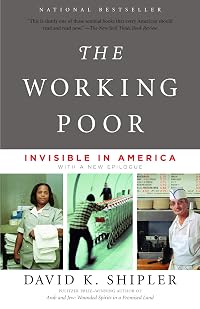





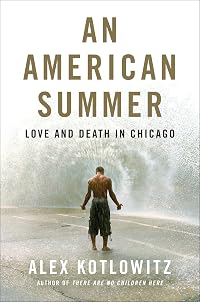






Member Recommendations

Die Arbeitslosen von Marienthal. Ein soziographischer Versuch über die Wirkungen langandauernder Arbeitslosigkeit by Günther Busch
jcbrunner Both Marie Jahoda and Sudhir Venkatesh went into the field to observe their subjects. Jahoda studied Austrian unemployed workers during the Great Depression, Venkatesh black kids in a Chicago ghetto, offering new perspectives into strange worlds.
wandering_star Both authors have spent a long time with a community of the very poor and have produced sympathetic and very insightful books about how the "underclass" see, and manage their interactions with, the rest of society.
Lorem Both deal with educated college-involved people who go into a misunderstood place and shed light on the raw beauty found there
Member Reviews
Author Sudhir Venkatesh exhibited breathtaking naiveté when he chose public housing as a topic for his PhD research at the University of Chicago. Venkatesh had grown up in southern California, in an upper middle class neighborhood; his family was East Indian. It wasn’t so much as fish out of water when he walked up to a housing project and tried to interview people; it was fish on Mars. Fortunately he encountered “J.T.”, the local gang leader for the Black Kings, who was able to offer protection. (Venkatesh was never offered any overt violence during his research, although he saw a lot of it and actually participated once; he makes the points that the gangs didn’t want violence because it was bad for business – which was show more selling crack cocaine).
Gang Leader for a Day is both inspiring and tragic; being a middle class white from the Chicago suburbs myself I share some of Venkatesh’s surprise with conditions in the Robert Taylor Homes. I used to see the Robert Taylor homes frequently on trips to and from the University of Chicago (I usually used the longer but less threatening Lake Shore Drive route rather than the Dan Ryan Expressway). The Robert Taylor Homes were a set of twenty-six 16-story buildings stretched out along the Dan Ryan (which conveniently acted as a barrier to keep the inhabitants from the white neighborhoods to the west). Venkatesh was amazed to find that residents of the RTH didn’t even consider calling police or ambulance services (Venkatesh had to loan his car once to medevac a gang member who’d been shot in the leg in a drive-by; the act got him more street cred). He was confounded to find that many of the “how can people live like that” FAQs actually had understandable answers (for example, RHT residents urinated in the stairwells to keep drug users and prostitutes from using them; in Venkatesh’s first encounter with gang members they keep him in a stairwell for a day. He eventually realizes that the liquid slowly dripping from above isn’t water).
Being a sociologist Venkatesh gradually puts together the economics of the Robert Tailor Homes (actually just one building, which was enough). There’s a Chicago Housing Authority representative in the building, Ms. Bailey, who’s supposed to act as sort of an ombudsman for the tenants. Instead, Ms. Bailey collects “taxes”; if your window is broken and you want the CHA to fix it, you need to pay Ms. Bailey. If you want to operate an illegal business (all business is illegal in the Robert Taylor Homes) you need to pay Ms. Bailey varying amounts; your illegal business can be car repair in the parking lot, selling candy from your apartment living room, cutting hair, squatting in the building, or being a prostitute. The Black Kings provide Ms. Bailey with an enforcement mechanism, and the payment can be in kind; Venkatesh discovers that one of Ms. Bailey’s agreements with the Black Kings is that they provide her with a young gang member as a lover (Venkatesh notes that Ms. Bailey is 50ish and heavyset). Venkatesh, again exhibiting tragic naiveté, causes an enforcement incident himself; as part of his research he interviews a number of the “hustlers” in the building – the car repair guy, the handyman – and takes notes on their economics. He then, with the enthusiasm of researchers everywhere, reveals these numbers to J.T. and Ms. Bailey – who promptly raise the “taxes” of the affected parties, getting Venkatesh in trouble with his informants.
Venkatesh has some difficulties with other women in the Robert Taylor Homes; the prostitutes recognize him for a naïve suburban boy and are able to hustle him. He doesn’t admit to sex with any of them and it seems unlikely that any occurred, but he is hustled by one to provide food for her children even though Ms. Bailey had warned him about her. He describes how the apparently high and/or drunk and disorderly dressed prostitute moans that her children haven’t had anything to eat – so Venkatesh goes to a local store and buys them food. Latter Ms. Bailey smirks at him and says she fed those kids that very morning. Ms. Bailey’s secretary is an attractive young woman with writing talent; Venkatesh reads her essays and coaches her. She’s latter shot to death by her father. Another woman has a potential career as a model; her boyfriend seizes her earnings and beats her up when she complains. This becomes a Black Kings enforcement case; they grab the boyfriend to “discipline” him and Venkatesh kicks him in the stomach when it looks like he’s going to escape.
The “gang leader for a day” episode is relatively subdued. J.T. doesn’t actually let Venkatesh do anything important and overrules him (for example, Venkatesh is asked to decide discipline for a pair of drug dealers; one has kept back some money when another failed to pay him. Venkatesh goes for “offsetting penalties” but J.T. notes that keeping back money has to be punished; the offender gets two “mouth shots” and a week’s suspension).
Venkatesh notes the Black Kings are pretty disciplined. Dealers are not allowed to use drugs themselves. They are required to finish high school (leading to an incident where Venkatesh tries to teach during a teacher’s strike. He is unable to maintain classroom discipline; although as near as I can tell Chicago school teachers can’t either). They are not allowed to sell (“work”, in gang parlance) when children are around. They sponsor basketball and baseball tournaments. They see themselves as “community activists” rather than drug dealers – and, to a certain extent, they do provide services that the City of Chicago is unable or unwilling to provide.
It all eventually comes to an end; the Robert Taylor Homes are demolished and the residents are spread throughout the city (by giving them vouchers for apartments). Both J.T. and Ms. Bailey “retire” (at one point, Venkatesh half-jokingly suggests J.T. become his research assistant. Venkatesh, now at Columbia, apparently keeps in touch with J.T. and still considers him a friend.
At one point, the gang’s accountant (T-Bone) gave Venkatesh the gang’s financial records (T-Bone later died in prison). Venkatesh developed this to contribute to Levitt and Dubner’s Freakonomics. It turns out that low level drug dealers have very small incomes; what keeps them working is the chance to move up in the hierarchy (I’ve heard much the same about American management in general).
Venkatesh’s writing is understated but gripping; an easy one-day read. This is not a scholarly work (although Venlatesh has published such an account, American Project; I’ll have to read it). Venkatesh provides no answers; he doesn’t suggest what should have been done or what could have been done at the Robert Taylor Homes, just what was done. show less
Gang Leader for a Day is both inspiring and tragic; being a middle class white from the Chicago suburbs myself I share some of Venkatesh’s surprise with conditions in the Robert Taylor Homes. I used to see the Robert Taylor homes frequently on trips to and from the University of Chicago (I usually used the longer but less threatening Lake Shore Drive route rather than the Dan Ryan Expressway). The Robert Taylor Homes were a set of twenty-six 16-story buildings stretched out along the Dan Ryan (which conveniently acted as a barrier to keep the inhabitants from the white neighborhoods to the west). Venkatesh was amazed to find that residents of the RTH didn’t even consider calling police or ambulance services (Venkatesh had to loan his car once to medevac a gang member who’d been shot in the leg in a drive-by; the act got him more street cred). He was confounded to find that many of the “how can people live like that” FAQs actually had understandable answers (for example, RHT residents urinated in the stairwells to keep drug users and prostitutes from using them; in Venkatesh’s first encounter with gang members they keep him in a stairwell for a day. He eventually realizes that the liquid slowly dripping from above isn’t water).
Being a sociologist Venkatesh gradually puts together the economics of the Robert Tailor Homes (actually just one building, which was enough). There’s a Chicago Housing Authority representative in the building, Ms. Bailey, who’s supposed to act as sort of an ombudsman for the tenants. Instead, Ms. Bailey collects “taxes”; if your window is broken and you want the CHA to fix it, you need to pay Ms. Bailey. If you want to operate an illegal business (all business is illegal in the Robert Taylor Homes) you need to pay Ms. Bailey varying amounts; your illegal business can be car repair in the parking lot, selling candy from your apartment living room, cutting hair, squatting in the building, or being a prostitute. The Black Kings provide Ms. Bailey with an enforcement mechanism, and the payment can be in kind; Venkatesh discovers that one of Ms. Bailey’s agreements with the Black Kings is that they provide her with a young gang member as a lover (Venkatesh notes that Ms. Bailey is 50ish and heavyset). Venkatesh, again exhibiting tragic naiveté, causes an enforcement incident himself; as part of his research he interviews a number of the “hustlers” in the building – the car repair guy, the handyman – and takes notes on their economics. He then, with the enthusiasm of researchers everywhere, reveals these numbers to J.T. and Ms. Bailey – who promptly raise the “taxes” of the affected parties, getting Venkatesh in trouble with his informants.
Venkatesh has some difficulties with other women in the Robert Taylor Homes; the prostitutes recognize him for a naïve suburban boy and are able to hustle him. He doesn’t admit to sex with any of them and it seems unlikely that any occurred, but he is hustled by one to provide food for her children even though Ms. Bailey had warned him about her. He describes how the apparently high and/or drunk and disorderly dressed prostitute moans that her children haven’t had anything to eat – so Venkatesh goes to a local store and buys them food. Latter Ms. Bailey smirks at him and says she fed those kids that very morning. Ms. Bailey’s secretary is an attractive young woman with writing talent; Venkatesh reads her essays and coaches her. She’s latter shot to death by her father. Another woman has a potential career as a model; her boyfriend seizes her earnings and beats her up when she complains. This becomes a Black Kings enforcement case; they grab the boyfriend to “discipline” him and Venkatesh kicks him in the stomach when it looks like he’s going to escape.
The “gang leader for a day” episode is relatively subdued. J.T. doesn’t actually let Venkatesh do anything important and overrules him (for example, Venkatesh is asked to decide discipline for a pair of drug dealers; one has kept back some money when another failed to pay him. Venkatesh goes for “offsetting penalties” but J.T. notes that keeping back money has to be punished; the offender gets two “mouth shots” and a week’s suspension).
Venkatesh notes the Black Kings are pretty disciplined. Dealers are not allowed to use drugs themselves. They are required to finish high school (leading to an incident where Venkatesh tries to teach during a teacher’s strike. He is unable to maintain classroom discipline; although as near as I can tell Chicago school teachers can’t either). They are not allowed to sell (“work”, in gang parlance) when children are around. They sponsor basketball and baseball tournaments. They see themselves as “community activists” rather than drug dealers – and, to a certain extent, they do provide services that the City of Chicago is unable or unwilling to provide.
It all eventually comes to an end; the Robert Taylor Homes are demolished and the residents are spread throughout the city (by giving them vouchers for apartments). Both J.T. and Ms. Bailey “retire” (at one point, Venkatesh half-jokingly suggests J.T. become his research assistant. Venkatesh, now at Columbia, apparently keeps in touch with J.T. and still considers him a friend.
At one point, the gang’s accountant (T-Bone) gave Venkatesh the gang’s financial records (T-Bone later died in prison). Venkatesh developed this to contribute to Levitt and Dubner’s Freakonomics. It turns out that low level drug dealers have very small incomes; what keeps them working is the chance to move up in the hierarchy (I’ve heard much the same about American management in general).
Venkatesh’s writing is understated but gripping; an easy one-day read. This is not a scholarly work (although Venlatesh has published such an account, American Project; I’ll have to read it). Venkatesh provides no answers; he doesn’t suggest what should have been done or what could have been done at the Robert Taylor Homes, just what was done. show less
Eminently readable and engaging, this book by Sudhir Venkatesh looks beyond the easy conclusions of either sympathy or condemnation for gangs and examines the part they play in an inner-city community. His "in their world but not of it" position lends the book a downer ending as he witnesses but doesn't have to experience the break-up of the community following the destruction of the Robert Taylor homes, but overall, the book is a great read.
I learned about Dr. Sudhir Venkatesh through Freakonomics and the chapter on why gang members still live with their moms. "Gang Leader for a Day" takes that one small chapter and shows the decade of the work and research that originally went into it.
When Sudhir Venkatesh arrives at the University of Chicago to work on a PhD in sociology, he decides to leave Hyde Park and "go exploring" in the Projects. He ends up pulled into studying in very close detail the lives of gang members, hustlers, prostitutes, squatters, and people just trying to get by in the Robert Taylor Projects in South Side Chicago. From there he gets a ring-side seat to the politics of gangs, police, tenant associations, Chicago Housing Authority, single mothers, and show more families trying to survive on welfare or less. His view is revealing -- he sees how crack cocaine makes essentially no one money except the cocaine suppliers, how people rely on each other to survive, how families will pull together in entire floors to give each other essential services so they can survive. He learns the economics of pimps and prostitutes, watches how people struggle, and makes some rather nasty interpersonal mistakes.
It all ends when Chicago decides, in 1995-1998, to tear down the Projects and replace them with very expensive upper class townhouses.
This book is utterly fantastic. While it's written in a colloquial style, it illuminates a huge swath of modern urban America. Highly recommended read. show less
When Sudhir Venkatesh arrives at the University of Chicago to work on a PhD in sociology, he decides to leave Hyde Park and "go exploring" in the Projects. He ends up pulled into studying in very close detail the lives of gang members, hustlers, prostitutes, squatters, and people just trying to get by in the Robert Taylor Projects in South Side Chicago. From there he gets a ring-side seat to the politics of gangs, police, tenant associations, Chicago Housing Authority, single mothers, and show more families trying to survive on welfare or less. His view is revealing -- he sees how crack cocaine makes essentially no one money except the cocaine suppliers, how people rely on each other to survive, how families will pull together in entire floors to give each other essential services so they can survive. He learns the economics of pimps and prostitutes, watches how people struggle, and makes some rather nasty interpersonal mistakes.
It all ends when Chicago decides, in 1995-1998, to tear down the Projects and replace them with very expensive upper class townhouses.
This book is utterly fantastic. While it's written in a colloquial style, it illuminates a huge swath of modern urban America. Highly recommended read. show less
Like many other readers, I was first introduced to Sudhir Venkatesh in a chapter of Steven Leavitt's 2005 bestseller, Freakonomics. Then I sort of forgot about him until I saw this new book circulating at the library, and picked it up. While a graduate student in sociology at the University of Chicago, Venkatesh takes the term "field work" to a whole new level, essentially becoming an honorary member of the gang he sets out to study. When his initial goal of approaching the Chicago housing projects with an armful of formal surveys is met with laughter and derision by the residents, Venkatesh isn't deterred, but abandons that angle and instead begins hanging around the buildings, getting to know the residents as human beings and gaining show more an insider's look at the complex and mysterious details of gang management and the fascinating economics of life in the projects. While I found the book riveting and Venkatesh's experiences valuable, as a reader and social justice advocate I came away with feelings of hopelessness, as there is little reason to think that life will improve for many of the memorable characters, deserving and otherwise, the reader becomes acquainted with within the pages of the book. show less
Rogue? Not really, but I suspect that's the publisher talking. The author doesn't seem to have such a high opinion of himself, and that helps the book a lot. It moves, it has a great mix of the personal (his qualms about using the gang to advance his career) and the descriptive. If you've watched The Wire (which you should of course) and read this, there is a consistency to the picture that adds credibility to both. And it ain't a pretty picture.
A very interesting piece of urban sociology / anthropology (although ignore the "Rogue Sociologist" nonsense in the title) , which brings to life a hidden, closed community in the Chicago projects, largely ignored by the outside world and run on a basis of fear, petty corruption and intimidation by the local gang, local police, and local power brokers. The comparison with "Gomorrah" for any who have read that, is striking.
Reading this there are a couple of points that struck me; firstly in a distorted way in the absence of any other form of authority its not surprising that the gangs fill the vacuum and act as some form of community organisation even if the principle source of income is in selling crack to its own community. Secondly show more how poor communities will always prey on each other. Thirdly how all of this could be solved or at least made better, by a sensible drug policy (rather than head in sand prohibition) that took away the gang's profit motive - for, as stated in the book, revenues from prostitution, extortion and other illegal activities are relatively small beer and not enough to attract many to "thug life". And fourthly, how the richest country in the world can effectively abandon some of its most vulnerable citizens to their fate
But this is highly recommended as a light on what for me anyway was a dark and hidden world show less
Reading this there are a couple of points that struck me; firstly in a distorted way in the absence of any other form of authority its not surprising that the gangs fill the vacuum and act as some form of community organisation even if the principle source of income is in selling crack to its own community. Secondly show more how poor communities will always prey on each other. Thirdly how all of this could be solved or at least made better, by a sensible drug policy (rather than head in sand prohibition) that took away the gang's profit motive - for, as stated in the book, revenues from prostitution, extortion and other illegal activities are relatively small beer and not enough to attract many to "thug life". And fourthly, how the richest country in the world can effectively abandon some of its most vulnerable citizens to their fate
But this is highly recommended as a light on what for me anyway was a dark and hidden world show less
What happens when a grad student goes to the projects with a survey on poverty? In this case, a harrowing first 12 hours under confinement by gang members, and then an entre into the world of the gang. Told with an honesty that underscores Venkatesh's ambivalence towards the gang leader, this was a fascinating look at a world most of us would not want to get too close to. In the end, no one spends this much time with the gang without getting touched somehow, but I sense that in this case, it was worth the ride.
Members
- Recently Added By
Lists

Non-Fiction Worth Reading
1,016 works; 262 members

TED 2013 Summer Reading List
190 works; 13 members

GAL Book Club
75 works; 3 members

Sociology
18 works; 1 member

One Day
27 works; 2 members
Author Information

8 Works 2,351 Members
Sudhir Venkatesh is William B. Ransford Professor of Sociology at Columbia University in the City of New York. He is a researcher and writer on urban neighborhoods in the United States (New York, Chicago) and Paris, France. He is also a documentary film-maker. His most recent book is Gang Leader for a Day. In 2006 he also published Off the Books: show more The Underground Economy of the Urban Poor about illegal economies in Chicago. Off the Books received a Best Book Award from Slate.Com (2006) as well as the C. Wright Mills Award (2007). His first book, American Project: The Rise and Fall of a Modern Ghetto (2000) explored life in Chicago public housing. He received his Ph.D. in Sociology from the University of Chicago. He was a Junior Fellow at the Society of Fellows, Harvard University from 1996-1999. He is currently Director of the Center for Urban Research and Policy, and Director of the Charles H. Revson Fellowship Program, both at Columbia University. (Bowker Author Biography) show less
Some Editions
Awards and Honors
Awards
Common Knowledge
- Original publication date
- 2008
- Important places
- Robert Taylor Homes (Chicago, Illinois, USA); Chicago, Illinois, USA
- First words
- During my first weeks at the University of Chicago, in the fall of 1989, I had to attend a variety of orientation sessions.
Classifications
- Genres
- Sociology, General Nonfiction, Nonfiction, Biography & Memoir
- DDC/MDS
- 364.10660977311 — Society, government, & culture Social problems and social services Crime Criminal offenses Organized Crime Gangsterism Standard subdivisions History, geographic treatment, biography
- LCC
- HV6439 .U7 .C46 — Social sciences Social pathology. Social and public welfare. Criminology Social pathology. Social and public welfare. Criminology Crimes and offenses
- BISAC
Statistics
- Members
- 1,610
- Popularity
- 14,100
- Reviews
- 50
- Rating
- (3.91)
- Languages
- Chinese, English, French, Swedish
- Media
- Paper, Audiobook, Ebook
- ISBNs
- 18
- UPCs
- 1
- ASINs
- 12