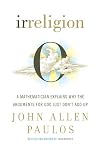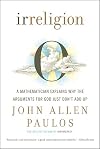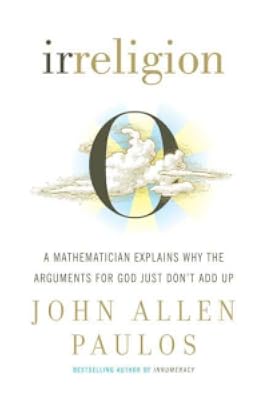
Irreligion: A Mathematician Explains Why the Arguments for God Just Don't Add Up
by John Allen Paulos
On This Page
Description
Are there any logical reasons to believe in God? Mathematician Paulos thinks not. Here he presents the case for his own worldview, organizing his book into twelve chapters that refute the twelve arguments most often put forward for believing in God's existence. Interspersed among his twelve counterarguments are remarks on a variety of irreligious themes, ranging from the nature of miracles and creationist probability to cognitive illusions and prudential wagers. Special attention is paid to show more topics, arguments, and questions that spring from his incredulity "not only about religion but also about others' credulity." Despite the strong influence of his day job, Paulos says, there isn't a single mathematical formula in the book.--From publisher description. show lessTags
Recommendations
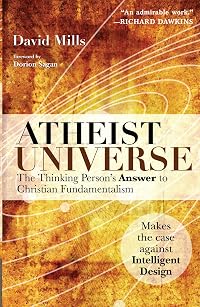

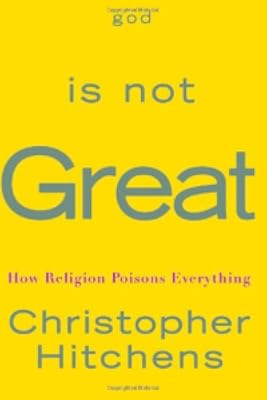
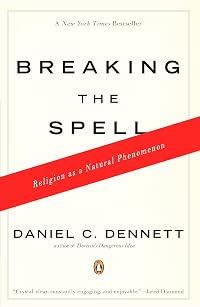
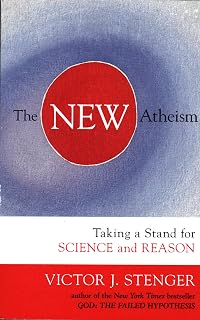

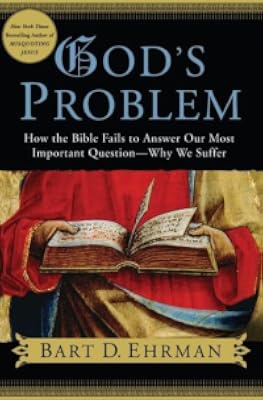
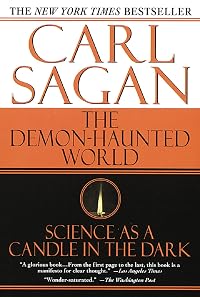
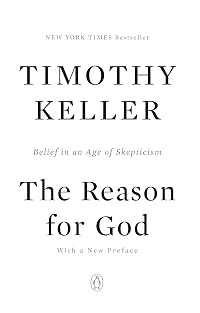

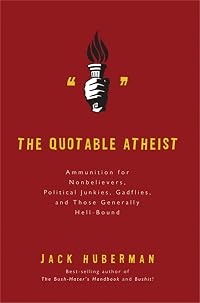


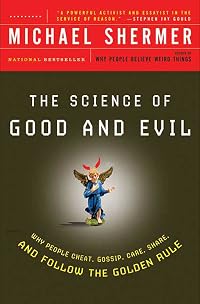
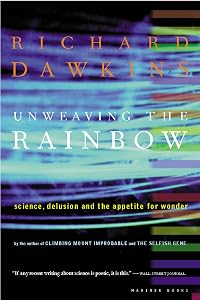

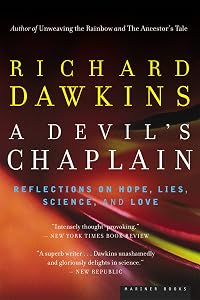
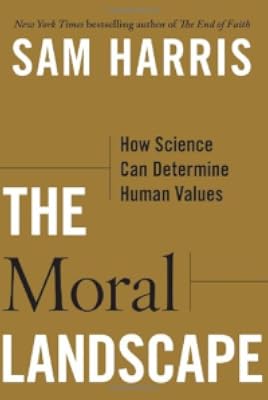
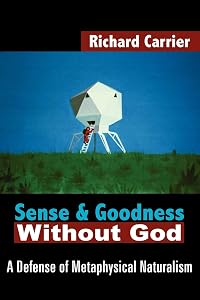
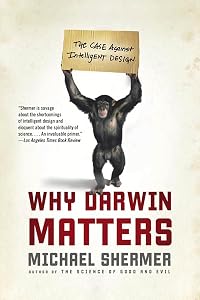
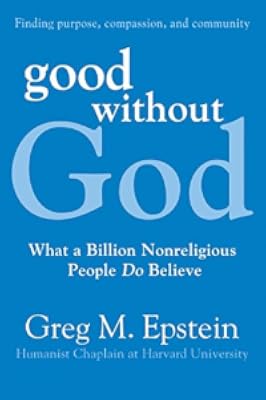


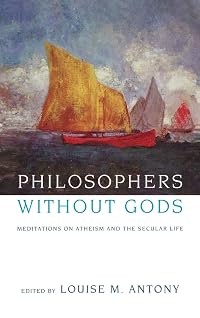


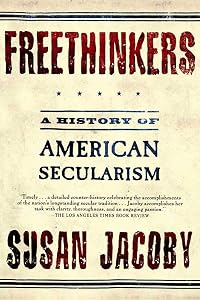
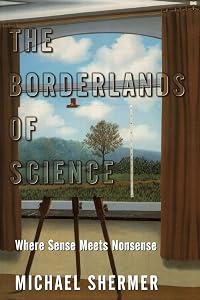
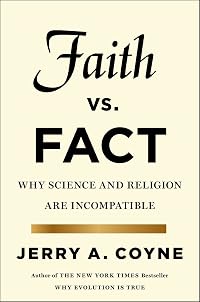
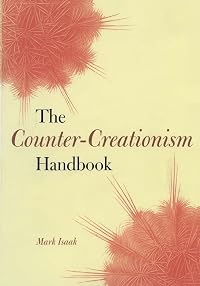
Member Recommendations
Member Reviews
John Allen Paulos has written a breezy, but cogent, debunking of most of the "logical" arguments for the existence of God. Most of Paulos's arguments come down to Occam's razor. Positing the existence of God is not necessary to explain any of the phenomena discussed and is usually just an extraneous step in the ostensible argument. Some of the arguments for God's existence are merely logical ledgermain [sorry Anselm] that don't have God as a valid conclusion.
This book, like the recent efforts of Sam Harris, Christopher Hitchens, and Richard Dawkins, is important in our absurdly pious and largely hypocritical political campaign. He seems to be saying to Americans, "Hasn't anyone here heard of the Enlightenment?" He quotes one of show more Voltaire's most telling epigrams: "Those who can make you believe absurdities can make you commit atrocities."
His final chapter is an exhortation to other infidels to make themselves heard since there are plenty of them, even though they are members of one of the least trusted categories of people in American society.
(JAB) show less
This book, like the recent efforts of Sam Harris, Christopher Hitchens, and Richard Dawkins, is important in our absurdly pious and largely hypocritical political campaign. He seems to be saying to Americans, "Hasn't anyone here heard of the Enlightenment?" He quotes one of show more Voltaire's most telling epigrams: "Those who can make you believe absurdities can make you commit atrocities."
His final chapter is an exhortation to other infidels to make themselves heard since there are plenty of them, even though they are members of one of the least trusted categories of people in American society.
(JAB) show less
This won't convince anyone not already convinced, but Paulos does apply a mathematical edge to the analysis.
The most telling chapter was the last - Athiests, Agnostics, and "Brights". I agree with Paulos in that I am also not too fond of the name "Brights", but maybe it'll catch on. The statistics are disturbing in how others view atheists and non-believers. The stigma is still hard to overcome.
The most telling chapter was the last - Athiests, Agnostics, and "Brights". I agree with Paulos in that I am also not too fond of the name "Brights", but maybe it'll catch on. The statistics are disturbing in how others view atheists and non-believers. The stigma is still hard to overcome.
(posted on my blog: davenichols.net)
Mathematician John Paulos offers a very brief book full of very brief responses to common modern arguments for the existence of God. Each short chapter offers a basic argument made for God, and Paulos presents his logical refutation. This book is so short, I had finished it in one sitting. Paulos muddles at times, makes strange excursions, ends explanations well short of full, and offers an amazing amount of choppiness in a book of such short length.
Overall, Paulos argues familiar lines to skeptical readers, and most of his presentation is not approachable to the novice or less-well read reader. While he works in some mathematical logic without many actual equations, some of his references are to show more subjects most readers won't understand. This work is mostly effective in shooting down the for-God arguments, but many of Paulos's explanations are meandering, muddled, and sometimes end abruptly. There is even one case where he states the argument could be fleshed out more, and then walks away from it. WTF?
Anyway, not a bad overview of the refutations, but not a very clean treatment. For a better and more comprehensive version of this same theme (with better mathematics and science content), see Victor Stenger's God: The Failed Hypothesis: How Science Shows that God Does Not Exist. Not specifically recommended for anyone and not one of the better offerings I've read on the subject. Two and one-half stars. show less
Mathematician John Paulos offers a very brief book full of very brief responses to common modern arguments for the existence of God. Each short chapter offers a basic argument made for God, and Paulos presents his logical refutation. This book is so short, I had finished it in one sitting. Paulos muddles at times, makes strange excursions, ends explanations well short of full, and offers an amazing amount of choppiness in a book of such short length.
Overall, Paulos argues familiar lines to skeptical readers, and most of his presentation is not approachable to the novice or less-well read reader. While he works in some mathematical logic without many actual equations, some of his references are to show more subjects most readers won't understand. This work is mostly effective in shooting down the for-God arguments, but many of Paulos's explanations are meandering, muddled, and sometimes end abruptly. There is even one case where he states the argument could be fleshed out more, and then walks away from it. WTF?
Anyway, not a bad overview of the refutations, but not a very clean treatment. For a better and more comprehensive version of this same theme (with better mathematics and science content), see Victor Stenger's God: The Failed Hypothesis: How Science Shows that God Does Not Exist. Not specifically recommended for anyone and not one of the better offerings I've read on the subject. Two and one-half stars. show less
Paulos makes some points I have not read elsewhere. And it was worth reading for those. But such points are few. The book is a bit light and I feel that others (such as Dawkins and Hitchens) have done a more thorough job addressing this subject.
It's me, over here in the choir robes. Nothing in this book I didn't already embrace, I mean. The geeky mathematical angle was a huge bonus. I found this audio book fun, funny and comforting. If you like this sort of thing, this is the sort of thing you like. And I do.
Simple, quick, neat, elegant, stylish, readable, and comprehensive.
Takes the most common, popular and "strongest" arguments for a god and gives them a logical seeing to.
Thank god it's also full of humour.
Takes the most common, popular and "strongest" arguments for a god and gives them a logical seeing to.
Thank god it's also full of humour.
Surprisingly thin. Paulos' earlier works are meaty, slim volumes on innumeracy. This one covers the territory but rambles; enjoyable if taken as the notes from an interesting dinner conversation with a smart guy, but isn't structured well enough for the lay reader. And the omission of Popperian falsifiability is astonishing.
Members
- Recently Added By
Lists

Atheism, humanism, freethought, &c. — Best nonfiction books in favour of
167 works; 14 members
Author Information

14+ Works 6,270 Members
John Allen Paulos is professor of mathematics at Temple University and the author of eight previous books, including the bestselling Innumeracy and A Mathematician Reads the Newspaper.
Common Knowledge
- Original publication date
- 2007
Classifications
- Genres
- Religion & Spirituality, Nonfiction, General Nonfiction, Philosophy
- DDC/MDS
- 212.1 — Religion Philosophy & theory of religion Existence of God, ways of knowing God, attributes of God Existence/Nonexistence of God
- LCC
- BL2775.3 .P38 — Philosophy, Psychology and Religion Religions. Mythology. Rationalism Religions. Mythology. Rationalism Rationalism
- BISAC
Statistics
- Members
- 546
- Popularity
- 54,366
- Reviews
- 13
- Rating
- (3.53)
- Languages
- English, Italian, Spanish
- Media
- Paper, Audiobook, Ebook
- ISBNs
- 13
- ASINs
- 4