On This Page
Description
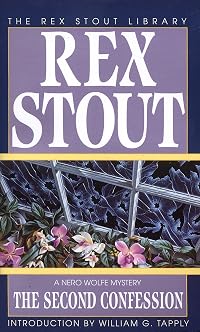
When a millionaire businessman hires Nero Wolfe to probe the background of his daughter's boyfriend, it seems like just another case of an overprotective father. But when a powerful gangland boss "counsels" the detective to drop the matter, Wolfe receives a warning: a burst of machine-gun fire through the windows of his orchid room. Then the lawyer boyfriend turns up dead, leaving Archie the number one suspect. Throw in drugged drinks, two man-killing debutantes, and officials of a highly show more un-American party and Wolfe finds himself involved in a case where he must quickly solve one murder to prevent another: his own. Introduction by William G. Tapply "It is always a treat to read a Nero Wolfe mystery. The man has entered our folklore."--The New York Times Book Review A grand master of the form, Rex Stout is one of America's greatest mystery writers, and his literary creation Nero Wolfe is one of the greatest fictional detectives of all time. Together, Stout and Wolfe have entertained--and puzzled--millions of mystery fans around the world. Now, with his perambulatory man-about-town, Archie Goodwin, the arrogant, gourmandizing, sedentary sleuth is back in the original seventy-three cases of crime and detection written by the inimitable master himself, Rex Stout. show lessTags
Recommendations




















Member Reviews
It all starts when a father wants to hire Nero Wolfe to confirm or deny his daughter's fiancé is not a Communist. James Sperling believes his daughter's suitor needs to be investigated before they marry. At first Nero is reluctant to take the case for he knows Sperling has connections to the mafia. That is the least of his troubles when the man in question is found murdered and all evidence points to Nero. [Stout likes vehicular homicide and it is Wolfe's vehicle with the blood evidence.]
It is rare that Nero Wolfe leaves his brownstone in New York City as the country makes him nervous, yet, in Second Confession Wolfe finds himself in Chappaqua, just above White Plains, New York. Another variance of this Nero Wolfe mystery is a show more different set of law enforcement running interference. Despite these differences, fear not! Archie is his old sarcastic witty self. show less
It is rare that Nero Wolfe leaves his brownstone in New York City as the country makes him nervous, yet, in Second Confession Wolfe finds himself in Chappaqua, just above White Plains, New York. Another variance of this Nero Wolfe mystery is a show more different set of law enforcement running interference. Despite these differences, fear not! Archie is his old sarcastic witty self. show less
In the belief that his youngest daughter’s boyfriend is a member of the Communist Party, a wealthy businessman hires Nero Wolfe to find proof of this affiliation before his daughter does something rash like marrying him. Before long, the boyfriend is dead, and Wolfe is looking for a murderer. This case once again brings Wolfe into contact with a mysterious mob boss that Wolfe refers to as X, and also as the only person he is afraid of.
This book would have been timely in its day since it was published just as the “red scare” was getting underway. It hasn’t aged well, and it has more the air of sensation than the sophisticated wit I’ve come to expect from Stout.
This book would have been timely in its day since it was published just as the “red scare” was getting underway. It hasn’t aged well, and it has more the air of sensation than the sophisticated wit I’ve come to expect from Stout.
I was introduced to Nero Wolfe through the amazing Nero Wolfe A&E series, so I see Maury Chaykin as Nero Wolfe and Timothy Hutton as Archie Goodwin, et al. So, after a hiatus of several years, I got a hold of And Be a Villain and liked it, so I decided to get them all so I could read them in order (from 1934 to 1975).
This one is number 15: The Second Confession. Here we see the beginning of the Cold War (this book is from 1949) and people worried about communists in their midst. A mystery well-told, with good characters, and a good story. Once more the supposedly-never-leaves-the-house-Wolfe leaves the house. Good fun and a good mystery, I didn't guess it, but I was close. Archie is always a hoot.
This one is number 15: The Second Confession. Here we see the beginning of the Cold War (this book is from 1949) and people worried about communists in their midst. A mystery well-told, with good characters, and a good story. Once more the supposedly-never-leaves-the-house-Wolfe leaves the house. Good fun and a good mystery, I didn't guess it, but I was close. Archie is always a hoot.
The second of the Zeck novels (and, alas, the last one I can read, as in the third one the dog very definitely dies). I get tired of the focus on Communists as the Source of All Evil, but I really enjoy the look at how they were seen at the time. A fun one, if not one of the top-tier Wolfe novels.
Fantastic.... Archie gets the girl, but not the one he's supposed to. Nero Wolfe leaves the house! And his nemesis has the plant rooms shot to pieces to get Wolfe to drop his investigation, but nothing doing. Probably my favorite of all the Zeck books (at least the ones I've read).
Wolfe is hired to discover if a man is a member of the Communist Party to break up a romance with a rich man's daughter. Archie is sent undercover to the family's estate to get in good with the young woman. It's discovered that the man is involved with a syndicate then he turns up dead. The father wants Wolfe to find the murderer than when it looks like he has, the father no longer wants Wolfe to investigate but Wolfe won't be called off especially when it looks like Archie may be the murderer.
I love Nero Wolfe stories. He is pompous but I like Archie. Wolfe will not allow his pride in his abilities to be compromised so he continues his investigation. Even when Wolfe is threatened and his orchids injured, he keeps on investigating. I show more did not figure it out. I was surprised by how Wolfe found the murderer and who it was.
I look forward to more Nero Wolfe stories. show less
I love Nero Wolfe stories. He is pompous but I like Archie. Wolfe will not allow his pride in his abilities to be compromised so he continues his investigation. Even when Wolfe is threatened and his orchids injured, he keeps on investigating. I show more did not figure it out. I was surprised by how Wolfe found the murderer and who it was.
I look forward to more Nero Wolfe stories. show less
Published in 1949, The Second Confession, by Rex Stout, once again finds our intrepid hero and his sidekick, Archie Goodwin, wending their way through the wiles and deceptions of a wealthy family (and hangers-on) to ferret out the identity of a murderer. Interestingly enough, this book includes a mysterious Mr. X, who turns out to be Wolfe's Moriarty, and a more menacing character I haven't seen in this series - and the character only shows up in the form of a few telephone calls in this book! Also interesting is the fact that the plot and its resolution hinges on uncovering a card-carrying member of the American Communist Party - at that time, the Cold War was in full swing, and the American public had a massive fear of Communists show more hidden in their midst, determined to undermine the American Way of Life. That Archie has a complete contempt for Communists doesn't surprise me; that Wolfe does as well, does. Another good entry into this long-running series, and as always, recommended! show less
Members
- Recently Added By
Lists

Crime and Mysteries to Read
746 works; 31 members

Books Read in 2017
4,249 works; 129 members

Books mentioned in Julian Symons’ Bloody Murder
438 works; 6 members
Author Information

377+ Works 50,373 Members
Author Rex Stout was born on December 1, 1886. A child prodigy with a gift for mathematics, Stout drifted as he became an adult, holding odd jobs in many places---cook, cabinetmaker, bellhop, hotel manager, salesman, bookkeeper, and even a guide in a pueblo. But his true talent lay in storytelling; he sold his first story, about William Howard show more Taft, in 1912. His most famous creation is Nero Wolfe, a 286-pound detective genius who, with sidekick Archie Goodwin, can often solve a case without leaving his room. It is the way in which the puzzle is solved that intrigues Nero Wolfe, who is much like Sherlock Holmes in his ability to use deductive reasoning. More than 60 million copies (in 24 languages) of Stout's books have been sold. Stout writes quickly, drawing upon a lifetime of impressions. He neither uses an outline nor revises; he lets his characters take over as the story develops. The classy, erudite Nero Wolfe presents for readers an alternative to the hard-boiled branch of the genre. He died on October 27, 1975 (Bowker Author Biography) show less

Rex Stout has a Legacy Library. Legacy libraries are the personal libraries of famous readers, entered by LibraryThing members from the Legacy Libraries group.
Some Editions
Series


Belongs to Publisher Series
Prisma detectives (87)
Öölane (132)
Work Relationships
Is contained in
Common Knowledge
- Canonical title
- The Second Confession
- Original title
- The Second Confession
- Original publication date
- 1949
- People/Characters
- Nero Wolfe; Archie Goodwin; Cleveland Archer (District Attorney); Fritz Brenner; Orrie Cather; Fred Durkin (show all 22); Ben Dykes; Connie Emerson; Paul Emerson; Lewis Hewitt; Theodore Horstmann; Webster Kane; Saul Panzer; Louis Rony; Gwenn Sperling; James U. Sperling; James U. Sperling, junior; Madeline Sperling; Purley Stebbins; Arnold Zeck; Doc Vollmer; Lon Cohen
- Important places
- New York, New York, USA; Westchester County, New York, USA
- Important events
- Cold War
- First words
- "I didn't mind it at all," our visitor said gruffly but affably.
- Last words
- (Click to show. Warning: May contain spoilers.)Recently I quit calling her ma'am.
- Original language
- English
Classifications
Statistics
- Members
- 1,024
- Popularity
- 25,496
- Reviews
- 21
- Rating
- (3.96)
- Languages
- 9 — Dutch, English, Estonian, Finnish, German, Norwegian (Bokmål), Norwegian, Portuguese, Russian
- Media
- Paper, Audiobook, Ebook
- ISBNs
- 22
- UPCs
- 1
- ASINs
- 23