
William G. Tapply (1940–2009)
Author of Hell Bent
About the Author
William G. Tapply was born in Waltham, Massachusetts on July 16, 1940. He graduated from Harvard University in 1963. He wrote more than 40 books during his lifetime including the Brady Coyne mysteries series, the Stoney Calhoun Novel series, and numerous non-fiction books about fly fishing and the show more outdoors. He was also a contributing editor for Field and Stream, a columnist for American Angler, and part of The Writer magazine editorial board. He was an English professor at Clark University in Worcester, Massachusetts and ran The Writers Studio at Chickadee Farm with his wife Vicki Stiefel. He died on July 28, 2009 after a battle with leukemia. (Bowker Author Biography) show less
Series
Works by William G. Tapply
Associated Works
Reader's Digest Select Editions 2009 v05 #305: Still Life / Grace / Hell Bent / Prayers for Sale (2009) 20 copies
Reader's Digest Select Editions 2011 v02 #314: Crossfire / Sweet Misfortune / Outwitting Trolls / Letters from Home (2011) 10 copies
Reader's Digest Select Editions: Before I Go to Sleep / Siege / Women and Children First / Outwitting Trolls (2013) — Author — 6 copies
Reader's Digest Select Editions: Even Money • The Sign • The Christmas Promise • Hell Bent (2010) — Author — 2 copies
Livros Condensados: A Montanha Que Nos Separa | Superando Ogres | A Rapariga Que Perseguia A Lua | Por Amor A Julie (2011) — Author — 2 copies
Het Beste Boek 269: Graan / Het Meisje Dat Geluk Had / Met Alle Geweld / Het Orkest Sat de Wereld Redt — Author — 1 copy, 1 review
Tagged
Common Knowledge
- Canonical name
- Tapply, William G.
- Legal name
- Tapply, William George
- Birthdate
- 1940
- Date of death
- 2009-07-28
- Gender
- male
- Occupations
- academic
writer-in-residence
columnist
magazine editor - Relationships
- Stiefel, Vicki (wife)
- Short biography
- William G. Tapply is the author of about 40 books, including more than two dozen New England-based mystery novels. He is a Contributing Editor for Field & Stream, a columnist for American Angler, and a member of the Editorial Board for The Writer magazine. Tapply is a professor of English at Clark University in Worcester, MA, where he is the Writer in Residence. He and his wife, novelist Vicki Stiefel, run The Writers Studio at Chickadee Farm. Tapply lived in Hancock, New Hampshire.
- Nationality
- USA
- Places of residence
- Hancock, New Hampshire, USA
- Associated Place (for map)
- New Hampshire, USA
Members
Reviews

This entry in Tapply’s long-running string of novels about Boston attorney Brady Coyne has a lot of promising elements. The plot starts promisingly: A reclusive Vietnam veteran, busted by local cops for growing marijuana with which to blunt the effects of Agent Orange exposure, needs legal help and Brady, who agrees to provide it, uncovers dark secrets and murder. The vet and his girlfriend – a free-spirited artist whom he rescued from drug addiction and prostitution – are well-drawn show more characters. Brady is his usual amiable self, and long-time supporting characters have their smile-inducing moments. The setting, in rural northern Connecticut, is unfamiliar and beautifully evoked.
The problem is that it doesn’t end there. There’s a subplot involving the vet’s unpublished memoir, a mysterious list of names that Brady investigates, an elaborately described funeral, a romantic subplot, and not one but two scenes in which friends with ties to the federal government tell Brady – fruitlessly, of course – to stop investigating. All that, along with a larger-than-usual supporting cast (three of whom have significant back stories that are relevant to the plot), is a lot to pack into a novel of well under 300 pages, and it shows. Most of the supporting characters (the literary agent, the vet’s war buddies, a hard-nosed local cop, Brady’s current girlfriend) barely exist except as plot devices, Brady’s investigation is perfunctory and the solution comes out of nowhere, and the final showdown with the killer relies on a gray-bearded Hollywood cliché.
The whole enterprise feels like an omelet with too much filling and not enough egg: It lacks shape and proportion, and sprawls across the plate with bits falling out on every side. The fact that some of the bits are undeniably tasty – the funeral is genuinely moving, and Brady’s scenes with the artist-girlfriend work in interestingly complicated ways – doesn’t make the dish, as a whole, anything close to a success. show less
The problem is that it doesn’t end there. There’s a subplot involving the vet’s unpublished memoir, a mysterious list of names that Brady investigates, an elaborately described funeral, a romantic subplot, and not one but two scenes in which friends with ties to the federal government tell Brady – fruitlessly, of course – to stop investigating. All that, along with a larger-than-usual supporting cast (three of whom have significant back stories that are relevant to the plot), is a lot to pack into a novel of well under 300 pages, and it shows. Most of the supporting characters (the literary agent, the vet’s war buddies, a hard-nosed local cop, Brady’s current girlfriend) barely exist except as plot devices, Brady’s investigation is perfunctory and the solution comes out of nowhere, and the final showdown with the killer relies on a gray-bearded Hollywood cliché.
The whole enterprise feels like an omelet with too much filling and not enough egg: It lacks shape and proportion, and sprawls across the plate with bits falling out on every side. The fact that some of the bits are undeniably tasty – the funeral is genuinely moving, and Brady’s scenes with the artist-girlfriend work in interestingly complicated ways – doesn’t make the dish, as a whole, anything close to a success. show less

The Seventh Enemy is an interesting novel about the theatrical aspects of politics struggling to escape from a lackluster mystery story. The politics are those of gun control, and Brady Coyne is drawn into the debate when his childhood friend Walter Kinnick, scheduled to testify against a gun-control law pending in the Massachusetts legislature, unexpectedly endorses it instead. He and (by association) Brady land on the “enemies list” of an NRA-like organization, and bullets begin flying show more in their direction.
Local law-enforcement officers, implausibly, do little to investigate, and Brady is soon on the trail of the shooter. Suspects abound, but most of them have such spectacularly obvious motives that experienced mystery readers will instantly discount them, leaving the “least likely suspect” more obvious than Tapply probably intended. Brady’s investigation of the mystery thus feels a bit perfunctory, and the crowning revelation – which doesn’t solve it, so much as render it moot – equally so. The latest installment in Brady’s busy romantic life also has a by-the-numbers quality, though he’s more fun to read about at the beginning of a relationship (as here) than at the end.
What lifts The Seventh Enemy above all that is Tapply’s sharp, cynical portrait of the gun-control debate as an elaborate political dance in which legislators, lobbyists, and reporters all know – and, to their mutual benefit, facilitate – one another’s moves. The great gulf, he suggests, is not that dividing those who support gun control from those who oppose it, but that dividing the “true believers” on both sides from the pros who choreograph the dance and use it to further their own careers in the public eye. Tapply, interestingly, spares neither Walt Kinnick nor Brady from that critique, giving his hero pause to think about his handling of the case and the reader a novel more complex than it might first appear. show less
Local law-enforcement officers, implausibly, do little to investigate, and Brady is soon on the trail of the shooter. Suspects abound, but most of them have such spectacularly obvious motives that experienced mystery readers will instantly discount them, leaving the “least likely suspect” more obvious than Tapply probably intended. Brady’s investigation of the mystery thus feels a bit perfunctory, and the crowning revelation – which doesn’t solve it, so much as render it moot – equally so. The latest installment in Brady’s busy romantic life also has a by-the-numbers quality, though he’s more fun to read about at the beginning of a relationship (as here) than at the end.
What lifts The Seventh Enemy above all that is Tapply’s sharp, cynical portrait of the gun-control debate as an elaborate political dance in which legislators, lobbyists, and reporters all know – and, to their mutual benefit, facilitate – one another’s moves. The great gulf, he suggests, is not that dividing those who support gun control from those who oppose it, but that dividing the “true believers” on both sides from the pros who choreograph the dance and use it to further their own careers in the public eye. Tapply, interestingly, spares neither Walt Kinnick nor Brady from that critique, giving his hero pause to think about his handling of the case and the reader a novel more complex than it might first appear. show less

The reader embarking on a project of reading a mystery set in every state of the union plus our nation's capital can expect two kinds of experiences. On the one hand, the armchair traveller will visit locations she has never seen in person, using the author's descriptions and her own imagination to inhabit Alaska, Hawaii or Delaware for a few hours. On the other hand, reading a book set in a familiar location, the reader compares her own impressions and memories with those of the author -- show more did he "get it right?" Such was the case as I was reading [a:William G. Tapply|81265|Philip R. Craig|http://www.goodreads.com/images/nophoto/nophoto-M-50x66.jpg]'s second Brady Coyne novel, [b:The Dutch Blue Error|2164046|The Dutch Blue Error|William G. Tapply|http://www.goodreads.com/images/nocover-60x80.jpg|2169573], set in Boston and environs, where I spent my college years. I can report that Tapply "got it right" -- not just the physical geography, but perhaps more importantly, the social geography as well.
I usually like to begin with the first book in a series, but [b:Death at Charity's Point|3870000|Death at Charity's Point|William G. Tapply|http://ecx.images-amazon.com/images/I/51zeo1YP-DL._SL75_.jpg|2432724] was not on the shelf at my library. I was happy to begin with [b:The Dutch Blue Error|2164046|The Dutch Blue Error|William G. Tapply|http://www.goodreads.com/images/nocover-60x80.jpg|2169573], though, because I have a resident philatelist who often reads the books I bring home. My in-house authority approved Mr. Tapply's writing about stamps, too.
Protagonist Brady Coyne is a successful Boston attorney with a downtown office. He's probably around 40 in 1984, when the book was published, so his law school years were in the late sixties and he had planned to become a crusading civil rights lawyer. Instead, case by case and client by client, he ended up as a personal attorney for a number of very rich people. One of them, Oliver Hazard Perry Weston, calls Brady in to assist in a stamp transaction -- all very hush-hush. Weston had thought he owned the only existing "Dutch Blue Error" stamp (the error? it should have been orange), but now has been given the opportunity to purchase another. But since Weston is confined to a wheelchair, he wants Brady to meet with the seller, have the stamp authenticated and make the exchange of cash for stamp. All seems to be going smoothly until the seller fails to show up for the final transaction. As he had used a false name, it's a few days later when Brady's interim secretary, African-American law school grad Xerxes Garrett, spots the man's photo in the Globe's obituary column. Attending the visitation, Brady learns that the would-be stamp seller was murdered in what police believe was a burglary attempt.
From there on, numerous complications arise. When Brady discovers another murder and is himself attacked, Cambridge police immediately suspect Xerxes, who rightly is offended. Brady is attracted to the first victim's daughter. And who has the stamp now? The plot twists and turns before arriving at a surprising and ironic conclusion.
There were many things I liked about the character of Brady Coyne; not least was that, unlike some fictional attorney-sleuths, he takes his duties as an officer of the court seriously. In this book at least, he seems to live in a man's world -- since his secretary is on maternity leave, the only women in the book are Deborah, the stamp-seller's daughter, and a few waitresses. Otherwise it's all golf, dinners at Jacob Wirth's with an old law-school buddy, brandy and cigars, talk of fly-fishing....I fully intend to read more of Mr. Tapply's work and will be interested to see whether that continues to be the case. show less
I usually like to begin with the first book in a series, but [b:Death at Charity's Point|3870000|Death at Charity's Point|William G. Tapply|http://ecx.images-amazon.com/images/I/51zeo1YP-DL._SL75_.jpg|2432724] was not on the shelf at my library. I was happy to begin with [b:The Dutch Blue Error|2164046|The Dutch Blue Error|William G. Tapply|http://www.goodreads.com/images/nocover-60x80.jpg|2169573], though, because I have a resident philatelist who often reads the books I bring home. My in-house authority approved Mr. Tapply's writing about stamps, too.
Protagonist Brady Coyne is a successful Boston attorney with a downtown office. He's probably around 40 in 1984, when the book was published, so his law school years were in the late sixties and he had planned to become a crusading civil rights lawyer. Instead, case by case and client by client, he ended up as a personal attorney for a number of very rich people. One of them, Oliver Hazard Perry Weston, calls Brady in to assist in a stamp transaction -- all very hush-hush. Weston had thought he owned the only existing "Dutch Blue Error" stamp (the error? it should have been orange), but now has been given the opportunity to purchase another. But since Weston is confined to a wheelchair, he wants Brady to meet with the seller, have the stamp authenticated and make the exchange of cash for stamp. All seems to be going smoothly until the seller fails to show up for the final transaction. As he had used a false name, it's a few days later when Brady's interim secretary, African-American law school grad Xerxes Garrett, spots the man's photo in the Globe's obituary column. Attending the visitation, Brady learns that the would-be stamp seller was murdered in what police believe was a burglary attempt.
From there on, numerous complications arise. When Brady discovers another murder and is himself attacked, Cambridge police immediately suspect Xerxes, who rightly is offended. Brady is attracted to the first victim's daughter. And who has the stamp now? The plot twists and turns before arriving at a surprising and ironic conclusion.
There were many things I liked about the character of Brady Coyne; not least was that, unlike some fictional attorney-sleuths, he takes his duties as an officer of the court seriously. In this book at least, he seems to live in a man's world -- since his secretary is on maternity leave, the only women in the book are Deborah, the stamp-seller's daughter, and a few waitresses. Otherwise it's all golf, dinners at Jacob Wirth's with an old law-school buddy, brandy and cigars, talk of fly-fishing....I fully intend to read more of Mr. Tapply's work and will be interested to see whether that continues to be the case. show less
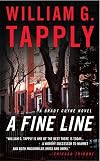
Walt Duffy, famous bird photographer who had lost the use of his legs, asks Coyne, his lawyer, to take some valuable letters of Merriwether Lewis to be appraised. The next day, Coyne finds Duffy on the brick floor of his birdhouse, his head bleeding profusely, crutches by his side and Ethan, Duffy’s son who lived with him has gone missing.
The plot becomes thicker as Coyne finds himself manipulated by a killer with links to a secret environmentalist organization. The killer seems to know show more Coyne’s every move and Coyne is not sure what move to make to save lives.
Sounds thin, but I’m trying to avoid spoilers. All you need to know is that Tapply writes well, always tells an engaging story, sprinkled with humor, and provides a few hours of solid entertainment. show less
The plot becomes thicker as Coyne finds himself manipulated by a killer with links to a secret environmentalist organization. The killer seems to know show more Coyne’s every move and Coyne is not sure what move to make to save lives.
Sounds thin, but I’m trying to avoid spoilers. All you need to know is that Tapply writes well, always tells an engaging story, sprinkled with humor, and provides a few hours of solid entertainment. show less
Awards

You May Also Like


Associated Authors
Statistics
- Works
- 54
- Also by
- 11
- Members
- 3,339
- Popularity
- #7,650
- Rating
- 3.7
- Reviews
- 110
- ISBNs
- 247
- Languages
- 3
- Favorited
- 8
