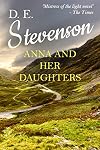
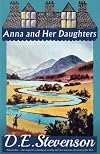
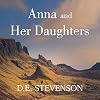
Anna and Her Daughters
by D.E. Stevenson
On This Page
Description
When their father dies, none of the three Harcourt girls are particularly upset. The loss of the family's income, however, is not something so easily overcome. When their mother Anna discovers that they have been left penniless, she decides to move them out of London and back to her hometown in Scotland. Helen, the demanding eldest sister, decamps almost immediately to Edinburgh in search of the excitement and refinement Ryddelton cannot offer. Rosalie, having always lived in her more show more beautiful eldest sister's shadow, begins to come into her own. And Jane finds an education she could never have gotten at Oxford in her work as a secretary for Mrs Millard, an eccentric biographer currently residing in the village. Anna's daughters seem to be settling down to their new life until Ronnie, a tall, broad-shouldered scientist, steps into their lives... show lessTags
Recommendations





















Member Reviews
I was expecting Anna to be the protagonist but instead this story is told by the youngest of her three daughters, Jane.
Seventeen year old Jane was intending to attend Oxford until her father’s death leaves the family in financial difficulties. Her mother decides that, instead of attempting to economise in London, they will move to the Scottish town where she grew up. (Ryddleton is also the setting of Celia’s House, Listening Valley
and Sarah’s Cottage, so there are references to familiar characters.)
Most of the book focuses on the following year or so, as Jane and her sisters adjust to their new lives and take further steps into adulthood. Jane gets a job helping Mrs Millard, a somewhat eccentric biographer, who is working on a show more book about a “naughty lady” from the 17th century, and this eventually inspires Jane to write a book herself.
The rest of the story takes place half a dozen or so years later (although the intervening years are not wholly skipped over) and is about circumstances which lead to Jane looking after her nephew.
This book has some wonderful descriptions of Jane’s experiences and of the people she is closest to. The scenery is lovely. Jane is delightfully perspicacious (and believably, and sometimes frustratingly, imperfect). Her nephew is lively and emotional -- I wasn’t expecting to find his reactions so realistic nor so compelling. If it wasn’t for that, I think I’d be more disappointed at the way the story shifts focus and at the way the romance plot is resolved.
This book also has a couple of scenes in which characters reveal some racist attitudes. It struck me as curious that Stevenson nearly gets it -- to me, it was so clear that her characters’ prejudice was rooted in fear and misunderstanding, and there was a moment when they could have begun to reevaluate. But no.
Anyway...
Seventeen year old Jane was intending to attend Oxford until her father’s death leaves the family in financial difficulties. Her mother decides that, instead of attempting to economise in London, they will move to the Scottish town where she grew up. (Ryddleton is also the setting of Celia’s House, Listening Valley
and Sarah’s Cottage, so there are references to familiar characters.)
Most of the book focuses on the following year or so, as Jane and her sisters adjust to their new lives and take further steps into adulthood. Jane gets a job helping Mrs Millard, a somewhat eccentric biographer, who is working on a show more book about a “naughty lady” from the 17th century, and this eventually inspires Jane to write a book herself.
The rest of the story takes place half a dozen or so years later (although the intervening years are not wholly skipped over) and is about circumstances which lead to Jane looking after her nephew.
This book has some wonderful descriptions of Jane’s experiences and of the people she is closest to. The scenery is lovely. Jane is delightfully perspicacious (and believably, and sometimes frustratingly, imperfect). Her nephew is lively and emotional -- I wasn’t expecting to find his reactions so realistic nor so compelling. If it wasn’t for that, I think I’d be more disappointed at the way the story shifts focus and at the way the romance plot is resolved.
This book also has a couple of scenes in which characters reveal some racist attitudes. It struck me as curious that Stevenson nearly gets it -- to me, it was so clear that her characters’ prejudice was rooted in fear and misunderstanding, and there was a moment when they could have begun to reevaluate. But no.
Anyway...
“Life is so dangerous. You make your bed when you’re very young and you’ve got to lie on it whether it’s comfortable or not. Helen and Rosalie are very different but in one thing they’re alike: they don’t understand.”show less
“They don’t understand what?” I asked in bewilderment.
“They don’t understand anything,” declared Mother smiling at me rather sadly. “They don’t even know that there’s anything to understand. They’re like horses with blinkers — they just see what’s in front of their noses and nothing more. I’m always terribly sorry for horses with blinkers,” added Mother with a sigh.
She had never spoken to me like that before — as if I were really and truly grown-up — and I realised that she wouldn’t have spoken like that now if she hadn’t been upset.
I thoroughly enjoyed Anna and her Daughters by D. E. Stevenson. It was both a warm-hearted romance and a lovely comfort read. When Anna’s husband dies, she is left considerably poorer but instead of struggling to make ends meet in London she and her three girls move north to Scotland to the tiny village of Ryddleton, where she was originally from. Of the three daughters, only the youngest, Jane, sees possibilities in the move north. Helen the oldest is a beautiful girl and has always been able to get what she wants which is a fun time, plenty of the latest fashions and men to take care of her until she is ready to discard them. The middle sister, Rosalie seems unsure of herself and is the most willing to follow Helen’s lead. The show more story is narrated by Jane, considered the ‘plain” sister.
Helen soon wrangles an invitation to live in Edinburgh with a cousin of Anna’s and Rosalie gets a job minding children. Jane meets and starts to work for a novelist and thru her gets the writing bug. She starts to produce a string of historical romances which become best sellers. Rosalie meets a young man while on vacation and he comes by one day for tea. It so happens that Helen is home that day and one look at her and the fellow is in love. Rosalie is heartbroken and Jane too has feelings as she had met this young man previously as well, and, in fact, based her romantic hero on him.
The book follows the ups and downs in their lives and I loved every minute of it. There is a fair mount of drama, missed connections and regrets but the author does manage to allow love to shine through in the end. As the years pass we are treated to cozy domestic details and the maturing of the characters, although not much can be done with selfish Helen. Both Rosalie and Jane become resourceful, caring young women with direction and purpose to their lives. show less
Helen soon wrangles an invitation to live in Edinburgh with a cousin of Anna’s and Rosalie gets a job minding children. Jane meets and starts to work for a novelist and thru her gets the writing bug. She starts to produce a string of historical romances which become best sellers. Rosalie meets a young man while on vacation and he comes by one day for tea. It so happens that Helen is home that day and one look at her and the fellow is in love. Rosalie is heartbroken and Jane too has feelings as she had met this young man previously as well, and, in fact, based her romantic hero on him.
The book follows the ups and downs in their lives and I loved every minute of it. There is a fair mount of drama, missed connections and regrets but the author does manage to allow love to shine through in the end. As the years pass we are treated to cozy domestic details and the maturing of the characters, although not much can be done with selfish Helen. Both Rosalie and Jane become resourceful, caring young women with direction and purpose to their lives. show less
I anticipated this book to be overly sappy. The quick and dirty review: A widowed mother brings her three near-adult daughters home to Scotland after learning she can no longer afford high society London. Her daughters couldn't be more different from each other and yet all three Harcourt sisters fall in love with the same man...cue the violins and weepy music.
Now for the long version:
Told from the first person perspective of youngest daughter, Jane, life turns upside down when mother decides to leave London and return to her pre-marriage home of Ryddelton, Scotland. Gone are the dreams of going to Oxford for an education. But Jane, not being as pretty nor outgoing as her sisters (as mentioned way too many times), soon meets Mrs. Millard show more and learns she is capable of becoming a successful (and published) author. Her dreams are only overshadowed by her eldest sister, Helen, when she wins the affections of the man whom with all three sisters fall in love. Of course the prettiest sister wins the boy, but not all is lost. It's not really a spoiler alert to say all four Harcourt women (mother Anna included) find their way to some kind of romance.
Jane is a wonderful character. Caring and considerate, she demonstrates perfect manners no matter the situation. I found myself admiring her for her attitude. show less
Now for the long version:
Told from the first person perspective of youngest daughter, Jane, life turns upside down when mother decides to leave London and return to her pre-marriage home of Ryddelton, Scotland. Gone are the dreams of going to Oxford for an education. But Jane, not being as pretty nor outgoing as her sisters (as mentioned way too many times), soon meets Mrs. Millard show more and learns she is capable of becoming a successful (and published) author. Her dreams are only overshadowed by her eldest sister, Helen, when she wins the affections of the man whom with all three sisters fall in love. Of course the prettiest sister wins the boy, but not all is lost. It's not really a spoiler alert to say all four Harcourt women (mother Anna included) find their way to some kind of romance.
Jane is a wonderful character. Caring and considerate, she demonstrates perfect manners no matter the situation. I found myself admiring her for her attitude. show less
The beginning of the book was the best. Jane and her sisters Helen and Rosalie, along with their mother, leave London for Scotland when they find that their income is reduced. The story is told through the eyes of Jane, who is astounded at the way her mother slips comfortably into a middle class country life. Her sisters are not as happy. Helen, the oldest, is set upon always getting what she wants no matter what. And Rosalie is the indecisive sister, always being compared to the others and never really knowing where she stands. Meanwhile, Jane gets to know her new Scotland home and finds it lovable. She begins working for an eccentric neighbor lady who is writing a book. This is the part of the story where she gains a little confidence show more and finds her vocation.
The remainder of the story uses some typical D.E. Stevenson tropes, including missed opportunities, a mismatched marriage, a sad child, and the compression of years of experiences into a few paragraphs. This part of the book I found less satisfying, but still very readable. show less
The remainder of the story uses some typical D.E. Stevenson tropes, including missed opportunities, a mismatched marriage, a sad child, and the compression of years of experiences into a few paragraphs. This part of the book I found less satisfying, but still very readable. show less
A lovely story where everything works out in the end. I love D.E.Stevenson for her consistency in quality and great characters and wonderful story. I can always count on her for a nice escape when the world gets to be too horrible.
A quaint little old-fashioned novel. Jane, the narrator, moves with her mother and sisters from London to a small town in Scotland after their father dies and leaves them unprovided for. Her sister Helen steals a boyfriend from the other sister, Rosalie, the same man that Jane herself liked very much, and complications ensue. While I enjoyed the novel, in retrospect I’m annoyed by the free pass given to Ronnie for his abandonment of Rosalie and kowtowing to Helen, while Helen is made so clearly to be the villain.
Ratings
Members
- Recently Added By
Lists

Fiction with Women's Names in the Title
378 works; 15 members

Books Read in 2017
4,249 works; 130 members

Books Read in 2020
4,379 works; 124 members

Books Read in 2024
4,623 works; 126 members
Author Information

62 Works 8,712 Members
D. E. (Dorothy Emily) Stevenson was born in Edinburgh, Scotland on November 18, 1892. She married Captain James Reid Peploe in 1916. She wrote over 40 books in her lifetime. Her first novel Peter West was published in 1923. Her other books include Mrs. Tim of the Regiment, Miss Buncle's Book, Miss Buncle Married, and Listening Valley. Her Mrs. Tim show more books were inspired by the diaries she kept while an army wife. She died on December 30, 1973. (Bowker Author Biography) show less
Series
Belongs to Publisher Series
Furrowed Middlebrow (81)
Work Relationships
Is contained in
Common Knowledge
- Original publication date
- 1958
- People/Characters
- Jane Harcourt; Helen Harcourt; Rosalie Harcourt; Anna Harcourt; Leornard Harcourt; Andrew Firth (show all 14); Tom Gow; Margaret Firth; Elizabeth Gow; Augusta Millard; Dick Lancaster; Ronnie Ferguson; Kenneth Ferguson; Val Ferguson
- Important places
- Ryddleton, Scotland, UK
- First words
- 'Are you asleep, Jane?'
- Last words
- (Click to show. Warning: May contain spoilers.)"Yes - someday - cross my heart,", I whispered.
- Original language
- English
Classifications
Statistics
- Members
- 172
- Popularity
- 189,846
- Reviews
- 6
- Rating
- (3.79)
- Languages
- English
- Media
- Paper, Audiobook, Ebook
- ISBNs
- 8
- ASINs
- 13