On This Page
Description
There's no place like home Celia Dunne may be an old spinster, but she's no fool. She knows that changing her will to leave the grand family estate, Dunnian, to her grand-nephew will ruffle feathers within the family. But Celia also knows that Dunnian has stood solemn and empty for far too long, and she intends for that to change after she's gone. Humphrey's children will turn the creaky old house back into a family home-just the way it was meant to be. As Humphrey's young family grows and show more expands within the walls of Dunnian, the house seems to welcome them with warmth and a wonderful feeling of belonging. Following the Dunnes through youthful antics, merry parties, heartbreaks, love, and marriages, Celia's House is an enchanting family novel that begs to be read and savored over and over again. show lessTags
Recommendations


















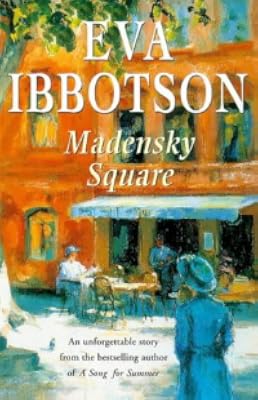


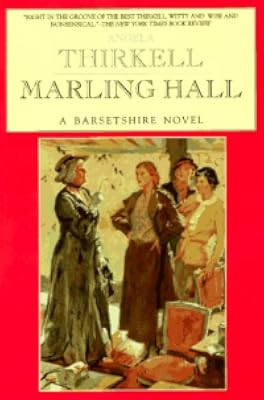



Member Recommendations

atimco Very similar plot.
Member Reviews
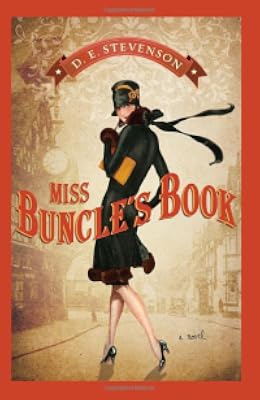
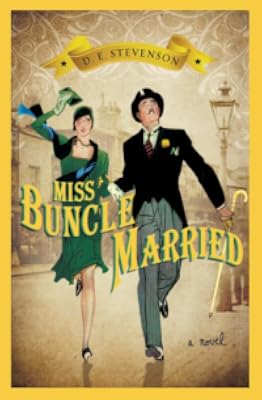
First off you need to know that I'm a sucker for books about traditional English country houses, and then add in one of my favourite periods of time to read about, the years between the two World Wars, and it's a pretty fair assessment that I'm going to enjoy the book. Celia's House is just one more delightful book by the wonderful author D.E. Stevenson, the treasure who brought us Miss Buncle's Book and it's sequels. Celia's House is about the Dunne family. We are first introduced to an elderly, but much loved Celia Dunne, a spinster who has lived her whole life at Dunnian, the family home. She wants to pass Dunnian on to an heir that she knows will love the house as much as she has and pass it on to keep the family traditions and show more heritage. Enter her great-nephew Humphrey and we begin to sink into a warm, loving story of Humphrey, his wife, his children and yes, the downstairs people too. The story begins in 1905 and carries on through to 1942 with a most satisfactory ending. There are highs and lows, big dramas and little tempests all encompassed by a beautiful home and breathtaking scenery. Celia's House is a delightful read from start to finish. show less
A pure comfort read about a family in Scotland and the house they inhabit through the years between the two World Wars (mostly). When Miss Celia Dunne feels her time is running out, she makes a will that will surprise everyone, dismaying or enraging presumptive heirs while delighting and perplexing its actual beneficiaries. She knows precisely what she's doing, and cannot be reasoned out of it. Time will prove her right. A marvelous antidote to grim realities and fictional horrors, this story was warm, predictable and entirely satisfying. If this is the sort of thing you like, you'll like it a lot.
In 1905, the elderly Miss Celia Dunne informs her great-nephew Humphrey, a naval officer with a young family, that she is planning to leave Dunnian House to him, to pass along to his future daughter, Celia.
This novel is divided into five parts -- Old People in the House; Children in the House; Young People in the House; Grown-up People in the House; and War Measures in the House -- and follows Humphrey Dunne’s family over several decades, in a series of episodes focusing on various members of the family. The common thread running throughout these episodes, sometimes more obviously than others, is the secret that the house will be inherited by Humphrey’s youngest child. That shapes Humphrey’s relationship with his son Mark, for show more instance, and the ambitions Mark has for himself, once he knows.
I enjoyed Stevenson’s descriptions of people and places, which are vivid and insightful. She can be surprisingly perceptive, particularly about the ways in which others can lack perspicacity. I was especially struck by how she captures the experience of Humphrey’s second cousin’s young daughter, Debbie, who comes to live with the Dunnes (after her mother goes off to India or something with her new husband) and the adults don’t recognise that, or else cannot understand why, Debbie is so desperately unhappy, because she has a warm bed and nice food/clothes/toys so what could be the problem?
When I first discovered Stevenson, a decade ago, my local library only had half a dozen of her novels and of those, Celia’s House was the only one I didn’t get around to reading. In some ways this was shortsighted of my past self, who didn’t realise what a lovely novel she was missing out on, but perhaps this turned out for the best. A decade ago, I had neither yet seen nor read A Midsummer Night’s Dream, and the sequence where the young Dunnes and their friends put on a production of it was all the more memorable for being familiar with that play -- which Stevenson likely assumed her audience would be. (Shakespeare is, I suspect, not the linchpin of English literary education he once was.)
Another reason I’m glad I didn’t read this book years ago is that I now have discovered Stevenson on audiobook and I suspect Stevenson is one of those authors whose stories I enjoy all the more when they’re read aloud.
I’d remembered that there was some mention of Celia, and of the town Ryddleton, in Sarah’s Cottage, which takes place after WWII, so when I had finished Celia’s House I flicked through that -- and was surprised by how much the Dunnes appeared! (And it wasn’t that I had forgotten those scenes, I had just hadn’t remembered enough details to put the pieces together.)
This novel is divided into five parts -- Old People in the House; Children in the House; Young People in the House; Grown-up People in the House; and War Measures in the House -- and follows Humphrey Dunne’s family over several decades, in a series of episodes focusing on various members of the family. The common thread running throughout these episodes, sometimes more obviously than others, is the secret that the house will be inherited by Humphrey’s youngest child. That shapes Humphrey’s relationship with his son Mark, for show more instance, and the ambitions Mark has for himself, once he knows.
I enjoyed Stevenson’s descriptions of people and places, which are vivid and insightful. She can be surprisingly perceptive, particularly about the ways in which others can lack perspicacity. I was especially struck by how she captures the experience of Humphrey’s second cousin’s young daughter, Debbie, who comes to live with the Dunnes (after her mother goes off to India or something with her new husband) and the adults don’t recognise that, or else cannot understand why, Debbie is so desperately unhappy, because she has a warm bed and nice food/clothes/toys so what could be the problem?
When I first discovered Stevenson, a decade ago, my local library only had half a dozen of her novels and of those, Celia’s House was the only one I didn’t get around to reading. In some ways this was shortsighted of my past self, who didn’t realise what a lovely novel she was missing out on, but perhaps this turned out for the best. A decade ago, I had neither yet seen nor read A Midsummer Night’s Dream, and the sequence where the young Dunnes and their friends put on a production of it was all the more memorable for being familiar with that play -- which Stevenson likely assumed her audience would be. (Shakespeare is, I suspect, not the linchpin of English literary education he once was.)
Another reason I’m glad I didn’t read this book years ago is that I now have discovered Stevenson on audiobook and I suspect Stevenson is one of those authors whose stories I enjoy all the more when they’re read aloud.
I’d remembered that there was some mention of Celia, and of the town Ryddleton, in Sarah’s Cottage, which takes place after WWII, so when I had finished Celia’s House I flicked through that -- and was surprised by how much the Dunnes appeared! (And it wasn’t that I had forgotten those scenes, I had just hadn’t remembered enough details to put the pieces together.)
“You don’t seem ninety, Aunt Celia. You’re so alive.”show less
“My brain is as good as ever,” she returned, smiling a little. “It’s my legs that are old. I still want to do things and then I find I can’t, but I’m not complaining, Humphrey. I’m quite happy.”
“You look happy.”
“I have my books,” she said. “I have my hills to look at, and I still have a few friends who come see me now and then [...] ”
Reading "Celia's House" is as comforting as sipping a cup of Earl Grey tea while looking looking out into a wildflower garden.
Re-issued from its original printing in the 1940's, the book covers several generations of the Dunne family residing at at the Dunnian estate in the U.K. When the book opens, we meet Celia, the elderly, unmarried auntie who will choose Dunnian's fate when she passes on. Bucking convention, she makes a very unusual choice, setting the book's plot in motion.
Stevenson includes many strong female characters for the day, and the book will resonate with Jane Austen fans. While the book may seem a bit slow moving and lacking in drama for some modern readers, others will appreciate the dry wit and genteel writing.
Thank show more you to NetGalley and SOURCESOOKS Landmark for a galley of this book in exchange for an honest review. show less
Re-issued from its original printing in the 1940's, the book covers several generations of the Dunne family residing at at the Dunnian estate in the U.K. When the book opens, we meet Celia, the elderly, unmarried auntie who will choose Dunnian's fate when she passes on. Bucking convention, she makes a very unusual choice, setting the book's plot in motion.
Stevenson includes many strong female characters for the day, and the book will resonate with Jane Austen fans. While the book may seem a bit slow moving and lacking in drama for some modern readers, others will appreciate the dry wit and genteel writing.
Thank show more you to NetGalley and SOURCESOOKS Landmark for a galley of this book in exchange for an honest review. show less
Enjoyable, classic D. E. Stevenson, even if the plot is a little (okay, a lot) derivative. About halfway in you start to see the similarities. Mousy poor relation falls in love with the handsome son of the family, but he's in love with a scheming fortune-hunter. Said fortune-hunter's caddish brother unexpectedly falls for poor relation but she won't have him. There are two pretty daughters of the house who do not bother much with their poor relation. Their mother, the lady of the house, depends on the poor relation to run the household. An amateur theatrical also plays a big role (:P) in this tale. Yes, this is basically the plot and some of the characters of Austen's Mansfield Park, but oddly enough I'm okay with that. It's framed a show more little differently and some of the details are so precise that you know Stevenson is well aware of her borrowing and means it as homage, not robbery.
I will say, however, that the ghost of the original Celia visiting the pregnant Alice and the hints of her reincarnation in her great-niece were a bit weird. show less
I will say, however, that the ghost of the original Celia visiting the pregnant Alice and the hints of her reincarnation in her great-niece were a bit weird. show less
A lovely book - unusual in it's timeline I felt, because it takes a while to get to the romance of the story, and follows multiple storylines, but all revolving in and around "Celia's House". I found it charming, insightful, and a little quirky. Just be warned that the romance involves distant cousins falling for each other, which although they are distant enough still sounds a bit strange to my modern ears.
This was what I can only call a "pleasant" book. I liked the first third or so of this novel the most. I kept expecting bad or dreadful things to happen, some gothic tale set in the early to mid 20th century, but this isn't that sort of book at all. I realized that well before I had finished the book, but I still couldn't quite get that thought out of my mind. It reminds me most of something that Lucy Maud Montgomery might have written, only this is set on the English Scottish border. The novel covers the period 1905-1942, of a family estate that was unexpectedly inherited. For me the entire setting and descriptions of the land was the strongest draw and in some ways the strongest character. This is a light romance thing as well, and show more the middle part has a drama that I see described as a retelling of Mansfield Park. It has been way too long since I read that novel to give an opinion, but the happenings certainly have a familiar feel of a period drama retold.
Overall I liked this and it does have a happy ending which counts for something. In a way it is a near perfect read for the style of story that it is. A pleasant pastoral read like this actually was a very nice change of pace and makes me want to visit something like this a little more often. This is a bit like a comfort food. I have my daughter's Little House books which I have always wanted to sample and I think I will before too long. Or perhaps I'll find another D.E. Stevenson novel in my hands one day. show less
Overall I liked this and it does have a happy ending which counts for something. In a way it is a near perfect read for the style of story that it is. A pleasant pastoral read like this actually was a very nice change of pace and makes me want to visit something like this a little more often. This is a bit like a comfort food. I have my daughter's Little House books which I have always wanted to sample and I think I will before too long. Or perhaps I'll find another D.E. Stevenson novel in my hands one day. show less
Members
- Recently Added By
Lists

Fiction with Women's Names in the Title
378 works; 15 members

Books Read in 2017
4,249 works; 130 members

Books Read in 2020
4,379 works; 124 members

Books Read in 2021
5,361 works; 114 members

Which house?
423 works; 16 members
Author Information

62 Works 8,712 Members
D. E. (Dorothy Emily) Stevenson was born in Edinburgh, Scotland on November 18, 1892. She married Captain James Reid Peploe in 1916. She wrote over 40 books in her lifetime. Her first novel Peter West was published in 1923. Her other books include Mrs. Tim of the Regiment, Miss Buncle's Book, Miss Buncle Married, and Listening Valley. Her Mrs. Tim show more books were inspired by the diaries she kept while an army wife. She died on December 30, 1973. (Bowker Author Biography) show less
Some Editions
Series

Work Relationships
Has the (non-series) sequel
Common Knowledge
- Canonical title
- Celia's House
- Original publication date
- 1943
- Important places
- Dunnian House, Scotland, UK (fictional)
- First words
- Some people call the Rydd Water a good-size stream; others call it a small river.
- Disambiguation notice
- "Originally published in 1943 in the United Kingdom by Farrar & Rinehart, Inc. This edition is based on the hardcover edition published in 1971 in the United States by Holt, Rinehart, and Winston." T.p. verso
Classifications
Statistics
- Members
- 296
- Popularity
- 109,176
- Reviews
- 19
- Rating
- (3.86)
- Languages
- English
- Media
- Paper, Audiobook, Ebook
- ISBNs
- 15
- UPCs
- 1
- ASINs
- 11