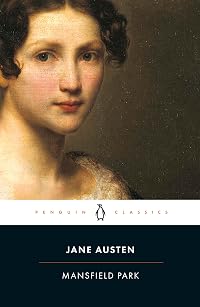
Mansfield Park
by Jane Austen
On This Page
Description
Mansfield Park is the study of three families--the Bertrams, the Crawfords, and the Prices. The story's heroine, Fanny Price, is at its center. She is adopted into the family of her rich uncle Thomas Bertram, and is condescendingly treated as a poor relation by "Aunt Norris." Of her cousins, only Edmund, a young clergyman, appreciates her fine qualities, and she falls in love with him. Unfortunately, however, he is drawn to the shallow and worldly Mary Crawford. Fanny's quiet passivity, show more steadfast loyalty, and natural goodness are matched against the wit and brilliance of her lovely rival. Jane Austen skillfully uses her characters' emotional relationships to explore the social and moral values by which they attempt to order their lives. show lessTags
Recommendations




Member Recommendations

Member Reviews
This is my favorite Jane Austen. I feel that in writing about Fanny Price, Jane was trying to envision someone that she admired but whom she could not exactly emulate. It is similar to the relationship between Eliza Bennett (who I think reflected the author's personality best) and her sister Jane, who seems almost too good. What would a story be like told through Jane's eyes? That, in a way, is what we have in Mansfield Park.
Although Fanny seems almost trapped at times by her own desire to self-effaced and unimportant, her position as observer of the Bertram family gives extraordinary insight on the complex motivations of people as they negotiate their inclinations in life with the people around them. Fanny sees all, and she has firm show more convictions about the relative merits of different behavior. She also sees deeply into herself. I can easily spend a lot of time with her. show less
Although Fanny seems almost trapped at times by her own desire to self-effaced and unimportant, her position as observer of the Bertram family gives extraordinary insight on the complex motivations of people as they negotiate their inclinations in life with the people around them. Fanny sees all, and she has firm show more convictions about the relative merits of different behavior. She also sees deeply into herself. I can easily spend a lot of time with her. show less
This is one of my favourite Austen novels now. It feels more mature, more complex and nuanced in how it tackles the story and its themes, and the characters also feel the most vivid. The sarcasm’s on point and the book doesn’t feel padded, which is a complaint I’ve had with other Austen novels in the past. It’s long, but it’s necessarily long.
I think part of my enjoyment’s that I’m a lot like Fanny, or at least more like her than the other heroines I’ve met. I could sympathise and see myself in her shoes. I was rooting for her to stand up to people and get her happy ending for much of the book, even knowing that it was Austen and of course she was going to.
In general, though, I liked how recognizable and human everyone show more was, and that nobody was solely good or bad—again, a complaint I’ve had with other Austen. I genuinely wanted to like Mary, for instance. The peculiar aggravations of Mrs. Norris just flow off the page. There seemed to be more of the Regency romance tropes in this one too, and more connection between them. Instead of “whoops, elopement” it’s, “well of course she was going to do that, saw it coming.”
So yeah, a good read! Definitely recommend if you’re into this era or genre! My one actual complaint: Don’t read this edition. The notes at the back are only for the bare minimum. I have the feeling I missed a lot of the references and humour.
Warnings: Neglect, taking advantage of others, compulsive flirts, but nothing to a harmful extent.
8/10 show less
I think part of my enjoyment’s that I’m a lot like Fanny, or at least more like her than the other heroines I’ve met. I could sympathise and see myself in her shoes. I was rooting for her to stand up to people and get her happy ending for much of the book, even knowing that it was Austen and of course she was going to.
In general, though, I liked how recognizable and human everyone show more was, and that nobody was solely good or bad—again, a complaint I’ve had with other Austen. I genuinely wanted to like Mary, for instance. The peculiar aggravations of Mrs. Norris just flow off the page. There seemed to be more of the Regency romance tropes in this one too, and more connection between them. Instead of “whoops, elopement” it’s, “well of course she was going to do that, saw it coming.”
So yeah, a good read! Definitely recommend if you’re into this era or genre! My one actual complaint: Don’t read this edition. The notes at the back are only for the bare minimum. I have the feeling I missed a lot of the references and humour.
Warnings: Neglect, taking advantage of others, compulsive flirts, but nothing to a harmful extent.
8/10 show less
Mansfield Park tells the story of Fanny Price, a poor relation of the Bertram family, who was brought to live with them when she was ten as an act of charity. Fanny is an odd heroine for a novel by Jane Austen. She lacks spark. Which is no wonder given that she was removed from her home while young, dumped into a strange environment and largely ignored. Her Aunt Norris is one of the worst characters ever put down on paper; all of the evil stepmothers of fairy tale fame would do well to take lessons from her. She makes certain that shy, insecure Fanny will only become more withdrawn and hesitant as she grows up and that the Bertram family will not forget to treat her as an unwelcome charity case.
And that is the strength of this novel. show more Along with the amazing aunt Norris, Austen has created a whole host of wonderful characters and breathed life into them. From the dull idiot Mr. Rushworth, who is so taken by being given a role in the play the young people decide to put on that involves him learning forty-two speeches (which he is then unable to learn), to Lady Bertram, who approaches a sedentary lifestyle with the dedication of an Olympic hopeful; each character is so interesting in their own right that I wanted several times in this book for Austen to have written other novels following each of them.
Fanny is such an interesting character. She's been systematically berated and ignored until by the age of eighteen she is anxious in any situation where attention might be paid to her, but also resentful when it isn't. She's been ordered to be grateful for substandard treatment so often that she rarely speaks and when she does it's often in an Eeyore-ish passive aggressive way, not that it does her any good. Unless her cousin Edmund happens to be listening, her wishes are entirely disregarded. And so she sits, largely silent, with years of pent-up judgements and opinions inside of her. She's not an easy character to like, although Austen makes clear that while she is silently thinking the worst of the people around her, the face she shows is so quiet and unassuming, that people attribute great kindness to her. It helps that being so shy makes her a very good listener to all the narcissists that surround her, and that she is very pretty. Her improved looks are noticed first by her uncle who, after having spent some months away in Antigua, at the sugar plantation that provides the Bertram family their wealth, begins to talk about her and to her quite a bit, she now being worthy of his notice. It's all a little skeevy, and Fanny, quite rightly, remains terrified of him.
This being Austen, there is a question of the central characters, here Fanny Price and her cousin Edmund, finding spouses. Edmund, a solemn man, plans to enter the clergy and live a rural life, is simultaneously entranced and repulsed by Mary Crawford, who is light, quick-witted and bubbly. She tends to say any witty thing that pops into her head and she often shocks and insults Edmund inadvertently. Of course they can't leave each other alone, and they are each constantly reassessing whether they could be happy together. Then there's her brother Henry, who begins the novel as a flirt who is always looking for new ways to entertain himself and others. He determines to pay court to Fanny as a way of passing the time after all the other eligible young ladies have left the neighborhood, making a contest to himself of winning her affection. Instead, he falls in love while Fanny remains hostile to his advances. His admiration for her causes him to renounce his rakehell ways. Unfortunately, Fanny bore witness to his worst behavior and is disinclined to give his reformation any credit. She attempts to get rid of him several times, but between her inability to speak clearly enough for him to understand and his own determination to win her no matter how long it takes, they are often in each other's company.
We all know how things should turn out -- with a double wedding at the local chapel in the best Austen style, but she throws a curve ball in Mansfield Park, refusing, in the end, to satisfy the reader. And this is where I ran into a problem with this book; I wanted a different ending. I knew what would happen. I'd read the book before. But until the final chapters, I was hoping for it. show less
And that is the strength of this novel. show more Along with the amazing aunt Norris, Austen has created a whole host of wonderful characters and breathed life into them. From the dull idiot Mr. Rushworth, who is so taken by being given a role in the play the young people decide to put on that involves him learning forty-two speeches (which he is then unable to learn), to Lady Bertram, who approaches a sedentary lifestyle with the dedication of an Olympic hopeful; each character is so interesting in their own right that I wanted several times in this book for Austen to have written other novels following each of them.
Fanny is such an interesting character. She's been systematically berated and ignored until by the age of eighteen she is anxious in any situation where attention might be paid to her, but also resentful when it isn't. She's been ordered to be grateful for substandard treatment so often that she rarely speaks and when she does it's often in an Eeyore-ish passive aggressive way, not that it does her any good. Unless her cousin Edmund happens to be listening, her wishes are entirely disregarded. And so she sits, largely silent, with years of pent-up judgements and opinions inside of her. She's not an easy character to like, although Austen makes clear that while she is silently thinking the worst of the people around her, the face she shows is so quiet and unassuming, that people attribute great kindness to her. It helps that being so shy makes her a very good listener to all the narcissists that surround her, and that she is very pretty. Her improved looks are noticed first by her uncle who, after having spent some months away in Antigua, at the sugar plantation that provides the Bertram family their wealth, begins to talk about her and to her quite a bit, she now being worthy of his notice. It's all a little skeevy, and Fanny, quite rightly, remains terrified of him.
This being Austen, there is a question of the central characters, here Fanny Price and her cousin Edmund, finding spouses. Edmund, a solemn man, plans to enter the clergy and live a rural life, is simultaneously entranced and repulsed by Mary Crawford, who is light, quick-witted and bubbly. She tends to say any witty thing that pops into her head and she often shocks and insults Edmund inadvertently. Of course they can't leave each other alone, and they are each constantly reassessing whether they could be happy together. Then there's her brother Henry, who begins the novel as a flirt who is always looking for new ways to entertain himself and others. He determines to pay court to Fanny as a way of passing the time after all the other eligible young ladies have left the neighborhood, making a contest to himself of winning her affection. Instead, he falls in love while Fanny remains hostile to his advances. His admiration for her causes him to renounce his rakehell ways. Unfortunately, Fanny bore witness to his worst behavior and is disinclined to give his reformation any credit. She attempts to get rid of him several times, but between her inability to speak clearly enough for him to understand and his own determination to win her no matter how long it takes, they are often in each other's company.
We all know how things should turn out -- with a double wedding at the local chapel in the best Austen style, but she throws a curve ball in Mansfield Park, refusing, in the end, to satisfy the reader. And this is where I ran into a problem with this book; I wanted a different ending. I knew what would happen. I'd read the book before. But until the final chapters, I was hoping for it. show less
Original review from 2011: I approached Mansfield Park with a bit of trepidation, as most Austen fans I know consider this the worst of the lot. I was pleasantly surprised by how much I enjoyed the book. I think the key is to go in with an open mind and to not compare it too closely to Pride and Prejudice or any other work. The writing is excellent and Austen’s humor is very present, especially in the descriptions, dialogue and actions of the secondary characters.
Mansfield Park is different from the other Austens I’ve read (P&P, Sense and Sensibility and Emma) in that it is more serious in its concerns and more of a commentary on morality. But far from boring or preachy, Austen strikes a nice balance between those concerns and the show more humor and social observation included in her other works.
While I did wish Fanny Price had more spunk in some situations, the circumstances of her childhood and her being brought to Mansfield are such that her rather timid and retreating nature were understandable. Since Mansfield Park is not, to my mind, intended as a romantic work, the lack of chemistry between Fanny and Edmund also makes sense. Austen is less concerned with them as lovers than as moral figures whose interior compasses bring them inexorably together.
This is definitely not my favorite of the Austen novels I’ve read, but it is still entertaining and perhaps more thought-provoking. show less
Mansfield Park is different from the other Austens I’ve read (P&P, Sense and Sensibility and Emma) in that it is more serious in its concerns and more of a commentary on morality. But far from boring or preachy, Austen strikes a nice balance between those concerns and the show more humor and social observation included in her other works.
While I did wish Fanny Price had more spunk in some situations, the circumstances of her childhood and her being brought to Mansfield are such that her rather timid and retreating nature were understandable. Since Mansfield Park is not, to my mind, intended as a romantic work, the lack of chemistry between Fanny and Edmund also makes sense. Austen is less concerned with them as lovers than as moral figures whose interior compasses bring them inexorably together.
This is definitely not my favorite of the Austen novels I’ve read, but it is still entertaining and perhaps more thought-provoking. show less
A reread for the - I'm not sure, 4th time? Mansfield Park used to be my least favorite Austen book (which still means I loved it) but it grows on me every time I read it. I now think it's actually one of her more mature books, with tons of opportunity to read between the lines, really interesting set up of believable characters, and lots of subtle humor and authorial commentary.
Fanny herself has also grown on me. She is often described as meek and mild and maddeningly won't ever put herself first. But I didn't see her that way on this reading. I saw that she is quiet and introverted and has been taught that her opinion isn't wanted, but her interior comments are quite perceptive and intelligent. And humanizing her even more, her show more interior thoughts, when revealed, are often self-centered, can be petty, and stubborn. I like this.
Also, a really large part of me wanted Henry Crawford to succeed with Fanny this time and become the person he thought he could be with her. First time to feel that way too!
I happily look forward to my next rereading of this book. show less
Fanny herself has also grown on me. She is often described as meek and mild and maddeningly won't ever put herself first. But I didn't see her that way on this reading. I saw that she is quiet and introverted and has been taught that her opinion isn't wanted, but her interior comments are quite perceptive and intelligent. And humanizing her even more, her show more interior thoughts, when revealed, are often self-centered, can be petty, and stubborn. I like this.
I happily look forward to my next rereading of this book. show less
Let other pens dwell on guilt and misery. I quit such odious subjects as soon as I can, impatient to restore everybody, not greatly in fault themselves, to tolerable comfort, and to have done with all the rest.
I’ve noted before Austen’s predilection for inserting her authorial voice into her novels: in Sense and Sensibility she speaks in chapter XXXVI, and in Pride and Prejudice she appears at the beginning of the final chapter. And here she is at it again in Mansfield Park, at the start of chapter XLVIII (yes, the final chapter again) giving a succinct if ironic set of observations about the previous forty-seven chapters. She says it’s about the ‘odious’ subjects of guilt and misery; and those who have suffered from such show more miseries, though not totally innocent, will come to some sort of happy ending, while those who have peddled the misery and turned the knife in feelings of guilt will get their more or less just deserts. Have I committed the unpardonable sin of introducing spoilers or, this being a classic romance, is this what readers of the genre hope for and expect?
I’ll speak of guilt first. There is the guilt of those who knowingly but carelessly play with others’ feelings. There’s Mrs Norris, aunt of the young Fanny Price, who continually puts her down and unfailingly reminds her of her lowly status. There are her cousins Maria and Julia who, like Cinderella’s step sisters, feel superior not only in breeding but also in virtue (though without any cause). There’s Henry Crawford, who deliberately sets out to charm Fanny and her guardian uncle Sir Thomas Bertram, even as he has eyes for Fanny’s cousins. There’s Henry’s sister, Mary, who in chapter V approvingly joins in a discussion about victims being ‘taken in’ or duped by those wooing them. There’s Fanny’s father, Lieutenant Price, who wantonly neglects his large family unless they are intent on joining the navy. And so it goes on.
Then there’s the guilt of those who underestimate or overlook our delicate heroine. Sir Thomas has her advancement at heart but is blind to where her true feelings lie, badgering her at one point till his better judgement takes over. Edmund Bertram is her true friend but is so obsessed with the faithless Mary that he cannot see Fanny’s worth as a loving partner.
Certainly misery there is in plenty, as critics of Mansfield Park complain, proclaiming that not only is Fanny a mousey, even prim and insipid, protagonist, but that her misery — long and drawn out as it is — makes for a pretty dismal tale. It is true that for our modern sensibilities there are few fireworks and that the pace is slow and stately, but for me this is a real strength: we get to know the virtues and foibles of all the principals (and not a few supporting characters too). This is a novel of manners, with social interactions at the forefront and most of the action, such as it is, largely offstage.
Indeed, at the heart of the novel are the rehearsals for the risqué play Lovers’ Vows, and in a way Mansfield Park too follows a sequence of set scenes, after the preliminary introductions are made: Fanny’s horse-riding lessons, a critical discussion of the clergy, the play rehearsals and their aftermath, cousin Maria’s precipitate marriage to James Rushworth of Sotherton Court, a meal at the Parsonage, the Christmas ball at the Park, a discussion on Shakespeare along with sermons, Fanny’s disastrous time with her birth family in Portsmouth and so on. Austen treats these all theatrically, with dialogue and reported speech aplenty. Not only do we have set scenes but Austen structures her story well. Just to give one example of this, the crucial ‘inciting incident’ or ‘plot point 1′ (to use screenwriting terms) occurs exactly halfway; late though this is in screenplay terms, it sets up the conflicts for the remainder of the novel. This is the point where the dastardly Henry Crawford tells his equally two-faced sister Mary that “my plan is to make Fanny Price [fall] in love with me”. From this point on all Fanny’s petty woes up to now will fade into the background as the ramifications of Henry’s callous decision cause her world to turn upside down.
The simultaneous arrival at Mansfield Park of Fanny’s beloved brother William (at this point a midshipman in the navy) will, while bringing her joy, strongly contrast with her reception when she goes to visit her birth family in Portsmouth. It will bring centre stage Fanny’s realisation that she is neither fish nor fowl — she cannot feel part of genteel society at Mansfield Park, nor can she accustom herself to the familial chaos of the Portsmouth household.
‘Tolerable comfort’ for the relatively innocent parties is what she promises — and delivers — in the last chapter. What began as a Pygmalion-type story (Sir Thomas tries to create a gentlewoman out of Fanny, discovering in time that she is more loyal and dependable than his true-born daughters), continues and ends within a Cinderella plotline (the virtue and beauty of the least regarded at last is recognised); and Austen rather speedily wraps things up with Fanny’s marriage to her prince. Misery for Fanny is dispersed, the guilty get punished after a fashion, and the minor gentry of Regency England are portrayed as little able to successfully raise a model family as the aspiring working class living from hand to mouth.
Mansfield Park was the first of Austen’s novels to be named after its setting (we can’t be sure what she intended the title of the posthumously published Northanger Abbey to be) and, maybe surprisingly, doesn’t follow the dichotomy-laden titles of Pride and Prejudice and Sense and Sensibility which had proved successful, nor does it follow common practice by being named after its protagonist Fanny Price (as her earlier attempts such as Lady Susan and Catherine and, of course, Emma show). So, in a sense, the Park itself is a character in its own right, a contrast with the Prices’ Portsmouth home as much as prejudice and sensibility are foils of pride and sense.
But of course Fanny is the not always still heart of the novel; and, nineteen by the close, hers is the ideal marriageable age for an Austen heroine. (Completed in 1813 and published the year after, the novel’s chronology suggests that Fanny was born around 1793-4.) I very much enjoyed Mansfield Park, despite its unwonted reputation, which combines a fairytale ending with a surgical dissection of human frailties.
https://calmgrove.wordpress.com/2015/07/15/mansfield/ show less
I’ve noted before Austen’s predilection for inserting her authorial voice into her novels: in Sense and Sensibility she speaks in chapter XXXVI, and in Pride and Prejudice she appears at the beginning of the final chapter. And here she is at it again in Mansfield Park, at the start of chapter XLVIII (yes, the final chapter again) giving a succinct if ironic set of observations about the previous forty-seven chapters. She says it’s about the ‘odious’ subjects of guilt and misery; and those who have suffered from such show more miseries, though not totally innocent, will come to some sort of happy ending, while those who have peddled the misery and turned the knife in feelings of guilt will get their more or less just deserts. Have I committed the unpardonable sin of introducing spoilers or, this being a classic romance, is this what readers of the genre hope for and expect?
I’ll speak of guilt first. There is the guilt of those who knowingly but carelessly play with others’ feelings. There’s Mrs Norris, aunt of the young Fanny Price, who continually puts her down and unfailingly reminds her of her lowly status. There are her cousins Maria and Julia who, like Cinderella’s step sisters, feel superior not only in breeding but also in virtue (though without any cause). There’s Henry Crawford, who deliberately sets out to charm Fanny and her guardian uncle Sir Thomas Bertram, even as he has eyes for Fanny’s cousins. There’s Henry’s sister, Mary, who in chapter V approvingly joins in a discussion about victims being ‘taken in’ or duped by those wooing them. There’s Fanny’s father, Lieutenant Price, who wantonly neglects his large family unless they are intent on joining the navy. And so it goes on.
Then there’s the guilt of those who underestimate or overlook our delicate heroine. Sir Thomas has her advancement at heart but is blind to where her true feelings lie, badgering her at one point till his better judgement takes over. Edmund Bertram is her true friend but is so obsessed with the faithless Mary that he cannot see Fanny’s worth as a loving partner.
Certainly misery there is in plenty, as critics of Mansfield Park complain, proclaiming that not only is Fanny a mousey, even prim and insipid, protagonist, but that her misery — long and drawn out as it is — makes for a pretty dismal tale. It is true that for our modern sensibilities there are few fireworks and that the pace is slow and stately, but for me this is a real strength: we get to know the virtues and foibles of all the principals (and not a few supporting characters too). This is a novel of manners, with social interactions at the forefront and most of the action, such as it is, largely offstage.
Indeed, at the heart of the novel are the rehearsals for the risqué play Lovers’ Vows, and in a way Mansfield Park too follows a sequence of set scenes, after the preliminary introductions are made: Fanny’s horse-riding lessons, a critical discussion of the clergy, the play rehearsals and their aftermath, cousin Maria’s precipitate marriage to James Rushworth of Sotherton Court, a meal at the Parsonage, the Christmas ball at the Park, a discussion on Shakespeare along with sermons, Fanny’s disastrous time with her birth family in Portsmouth and so on. Austen treats these all theatrically, with dialogue and reported speech aplenty. Not only do we have set scenes but Austen structures her story well. Just to give one example of this, the crucial ‘inciting incident’ or ‘plot point 1′ (to use screenwriting terms) occurs exactly halfway; late though this is in screenplay terms, it sets up the conflicts for the remainder of the novel. This is the point where the dastardly Henry Crawford tells his equally two-faced sister Mary that “my plan is to make Fanny Price [fall] in love with me”. From this point on all Fanny’s petty woes up to now will fade into the background as the ramifications of Henry’s callous decision cause her world to turn upside down.
The simultaneous arrival at Mansfield Park of Fanny’s beloved brother William (at this point a midshipman in the navy) will, while bringing her joy, strongly contrast with her reception when she goes to visit her birth family in Portsmouth. It will bring centre stage Fanny’s realisation that she is neither fish nor fowl — she cannot feel part of genteel society at Mansfield Park, nor can she accustom herself to the familial chaos of the Portsmouth household.
‘Tolerable comfort’ for the relatively innocent parties is what she promises — and delivers — in the last chapter. What began as a Pygmalion-type story (Sir Thomas tries to create a gentlewoman out of Fanny, discovering in time that she is more loyal and dependable than his true-born daughters), continues and ends within a Cinderella plotline (the virtue and beauty of the least regarded at last is recognised); and Austen rather speedily wraps things up with Fanny’s marriage to her prince. Misery for Fanny is dispersed, the guilty get punished after a fashion, and the minor gentry of Regency England are portrayed as little able to successfully raise a model family as the aspiring working class living from hand to mouth.
Mansfield Park was the first of Austen’s novels to be named after its setting (we can’t be sure what she intended the title of the posthumously published Northanger Abbey to be) and, maybe surprisingly, doesn’t follow the dichotomy-laden titles of Pride and Prejudice and Sense and Sensibility which had proved successful, nor does it follow common practice by being named after its protagonist Fanny Price (as her earlier attempts such as Lady Susan and Catherine and, of course, Emma show). So, in a sense, the Park itself is a character in its own right, a contrast with the Prices’ Portsmouth home as much as prejudice and sensibility are foils of pride and sense.
But of course Fanny is the not always still heart of the novel; and, nineteen by the close, hers is the ideal marriageable age for an Austen heroine. (Completed in 1813 and published the year after, the novel’s chronology suggests that Fanny was born around 1793-4.) I very much enjoyed Mansfield Park, despite its unwonted reputation, which combines a fairytale ending with a surgical dissection of human frailties.
https://calmgrove.wordpress.com/2015/07/15/mansfield/ show less
I know that I am not alone in considering Mansfield Park Jane Austen's weakest novel, and Fanny Price her least likable heroine. This tale of a young girl who is the "poor relation" among wealthy people, always seems longer than it needs to be, with entire sections that just drag along. I recall frequently thinking that the novel would have benefited from a quicker pace.
As for the heroine, I have heard it said that Fanny's moralizing is obnoxious to the reader because it is so alien - that her disapproval of the play-acting seems ridiculous to the modern eye. For my part, I was less disturbed by the seeming absurdity of Fanny's moral objections than I was by her overall lack of strength. Of all of Austen's heroines, she seems singularly show more lacking in a real sense of self, and even her moment of "triumph," in which she refuses to be bullied into marriage, is tinged with shades of anxiety.
Ironically, it is the less-likable minor secondary characters who provide the real enjoyment in Mansfield Park, whether it be the delightfully malicious Mrs. Norris, or the charming and wicked Crawford siblings. I understand that some scholars have read this as an oblique criticism of slave-holding, while others (Edward Said among them) maintain that Austen justifies the practice by ignoring it. I myself was able to observe little social commentary of value... show less
As for the heroine, I have heard it said that Fanny's moralizing is obnoxious to the reader because it is so alien - that her disapproval of the play-acting seems ridiculous to the modern eye. For my part, I was less disturbed by the seeming absurdity of Fanny's moral objections than I was by her overall lack of strength. Of all of Austen's heroines, she seems singularly show more lacking in a real sense of self, and even her moment of "triumph," in which she refuses to be bullied into marriage, is tinged with shades of anxiety.
Ironically, it is the less-likable minor secondary characters who provide the real enjoyment in Mansfield Park, whether it be the delightfully malicious Mrs. Norris, or the charming and wicked Crawford siblings. I understand that some scholars have read this as an oblique criticism of slave-holding, while others (Edward Said among them) maintain that Austen justifies the practice by ignoring it. I myself was able to observe little social commentary of value... show less
Members
- Recently Added By
Lists

1001 Books You Must Read Before You Die
1,448 works; 1,137 members

The Guardian's 1000 Novels Everyone Must Read
1,005 works; 552 members

Read the book and saw the movie
1,170 works; 193 members

Classics you know you should have read but probably haven't
421 works; 408 members

Favourite 19th century fiction
257 works; 62 members
Best of British Literature
226 works; 40 members

Female Author
1,234 works; 66 members

Favourite Books
1,820 works; 308 members
Literature About Social Class
134 works; 19 members
Books I've Read More Than Once
602 works; 49 members
Female Protagonist
1,056 works; 57 members
Best Family Stories
241 works; 22 members

Favourite Virago Modern Classics
183 works; 38 members
Best Satire
188 works; 29 members

Books Set in Great Britain
191 works; 13 members
Love and Marriage
93 works; 10 members

Favorite Long Books
330 works; 42 members
Folio Society
831 works; 53 members

Western World's Greatest Books - Project Gutenberg
295 works; 15 members

Best Laugh Out Loud Books
143 works; 49 members
Harold Bloom - The Western Canon: C. The Democratic Age
336 works; 15 members
Women's reading list
50 works; 7 members

Houses and Buildings as Characters in Fiction
182 works; 28 members
Literature About Women and Girls
426 works; 41 members
Readable Classics
110 works; 15 members

Global Reads: Books Set in the United Kingdom and Ireland
109 works; 5 members

1,001 BYMRBYD Concensus
723 works; 27 members
Love Triangles in Literature
108 works; 15 members

Out of Copyright
244 works; 14 members
Best Domestic Fiction
77 works; 6 members

Movie Adaptations
111 works; 4 members
Books Read in 2015
3,299 works; 129 members

Mind Expanding Books by hackerkid
581 works; 8 members
Books tagged favorites
390 works; 30 members

Bibliography for How to be a Heroine
148 works; 12 members
Good, Smart, Clean Fiction
46 works; 4 members

United Kingdom
82 works; 5 members

SHOULD Read Books!
354 works; 9 members

Books on my Kindle
162 works; 3 members

Books Read/Reading in 2018
5 works; 1 member

University literature
145 works; 5 members

1810s
11 works; 2 members

Books Read in 2022
5,226 works; 115 members
Literature About Adultery
69 works; 10 members

W. S. Maugham's Reading Suggestions for Spiritual Enrichment: British
24 works; 3 members

Comedy of Manners
73 works; 1 member

Shelf 101
60 works; 1 member

The 150 Greatest Novels of All Time
150 works; 6 members

Survey suggestions
16 works; 2 members

2024-25 reading
36 works; 1 member

Recommended Reading : 600 Classics Reviewed, Editors of Salem Press, 2015
634 works; 6 members
Vlogbrothers Book Recommendations
307 works; 4 members
Book Worlds We'd Like To Visit
322 works; 158 members
Books Featured in Jane Austen's Bookshelf
37 works; 7 members
Reading LIst
648 works; 1 member
Books You Read For University
184 works; 3 members

Tagged 19th Century
104 works; 7 members
Mustich's 1000 Books to Read Before You Die: A Life Changing List
1,001 works; 20 members

AP Lit
363 works; 6 members

Ambleside Books
459 works; 18 members

Alphabetical Books
211 works; 3 members

Art of Reading
188 works; 5 members

Books Read in 2012
816 works; 34 members

Literary Works Read in College
316 works; 15 members

Eldritch Exarch Press - Appendix N
244 works; 1 member

Watched the Movie, Probably Won't Read the Book
185 works; 34 members

Unread books
1,063 works; 83 members

Best of World Literature
437 works; 52 members
Talk Discussions
Past Discussions
Tutored read: Mansfield Park by Jane Austen - Thread 2 in 75 Books Challenge for 2015 (June 2022)
Tutored read: Mansfield Park by Jane Austen in 75 Books Challenge for 2015 (June 2022)
Discussion Thread: Mansfield Park in 2015 Category Challenge (September 2015)
Austenathon 2011: Mansfield Park (Spoiler Thread) in 75 Books Challenge for 2011 (July 2011)
Austenathon 2011: Mansfield Park (Non-Spoiler Thread) in 75 Books Challenge for 2011 (June 2011)
Fanny Price - Passive/Agressive? in I Love Jane Austen (May 2010)
Help! Trying (again) to finish Mansfield Park..... in I Love Jane Austen (May 2009)
Author Information

Jane Austen's life is striking for the contrast between the great works she wrote in secret and the outward appearance of being quite dull and ordinary. Austen was born in the small English town of Steventon in Hampshire, and educated at home by her clergyman father. She was deeply devoted to her family. For a short time, the Austens lived in the show more resort city of Bath, but when her father died, they returned to Steventon, where Austen lived until her death at the age of 41. Austen was drawn to literature early, she began writing novels that satirized both the writers and the manners of the 1790's. Her sharp sense of humor and keen eye for the ridiculous in human behavior gave her works lasting appeal. She is at her best in such books as Pride and Prejudice (1813), Mansfield Park (1814), and Emma (1816), in which she examines and often ridicules the behavior of small groups of middle-class characters. Austen relies heavily on conversations among her characters to reveal their personalities, and at times her novels read almost like plays. Several of them have, in fact, been made into films. She is considered to be one of the most beloved British authors. (Bowker Author Biography) show less
Some Editions
Awards and Honors
Notable Lists
Series
Belongs to Publisher Series
Romance Classics (1)
Work Relationships
Is contained in
Sense and Sensibility / Pride and Prejudice / Mansfield Park / Emma / Northanger Abbey / Persuasion / Lady Susan by Jane Austen
Sense and Sensibility / Pride and Prejudice / Mansfield Park / Emma / Northanger Abbey / Persuasion by Jane Austen
Emma / Mansfield Park / Northanger Abbey / Persuasion / Pride and Prejudice / Sense and Sensibility / Shorter Works by Jane Austen
Romance Classics: Jane Eyre / Mansfield Park / Lorna Doone / Far from the Madding Crowd / Middlemarch / Agnes Grey by Charlotte Brontë
Contains
Is retold in
Has the (non-series) sequel
Has the adaptation
Is parodied in
Is replied to in
Inspired
Has as a reference guide/companion
Has as a study
Has as a commentary on the text
Has as a student's study guide
Common Knowledge
- Canonical title
- Mansfield Park
- Original title
- Mansfield Park
- Original publication date
- 1814-07-01
- People/Characters
- Fanny Price; Edmund Bertram; Thomas Bertram (Sir); Lady Bertram; Mrs. Norris; Tom Bertram (show all 19); Maria Bertram; Julia Bertram; Mary Crawford; Henry Crawford; Mr. Rushworth; Mr. Yates; William Price (Lieutenant, British Navy); Mr. Price; Frances Price (Mrs., mother of Fanny Price); Susan Price; Dr. Grant; Mrs. Grant; Lady Stornoway
- Important places
- Mansfield Park, Northamptonshire, England, UK (fictional place); Portsmouth, Hampshire, England, UK; Northamptonshire, England, UK; Sotherton, Northamptonshire, England, UK; England, UK
- Important events
- Napoleonic Wars; 19th century
- Related movies
- Mansfield Park (1983 | BBC TV mini-series | IMDb); Mansfield Park (1999 | Patricia Rozema | IMDb); Mansfield Park (2007 | TV | IMDb)
- First words
- About thirty years ago, Miss Maria Ward of Huntingdon, with only seven thousand pounds, had the good luck to captivate Sir Thomas Bertram, of Mansfield Park, in the county of Northampton, and to be thereby raised to the rank ... (show all)of a baronet's lady, with all the comforts and consequences of an handsome house and large income.
- Quotations
- But there certainly are not so many men of large fortune in the world, as there are pretty women to deserve them.
It is Fanny that I think of all day and dream of all night.
Where an opinion be general, it is usually correct. - Last words
- (Click to show. Warning: May contain spoilers.)On that event they removed to Mansfield; and the Parsonage there, which, under each of its two former owners, Fanny had never been able to approach but with some painful sensation of restraint or alarm, soon grew as dear to her heart, and as thoroughly perfect in her eyes, as everything else within the view and patronage of Mansfield Park had long been.
- Blurbers
- Mitford, Mary Russell
- Original language
- British English
Classifications
Statistics
- Members
- 25,820
- Popularity
- 177
- Reviews
- 403
- Rating
- (3.83)
- Languages
- 23 — Catalan, Chinese, Czech, Danish, Dutch, English, Estonian, Finnish, French, German, Greek, Hungarian, Italian, Latvian, Norwegian (Bokmål), Farsi/Persian, Polish, Russian, Croatian, Spanish, Swedish, Turkish, Portuguese (Portugal)
- Media
- Paper, Audiobook, Ebook
- ISBNs
- 798
- UPCs
- 7
- ASINs
- 312