
Deborah Lutz
Author of The Brontë Cabinet: Three Lives in Nine Objects
About the Author
Deborah Lutz's books include Pleasure Bound: Victorian Sex Rebels and the New Eroticism and Relics of Death in Victorian Literature and Culture. She is the Thruston B. Morton Professor of English at the University of Louisville.
Works by Deborah Lutz
Associated Works
Tagged
Common Knowledge
- Gender
- female
- Education
- City University of New York
- Occupations
- English professor
- Organizations
- Long Island University
University of Louisville - Nationality
- USA
- Places of residence
- Brooklyn, New York, USA
- Associated Place (for map)
- New York, USA
Members
Reviews
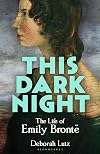
As I might have mentioned in previous reviews, Emily Bronte is my girl. I am 100% Team Emily, and I even have a badge from the Parsonage to prove it. Not only do we share a birthday - along with Kate Bush - but a birthplace (well, close enough) and an approach to life. I have read other biographies of Emily, most notably Edward Chatham's brief and factual epitome, and was of course drawn to this new title. I had the hardback on pre-order, before reading very mixed reviews, and then I decided show more to err on the side of caution and listen for 'free' on Audible, my cheat for new titles I don't want to pay for. (The voice artist was fair, apart from her West Country 'Yorkshire' accent and struggle with local place names.)
Were the less glowing reviews that put me off accurate? As the author acknowledges, little is known of Emily as almost none of her papers, personal or fictional survive, and so any biography of her inevitably falls into two traps: guesswork and supposition, mostly based on her writing, and including the whole family to pad out Emily's story. Deborah Lutz does both, and includes yet more filler in the form of long, drawn out passages about 'Bronte's time and her place in it' and 'the texture of her days'. So we get descriptions of Emily washing herself in the morning and lists of sites the family 'might have' viewed while passing through London. 'Probably', 'may have' and 'why not both?' do a lot of heavy lifting throughout, as do modern interpretations of Victorian women's lives, as is noted in the foreword - forewarned is forearmed, I suppose.
One review mentioned that this is a biography for Bronte enthusiasts rather than the general reader, which I would most wholeheartedly refute. The author feels the need to explain not only that Charlotte wrote Jane Eyre but also that the plot of Wuthering Heights needs recounting. And as the whole family are packed in, plus many familiar 'anecdotes' like the collapse of the peat bog, Patrick firing his gun every morning and Emily being bitten by a dog, no background expertise is required. Fans of the 2026 adaptation of "Wuthering Heights", for example, who eagerly sought out the novel after watching the movie, expecting a romance but finding a complex gothic generational horror story written in 'old English', are probably the target demographic.
The rest is supposition and wild speculation - in that, a little background knowledge would probably help in sorting the wheat from the chaff. To borrow Virginia Woolf's words from the author, Lutz is very keen to 'free life from its dependence on facts'. For a start, apparently everything the Brontës said or did is tied to the deaths of their mother and two elder sisters, 'despite the fact that [Emily] may not consciously have remembered it'. Lutz has a morbid fascination with the family crypt in St Michael's, Haworth, despite that being Patrick's church; she talks about Emily witnessing the crypt being reopened and burials in the churchyard like she was surrounded by corpses and coffins didn't exist (and this is obviously what inspired Heathcliff digging up Catherine's perfectly preserved body).
Other leaps in logic are made and then questioned - Emily's drawing of a window in which 'some claim to see a hand emerging, especially when the drawing is inverted'; a juvenilia poem of Charlotte's suggesting that 'Emily overindulged [in her aunt's store of alcohol] when the adults weren't looking'; Emily 'may have' been introduced to Anne Lister while working at Law Hill, while her claims of being treated like a slave there were obviously exaggerated (yet Cowan Bridge must have been reported accurately); and every word written by Emily of course need have some psychological significance, at the same time as 'these poems might have nothing to do with Emily's emotional make-up'. The author's constant dance of two leaps forward and one step back made me wonder if she wasn't channelling Elizabeth 'National Enquirer' Gaskell, who did the very same thing to Charlotte.
The attention-grabbing theories that really annoyed me, and which could belong to Bronte 'scholars' or the author herself, include Emily being 'banished' to Roe Head - where Charlotte was already teaching - because 'she may have become romantically entangled with a young man - or a young woman'! There is absolutely no evidence that Emily ever had a romance with either sex, but Lutz claims that Patrick asking Elizabeth Firth to look out for his daughters and Emily making herself ill, which even Charlotte knew was homesickness, proves that she was 'in exile' there. Or to employ Lutz's favourite phrase, 'But it could also be both.'
Lutz then doubles down and throws in a possible 'romantic attachment with a fellow teacher' at Law Hill because of a poem - written as part of Emily's Gondal fantasy, not reality - and also that 'it's tempting to imagine that Emily and Anne Lister met', while acknowledging that they were in no way part of the same social scene.
Branwell also gets a target slapped on his back from a letter to sexton John Brown - yes, the same one who sold out the family after Charlotte's death to cash in on Gaskell's book - where he teases his friend about his 'manhood'. But then, Branwell was also 'having sex and getting female servants pregnant'.
Every statement and event in this book has the potential to be a scandal or a gothic trope. Stories are always been told about Emily, and the family become part of local legend, as with the quite plainly false accusation that Emily beat her dog about the head to teach him a lesson (Gaskell, again), when she loved animals more than people. Ponden Kirk means 'the devil's church', while Halifax is not 'an area of coarse grass in a nook of land' but a fanciful tale about a young virgin being beheaded and her hair turning into trees. Or something. Emily was obsessed with Satan! She had a 'weird, witchy and violent' sense of humour!
The bones of Emily Bronte, apologies for the gothic imagery, are there, but buried under fanciful claims, oft repeated lore, and modern interpretations. To use another quote from the introduction, this biography is 'a collection of holes tied together with string'. We also get entire chapters dedicated to Charlotte in Roe Head/Brussels, and lengthy and unnecessary synopses of Wuthering Heights. I loved reading about Emily's forthright nature and 'not suffering fools gladly', her 'regularity papers' and fair copy notebooks, the way she would slip into a room with company, grab her book and walk out without speaking, her love of animals, and details of some of the papers recovered from the Honresfield Library - that's my Emily. Not autistic, not disabled, just not willing to play the game, like Charlotte. She died young and yet still suffers, from her own sister's bowdlerisation of her writing, and now shallow adaptations of her novel, misogynistic biopics and glory seeking biographies. Leave her alone! show less
Were the less glowing reviews that put me off accurate? As the author acknowledges, little is known of Emily as almost none of her papers, personal or fictional survive, and so any biography of her inevitably falls into two traps: guesswork and supposition, mostly based on her writing, and including the whole family to pad out Emily's story. Deborah Lutz does both, and includes yet more filler in the form of long, drawn out passages about 'Bronte's time and her place in it' and 'the texture of her days'. So we get descriptions of Emily washing herself in the morning and lists of sites the family 'might have' viewed while passing through London. 'Probably', 'may have' and 'why not both?' do a lot of heavy lifting throughout, as do modern interpretations of Victorian women's lives, as is noted in the foreword - forewarned is forearmed, I suppose.
One review mentioned that this is a biography for Bronte enthusiasts rather than the general reader, which I would most wholeheartedly refute. The author feels the need to explain not only that Charlotte wrote Jane Eyre but also that the plot of Wuthering Heights needs recounting. And as the whole family are packed in, plus many familiar 'anecdotes' like the collapse of the peat bog, Patrick firing his gun every morning and Emily being bitten by a dog, no background expertise is required. Fans of the 2026 adaptation of "Wuthering Heights", for example, who eagerly sought out the novel after watching the movie, expecting a romance but finding a complex gothic generational horror story written in 'old English', are probably the target demographic.
The rest is supposition and wild speculation - in that, a little background knowledge would probably help in sorting the wheat from the chaff. To borrow Virginia Woolf's words from the author, Lutz is very keen to 'free life from its dependence on facts'. For a start, apparently everything the Brontës said or did is tied to the deaths of their mother and two elder sisters, 'despite the fact that [Emily] may not consciously have remembered it'. Lutz has a morbid fascination with the family crypt in St Michael's, Haworth, despite that being Patrick's church; she talks about Emily witnessing the crypt being reopened and burials in the churchyard like she was surrounded by corpses and coffins didn't exist (and this is obviously what inspired Heathcliff digging up Catherine's perfectly preserved body).
Other leaps in logic are made and then questioned - Emily's drawing of a window in which 'some claim to see a hand emerging, especially when the drawing is inverted'; a juvenilia poem of Charlotte's suggesting that 'Emily overindulged [in her aunt's store of alcohol] when the adults weren't looking'; Emily 'may have' been introduced to Anne Lister while working at Law Hill, while her claims of being treated like a slave there were obviously exaggerated (yet Cowan Bridge must have been reported accurately); and every word written by Emily of course need have some psychological significance, at the same time as 'these poems might have nothing to do with Emily's emotional make-up'. The author's constant dance of two leaps forward and one step back made me wonder if she wasn't channelling Elizabeth 'National Enquirer' Gaskell, who did the very same thing to Charlotte.
The attention-grabbing theories that really annoyed me, and which could belong to Bronte 'scholars' or the author herself, include Emily being 'banished' to Roe Head - where Charlotte was already teaching - because 'she may have become romantically entangled with a young man - or a young woman'! There is absolutely no evidence that Emily ever had a romance with either sex, but Lutz claims that Patrick asking Elizabeth Firth to look out for his daughters and Emily making herself ill, which even Charlotte knew was homesickness, proves that she was 'in exile' there. Or to employ Lutz's favourite phrase, 'But it could also be both.'
Lutz then doubles down and throws in a possible 'romantic attachment with a fellow teacher' at Law Hill because of a poem - written as part of Emily's Gondal fantasy, not reality - and also that 'it's tempting to imagine that Emily and Anne Lister met', while acknowledging that they were in no way part of the same social scene.
Branwell also gets a target slapped on his back from a letter to sexton John Brown - yes, the same one who sold out the family after Charlotte's death to cash in on Gaskell's book - where he teases his friend about his 'manhood'. But then, Branwell was also 'having sex and getting female servants pregnant'.
Every statement and event in this book has the potential to be a scandal or a gothic trope. Stories are always been told about Emily, and the family become part of local legend, as with the quite plainly false accusation that Emily beat her dog about the head to teach him a lesson (Gaskell, again), when she loved animals more than people. Ponden Kirk means 'the devil's church', while Halifax is not 'an area of coarse grass in a nook of land' but a fanciful tale about a young virgin being beheaded and her hair turning into trees. Or something. Emily was obsessed with Satan! She had a 'weird, witchy and violent' sense of humour!
The bones of Emily Bronte, apologies for the gothic imagery, are there, but buried under fanciful claims, oft repeated lore, and modern interpretations. To use another quote from the introduction, this biography is 'a collection of holes tied together with string'. We also get entire chapters dedicated to Charlotte in Roe Head/Brussels, and lengthy and unnecessary synopses of Wuthering Heights. I loved reading about Emily's forthright nature and 'not suffering fools gladly', her 'regularity papers' and fair copy notebooks, the way she would slip into a room with company, grab her book and walk out without speaking, her love of animals, and details of some of the papers recovered from the Honresfield Library - that's my Emily. Not autistic, not disabled, just not willing to play the game, like Charlotte. She died young and yet still suffers, from her own sister's bowdlerisation of her writing, and now shallow adaptations of her novel, misogynistic biopics and glory seeking biographies. Leave her alone! show less
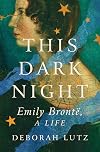
Coarse, strange, disagreeable went the general consensus–too gloomy, savage, and eccentric. from This Dark Night
“It’s as if her readers hadn’t caught up with her yet,” Deborah Lutz writes, “It would take close to a hundred years for that to happen.”
Emily Bronte’s novel Wuthering Heights grew out of the Bronte siblings’ years of story spinning. The isolated children were each other’s best friends and playmates and spent years creating a make believe world. Even into show more adulthood, Emily lived in two worlds–the everyday filled with household chores, and the imagined world of Gondor. She wrote poems inspired by the characters and incidents in that make believe place.
Emily may have had only one year of formal schooling, but she was brilliant, and she was brave and fearless. She was drawn to nature and animals, inspired by both beauty and the power of destruction.
All of those years of world-building had finally come to fruition. from This Dark Night
Her novel of passion, obsession, and violence can still shock today.
The child Heathcliff, “dark almost as if it came from the devil”, clearly foreign, referred to as an ‘it’. His adopted father’s favorite, upon the father’s death he is relegated to low servanthood by the heir. Heathcliff and Cathy share a wildness, but Cathy is seduced into polite society and marriage to another. Heathcliff’s spurned love and rejection fuels his vengeance and retribution.
After Emily’s death, the sole surviving sibling Charlotte edited and revised Wuthering Heights, twisting it into conformity. She also changed Emily’s poems, undercutting “their doubting nature.”
Emily’s life was short, and the bulk of her work was related to the Gondor world. All of the Bronte sisters died too young, and we regret the books they may have written. Charlotte was the most popular selling of them all, but after reading this biography, it is Emily who I regret the most.
Thanks to the publisher for a free book through NetGalley. show less
“It’s as if her readers hadn’t caught up with her yet,” Deborah Lutz writes, “It would take close to a hundred years for that to happen.”
Emily Bronte’s novel Wuthering Heights grew out of the Bronte siblings’ years of story spinning. The isolated children were each other’s best friends and playmates and spent years creating a make believe world. Even into show more adulthood, Emily lived in two worlds–the everyday filled with household chores, and the imagined world of Gondor. She wrote poems inspired by the characters and incidents in that make believe place.
Emily may have had only one year of formal schooling, but she was brilliant, and she was brave and fearless. She was drawn to nature and animals, inspired by both beauty and the power of destruction.
All of those years of world-building had finally come to fruition. from This Dark Night
Her novel of passion, obsession, and violence can still shock today.
The child Heathcliff, “dark almost as if it came from the devil”, clearly foreign, referred to as an ‘it’. His adopted father’s favorite, upon the father’s death he is relegated to low servanthood by the heir. Heathcliff and Cathy share a wildness, but Cathy is seduced into polite society and marriage to another. Heathcliff’s spurned love and rejection fuels his vengeance and retribution.
After Emily’s death, the sole surviving sibling Charlotte edited and revised Wuthering Heights, twisting it into conformity. She also changed Emily’s poems, undercutting “their doubting nature.”
Emily’s life was short, and the bulk of her work was related to the Gondor world. All of the Bronte sisters died too young, and we regret the books they may have written. Charlotte was the most popular selling of them all, but after reading this biography, it is Emily who I regret the most.
Thanks to the publisher for a free book through NetGalley. show less
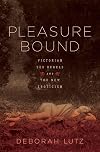
Lutz produces what amounts to an extended essay, a rumination almost, in nine interconnected chapters on the development of attitudes to sexuality amongst the rebel intelligensia of the British Victorian era.
There are other fuller accounts of the history of British sexuality to be found but this book has the virtue of readability and 'suggestiveness'. Lutz is not trying to push some agenda or thesis but lets the people she studies speak for themselves and us to draw our own conclusions.
She show more majors on two strong male figures - Dante Gabriel Rossetti and Richard Burton - with the camp flagellant poet Algernon Swinburne acting as a loose hinge between the two worlds they represent.
Using Rossetti and his circle as starting point, she gives us a flavour of the emotional and often unstable but fruitful exploration of heterosexuality which morphed into an increasing open-ness of soul to create a window for homosexuality in due course.
The Pre-Raphaelites became the Aesthetes. Arts & Crafts and then the Decadents. It is no surprise to see their free-thinking challenge (which often merged with political and social radicalism) eventually helping to trigger the reaction that we wrongly associate with the Victorian era.
There is a Foucauldian aspect to Lutz's analysis (although she name checks him only once), above all the process of shifting culture from a free-ranging if secretive sexuality without naming to the naming, partially medicalised, of sexual behaviours and thence to identity politics.
Lutz writes from New York (Norton must be congratulated on the high standard of bookmanship as publishers) so the origins of identity politics (which I happen to consider the most malign of Western liberal ideologies) are very relevant to the construction of the modern American.
To trace identity politics in its initial gay form (feminism, of course represents another story) to Edward Carpenter and the socialist circle around him reminds us what a neglected figure he can be, a bridge between Morris' romantic socialism and homosexual self-identification.
This story, of course, ends with the brutal repression of open homosexual expression in the destruction not only of Oscar Wilde but of the painter Simeon Solomon, a Jewish gay and so doubly an outsider, most of whose works were subsequently destroyed in disgust.
The sexual dark ages (which should be considered to be a later phenomenon stretching from war time in around 1916 to the 1960s) really start to be constructed around these trials and the evangelical societies seeking to suppress vice but there is a transitional phase.
After all, not covered by Lutz as out of her period, we have the major figure of Crowley to contend with in the first third of the next century who took the idea of the sexual and the foreign as evil and revelled in it to become the 'wickedest man on earth' and be rediscovered in the 1960s.
The link of sexual rebellion to late eighteenth century aristocratic free-thinking sexuality (the world of the Hellfire Club) and to the age of Crowley is beyond the scope of the writer but it is worth bearing in mind - sexual rebellion is an eternal because human beings are sexual creatures.
The second major figure covered in the author's impressionistic yet factual way is that remarkable genius of human observation Richard Burton whose anthropological researches into sexuality are nicely positioned within the Victorian obsession with categorisation and collecting.
Lutz changes our perception of his wife Isabel who was no prude as implied in the tale of his burning Burton's late papers but a canny collaborator equally interested in sexuality, transgression and problems of normality in an abnormally 'pseudo-normal' Victorian society.
Whereas the chapters arising from Rossetti are primarily about the arts (although there are remarkable connections between Rossetti's world and that of Burton), those related largely to Burton are about what might pass for Victorians as 'science' (meaning knowledge).
Just as the freedom agenda of the first group was ultimately to end up with the categorising and miserable dead end of identity politics so it could be argued that the studies of Burton's circles (truly subtle in their way) would lead accidentally to the worst of scientific sexology.
As with Karl Marx and Jesus Christ, it is those who follow you after your death who are likely to have depressed you most if you had remained alive. Isabel destroyed Burton's last papers but not without justification. Burton was closely investigating homosexuality in a very dangerous time.
The move from homosexuality just being something that is done (the doing of sodomy was the crime, not male/male love and affection) to being a category of 'being' is traced in the last half of the book. Identity politics might be seen as a necessary defensive reaction in that context.
The investigation of Burton (there is a fascinating fact or minor insight about sexuality in the Victorian era on virtually every page of this book) leads to an investigation of transgressional writing and pornography which positions it as as much scholarly as prurient.
The pornography of large-scale and initially criminal capitalist enterprise in the second half of the following century is very different from the artisanal and upper middle class pornography of the late nineteenth century.
This latter was more in the tradition of that of the French pre-revolutionary period. Its point was to transgress as much as and possibly more than to titillate. The cat and mouse game between the pornographers, with their upper class patrons, and the authorities remains fascinating.
Although modern identity politics and liberal mores would not appreciate the point, pornography was liberating and progressive as much as it was often (in its transgression) liable to extreme sexploitation and cruelty. The influence of De Sade was important.
Algernon Swinburne enters as a link between the two worlds early on - a paradoxical figure who would be regarded as exhibiting all the characteristics of camp gayness were we to observe him from our point in history yet was strongly anti-homosexual insofar as homosexuals were 'sods'.
His kink was flagellation which has since been dignified with the scientific invention of sado-masochism and been earnestly studied as such. Today it is a distinct sub-culture with complex consensual rules of behaviour but things were curiously different then.
As Lutz points out, beatings were normal in the nineteenth century, notably as discipline under all possible circumstances including education. Flagellation seems to have become sexualised because beatings took place just when young males were becoming sexual in all-male contexts.
This did not mean that flagellation and homosexuality were necessarily linked. Far from it. They were (and are) distinct worlds. Instead, we are presented with a curious 'pleasure' with its own network of participants and an infamous 'fladge' brothel, one of several, called Verbena Lodge.
This 'English vice' of beatings was notorious to foreigners whose tastes were more vanilla and less restricted (Paris was a centre for British pornographic production). Its dominance in not only British but American sexually transgressive culture not coincidentally lasted until the 1960s.
Swinburne's poetry (and the carefully chosen extracts of others in the book) gives some sense of what it felt like to be engaged in sexual transgression and pleasure before either had to be defined, categorised, explained, apologised for or justified (which is the current state of affairs).
The book is a good read and leaves you with an almost dream-like sense of another world whose shadows we can still see in our own. There are insights not only into sexuality but class and politics even if Lutz has neither time nor interest in balancing the story with tales of 'normality'.
It has to be remembered throughout that artists and transgressional members of the upper middle class were always a small minority in a society that can justifiably called (though no less than ours) 'hypocritical' because hypocrisy seems to be the only way we can all get along together in practice.
Nevertheless, these figures were all 'enablers' of change simply by existing. One cannot imagine the sexual revolution of the 1960s and 1970s entirely without Crowley and Crowley is unlikely to have existed without the example of Swinburne. Burton's researches underpin our tolerances today.
Looked at objectively, most people are going to be 'voyeurs' (another distinctive and categorisable sexual practice), timidly preferring others to do their transgressions for them. Authoritarians are always going to try and wipe these transgressors from our view.
The point about transgressors is that, even when they are fundamentally harmless, as Rossetti was, they open doors and through these doors step ever more radical ideas of freedom until eventually the freedom more than shocks society. It has to be regarded as criminal.
For example, the notion of consent is central to our contemporary sexuality but it was not so during this period. There was no truck with slavery, of course, but Sadean impulses existed and class power played its role in permitting freedoms not permitted to the masses.
The most shocking difference would probably have been the acceptance of ephebophilia as normal if not strict paedophilia. It does not need to be said that women have little agency in the story even if there are very strong female figures in Rossetti's circle and, of course, Isabel Burton is a fact.
Transgression requires a very clear idea of what you are transgressing against and why you are doing so. In the end, seen in this light, transgression becomes an existential act where you take responsibility for the consequences - Jean Genet being the notable example.
From this perspective, the Burton circle (notably the Cannibal Club) were extreme existentialists (or would that be narcissists or psychopaths) 'avant la lettre'. They were well aware of the potentially damaging consequences and did it anyway. Rabelais ruled as much as De Sade.
Taking on the social without understanding is like trying make a table without tools. The result will be dysfunctional and rickety. From this perspective, much of Victorian transgression was just hitting out at normality simply to express a different personal reality.
Some were severely damaged by this - Simeon Solomon and Oscar Wilde most notably. Others managed their transgression to become controversial but tolerated figures. Perhaps only Burton seemed to have some sort of philosophy of transgression that might change society.
Social change came any way but it is probable that we (in the West) still have not developed much progress on healthy transgression and freedom. Things have been lost as well as gained over the last 120 years. Foucault had a point. show less
There are other fuller accounts of the history of British sexuality to be found but this book has the virtue of readability and 'suggestiveness'. Lutz is not trying to push some agenda or thesis but lets the people she studies speak for themselves and us to draw our own conclusions.
She show more majors on two strong male figures - Dante Gabriel Rossetti and Richard Burton - with the camp flagellant poet Algernon Swinburne acting as a loose hinge between the two worlds they represent.
Using Rossetti and his circle as starting point, she gives us a flavour of the emotional and often unstable but fruitful exploration of heterosexuality which morphed into an increasing open-ness of soul to create a window for homosexuality in due course.
The Pre-Raphaelites became the Aesthetes. Arts & Crafts and then the Decadents. It is no surprise to see their free-thinking challenge (which often merged with political and social radicalism) eventually helping to trigger the reaction that we wrongly associate with the Victorian era.
There is a Foucauldian aspect to Lutz's analysis (although she name checks him only once), above all the process of shifting culture from a free-ranging if secretive sexuality without naming to the naming, partially medicalised, of sexual behaviours and thence to identity politics.
Lutz writes from New York (Norton must be congratulated on the high standard of bookmanship as publishers) so the origins of identity politics (which I happen to consider the most malign of Western liberal ideologies) are very relevant to the construction of the modern American.
To trace identity politics in its initial gay form (feminism, of course represents another story) to Edward Carpenter and the socialist circle around him reminds us what a neglected figure he can be, a bridge between Morris' romantic socialism and homosexual self-identification.
This story, of course, ends with the brutal repression of open homosexual expression in the destruction not only of Oscar Wilde but of the painter Simeon Solomon, a Jewish gay and so doubly an outsider, most of whose works were subsequently destroyed in disgust.
The sexual dark ages (which should be considered to be a later phenomenon stretching from war time in around 1916 to the 1960s) really start to be constructed around these trials and the evangelical societies seeking to suppress vice but there is a transitional phase.
After all, not covered by Lutz as out of her period, we have the major figure of Crowley to contend with in the first third of the next century who took the idea of the sexual and the foreign as evil and revelled in it to become the 'wickedest man on earth' and be rediscovered in the 1960s.
The link of sexual rebellion to late eighteenth century aristocratic free-thinking sexuality (the world of the Hellfire Club) and to the age of Crowley is beyond the scope of the writer but it is worth bearing in mind - sexual rebellion is an eternal because human beings are sexual creatures.
The second major figure covered in the author's impressionistic yet factual way is that remarkable genius of human observation Richard Burton whose anthropological researches into sexuality are nicely positioned within the Victorian obsession with categorisation and collecting.
Lutz changes our perception of his wife Isabel who was no prude as implied in the tale of his burning Burton's late papers but a canny collaborator equally interested in sexuality, transgression and problems of normality in an abnormally 'pseudo-normal' Victorian society.
Whereas the chapters arising from Rossetti are primarily about the arts (although there are remarkable connections between Rossetti's world and that of Burton), those related largely to Burton are about what might pass for Victorians as 'science' (meaning knowledge).
Just as the freedom agenda of the first group was ultimately to end up with the categorising and miserable dead end of identity politics so it could be argued that the studies of Burton's circles (truly subtle in their way) would lead accidentally to the worst of scientific sexology.
As with Karl Marx and Jesus Christ, it is those who follow you after your death who are likely to have depressed you most if you had remained alive. Isabel destroyed Burton's last papers but not without justification. Burton was closely investigating homosexuality in a very dangerous time.
The move from homosexuality just being something that is done (the doing of sodomy was the crime, not male/male love and affection) to being a category of 'being' is traced in the last half of the book. Identity politics might be seen as a necessary defensive reaction in that context.
The investigation of Burton (there is a fascinating fact or minor insight about sexuality in the Victorian era on virtually every page of this book) leads to an investigation of transgressional writing and pornography which positions it as as much scholarly as prurient.
The pornography of large-scale and initially criminal capitalist enterprise in the second half of the following century is very different from the artisanal and upper middle class pornography of the late nineteenth century.
This latter was more in the tradition of that of the French pre-revolutionary period. Its point was to transgress as much as and possibly more than to titillate. The cat and mouse game between the pornographers, with their upper class patrons, and the authorities remains fascinating.
Although modern identity politics and liberal mores would not appreciate the point, pornography was liberating and progressive as much as it was often (in its transgression) liable to extreme sexploitation and cruelty. The influence of De Sade was important.
Algernon Swinburne enters as a link between the two worlds early on - a paradoxical figure who would be regarded as exhibiting all the characteristics of camp gayness were we to observe him from our point in history yet was strongly anti-homosexual insofar as homosexuals were 'sods'.
His kink was flagellation which has since been dignified with the scientific invention of sado-masochism and been earnestly studied as such. Today it is a distinct sub-culture with complex consensual rules of behaviour but things were curiously different then.
As Lutz points out, beatings were normal in the nineteenth century, notably as discipline under all possible circumstances including education. Flagellation seems to have become sexualised because beatings took place just when young males were becoming sexual in all-male contexts.
This did not mean that flagellation and homosexuality were necessarily linked. Far from it. They were (and are) distinct worlds. Instead, we are presented with a curious 'pleasure' with its own network of participants and an infamous 'fladge' brothel, one of several, called Verbena Lodge.
This 'English vice' of beatings was notorious to foreigners whose tastes were more vanilla and less restricted (Paris was a centre for British pornographic production). Its dominance in not only British but American sexually transgressive culture not coincidentally lasted until the 1960s.
Swinburne's poetry (and the carefully chosen extracts of others in the book) gives some sense of what it felt like to be engaged in sexual transgression and pleasure before either had to be defined, categorised, explained, apologised for or justified (which is the current state of affairs).
The book is a good read and leaves you with an almost dream-like sense of another world whose shadows we can still see in our own. There are insights not only into sexuality but class and politics even if Lutz has neither time nor interest in balancing the story with tales of 'normality'.
It has to be remembered throughout that artists and transgressional members of the upper middle class were always a small minority in a society that can justifiably called (though no less than ours) 'hypocritical' because hypocrisy seems to be the only way we can all get along together in practice.
Nevertheless, these figures were all 'enablers' of change simply by existing. One cannot imagine the sexual revolution of the 1960s and 1970s entirely without Crowley and Crowley is unlikely to have existed without the example of Swinburne. Burton's researches underpin our tolerances today.
Looked at objectively, most people are going to be 'voyeurs' (another distinctive and categorisable sexual practice), timidly preferring others to do their transgressions for them. Authoritarians are always going to try and wipe these transgressors from our view.
The point about transgressors is that, even when they are fundamentally harmless, as Rossetti was, they open doors and through these doors step ever more radical ideas of freedom until eventually the freedom more than shocks society. It has to be regarded as criminal.
For example, the notion of consent is central to our contemporary sexuality but it was not so during this period. There was no truck with slavery, of course, but Sadean impulses existed and class power played its role in permitting freedoms not permitted to the masses.
The most shocking difference would probably have been the acceptance of ephebophilia as normal if not strict paedophilia. It does not need to be said that women have little agency in the story even if there are very strong female figures in Rossetti's circle and, of course, Isabel Burton is a fact.
Transgression requires a very clear idea of what you are transgressing against and why you are doing so. In the end, seen in this light, transgression becomes an existential act where you take responsibility for the consequences - Jean Genet being the notable example.
From this perspective, the Burton circle (notably the Cannibal Club) were extreme existentialists (or would that be narcissists or psychopaths) 'avant la lettre'. They were well aware of the potentially damaging consequences and did it anyway. Rabelais ruled as much as De Sade.
Taking on the social without understanding is like trying make a table without tools. The result will be dysfunctional and rickety. From this perspective, much of Victorian transgression was just hitting out at normality simply to express a different personal reality.
Some were severely damaged by this - Simeon Solomon and Oscar Wilde most notably. Others managed their transgression to become controversial but tolerated figures. Perhaps only Burton seemed to have some sort of philosophy of transgression that might change society.
Social change came any way but it is probable that we (in the West) still have not developed much progress on healthy transgression and freedom. Things have been lost as well as gained over the last 120 years. Foucault had a point. show less
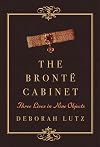
I have been fascinated with the three Brontë sisters – Charlotte, Emily, and Anne – ever since I first read Jane Eyre in my high school days. Even then, my voracious appetite led me to read all of their novels. When I started an English degree in order to do graduate work, the first class was in the summer before the full semester started. The second class I took was on British Women Writers. The class was intense. We read everything by the Brontës, along with all of Jane Austen, show more George Elliot, and Elizabeth Gaskill. This reading regimen exactly fulfilled all I had hoped for in my new adventure. When I saw a review of a Brontë biography by Deborah Lutz, The Brontë Cabinet: Three Lives in Nine Objects, I put everything else I was reading aside. Deborah is a Professor of English at Long Island University, and she lives in Brooklyn, New York. She has written several books on the Victorian period.
Each of the nine chapters delves into the personal lives of the three sisters by way of examining a variety of objects they used every day. The chapters include “Tiny Books” – my favorite – “Keeper, Grasper, and Other Family Animals,” and “The Alchemy of Desks.” Along with detailed descriptions in the nine chapters, is an array of photographs of the objects.
In the “Preface,” Lutz writes, “The Brontës scribbled, doodled, and inscribed in their books – stuck plants, drawings, visiting cards in them – making their presence manifest. Some of these well-used volumes transmitted even more than evidence of reading; they had a certain secret to them, which seemed to my nose, a fleshy smell. I was lucky to be able to touch (often without gloves), turn over, bring close, and even sniff the things I handled in libraries and museums” (Preface xxii). Few things give me more pleasure than opening a new book and drinking in the wonderful aroma of paper and ink. In the “Tiny Books” chapter, Lutz adds, “The Brontës felt an intimacy with these closely handled books, made by their own limbs and clothed with materials familiar from the kitchen or the parlor. This closeness of the body and the book was an ordinary feature of daily life in the nineteenth century, a relationship no longer obvious today” (23). I blame e-readers for the loss of the tactile sensations when holding a finely made new book.
In the chapter on “Family Animals,” Lutz explains, ‘For Emily, animals weren’t pets so much as they were family” (105). I can visualize Emily talking to her beloved Keeper as he cocks his head to one side, as our beloved Lab often does. The chapter has a drawing which “Emily immortalized [Keeper] in an expressive pencil portrait she did in January 1834” (115). This pencil drawing is included, along with the color pictures of his collar and a watercolor, also by Emily, of Keeper without his collar.
Deborah Lutz has written a warm, lovely, and informative look into the secret lives of Anne, Emily, and Charlotte Brontë. The Brontës Cabinet: Three Lives in Nine Objects is a delicious and wonderful trip to Haworth Parsonage in the middle of the 19th century. Take a walk on the Yorkshire moors and feel their presence.
--Chiron, 6/5/16 show less
Each of the nine chapters delves into the personal lives of the three sisters by way of examining a variety of objects they used every day. The chapters include “Tiny Books” – my favorite – “Keeper, Grasper, and Other Family Animals,” and “The Alchemy of Desks.” Along with detailed descriptions in the nine chapters, is an array of photographs of the objects.
In the “Preface,” Lutz writes, “The Brontës scribbled, doodled, and inscribed in their books – stuck plants, drawings, visiting cards in them – making their presence manifest. Some of these well-used volumes transmitted even more than evidence of reading; they had a certain secret to them, which seemed to my nose, a fleshy smell. I was lucky to be able to touch (often without gloves), turn over, bring close, and even sniff the things I handled in libraries and museums” (Preface xxii). Few things give me more pleasure than opening a new book and drinking in the wonderful aroma of paper and ink. In the “Tiny Books” chapter, Lutz adds, “The Brontës felt an intimacy with these closely handled books, made by their own limbs and clothed with materials familiar from the kitchen or the parlor. This closeness of the body and the book was an ordinary feature of daily life in the nineteenth century, a relationship no longer obvious today” (23). I blame e-readers for the loss of the tactile sensations when holding a finely made new book.
In the chapter on “Family Animals,” Lutz explains, ‘For Emily, animals weren’t pets so much as they were family” (105). I can visualize Emily talking to her beloved Keeper as he cocks his head to one side, as our beloved Lab often does. The chapter has a drawing which “Emily immortalized [Keeper] in an expressive pencil portrait she did in January 1834” (115). This pencil drawing is included, along with the color pictures of his collar and a watercolor, also by Emily, of Keeper without his collar.
Deborah Lutz has written a warm, lovely, and informative look into the secret lives of Anne, Emily, and Charlotte Brontë. The Brontës Cabinet: Three Lives in Nine Objects is a delicious and wonderful trip to Haworth Parsonage in the middle of the 19th century. Take a walk on the Yorkshire moors and feel their presence.
--Chiron, 6/5/16 show less
Lists
Awards


You May Also Like


Associated Authors
Statistics
- Works
- 6
- Also by
- 6
- Members
- 365
- Popularity
- #65,882
- Rating
- 4.3
- Reviews
- 14
- ISBNs
- 21
- Languages
- 1