
Nigel Cliff
Author of The Last Crusade: The Epic Voyages of Vasco da Gama
About the Author
Nigel Cliff is a historian and biographer. His first book, The Shakespeare Riots, was a finalist for the National Award for Arts Writing and was chosen as one of the Washington Post's best books of the year. His second book, The Last Crusade: The Epic Voyages of Vasco da Gama, was a New York Times show more Notable Book. His most recent book is a translation of The Travels by Marco Polo. A Former film and theater critic for The Times (London) and contributor to The Economist, he writes for a range of publications, including the New York Times Book Review. A fellow of Harris Manchester College, Oxford, he lives in London. show less
Works by Nigel Cliff
The Shakespeare Riots: Revenge, Drama, and Death in Nineteenth-Century America (2007) 103 copies, 3 reviews
Moscow Nights: The Van Cliburn Story-How One Man and His Piano Transformed the Cold War (2016) 100 copies, 6 reviews
HOLY WAR 1 copy
Associated Works
Tagged
Common Knowledge
- Birthdate
- 1969
- Gender
- male
- Nationality
- England
UK - Birthplace
- Manchester, Lancashire, England, UK
- Places of residence
- London, England, UK
- Associated Place (for map)
- England, UK
Members
Reviews
Holy War: How Vasco da Gama's Epic Voyages Turned the Tide in a Centuries-Old Clash of Civilizations by Nigel Cliff
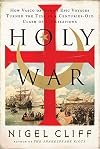
Nigel Cliff’s Holy War is a reinterpretation of the explorations conducted by Vasco da Gama. Specifically, he tells the story of the deeply flawed, fanatically religious, but very brave but edacious men who first sailed around the Cape of Good Hope from Portugal to India, and in the process broke up the monopoly of the spice trade that the Islamic world had exercised over Europe.
Cliff sets the stage for the main story by describing the early growth of Islam and the intolerance followers show more of Islam and Christianity had for one another. He observes, "The modern concept of Europe was born not from geography alone, nor simply from a shared religion. It slowly emerged among a patchwork of fractious peoples that found common purpose in their struggle with Islam.”
To Cliff, the original motivation behind the Portuguese expansion was not so much trade and profit, as it was religion and a desire to rid the world of Islam. (Cliff's interpretation asks the reader to choose between fanaticism and greed as motivators, not exactly a happy outcome in either event.)
To understand the remarkable events of the 15th and 16th centuries, modern readers must be aware of significant differences between current technology and our perception of the world and those of the people of that time. Navigation on the high seas was exceedingly difficult. Using Polaris, mariners could determine their latitude, but only in the Northern Hemisphere. More importantly, there was no known way of measuring longitude other than by estimating speed, direction, and time from a know starting point. The Americas remained undiscovered because sailors seldom ventured very far west from the European land mass. Indeed, the Portuguese discovered Brazil accidentally by straying farther west than they had intended while trying to find favorable winds to round Africa’s Cape of Good Hope!
The peoples of Europe and of the Middle East were at constant loggerheads with one another owing to religious differences. Because of the difficulties of traveling through Muslim lands, Europeans had only very infrequent contact with East Asians, and knew very little about China and India, except that they were the source of that era’s “gold” - spices. In the absence of refrigeration, food spoiled quickly and so spices (which grew in India and farther east, but not in Europe or the Islamic world) were relatively precious because they made food palatable.
In the 15th century, the Christians of Portugal and Spain were engaged in a bitter struggle with the Muslim Moors, who had conquered much of the Iberian Peninsula in the 8th century. In 1415, King John of Portugal initiated an aggressive campaign against the Muslims and astonished his contemporaries by conquering Ceuta, an important trading port on the African side of the Pillars of Hercules, in a single day. Cliff argues that that victory “left a legacy that would burden the ambitious young nation for centuries to come.”
The Portuguese were determined to find Prester John, a legendary king of a great Christian power to the south or east of the Muslim lands. They hoped to link up with him by sailing around Africa. In fact, there was a predominantly Christian country, Ethiopia, south of the Islamic world with which the Europeans had lost contact. However, it was nowhere near as powerful as they fancied.
The Portuguese began their southern quest in earnest in the 1440’s when their control of Ceuta proved to be a liability--the Muslims simply ignored it and traded with nearby Tangiers. Rounding Africa proved to be a daunting task: it took more than 50 years of exploring the west African coast before a small flotilla of three ships and about 160 men led by the intrepid Vasco da Gama actually made it to India in 1498. Da Gama’s mission was to win allies and wealth (including spices) that would enable Portugal to invade the Arab heartland and conquer Jerusalem. In the latter respect, he was unsuccessful, making more enemies than allies, and discovering that Islam had penetrated the African continent and even India much more than the Portuguese had believed. On the other hand, he was enormously successful in expanding European knowledge of geography and opening up a profitable trade in spices for Portugal.
The Portuguese were fortunate in their timing because the most powerful Muslim country of that time, the Ottoman Empire, was more concerned with expanding into southeast Europe and Iran than protecting trading opportunities in India. Consequently, the Portuguese were able to build forts and establish semi-permanent trading stations in India - Goa being the most prominent. From these fortified locations, the Portuguese traded profitably with the Indians and raided Muslim shipping from the Red Sea and the Arabian Gulf. However, the crusader spirit petered out in the 16th century when Prester John proved nowhere to be found and the profits from the spice trade and piracy directed against Arab shipping provided a greater incentive than religious zeal.
By 1600, the Portuguese monopoly of the seaway around Africa was ended as the English and the Dutch began to build strong navies and sought colonies in the East. Nevertheless, the long-term effects of the Portuguese expansion involved a significant shift of the balance of power between the Islamic world and Europe. Cliff summarizes: "As centuries of cribbed fantasies gave way to clearly charted facts, new mental as well geographical horizons opened up. Colonies were founded, churches sprang up in unheard-of places, and Islam’s supremacy no longer seemed unassailable. Vast wealth in natural resources—bullion, manpower, and of course spices—fell under Christian control, and at long last the West had the means to hold off and eventually repel the Ottoman challenge at its gates. But for that, the fate of much of Europe, the settlement of America, and the discovery of new worlds then unknown might have taken a very different path.”
But as to the Portuguese motivation, Cliff concludes: "In the end, the religious certainty that drove Vasco da Gama and his fellow explorer halfway around the world was also their undoing. For all their astonishing achievements, the idea of a Last Crusade—a holy war to end all holy wars—was always a crazy dream.”
Evaluation: This is a very enlightening and entertaining book. Cliff is a good raconteur, and his descriptions of the privations of the early explorers make riveting reading. Many ships were lost because of foul weather or just bad navigation, and the crews suffered horribly from scurvy. On the other hand, the Portuguese were far from sympathetic actors on the global stage; they were greedy and rapacious, often using their new-found superiority in naval artillery to slaughter Muslims or primitive Africans. Cliff asks that we understand Portuguese exploration as part of a "holy war" instead of a war for territory and land. He makes an interesting though not definitive case, but certainly provides much "spicy" food for thought.
(JAB) show less
Cliff sets the stage for the main story by describing the early growth of Islam and the intolerance followers show more of Islam and Christianity had for one another. He observes, "The modern concept of Europe was born not from geography alone, nor simply from a shared religion. It slowly emerged among a patchwork of fractious peoples that found common purpose in their struggle with Islam.”
To Cliff, the original motivation behind the Portuguese expansion was not so much trade and profit, as it was religion and a desire to rid the world of Islam. (Cliff's interpretation asks the reader to choose between fanaticism and greed as motivators, not exactly a happy outcome in either event.)
To understand the remarkable events of the 15th and 16th centuries, modern readers must be aware of significant differences between current technology and our perception of the world and those of the people of that time. Navigation on the high seas was exceedingly difficult. Using Polaris, mariners could determine their latitude, but only in the Northern Hemisphere. More importantly, there was no known way of measuring longitude other than by estimating speed, direction, and time from a know starting point. The Americas remained undiscovered because sailors seldom ventured very far west from the European land mass. Indeed, the Portuguese discovered Brazil accidentally by straying farther west than they had intended while trying to find favorable winds to round Africa’s Cape of Good Hope!
The peoples of Europe and of the Middle East were at constant loggerheads with one another owing to religious differences. Because of the difficulties of traveling through Muslim lands, Europeans had only very infrequent contact with East Asians, and knew very little about China and India, except that they were the source of that era’s “gold” - spices. In the absence of refrigeration, food spoiled quickly and so spices (which grew in India and farther east, but not in Europe or the Islamic world) were relatively precious because they made food palatable.
In the 15th century, the Christians of Portugal and Spain were engaged in a bitter struggle with the Muslim Moors, who had conquered much of the Iberian Peninsula in the 8th century. In 1415, King John of Portugal initiated an aggressive campaign against the Muslims and astonished his contemporaries by conquering Ceuta, an important trading port on the African side of the Pillars of Hercules, in a single day. Cliff argues that that victory “left a legacy that would burden the ambitious young nation for centuries to come.”
The Portuguese were determined to find Prester John, a legendary king of a great Christian power to the south or east of the Muslim lands. They hoped to link up with him by sailing around Africa. In fact, there was a predominantly Christian country, Ethiopia, south of the Islamic world with which the Europeans had lost contact. However, it was nowhere near as powerful as they fancied.
The Portuguese began their southern quest in earnest in the 1440’s when their control of Ceuta proved to be a liability--the Muslims simply ignored it and traded with nearby Tangiers. Rounding Africa proved to be a daunting task: it took more than 50 years of exploring the west African coast before a small flotilla of three ships and about 160 men led by the intrepid Vasco da Gama actually made it to India in 1498. Da Gama’s mission was to win allies and wealth (including spices) that would enable Portugal to invade the Arab heartland and conquer Jerusalem. In the latter respect, he was unsuccessful, making more enemies than allies, and discovering that Islam had penetrated the African continent and even India much more than the Portuguese had believed. On the other hand, he was enormously successful in expanding European knowledge of geography and opening up a profitable trade in spices for Portugal.
The Portuguese were fortunate in their timing because the most powerful Muslim country of that time, the Ottoman Empire, was more concerned with expanding into southeast Europe and Iran than protecting trading opportunities in India. Consequently, the Portuguese were able to build forts and establish semi-permanent trading stations in India - Goa being the most prominent. From these fortified locations, the Portuguese traded profitably with the Indians and raided Muslim shipping from the Red Sea and the Arabian Gulf. However, the crusader spirit petered out in the 16th century when Prester John proved nowhere to be found and the profits from the spice trade and piracy directed against Arab shipping provided a greater incentive than religious zeal.
By 1600, the Portuguese monopoly of the seaway around Africa was ended as the English and the Dutch began to build strong navies and sought colonies in the East. Nevertheless, the long-term effects of the Portuguese expansion involved a significant shift of the balance of power between the Islamic world and Europe. Cliff summarizes: "As centuries of cribbed fantasies gave way to clearly charted facts, new mental as well geographical horizons opened up. Colonies were founded, churches sprang up in unheard-of places, and Islam’s supremacy no longer seemed unassailable. Vast wealth in natural resources—bullion, manpower, and of course spices—fell under Christian control, and at long last the West had the means to hold off and eventually repel the Ottoman challenge at its gates. But for that, the fate of much of Europe, the settlement of America, and the discovery of new worlds then unknown might have taken a very different path.”
But as to the Portuguese motivation, Cliff concludes: "In the end, the religious certainty that drove Vasco da Gama and his fellow explorer halfway around the world was also their undoing. For all their astonishing achievements, the idea of a Last Crusade—a holy war to end all holy wars—was always a crazy dream.”
Evaluation: This is a very enlightening and entertaining book. Cliff is a good raconteur, and his descriptions of the privations of the early explorers make riveting reading. Many ships were lost because of foul weather or just bad navigation, and the crews suffered horribly from scurvy. On the other hand, the Portuguese were far from sympathetic actors on the global stage; they were greedy and rapacious, often using their new-found superiority in naval artillery to slaughter Muslims or primitive Africans. Cliff asks that we understand Portuguese exploration as part of a "holy war" instead of a war for territory and land. He makes an interesting though not definitive case, but certainly provides much "spicy" food for thought.
(JAB) show less
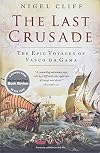
often "Racy" and "Nail biting " are not the adjectives I tend to associate with non fiction, but I couldn't find better words to describe the book. The narration is worthy of a Hollywood screenplay. European naval warfare and crusades intrigue me and this book catered to my cravings. Throughly researched and wonderfully narrated.
Moscow Nights: The Van Cliburn Story-How One Man and His Piano Transformed the Cold War by Nigel Cliff
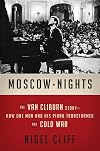
Engrossing story of how Texan pianist Van Cliburn won the first International Tchaikovsky Competition -- and the hearts of the Russian people -- at a time when tensions between the US and the USSR were almost at a breaking point. The author does an excellent job at placing Cliburn's story in the broader international context. Fascinating details emerge about the post-Stalin world of Nikita Khrushchev, who emerges as an interesting figure. -- A little languor crept in for a chapter or two show more (following the competition, as Cliburn temporarily recedes into the background), but, on the whole, a splendid achievement: part biography, part cultural/political history. show less
Moscow Nights: The Van Cliburn Story-How One Man and His Piano Transformed the Cold War by Nigel Cliff
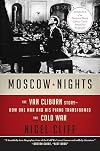
A really fascinating account of the pianist Van Cliburn and his attachment to Russia, and how that attachment affected his own life and Cold War politics. I knew nothing about this story at all when I picked up the book -- I knew nothing about Van Cliburn except that he was a pianist -- so I learned quite a bit. I think the author does a good job of describing the atmosphere of the Cold War and, later, the Cuban Missile Crisis, and also making it clear why the American intelligence community show more viewed Van Cliburn with some suspicion after his competition win in Russia.
Cliburn himself comes across as shockingly naive and more than a bit full of himself (at one point he arrives in Washington for a concert, realizes he doesn't have his tuxedo, and calls President Lyndon Johnson to see if he could borrow one -- Johnson obliged). It's believable, given his sheltered upbringing in a small Texas town and the behavior of his ever-present mother, who took helicopter parenting to a whole new level. But by the time the book reached the Sixties I was getting frustrated with him myself, so I can only imagine how exasperating he must have been to deal with.
And one of the few frustrations of the book is that you don't really get a sense of how the people around Cliburn dealt with him. I wouldn't call this a bio; its hyper-focus on Cliburn and Russia means that you don't get a full understanding of what he was like as a person, what his relationship with his mother was like, how he dealt with conflicts between his sexuality (he was gay) and his deep religious beliefs, or really anything else other than his attachment to Russia. That's not really a shortcoming of the book -- the subtitle makes it pretty clear what Cliff wants to focus on in this book -- but it did leave me wanting to know more. show less
Cliburn himself comes across as shockingly naive and more than a bit full of himself (at one point he arrives in Washington for a concert, realizes he doesn't have his tuxedo, and calls President Lyndon Johnson to see if he could borrow one -- Johnson obliged). It's believable, given his sheltered upbringing in a small Texas town and the behavior of his ever-present mother, who took helicopter parenting to a whole new level. But by the time the book reached the Sixties I was getting frustrated with him myself, so I can only imagine how exasperating he must have been to deal with.
And one of the few frustrations of the book is that you don't really get a sense of how the people around Cliburn dealt with him. I wouldn't call this a bio; its hyper-focus on Cliburn and Russia means that you don't get a full understanding of what he was like as a person, what his relationship with his mother was like, how he dealt with conflicts between his sexuality (he was gay) and his deep religious beliefs, or really anything else other than his attachment to Russia. That's not really a shortcoming of the book -- the subtitle makes it pretty clear what Cliff wants to focus on in this book -- but it did leave me wanting to know more. show less
Lists
Awards


You May Also Like


Statistics
- Works
- 6
- Also by
- 2
- Members
- 548
- Popularity
- #45,523
- Rating
- 3.8
- Reviews
- 18
- ISBNs
- 18
- Languages
- 3