So the Wind Won't Blow It All Away
by Richard Brautigan
On This Page
Description
It is 1979, and a man recalls the events of his twelfth summer, when he bought bullets for his gun instead of a hamburger. The youthful protagonist accidentally kills his best friend with a gun, and the novel deals with the repercussions of this tragedy and its recurring theme of "what if.".Tags
Recommendations


























Member Recommendations
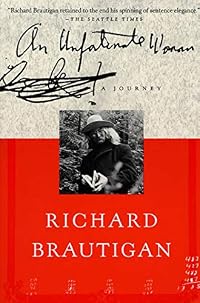
CGlanovsky characters haunted by childhood accidental shooting deaths, non-linear chronology, written in the same year
Member Reviews
Tündérmese egy elfelejtett Amerikáról, aminek nyomait úgy fújta szét a szél, mint a pernyét. Csakhogy az író egyben okleveles bányász is, aki képes lemerülni saját emlékeinek sötét tárnáiba, hogy felszínre hozzon ezt-azt a mélyből. Így születnek a gyermekkor-regények. (Aztán hogy ez a gyermekkor konkrétan az íróé, vagy valami fiktív entitásé - vagy, mint általában: is-is -, arról vitatkozzanak a kritikusok.) Kisregény, minimemoár, nem csak terjedelmében, hanem céljaiban is: egy jól körülhatárolt kort és hangulatot kíván kismesteri eszközökkel megragadni. Van benne egy központi kérdés, egy dermesztő döntéshelyzet: hogy az ember gyereke ott áll, csörög a zsebében az a semmi kis show more pénze, és azon tépelődik, hamburgert vegyen-e, vagy töltényt a fasza .22-es puskájába. És persze rosszul dönt. Ebből már mind tudjuk, mire fog kifutni az egész, nem fogunk meglepődni a szemünk előtt kibontakozó tragédián. De nem is a meglepetés a lényeg. Hanem a nyelv. Az a játékos, életteli, őszinte és hajlékony, vidám és szomorú nyelv, amin ez az egész el van mondva*. Ez a brautigani nyelv az, amitől az egész szöveg napfényes tisztás lesz. Pici tisztás, talán jelentéktelen tisztás, de jó rajta időzni, feküdni háton, és nézni, ahogy a zivatarfelhő egyre közelebb lopódzik.
* Bár a fordítás néha-néha döccen kicsit. Az „iskolai hajrákórus” szókapcsolatot ma már Gy. Horváth László is bizonyára tűzzel-vassal pusztítaná ki a szövegből. show less
B (Good).
Recollections of childhood leading up to a shooting accident. A more straight-forward, "normal" story than you usually get from Brautigan.
(Apr. 2024)
Recollections of childhood leading up to a shooting accident. A more straight-forward, "normal" story than you usually get from Brautigan.
(Apr. 2024)
Interesting that Brautigan could foretell what was to come in our present day while looking back in regards to the innocence of boys growing up after WWII who would think nothing of riding their bikes through town, rifles strapped to the handlebars, out to the woods and fields in order to shoot their 22's at cans, or rotten apples, or even a pheasant or two if they could scare one up. Today these kids would be considered terrorists or a potential Adam Lanza. Brautigan remarked within these pages that kids even in 1978 would not be able to partake in this fun activity without drawing the wrath of the townspeople and their authority.
Not much has really changed though regarding the basic shitty family and their like. They keep on show more producing more offspring just like them and it, we know, is a cycle that is very hard to change. This novel is much too serious for my tastes, and the creepiness of it all is the voice of Brautigan's narrator who says he is forty-three or some such age and yet he still sounds like a kid speaking. Of course, Richard Brautigan always sounded like a kid to me in everything that I read of what he wrote. Somehow this title escaped me, but I think I was already pretty much over Brautigan by the time he wrote this book and then killed himself not long after its publication.
I have a feeling that in the future, that is if I even have much additional time left, that I might be haunted by these words of his every so often when I least expect it. His fat folks on the pond fishing from the comfort of a large couch hauled in on the back of their pickup. The old cook stove and the hamburgers it would make even in light of their nightly catch of at least fifteen catfish each. The fact that they called one another Mother and Father when they rarely would speak sent a chill down my spine that hasn't gone away quite yet. And I won't forget too soon Brautigan's strong image of the old man at the other end of the pond where the bluegills hid, as he did as well in his six by eight-foot discarded thrown-together pallet-shack. Haunting is the operative word. Even the extreme and wordy focus on the hamburger joint downtown and the fateful choice the narrator made between buying a box of shells or a burger and the affect it had on his life, and now mine.
There isn't much else to say about this smallish book. If you like Richard Brautigan I bet you'll like this. If you already hate Dick you will hate him even more because he definitely gets under your skin here. Obviously he hadn't had much luck with the girls as a young man growing up, and you can tell it here between these pages. He is something of a joke to most, but I sort of think the joke is kind of on us if you think about it hard as I have. But most people don't, that is, think about too much it seems these days while being bombarded by humongous flat-screen TVs and the social pages of our internet. But the good people here on goodreads are a different breed of cat. And that makes me glad even in light of how sad his story truly is. Richard Brautigan deserved better, as do most, and there really isn't anything much we can do about anything. But we'll keep trying and hoping some day we get it right. show less
Not much has really changed though regarding the basic shitty family and their like. They keep on show more producing more offspring just like them and it, we know, is a cycle that is very hard to change. This novel is much too serious for my tastes, and the creepiness of it all is the voice of Brautigan's narrator who says he is forty-three or some such age and yet he still sounds like a kid speaking. Of course, Richard Brautigan always sounded like a kid to me in everything that I read of what he wrote. Somehow this title escaped me, but I think I was already pretty much over Brautigan by the time he wrote this book and then killed himself not long after its publication.
I have a feeling that in the future, that is if I even have much additional time left, that I might be haunted by these words of his every so often when I least expect it. His fat folks on the pond fishing from the comfort of a large couch hauled in on the back of their pickup. The old cook stove and the hamburgers it would make even in light of their nightly catch of at least fifteen catfish each. The fact that they called one another Mother and Father when they rarely would speak sent a chill down my spine that hasn't gone away quite yet. And I won't forget too soon Brautigan's strong image of the old man at the other end of the pond where the bluegills hid, as he did as well in his six by eight-foot discarded thrown-together pallet-shack. Haunting is the operative word. Even the extreme and wordy focus on the hamburger joint downtown and the fateful choice the narrator made between buying a box of shells or a burger and the affect it had on his life, and now mine.
There isn't much else to say about this smallish book. If you like Richard Brautigan I bet you'll like this. If you already hate Dick you will hate him even more because he definitely gets under your skin here. Obviously he hadn't had much luck with the girls as a young man growing up, and you can tell it here between these pages. He is something of a joke to most, but I sort of think the joke is kind of on us if you think about it hard as I have. But most people don't, that is, think about too much it seems these days while being bombarded by humongous flat-screen TVs and the social pages of our internet. But the good people here on goodreads are a different breed of cat. And that makes me glad even in light of how sad his story truly is. Richard Brautigan deserved better, as do most, and there really isn't anything much we can do about anything. But we'll keep trying and hoping some day we get it right. show less
Let's say ****1/2. Very melancholy and lacking a lot of Brautigan's usual humor, but something about it affected me really deeply. There's a great ring of truth about it. I like Brautigan best when he's in that semi-autobiographical mode, where you can tell that what he's writing came from some personal experience, even if it's fictionalized on the page.
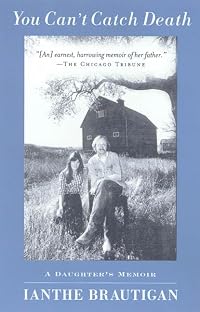
I first came across Richard Brautigans work through a short review of his novel "Sombrero Fallout". It was described as an off-beat, humorous novel. I bought it, read it and found it thoroughly amusing. There after I bought every book of his I could lay my hands on. The central character in Sombrero Fallout is a humorous novelist without a sense of humor who cannot understand why other people find his novels so funny. The more I read Brautigan, the less funny I found him, but I still enjoyed his books. He had a wonderful turn of phrase. Then I bought the subject of this review. It is the story of an episode in Brautigans life when he was a boy. He tells it with such clarity and economy that you are left with a feeling of having show more conversed and understood a ghost. I only read it once and don't think I could read it again. He committed suicide a few years later. Last year I read his daughters autobiography and memoir of her father "You can't catch Death". Again it was painful to read but beautiful too. I was left both happy and melancholic and also grateful to her for having written such a lovely book. I mad a great effort and read Brautigans last book after that. I may return to them one day but they remain treasured possessions. show less
Découvert Brautigan avec ce livre. Je ne saurais trop expliquer ce qui me plait le plus chez lui : la légèreté de son écriture ? La poésie qu'il insuffle à son récit ? La dextérité avec laquelle il manie l'émotion sans ne jamais en faire un matériau racoleur et vulgaire ? Son aisance à saisir et retranscrire fidèlement tous les petits détails liés à l'enfance, l'innocence, la vulnérabilité, l'impuissance, on retrouve tout cela dans la narration de Mémoire sauvés du vent. Un récit tragique traité avec sobriété, finesse, légèreté.
Sep 4, 2010French
Il dramma aleggia fin dalle prime pagine, eppure il tono è, a tratti, brioso, il che rende il tutto ancora più inquietante. La voce narrante è quella di un dodicenne che parla da adulto e al tempo stesso quella di un adulto nei suoi panni di dodicenne. Un racconto straniante, di un autore dalla personalità che si percepisce problematica e dalla vita difficile.
Sep 9, 2017Italian
Members
- Recently Added By
Author Information

61+ Works 14,760 Members
Awards and Honors
Notable Lists
Work Relationships
Common Knowledge
- Original title
- So the Wind Won't Blow It All Away
- Alternate titles*
- So the Wind Won't Blow It All Away
- Original publication date
- 1982
*Some information comes from Common Knowledge in other languages. Click "Edit" for more information.
Classifications
Statistics
- Members
- 398
- Popularity
- 77,913
- Reviews
- 8
- Rating
- (3.88)
- Languages
- 8 — Dutch, English, Estonian, French, German, Hungarian, Italian, Turkish
- Media
- Paper, Audiobook, Ebook
- ISBNs
- 28
- ASINs
- 6