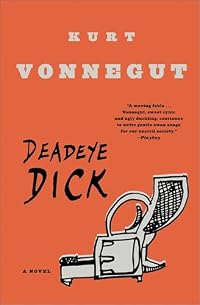
Deadeye Dick
by Kurt Vonnegut
On This Page
Description
Amid the horrors of a double murder and a city's annihilation by a neutron bomb, Rudy Waltz, a.k.a. Deadeye Dick, takes the reader on a zany search for absolution and happiness.Tags
Recommendations





Member Recommendations
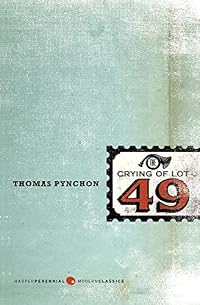
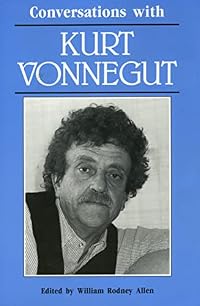
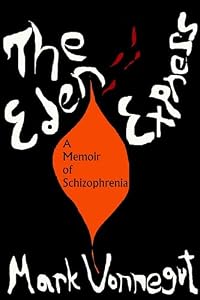
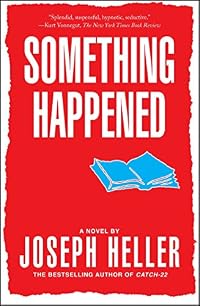
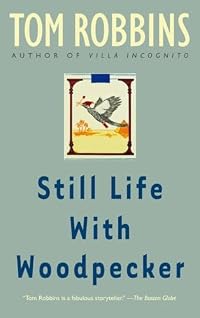
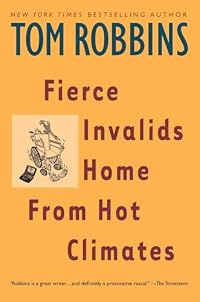
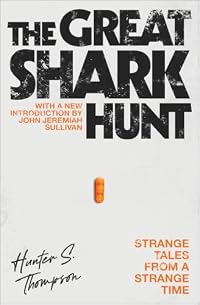
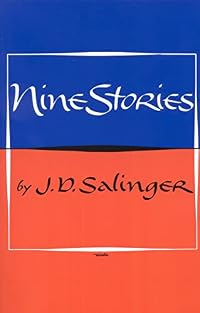
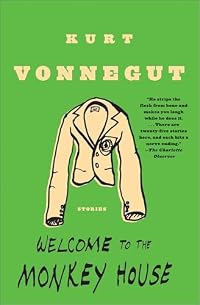
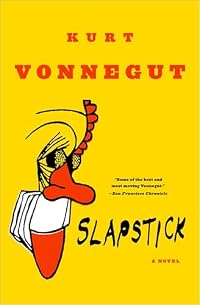
CGlanovsky Parallel novels: shared setting and characters

CGlanovsky Stories of kids haunted by accidental shooting deaths, non-linear chronology, written in the same year
Member Reviews
I’m a big fan of Kurt Vonnegut, and the fact that he was so clear-eyed in critiquing America in 1982, when nationalism was on the rise, makes me admire him all the more. Here he remarks on so many things: racism and Nazi sympathies in America, the callousness of the wealthy, the drug industry, and the development of the horrifying neutron bomb for starters (sardonically quipping about the latter, “Since all the property is undamaged, has the world lost anything it loved?”). He also makes points about conspiracy theories, American paranoia, and the gun culture of the NRA (and boy, he had seen nothing yet). As the quotes below attest to, when he makes a point that resonates, it’s like fire on the page.
Unfortunately, the story show more constructed in Deadeye Dick falters after a strong start, never really developing into the type of cohesive narrative that’s engaging. The recipes interspersed through the narrative seemed random. The device of shifting the narrative to a screenplay was overdone. There are little bits of information tacked on in places that seem purposeless, and could have used editing. At times I felt like he had just lost his way and gone off the rails, but the examples I thought about citing are hard to understand without context.
There are enough nuggets of brilliance to make this worth reading, but it could have used more vision in its plot, and ended up being just so-so for me.
These quotes are brilliant though:
On colonialism:
“…Haitian refugees should follow the precedent set by white people and simply discover Florida or Virginia or Massachusetts or whatever. They could come ashore, and start converting people to voodooism. It’s a widely accepted principle…that you can claim a piece of land which has been inhabited for tens of thousands of years, if only you will repeat this mantra endlessly: ‘We discovered it, we discovered it, we discovered it…’”
On humanity:
“You want to know something? We are still in the Dark Ages. The Dark Ages – they haven’t ended yet.”
From the husband of a victim of gun violence:
“My wife has been killed by a machine which should never have come into the hands of any human being. It is called a firearm. It makes the blackest of all human wishes come true at once, at a distance: that something die.
There is evil for you.
We cannot get rid of mankind’s fleetingly wicked wishes. We can get rid of the machines that make them come true.
I give you a holy word: DISARM.”
On life, and America:
“If a person survives an ordinary span of sixty years or more, there is every chance that his or her life as a shapely story has ended, and all that remains to be experienced is epilogue. Life is not over, but the story is. Some people, of course, find inhabiting an epilogue so uncongenial that they commit suicide. Ernest Hemingway comes to mind. … This could be true of nations, too. Nations might think of themselves as stories, and the stories end, but life goes on. Maybe my own country’s life as a story ended after the Second World War, when it was the richest and most powerful nation on earth, when it was going to ensure peace and justice everywhere, since it alone had the atom bomb.”
On meaninglessness:
“The corpse was a mediocrity who had broken down after a while. The mourners were mediocrities who would break down after a while. … The planet itself was breaking down. It was going to blow itself up sooner or later anyway, if it didn’t poison itself first. … There in the back of the church, I daydreamed a theory of what life was all about. I told myself that Mother and Felix and the Reverend Harrell and Dwayne Hoover and so on were cells in what was supposed to be one great big animal. There was no reason to take us seriously as individuals. Celia in her casket there, all shot through with Drano and amphetamine, might have been a dead cell sloughed off by a pancreas the size of the Milky Way.”
On mommy issues:
“I have a tendency, anyway, to swoon secretly in the presence of nurturing women, since my own mother was such a cold and aggressively helpless old bat.”
And finally, this classic:
“To be is to do” – Socrates
“To do is to be” – Jean-Paul Sartre
“Do be do be do” – Frank Sinatra show less
Unfortunately, the story show more constructed in Deadeye Dick falters after a strong start, never really developing into the type of cohesive narrative that’s engaging. The recipes interspersed through the narrative seemed random. The device of shifting the narrative to a screenplay was overdone. There are little bits of information tacked on in places that seem purposeless, and could have used editing. At times I felt like he had just lost his way and gone off the rails, but the examples I thought about citing are hard to understand without context.
There are enough nuggets of brilliance to make this worth reading, but it could have used more vision in its plot, and ended up being just so-so for me.
These quotes are brilliant though:
On colonialism:
“…Haitian refugees should follow the precedent set by white people and simply discover Florida or Virginia or Massachusetts or whatever. They could come ashore, and start converting people to voodooism. It’s a widely accepted principle…that you can claim a piece of land which has been inhabited for tens of thousands of years, if only you will repeat this mantra endlessly: ‘We discovered it, we discovered it, we discovered it…’”
On humanity:
“You want to know something? We are still in the Dark Ages. The Dark Ages – they haven’t ended yet.”
From the husband of a victim of gun violence:
“My wife has been killed by a machine which should never have come into the hands of any human being. It is called a firearm. It makes the blackest of all human wishes come true at once, at a distance: that something die.
There is evil for you.
We cannot get rid of mankind’s fleetingly wicked wishes. We can get rid of the machines that make them come true.
I give you a holy word: DISARM.”
On life, and America:
“If a person survives an ordinary span of sixty years or more, there is every chance that his or her life as a shapely story has ended, and all that remains to be experienced is epilogue. Life is not over, but the story is. Some people, of course, find inhabiting an epilogue so uncongenial that they commit suicide. Ernest Hemingway comes to mind. … This could be true of nations, too. Nations might think of themselves as stories, and the stories end, but life goes on. Maybe my own country’s life as a story ended after the Second World War, when it was the richest and most powerful nation on earth, when it was going to ensure peace and justice everywhere, since it alone had the atom bomb.”
On meaninglessness:
“The corpse was a mediocrity who had broken down after a while. The mourners were mediocrities who would break down after a while. … The planet itself was breaking down. It was going to blow itself up sooner or later anyway, if it didn’t poison itself first. … There in the back of the church, I daydreamed a theory of what life was all about. I told myself that Mother and Felix and the Reverend Harrell and Dwayne Hoover and so on were cells in what was supposed to be one great big animal. There was no reason to take us seriously as individuals. Celia in her casket there, all shot through with Drano and amphetamine, might have been a dead cell sloughed off by a pancreas the size of the Milky Way.”
On mommy issues:
“I have a tendency, anyway, to swoon secretly in the presence of nurturing women, since my own mother was such a cold and aggressively helpless old bat.”
And finally, this classic:
“To be is to do” – Socrates
“To do is to be” – Jean-Paul Sartre
“Do be do be do” – Frank Sinatra show less
Another example why I don't understand German translations of book and film titles. Although Rudy is frequently referred to as Deadeye Dick throughout the book they somehow thought it necessary to change the title.
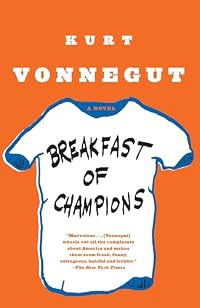
Like other books by Kurt Vonnegut, it looks like the author has a pessimistic view on the future of American society and the world as a whole. Some of the characters from Deadeye Dick also appear in Breakfast of Champions, one of my favourite books by him. Another parallel is the environmental pollution and destruction present in both books. Although in this book this dark premonition on ecological destruction clearly escalates with the detonation of the neutron bomb over Midland City. Aside from the bizarr story I also liked show more how some parts were written as a theatre scene (somehow reminden me of Tennesse Williams, don't know why) and the recipes strewn in for good measure.
I also love the unconventional little phrases that are so typical for Vonnegut. In this book it was him describing being born as a peephole opening. show less
Like other books by Kurt Vonnegut, it looks like the author has a pessimistic view on the future of American society and the world as a whole. Some of the characters from Deadeye Dick also appear in Breakfast of Champions, one of my favourite books by him. Another parallel is the environmental pollution and destruction present in both books. Although in this book this dark premonition on ecological destruction clearly escalates with the detonation of the neutron bomb over Midland City. Aside from the bizarr story I also liked show more how some parts were written as a theatre scene (somehow reminden me of Tennesse Williams, don't know why) and the recipes strewn in for good measure.
I also love the unconventional little phrases that are so typical for Vonnegut. In this book it was him describing being born as a peephole opening. show less
This novel concludes with ''You want to know something? We are still in the Dark Ages. The Dark Ages - they haven't ended yet.'' Tying this work from 1982 to today, its plot elements have issues still not yet resolved: the inherent danger of easy access to firearms, nuclear weapons and radioactive waste, and -- instead of the 'bad chemicals' in the brain, such as 'Bad chemicals and bad ideas were the Yin and Yang of madness.' (Breakfast of Champions) -- the bad chemicals around.
Much like "I Hung My Head", the song written by the Sting and released in 1996, this book tackles deeper and more philosophical themes of life and death, justice and redemption. Of course, In 2002, Johnny Cash covered the song on American IV: The Man Comes show more Around twenty years after this novel and this story of a boy who shoots a person and the resulting shame and consequences for many still has legs and raises uncomfortable issues. Is anyone to blame? Is the gun owner or the boy shooter? Is it a tragic accident and, like something ripped from the headlines, you have abusive cops, too.
show less
Much like "I Hung My Head", the song written by the Sting and released in 1996, this book tackles deeper and more philosophical themes of life and death, justice and redemption. Of course, In 2002, Johnny Cash covered the song on American IV: The Man Comes show more Around twenty years after this novel and this story of a boy who shoots a person and the resulting shame and consequences for many still has legs and raises uncomfortable issues. Is anyone to blame? Is the gun owner or the boy shooter? Is it a tragic accident and, like something ripped from the headlines, you have abusive cops, too.
show less
A witty, well written book! Poor Rudy - his life forever ruined by the power of a gun. The story is so interesting, and sad, I could hardly put it down! His dad was a good pal of Hitler? Flying a Nazi flag over his good ol' Midland City home? Which gets de-populated by a neutron bomb? Crazy! And interspersed in the story are some detailed recipes of Rudy's. Weird, huh? But it works, as only Vonnegut can do! Peepholes opening and closing.
My favorite thing about this book is it reads just like my own inner monologue when I'm telling myself my own story (the concept of which also comes up in this book). And yet is seems so tightly written that the character and the story almost feel like a true memoir at times. Vonnegut seems to know the facts of Rudy Waltz's life so well that he calls back to earlier events and references so effortlessly and casually that it seems like it must be real.
One of the Vonneguts I missed when it came out. Not his best, but that's okay with me. I like his style and there are always little gems scattered throughout. And he has a special way of riding the line between humor and heartbreak, which is where so much of real life happens.
https://www.goodreads.com/review/show/6048031777
Like many Vonnegut books, this is an almost rambling (coherently so) account from the protagonist about the circumstances of their life. Vonnegut is one of my favorite writers when it comes to satire, and this one explores guns and violence, the bomb, and to an extent small town life. It not my favorite of his writings, but I still enjoyed it.
Like many Vonnegut books, this is an almost rambling (coherently so) account from the protagonist about the circumstances of their life. Vonnegut is one of my favorite writers when it comes to satire, and this one explores guns and violence, the bomb, and to an extent small town life. It not my favorite of his writings, but I still enjoyed it.
Members
- Recently Added By
Lists

1980s
356 works; 23 members

Books Read in 2023
5,547 works; 144 members

Read
293 works; 4 members

Books Read in 2019
4,052 works; 110 members

Unread books
1,063 works; 87 members
Author Information

288+ Works 200,700 Members
The appeal of Kurt Vonnegut, especially to bright younger readers of the past few decades, may be attributed partly to the fact that he is one of the few writers who have successfully straddled the imaginary line between science-fiction/fantasy and "real literature." He was born in Indianapolis and attended Cornell University, but his college show more education was interrupted by World War II. Captured during the Battle of the Bulge and imprisoned in Dresden, he received a Purple Heart for what he calls a "ludicrously negligible wound." After the war he returned to Cornell and then earned his M.A. at the University of Chicago.He worked as a police reporter and in public relations before placing several short stories in the popular magazines and beginning his career as a novelist. His first novel, Player Piano (1952), is a highly credible account of a future mechanistic society in which people count for little and machines for much. The Sirens of Titan (1959), is the story of a playboy whisked off to Mars and outer space in order to learn some humbling lessons about Earth's modest function in the total scheme of things. Mother Night (1962) satirizes the Nazi mentality in its narrative about an American writer who broadcasts propaganda in Germany during the war as an Allied agent. Cat's Cradle (1963) makes use of some of Vonnegut's experiences in General Electric laboratories in its story about the discovery of a special kind of ice that destroys the world. God Bless You, Mr. Rosewater (1965) satirizes a benevolent foundation set up to foster the salvation of the world through love, an endeavor with, of course, disastrous results. Slaughterhouse-Five; or The Children's Crusade (1969) is the book that marked a turning point in Vonnegut's career. Based on his experiences in Dresden, it is the story of another Vonnegut surrogate named Billy Pilgrim who travels back and forth in time and becomes a kind of modern-day Everyman. The novel was something of a cult book during the Vietnam era for its antiwar sentiments. Breakfast of Champions (1973), the story of a Pontiac dealer who goes crazy after reading a science fiction novel by "Kilgore Trout," received generally unfavorable reviews but was a commercial success. Slapstick (1976), dedicated to the memory of Laurel and Hardy, is the somewhat wacky memoir of a 100-year-old ex-president who thinks he can solve society's problems by giving everyone a new middle name. In addition to his fiction, Vonnegut has published nonfiction on social problems and other topics, some of which is collected in Wampeters, Foma and Granfalloons (1974). He died from head injuries sustained in a fall on April 11, 2007. (Bowker Author Biography) show less
Awards and Honors
Distinctions
Series
Belongs to Publisher Series
Work Relationships
Common Knowledge
- Canonical title
- Deadeye Dick
- Original title
- Deadeye Dick
- Original publication date
- 1982
- People/Characters
- Rudy Waltz; Otto Waltz; August Gunther; Adolf Hitler; Gino Maritimo; Marco Maritimo (show all 12); Celia Hildreth; Dwayne Hoover; Mary Hoobler; Eloise Metzger; George Metzger; Eleanor Roosevelt
- Important places
- Haiti; Hispaniola; Midland City, Ohio, USA; Ohio, USA; Vienna, Austria
- Epigraph
- Who is Celia? What is she?
That all her swains commend her?
—Otto Waltz
(1892‒1960) - Dedication
- For Jill
- First words
- "Deadeye Dick," like "Barnacle Bill," is a nickname for a sailor.
To the as-yet-unborn, to all innocent wisps of undifferentiated nothingness: Watch out for life. - Quotations
- To the as-yet-unborn, to all innocent wisps of undifferentiated nothingness: Watch out for life.
I have caught life. I have come down with life. I was a wisp of undifferentiated nothingness, and then a little peephole open... (show all)ed quite suddenly.
That is my principal objection to life, I think: It is too easy, when alive, to make perfectly horrible mistakes.
“My wife has been killed by a machine which should never have come into the hands of any human being. It is called a firearm. It makes the blackest of all human wishes come true at once, at a distance: that something die.
“We cannot get rid of mankind's fleetingly wicked wishes. We can get rid of the machines that make them come true.
“I give you a holy word: DISARM.”
The late twentieth century will go down in history, I'm sure, as an era of pharmaceutical buffoonery. My own brother came home from New York City — bombed on Darvon and Ritalin and methaqualone and Valium, and God only know... (show all)s what all. He had prescriptions for every bit of it. He said he was home to discover his roots, but, after I heard about all the pills he was taking, I thought he would be lucky to find his own behind with both hands. I thought it was a miracle that he had even found the right exit off the Interstate.
You want to know something? We are still in the Dark Ages. The Dark Ages — they haven't ended yet. - Last words
- (Click to show. Warning: May contain spoilers.)You want to know something? We are still in the Dark Ages. The Dark Ages---they haven't ended yet.
- Original language
- English
Classifications
Statistics
- Members
- 4,249
- Popularity
- 3,550
- Reviews
- 27
- Rating
- (3.65)
- Languages
- 19 — Catalan, Chinese, Czech, Danish, Dutch, English, Estonian, Finnish, French, German, Hungarian, Italian, Japanese, Polish, Romanian, Slovak, Spanish, Swedish, Turkish
- Media
- Paper, Audiobook, Ebook
- ISBNs
- 49
- ASINs
- 25