On This Page
Description
'Charming, very funny indeed. Angela Thirkell is perhaps the most Pym-like of any twentieth-century author, after Pym herself' - Alexander McCall Smith Edgewood Rectory may be set in an ancient landscape, but the Grantly family are very much of their time. Caught up in the uncertain world that has emerged since the outbreak of peace, the Rector and Mrs Grantly are bewildered by the challenges facing their eldest children: Eleanor, longing for more excitement than can be found in the Red show more Cross Library; and Tom, struggling to readjust to student life at Oxford after his military service. When their elderly neighbour Miss Sowerby sells her beloved Old Bank House to self-made MP Sam Adams, the one-time outsider finds himself at the heart of Barsetshire society. And while Sam may dismiss her advice that the house needs a mistress, even a contented widower can be surprised by love. show lessTags
Recommendations



















Member Recommendations

Member Reviews
The Old Bank House is the eighteenth of Angela Thirkell’s Barsetshire novels. Set in the late 1940s, the citizens of Barsetshire have adjusted -- somewhat -- to peacetime and the post-war Labour government. MP and industrialist Sam Adams has decided to step back from day-to-day business operations. His daughter, Heather, will soon marry and this will leave Sam, a widower, on his own. He has bought a new home which, according to the previous owner, “needs a mistress.” Regular readers will immediately spot this foreshadowing, and know there will be at least one happy ending to this novel. Meanwhile, Young Tom Grantly has recently earned a classics degree at Oxford, but finds himself less interested in the academic career his degree show more prepared him for, and more interested in land work such as farming or estate management. Fortunately for Tom, he is well-liked and there are many who are willing to show him the ropes and give him opportunities to learn. And his sister Eleanor, although recently appointed to run the Red Cross Library, has greater aspirations.
The major Barsetshire families are brought in through the usual set pieces of garden parties, country house weekends, and “farm talk.” These are delivered with Thirkell’s characteristic humor, and advance the storylines in pleasing ways without becoming overly complicated. They are also a way for Thirkell to document life events for certain characters who, while not central to this novel, are pivotal to the series as a whole.
These are novels in which nothing much happens, but I always close the book feeling satisfied. show less
The major Barsetshire families are brought in through the usual set pieces of garden parties, country house weekends, and “farm talk.” These are delivered with Thirkell’s characteristic humor, and advance the storylines in pleasing ways without becoming overly complicated. They are also a way for Thirkell to document life events for certain characters who, while not central to this novel, are pivotal to the series as a whole.
These are novels in which nothing much happens, but I always close the book feeling satisfied. show less
This entry in the Barsetshire series reminded me of some of the earlier books in its style and wit - much more light-hearted than the previous few. A charming tale of the lives, particularly the love lives, of the county and not quite county. Thirkell makes all the nuances of the different classes of English society come to life for me (an American) in a way that few other authors have. Austen, for example, wrote almost exclusively of the gentry. Thirkell's books focus on the gentry but also included the "foreigners" who moved into the county in the 1920s and 30s, and who are very nice but not county, as well as the "self-made" men and their families.
This entry in the Barsetshire series reminded me of some of the earlier books in its style and wit - much more light-hearted than the previous few. A charming tale of the lives, particularly the love lives, of the county and not quite county. Thirkell makes all the nuances of the different classes of English society come to life for me (an American) in a way that few other authors have. Austen, for example, wrote almost exclusively of the gentry. Thirkell's books focus on the gentry but also included the "foreigners" who moved into the county in the 1920s and 30s, and who are very nice but not county, as well as the "self-made" men and their families.
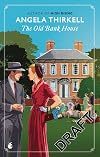
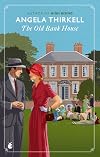
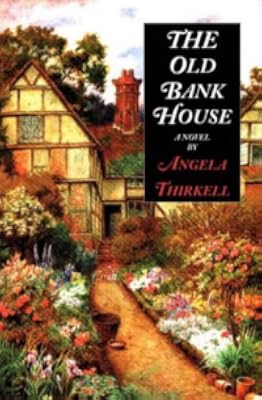
The cover is certainly beautiful. And while it's not my favorite of Angela Thirkell's books, it's quite nice and continues to have spots of insight where the reader is inclined to laugh a little and say, "Yup."
Things must have felt awfully rotten in Britain during the first years after WW II. This book, like many of its predecessors, has the air of bravely carrying on and trying not to mind too much about the world changing around you, even though you're mostly sure it's not for the better. But it's not depressing, it's just kind of poignant. Likeable and occasionally loveable characters.
Things must have felt awfully rotten in Britain during the first years after WW II. This book, like many of its predecessors, has the air of bravely carrying on and trying not to mind too much about the world changing around you, even though you're mostly sure it's not for the better. But it's not depressing, it's just kind of poignant. Likeable and occasionally loveable characters.
Another is Thirkell's "Barset" novels which I inherited from my father but have not read.
Despite my reservations I am continuing with this series and I do like the characters, despite some of them having distasteful political and social opinions. It is pleasant to read a story with happy endings for most characters (and the promise of it for the rest in a further book).
Mar 15, 2026English (UK)
Ratings
Members
- Recently Added By
Author Information

47+ Works 8,518 Members
Awards and Honors
Distinctions
Series

Belongs to Publisher Series
Virago Modern Classics (739)
Common Knowledge
- Original publication date
- 1949
- Quotations
- "I suppose the wall-paper has faded a great deal", said Mrs Grantly. Miss Sowerby opened the bottom drawer and extracted from it a roll of paper. "That is as it was when my great-grandfather brought it back from Canton", she ... (show all)said. ... "Good paper and vegetable colours and wood blocks I suppose."
"I shall tell [The Head Chief's] father that the number four is sacred in England, He has often heard me speak of the Fourth of June as the greatest festival of the year - always excepting Christmas and Easter."
"Could Jennifer go to the Barchester Odeon with her and see Glamora Tudor in What Men Desire with the new male star Hastings Pond."
"You simply must come to the Barchester Odeon next Saturday. It's Glamora Tudor and Croke Hoskiss in Love and Lust."
Classifications
Statistics
- Members
- 188
- Popularity
- 174,912
- Reviews
- 6
- Rating
- (4.09)
- Languages
- English
- Media
- Paper, Ebook
- ISBNs
- 5
- ASINs
- 6