On This Page
Description
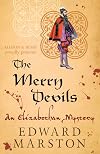
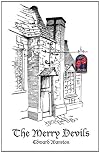
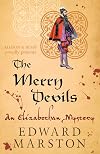
He had the power to assume a pleasing shape, but would he take to the stage? The audience was merry indeed when a third devilish imp bounded onstage to join the two that had been written into the script. But backstage all was uproar. The third demon seemed too much like the real thing. Even Nicholas Bracewell, the company mainstay, was shaken when, next time the play was given, only one devil appeared. The second, poor fellow, was now only a little red heap under the stage. Dead. Before
show more the curtain rose again, Lord Westfield's Men would suffer the sermons of a Puritan fanatic, tTags
Recommendations







Member Reviews
In the second book in the series, the author returns to the interesting and sometimes crazy world of the Elizabethan theater. All the main characters are still around - Nicholas Bracewell is keeping the whole company together, Firethorn and Barnaby are their usual self-important selves (although we see a lot less from Barnaby this time around and Firethorn is subdued - mainly by shifting the story away from him than from a change in his character.
Noone is trying to kill the queen this time - it worked in the first book but it would have been a bit too much to repeat it. This time the center stage is taken by the Puritans and their intolerance for anything that is even remotely amusing and supernatural beings from Hell and all the show more superstitions around them. Which proves to be a really amusing combination. Add to that the evil nephew of the companies's patron Lord Westfield, a mental institution, a body, a series if misfortunes and Nicholas's sharp mind that manages to put everything together.
The style of the narrative is an improvement compared to the first book - even though the long winded dialogs are still here occasionally, they are a bit more focused and in most cases they match the overall tone of the series. The portrayal of the Elizabethan theater is as good as in the first book although we see a bit more from London itself (and the region around it) than we learn about the theater in the era. Which makes the book a bit more accessible for people that don't really care for the details about the theater. The details are there though - intermingled with the details of London. At the same time the book can be a confusing matter for anyone that had not read the first book - way too many people show up at the same time with their actions and behaviors and even if the basic introductions are there, the first book adds a layer to most of the characters -- and makes them a bit more believable and a bit more real.
The Queen's Head owner is getting a spotlight in the first pages of the story and honestly made me laugh - including Nicholas's thoughts that there is no reason to have any doubts who will be the perfect person to bring the news for the end of the world if it comes to that.
The story itself unfolds in the last pages and brings all the storylines together in what is a real surprising turn of events. Not the type that leaves you wonder why you read all those pages and now everything is changed.... it is a lot more subtle but not less powerful.
Overall a nice addition to the series and I suspect I will be reading #3 soon enough. show less
Noone is trying to kill the queen this time - it worked in the first book but it would have been a bit too much to repeat it. This time the center stage is taken by the Puritans and their intolerance for anything that is even remotely amusing and supernatural beings from Hell and all the show more superstitions around them. Which proves to be a really amusing combination. Add to that the evil nephew of the companies's patron Lord Westfield, a mental institution, a body, a series if misfortunes and Nicholas's sharp mind that manages to put everything together.
The style of the narrative is an improvement compared to the first book - even though the long winded dialogs are still here occasionally, they are a bit more focused and in most cases they match the overall tone of the series. The portrayal of the Elizabethan theater is as good as in the first book although we see a bit more from London itself (and the region around it) than we learn about the theater in the era. Which makes the book a bit more accessible for people that don't really care for the details about the theater. The details are there though - intermingled with the details of London. At the same time the book can be a confusing matter for anyone that had not read the first book - way too many people show up at the same time with their actions and behaviors and even if the basic introductions are there, the first book adds a layer to most of the characters -- and makes them a bit more believable and a bit more real.
The Queen's Head owner is getting a spotlight in the first pages of the story and honestly made me laugh - including Nicholas's thoughts that there is no reason to have any doubts who will be the perfect person to bring the news for the end of the world if it comes to that.
The story itself unfolds in the last pages and brings all the storylines together in what is a real surprising turn of events. Not the type that leaves you wonder why you read all those pages and now everything is changed.... it is a lot more subtle but not less powerful.
Overall a nice addition to the series and I suspect I will be reading #3 soon enough. show less
Ratings
Members
- Recently Added By
Author Information

Series

Work Relationships
Common Knowledge
- Canonical title
- The Merry Devils
- Original publication date
- 1989
- People/Characters
- Nicholas Bracewell; Lawrence Firethorne; Barnaby Gill; Edmund Hoode; Alexander Marwood; Lord Westfield (show all 9); Richard Honeydew; Martin Yeo; Lord Westfield
- Important places
- London, England, UK
- Epigraph
- 'This I bar, that none of you stroke your beards to make action, play with your codpiece points, or stand fumbling on your buttons when you know not how to bestow your fingers. Serve God and act clearly.
Thomas Nashe - Dedication
- Matre pulchra filia pulchrior
Helena
rosa formosa
orbis et cordis - First words
- London was the capital city of noise, a vibrant, volatile place, surging with life and clamourous with purpose.
- Last words
- (Click to show. Warning: May contain spoilers.)'He was far too merry for Heaven.'
Classifications
Statistics
- Members
- 229
- Popularity
- 141,507
- Reviews
- 1
- Rating
- (3.46)
- Languages
- English, French, German
- Media
- Paper, Audiobook, Ebook
- ISBNs
- 16
- ASINs
- 7