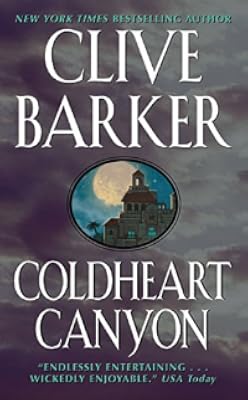
Coldheart Canyon
by Clive Barker
On This Page
Description
Film's most popular action hero needs a place to heal after his surgery has gone terribly wrong. His fiercely loyal agent finds him just such a place in a luxurious forgotten mansion high in the Hollywood Hills. But the original owner of the mansion was a beautiful woman devoted to pleasure at any cost, and the terrible legacy of her deeds has not yet died. There are ghosts and monsters haunting Coldheart Canyon, where nothing is forbidden . . . Clive Barker's Coldheart Canyon showcases the show more boldly innovative New York Times bestselling master at the very top of his formidable and frightening skills. Clive Barker is the internationally bestselling author of more than twenty books for adults and children. He is also a widely acclaimed artist, film producer, screenwriter, and director. He lives in Beverly Hills, California. show lessTags
Recommendations










Member Reviews
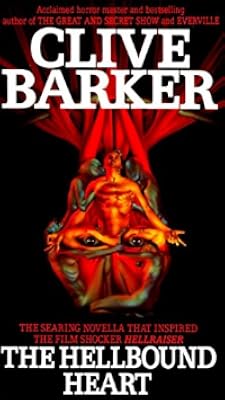
Clive Barker and I go way back. Long before God and everybody knew who Pinhead was, I was enjoying stories like "In the Hills, the Cities" and "Pig Blood Blues." Hmmm. Perhaps "enjoying" isn't quite the right word, but you know what I mean. I can't say I've read everything the man has written, but I've certainly read a goodly portion of it. Part of the reason for Barker's success is the combination of beautiful, dreamlike prose with some of the most vile and visceral situations and characters known to man. For most of Barker's stories, this works just fine, in huge books like Imajica as well as in smaller gems like The Hellbound Heart or The Thief of Always. But for some reason in Coldheart Canyon: A Hollywood Ghost Story, the show more combination felt flat.
Coldheart Canyon takes place in two different timeframes and in two different worlds. It opens in 1920 in a monastery in Romania. Although this section does introduce us to characters we'll be meeting later, including a tiled room completely covered in exquisite and obscene artwork, I'm not sure this was necessary. The two major characters we meet, Katya Lupi and the aforementioned tiled room, function as ghosts of a sort in the latter portions of the book. As such, they're allowed to be mysterious and unexplained. Heck, half the fun of a good ghost story is wondering whether or not there really IS a ghost. This opening segment gives us information we don't really need to make the whole story work.
The rest of the book takes place in modern-day Hollywood, and our main character is Todd Pickett, a brilliantly handsome, megawatt famous, almost competent actor. From here on in the book is essentially a battle for Todd's soul, and that's part of my problem with it. I'm not sure Todd has one. Barker seems to believe that he's worthy of sympathy; that we should care about his struggle. But I don't. I could live with one character I didn't like, even a main character. But "none of the above" should never be your answer when someone asks you about your favorite character. I really didn't like much of anybody in this one, and for a ghost story, that's an especially bad thing. The whole point of a ghost story is to scare you. Sure, some violent episodes and glistening viscera are disturbing, but in order to truly scare you, you have to care about what's going to happen to the characters. If you have no connection with the characters, then their bloody demises are just so much splatter, regardless of how poetically they may be described.
But maybe the problem is with me. When I hear the words "ghost story," I tend to think of something elegant and subtle. Something eerie and disturbing that makes you jump at sudden noises and stare hard at stray shadows. Barker is a visceral writer. For the most part, he doesn't suggest creepy goings-on; he describes them in all their carnal glory. This vivid description may ultimately be more terrifying, but I like to have room for my imagination to work on a scary story. I believe it was Stephen King who, in talking about film monsters mentioned the sense of relief that comes with the revelation of the scary thing. As scary as that thing may be, there's always a sense of "Whew! That was bad, but not as bad as what I was thinking." Barker takes too much away from me in this one; he doesn't let me create my own worst monster.
In all fairness, there's no rule that says he has to. It's not a bad book, by any stretch of the imagination. There's a story being told, the characters develop, and Barker's prose is as strong as ever. I just never engaged with the story or the characters. I didn't care who won or lost, or really even who lived or died. It didn't feel like a ghost story to me, and so it left me disappointed. show less
Coldheart Canyon takes place in two different timeframes and in two different worlds. It opens in 1920 in a monastery in Romania. Although this section does introduce us to characters we'll be meeting later, including a tiled room completely covered in exquisite and obscene artwork, I'm not sure this was necessary. The two major characters we meet, Katya Lupi and the aforementioned tiled room, function as ghosts of a sort in the latter portions of the book. As such, they're allowed to be mysterious and unexplained. Heck, half the fun of a good ghost story is wondering whether or not there really IS a ghost. This opening segment gives us information we don't really need to make the whole story work.
The rest of the book takes place in modern-day Hollywood, and our main character is Todd Pickett, a brilliantly handsome, megawatt famous, almost competent actor. From here on in the book is essentially a battle for Todd's soul, and that's part of my problem with it. I'm not sure Todd has one. Barker seems to believe that he's worthy of sympathy; that we should care about his struggle. But I don't. I could live with one character I didn't like, even a main character. But "none of the above" should never be your answer when someone asks you about your favorite character. I really didn't like much of anybody in this one, and for a ghost story, that's an especially bad thing. The whole point of a ghost story is to scare you. Sure, some violent episodes and glistening viscera are disturbing, but in order to truly scare you, you have to care about what's going to happen to the characters. If you have no connection with the characters, then their bloody demises are just so much splatter, regardless of how poetically they may be described.
But maybe the problem is with me. When I hear the words "ghost story," I tend to think of something elegant and subtle. Something eerie and disturbing that makes you jump at sudden noises and stare hard at stray shadows. Barker is a visceral writer. For the most part, he doesn't suggest creepy goings-on; he describes them in all their carnal glory. This vivid description may ultimately be more terrifying, but I like to have room for my imagination to work on a scary story. I believe it was Stephen King who, in talking about film monsters mentioned the sense of relief that comes with the revelation of the scary thing. As scary as that thing may be, there's always a sense of "Whew! That was bad, but not as bad as what I was thinking." Barker takes too much away from me in this one; he doesn't let me create my own worst monster.
In all fairness, there's no rule that says he has to. It's not a bad book, by any stretch of the imagination. There's a story being told, the characters develop, and Barker's prose is as strong as ever. I just never engaged with the story or the characters. I didn't care who won or lost, or really even who lived or died. It didn't feel like a ghost story to me, and so it left me disappointed. show less
This bloated, overwritten doorstop (676 pages) takes an intriguing idea for a horror novel and sexes it up to XXX rating with various nasties as garnish.
Basically, a pretty boy actor whose youthful good looks are beginning to slide opts for a cosmetic surgery which goes awry, leading him to seek seclusion while he recuperates. Unfortunately, the isolated 1920s-era estate he chooses is already occupied -- by a legion of ghosts, a mysterious woman, and multiple demons, all centering around an enchanted -- or possibly damned -- room deep in the bowels of the mansion.
There's a good story here, which could be developed in a number of ways. Barker, however, has chosen to lard it up with self-indulgences like a 20-page digression on the death show more of a pet dog, which is -- as Barker tells his readers in the forward -- a reflection of recent events in his own life. Traumatic for the author? Yes. Heartbreaking to anyone who has ever lost a beloved pet? Yes. Relevant to the story? No -- unless it's an attempt to show that protagonist Todd Pickett is more than a self-involved prick. And it fails even at that, since his emotional reaction to the animal's death has little to do with his subsequent actions.
There are multiple internal inconsistencies in the book, as if the author and/or copy editor were either not interested in catching them or were simply overwhelmed by the verbiage. A floor described as covered with tiles becomes, in the next scene, dirt. After an intense conversation between two lovers in which the beautiful but depraved Katya makes it clear that she will set the rules in the relationship, she tells Todd to meet her in the kitchen. In the next scene, they are back in the bedroom, the order apparently forgotten. A character is killed with maximum gore, by being run through with a sword and hours (days? -- it all begins to run together after a while) later is found lying at the foot of a staircase with just enough life left in him to provide another character with the secret to dealing with the vengeful ghosts. Toward the end of the book, a man who was introduced as having lost six children to "the plague" tells another character (the same one, actually, to whom he described the loss) that he has never had children.
Picky stuff, yes, but this is not a work that will encourage most readers to feel forgiving of minor little errors like an author forgetting something that was initially presented as a strong formative event in a character's life.
Then there's the sex. Oh, boy, is there the sex. BDSM, sodomy, kiddy porn, group sex, straight sex, gay sex, fetishism, golden showers, bestiality -- you name it, and Barker has devoted whole sections to it -- supposedly to demonstrate the utter depravity of the ghosts and of Katya, whose connection to them is gradually revealed. But most readers would have been able to check off that box after the first few pages describing the orgy.
And it does drag on. The sex scenes, the underlying sexual perversions, and explicit descriptions of various gruesome fates, some of which are perilously close to going over the top from Grand Guignol into Laughable Camp. I mean, seriously -- a rapist peacock?
There are several points in the book when the reader may be forgiven for assuming that Barker is wrapping things up. But he apparently gets a second ... and third ... and fourth wind, going on and on and on long after the supposed main characters have met their fates.
Barker is an immensely popular author within the horror genre, but if Coldheart Canyon is typical of his work, this reviewer won't be going back for more. show less
Basically, a pretty boy actor whose youthful good looks are beginning to slide opts for a cosmetic surgery which goes awry, leading him to seek seclusion while he recuperates. Unfortunately, the isolated 1920s-era estate he chooses is already occupied -- by a legion of ghosts, a mysterious woman, and multiple demons, all centering around an enchanted -- or possibly damned -- room deep in the bowels of the mansion.
There's a good story here, which could be developed in a number of ways. Barker, however, has chosen to lard it up with self-indulgences like a 20-page digression on the death show more of a pet dog, which is -- as Barker tells his readers in the forward -- a reflection of recent events in his own life. Traumatic for the author? Yes. Heartbreaking to anyone who has ever lost a beloved pet? Yes. Relevant to the story? No -- unless it's an attempt to show that protagonist Todd Pickett is more than a self-involved prick. And it fails even at that, since his emotional reaction to the animal's death has little to do with his subsequent actions.
There are multiple internal inconsistencies in the book, as if the author and/or copy editor were either not interested in catching them or were simply overwhelmed by the verbiage. A floor described as covered with tiles becomes, in the next scene, dirt. After an intense conversation between two lovers in which the beautiful but depraved Katya makes it clear that she will set the rules in the relationship, she tells Todd to meet her in the kitchen. In the next scene, they are back in the bedroom, the order apparently forgotten. A character is killed with maximum gore, by being run through with a sword and hours (days? -- it all begins to run together after a while) later is found lying at the foot of a staircase with just enough life left in him to provide another character with the secret to dealing with the vengeful ghosts. Toward the end of the book, a man who was introduced as having lost six children to "the plague" tells another character (the same one, actually, to whom he described the loss) that he has never had children.
Picky stuff, yes, but this is not a work that will encourage most readers to feel forgiving of minor little errors like an author forgetting something that was initially presented as a strong formative event in a character's life.
Then there's the sex. Oh, boy, is there the sex. BDSM, sodomy, kiddy porn, group sex, straight sex, gay sex, fetishism, golden showers, bestiality -- you name it, and Barker has devoted whole sections to it -- supposedly to demonstrate the utter depravity of the ghosts and of Katya, whose connection to them is gradually revealed. But most readers would have been able to check off that box after the first few pages describing the orgy.
And it does drag on. The sex scenes, the underlying sexual perversions, and explicit descriptions of various gruesome fates, some of which are perilously close to going over the top from Grand Guignol into Laughable Camp. I mean, seriously -- a rapist peacock?
There are several points in the book when the reader may be forgiven for assuming that Barker is wrapping things up. But he apparently gets a second ... and third ... and fourth wind, going on and on and on long after the supposed main characters have met their fates.
Barker is an immensely popular author within the horror genre, but if Coldheart Canyon is typical of his work, this reviewer won't be going back for more. show less
The most visceral ghost story I've ever read, which is probably why it's my favorite. As is usually the case, Barker comes up with new angles to the premise that highlights how unoriginal most writers are, such as the tiled chamber that transports those within to a hellscape frozen in time, or the warped hybrids resulting from celebrity dalliances in beastiality, ideas with teeth that land like a bracing slap in the face after you've been long-anesthetized by the anemic "young adult" baby food that clogs every shelf in the bookstore.
The most effective thing about the novel is how savagely it critiques Hollywood narcissism; the reader ends up amazed the denizens of Tinsel Town manage to produce even decent movies, much less great ones, show more considering the absurd realpolitik of the process. If I have to level one criticism of the book, it would be that Tammy, an obsessed fan of the protagonist, falls out of love with him a little too easily. There are points where its hard to buy her as the voice of reason without going through a little more growing. show less
The most effective thing about the novel is how savagely it critiques Hollywood narcissism; the reader ends up amazed the denizens of Tinsel Town manage to produce even decent movies, much less great ones, show more considering the absurd realpolitik of the process. If I have to level one criticism of the book, it would be that Tammy, an obsessed fan of the protagonist, falls out of love with him a little too easily. There are points where its hard to buy her as the voice of reason without going through a little more growing. show less
I can imagine Clive Barker falling asleep on the sofa one night while watching Sunset Boulevard, then waking in the wee hours halfway through a showing of Splatter Cinema Showcase and getting a very bright idea for his next novel.
Hollywood. Has-beens. Ghosts. Sex. Angels. Cretinous atrocities resembling the love children of H.P. Lovecraft and Mary Shelley.
Yes, the elements are all there for horrormeister Barker to whip up weirdness a la ready-for-her-close-up Norma Desmond and the author’s own Nightbreed. Why not throw in a dash of Touched by an Angel for good measure? The result is Coldheart Canyon, a typically thick, luxuriant, ick-stained book which attempts too much and ultimately collapses under the excess weight.
Coldheart show more Canyon contains several plot threads which tangle into one big ball of slime-coated string. First, there’s the tale of Todd Pickett, a Tom Cruisean golden boy who is sitting at the pinnacle of Hollywood’s A-list. Unfortunately, when you perch on the pinnacle, that usually means you’re teetering and, in Todd’s case, he’s about to go sliding down the has-been side of celebrity. Concerned that his perfect good looks are starting to show too much wear and tear, he visits a cosmetic surgeon for a routine chemical peel.
But something goes wrong while he’s under the knife. Horribly wrong.
Bandaged and bleeding, Todd retreats from society and its paparazzi, buying an old mansion high in the Hollywood hills until his face can heal and he can again face the flashbulbs. The dream-palace he settles in once belonged to an actress named Katya Lupi, the most beautiful actress of the silent era. In her day seventy years ago, Katya out-Garboed Greta, vamped more sensually than Theda Bara, and left Mary Pickford choking on her stardust. In the Hollywood heyday of parties populated by Valentino, Chaplin, Fairbanks and Barrymore, Katya was the life of all the parties. A simpering, pure-hearted virgin on-screen, she turned into a wild vamp after-hours as she threw lavish orgies at her mansion in Coldheart Canyon.
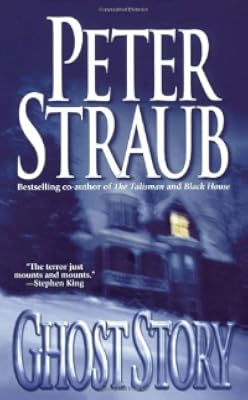
One night, she shimmers into Todd’s life as he’s moping around the house. And when I say “shimmers,âÂ? I mean that literally. The eighty-year-old silent cinema has-been appears like a radiant mirage in a dark corner of the room, startling Todd as she walks out of the shadows. SheâÂÂs gorgeous and downright juicy as a ripe apple. Trouble is, she doesnâÂÂt look a day over thirty. Like Alma Mobley, the preserved beauty in Peter StraubâÂÂs Ghost Story, Katya Lupi lingers in corporeal form, a sensuous ectoplasm that soon has Todd dropping his drawers and engaging in some very vivid (and spirited!) sex.
What Todd doesnâÂÂt realize is that Katya has become a Queen of the Underworld, the ruler of a howling pack of deformities bred when humans like Victor Mature and Jean Harlow had sex with wild creatures. Those bizarre offspring now want access to a place called the DevilâÂÂs CountryâÂÂa region which could only spring from BarkerâÂÂs imagination. Pinhead, Candyman and the Cenobites would feel right at home in this corner of Hell. The portal to the DevilâÂÂs Country lies deep in the bowels of the Coldheart Canyon house and Katya has placed a spell over the doorway of her house so no creatureâÂÂespecially those resembling half-man, half-peacockâÂÂcould come back to the country which helps preserve their good looks (the secret to KatyaâÂÂs ability to look ravishing after all these years).
Meanwhile, topside in the real world, a member of ToddâÂÂs fan club, a housewife named Tammy Lauper, is trying to track down the elusive star who seems to have disappeared right off the face of tabloid earth. Tammy eventually makes her way to the Canyon where first sheâÂÂs assaulted by the well-endowed man-peacock, then finds Todd and aids him in escaping KatyaâÂÂs clutches.
While Coldheart Canyon ends up in a muddle of disappointmentâÂÂpoints are belabored, dialogue is curdled and plots are treacledâÂÂthereâÂÂs plenty of ultra-sharp horror to prick your nerves in the hundreds of pages that come before the closing chapters. This is by no stretch of the imagination a tame novel. EverythingâÂÂghosts, mutations, sex, Hollywood satireâÂÂreads as if it has been plugged into an electric amplifier. Fair warning to prim, goody-two-shoes readers: there are several sex scenes which will curl your toes; scenes of an orgiastic cornucopia (pornucopia?) with a landscape of writhing limbs, exposed genitalia and kinky S&M; eroticism so intense that, were I to type an excerpt here, the very words on your computer monitor would melt your hard drive. Sex, pain, horrorâÂÂitâÂÂs all a phantasmagorial stew bubbling in BarkerâÂÂs brain. Even Lovecraft starts to look like a Sunday School teacher by comparison. show less
Hollywood. Has-beens. Ghosts. Sex. Angels. Cretinous atrocities resembling the love children of H.P. Lovecraft and Mary Shelley.
Yes, the elements are all there for horrormeister Barker to whip up weirdness a la ready-for-her-close-up Norma Desmond and the author’s own Nightbreed. Why not throw in a dash of Touched by an Angel for good measure? The result is Coldheart Canyon, a typically thick, luxuriant, ick-stained book which attempts too much and ultimately collapses under the excess weight.
Coldheart show more Canyon contains several plot threads which tangle into one big ball of slime-coated string. First, there’s the tale of Todd Pickett, a Tom Cruisean golden boy who is sitting at the pinnacle of Hollywood’s A-list. Unfortunately, when you perch on the pinnacle, that usually means you’re teetering and, in Todd’s case, he’s about to go sliding down the has-been side of celebrity. Concerned that his perfect good looks are starting to show too much wear and tear, he visits a cosmetic surgeon for a routine chemical peel.
But something goes wrong while he’s under the knife. Horribly wrong.
Bandaged and bleeding, Todd retreats from society and its paparazzi, buying an old mansion high in the Hollywood hills until his face can heal and he can again face the flashbulbs. The dream-palace he settles in once belonged to an actress named Katya Lupi, the most beautiful actress of the silent era. In her day seventy years ago, Katya out-Garboed Greta, vamped more sensually than Theda Bara, and left Mary Pickford choking on her stardust. In the Hollywood heyday of parties populated by Valentino, Chaplin, Fairbanks and Barrymore, Katya was the life of all the parties. A simpering, pure-hearted virgin on-screen, she turned into a wild vamp after-hours as she threw lavish orgies at her mansion in Coldheart Canyon.
One night, she shimmers into Todd’s life as he’s moping around the house. And when I say “shimmers,âÂ? I mean that literally. The eighty-year-old silent cinema has-been appears like a radiant mirage in a dark corner of the room, startling Todd as she walks out of the shadows. SheâÂÂs gorgeous and downright juicy as a ripe apple. Trouble is, she doesnâÂÂt look a day over thirty. Like Alma Mobley, the preserved beauty in Peter StraubâÂÂs Ghost Story, Katya Lupi lingers in corporeal form, a sensuous ectoplasm that soon has Todd dropping his drawers and engaging in some very vivid (and spirited!) sex.
What Todd doesnâÂÂt realize is that Katya has become a Queen of the Underworld, the ruler of a howling pack of deformities bred when humans like Victor Mature and Jean Harlow had sex with wild creatures. Those bizarre offspring now want access to a place called the DevilâÂÂs CountryâÂÂa region which could only spring from BarkerâÂÂs imagination. Pinhead, Candyman and the Cenobites would feel right at home in this corner of Hell. The portal to the DevilâÂÂs Country lies deep in the bowels of the Coldheart Canyon house and Katya has placed a spell over the doorway of her house so no creatureâÂÂespecially those resembling half-man, half-peacockâÂÂcould come back to the country which helps preserve their good looks (the secret to KatyaâÂÂs ability to look ravishing after all these years).
Meanwhile, topside in the real world, a member of ToddâÂÂs fan club, a housewife named Tammy Lauper, is trying to track down the elusive star who seems to have disappeared right off the face of tabloid earth. Tammy eventually makes her way to the Canyon where first sheâÂÂs assaulted by the well-endowed man-peacock, then finds Todd and aids him in escaping KatyaâÂÂs clutches.
While Coldheart Canyon ends up in a muddle of disappointmentâÂÂpoints are belabored, dialogue is curdled and plots are treacledâÂÂthereâÂÂs plenty of ultra-sharp horror to prick your nerves in the hundreds of pages that come before the closing chapters. This is by no stretch of the imagination a tame novel. EverythingâÂÂghosts, mutations, sex, Hollywood satireâÂÂreads as if it has been plugged into an electric amplifier. Fair warning to prim, goody-two-shoes readers: there are several sex scenes which will curl your toes; scenes of an orgiastic cornucopia (pornucopia?) with a landscape of writhing limbs, exposed genitalia and kinky S&M; eroticism so intense that, were I to type an excerpt here, the very words on your computer monitor would melt your hard drive. Sex, pain, horrorâÂÂitâÂÂs all a phantasmagorial stew bubbling in BarkerâÂÂs brain. Even Lovecraft starts to look like a Sunday School teacher by comparison. show less
I have to say I liked it. Coldheart Canyon was an imaginative twist on the haunted house iconography.
The canyon that Barker created is deliciously creepy, and I like to think about it really being there to this day. It is in fact the canyon that is haunted, and not the house. The house has something else entirely going on. The idea of the huge underground tiled room known as the Devil's Country was so intriguing that I feel such a compulsion to see it for myself.
Another reason I liked this book so much is that Clive Barker and I seem to share the same opinion of Hollywood.
I can give this book the "Pet Owner Seal of Approval" (which I will continue to deny to writers who let pets die in horrible ways.....Joe Hill, I'm shaking my head at show more you buddy, because I am so disappointed in you) show less
The canyon that Barker created is deliciously creepy, and I like to think about it really being there to this day. It is in fact the canyon that is haunted, and not the house. The house has something else entirely going on. The idea of the huge underground tiled room known as the Devil's Country was so intriguing that I feel such a compulsion to see it for myself.
Another reason I liked this book so much is that Clive Barker and I seem to share the same opinion of Hollywood.
I can give this book the "Pet Owner Seal of Approval" (which I will continue to deny to writers who let pets die in horrible ways.....Joe Hill, I'm shaking my head at show more you buddy, because I am so disappointed in you) show less
What a drag. After a botched cosmetic surgery, a popular actor retreats to a hidden mansion that's "haunted" by an actress of a bygone era. The novel begins with an intriguing prologue, but then we have to suffer through nearly 200 pages of lifestyles of the rich and famous, the vain and self-obsessed, before anything out of the mundane, or at least interesting, happens again. Todd Pickett, the actor, is dull. The most interesting character, and I mean this in a relative way, is an obsessed fan who actually has a pretty good character arc throughout the course of the novel. The only other likeable [earthly] character, really, is Todd's dog.
The core of the story, a secret room that is painted so realistically from top to bottom that it show more actually becomes a new world when one steps into it, is fantastic. The sections that take place there are exciting, even if the writing quality is lacking.
Yes, the writing. This book has made me feel differently about The Scarlet Gospels. I still think that book was garbage, but I no longer believe that it was ghost-written, because I could see the transition as I was reading this one. Barker just isn't as good as he used to be. There was a time when he could write about the grotesque with a kind of elegance that almost made it seem beautiful. No longer. Here he hits the lowest notes and instead of feeling unsettled by those contrary feelings, I simply found myself laughing aloud. Some things are impossible to describe without them sounding ridiculous; in those cases, less is more, but Barker pulls out all the stops and writes like a far less mature writer who just wants to be EXTREME.
Finally, there's just too much here. The story reaches a natural conclusion a good hundred pages before the book ends, but Barker drags it out with an unnecessary epilogue filled with inane philosophical dialogue. Maybe he felt this was necessary due to recent events in his life (he tells you all about it in the introduction) but it doesn't make the story better.
I might continue to explore his earlier work but I shall be wary of anything new he puts out. show less
The core of the story, a secret room that is painted so realistically from top to bottom that it show more actually becomes a new world when one steps into it, is fantastic. The sections that take place there are exciting, even if the writing quality is lacking.
Yes, the writing. This book has made me feel differently about The Scarlet Gospels. I still think that book was garbage, but I no longer believe that it was ghost-written, because I could see the transition as I was reading this one. Barker just isn't as good as he used to be. There was a time when he could write about the grotesque with a kind of elegance that almost made it seem beautiful. No longer. Here he hits the lowest notes and instead of feeling unsettled by those contrary feelings, I simply found myself laughing aloud. Some things are impossible to describe without them sounding ridiculous; in those cases, less is more, but Barker pulls out all the stops and writes like a far less mature writer who just wants to be EXTREME.
Finally, there's just too much here. The story reaches a natural conclusion a good hundred pages before the book ends, but Barker drags it out with an unnecessary epilogue filled with inane philosophical dialogue. Maybe he felt this was necessary due to recent events in his life (he tells you all about it in the introduction) but it doesn't make the story better.
I might continue to explore his earlier work but I shall be wary of anything new he puts out. show less
One of Barker's most underrated yet masterful works, COLDHEART CANYON is overflowing with unrelenting imagination from its moving beginning to its tearful end and all the ghostly depravity in between.
Members
- Recently Added By
Published Reviews
ThingScore 100
Barker's new novel is a ferocious indictment of (and backhanded tribute to) Hollywood Babylon, depicted through Barker's glorious imagination as a nexus of human and inhuman evil where fleshly pursuits corrupt the spirit. It's also one ripping ghost story, spooky and suspenseful, as well as a departure for Barker in that here, as never before, the fantastic mingles with the real, kind of.... a show more fluid writing style; a canvas whose twisted originality rivals Bosch; a depth of theme; and an understanding of the human yearning for good and evil alike—they add up to a royal flush, one of the most accomplished, and most notable, novels of the year. show less
added by Lemeritus
Lists

XB-1: Osobnosti zanru doporucuji
67 works; 1 member

Books Read in 2001
194 works; 4 members
Author Information

381+ Works 57,041 Members
Critics of the horror story have frequently called Clive Barker the "British Stephen King". Born in Liverpool in 1952, Barker attended the University of Liverpool but moved to London in 1977, where he worked as a commercial artist and became involved with the avant-garde theatrical community. Primarily a playwright during this period, he also show more produced short fiction that he would eventually publish as part of his six-volume collection titled Books of Blood (1984-85). More than any other author of contemporary horror fiction, Barker has had a major impact on the direction of the genre. He has introduced strong elements of sex and graphic violence into his fiction, but these elements are employed with an artistic objective. Barker underscores his work with complex subtextual metaphors and artistic allusions. Preoccupied with the craft of writing and with its effect on the reader, Barker is an innovator of formula and genre, often parodying the former in order to change the philosophical contour of the latter. Barker has achieved commercial success not only with his short fiction but also with his novels, which tend to be epic in scope and to blend elements of horror with those of high fantasy. Barker is one of the more influential voices in horror cinema, having written and directed a number of films. His printed works include The Candle in the Cloud, Absolute Midnight, The Scarlet Gospels, and Black is the Devil's Rainbow: Tales of a Journeyman. His films include Dread, Tortured Souls: Animae Damanatae, and Hellraiser. (Bowker Author Biography) Clive Barker was born in October, 1952, in Liverpool, England, and graduated from Liverpool University. While a student, the resourceful Barker formed a theater company as an outlet for his career as a budding playwright. After minor success with several plays such as "Frankenstein in Love," Barker vaulted onto the horror fiction scene with the publication of his short stories, "The Books of Blood." Later books such as "The Damnation Game," "Imajica," and "Everville" have further established his reputation as a Master of Horror. Barker gained further popularity with several motion picture projects. Unhappy with previous film versions of his works, he chose to direct the successful movie "Hellraiser," which generated a string of sequels. In addition to writing and directing, Barker has produced several of the movies in both the "Hellraiser" and "Candyman" series. Besides his writing and film activities, the multitalented Barker is an actor and illustrator, with several published volumes of his artwork. Barker is a recipient of British Fantasy awards and a World Fantasy award, and resides in Los Angeles. (Bowker Author Biography) show less
Some Editions
Awards and Honors
Awards
Distinctions
Series
Belongs to Publisher Series
Common Knowledge
- Original publication date
- 2001
- People/Characters
- Todd Pickett; Katya Lupi; Tammy Lauper
- Dedication
- For David Emilian Armstrong
- First words
- It is night in Coldheart Canyon, and the wind comes off the desert.
- Last words
- (Click to show. Warning: May contain spoilers.)And in time it will be as though men had never come to this perfect corner of the world -- never called it paradise on earth, never despoiled it with their dream factories; and in the golden hush of the afternoon all that will be heard will be the flittering of dragonflies, and the murmur of hummingbirds as they pass from bower to bower, looking for a place to sup sweetness.
- Blurbers
- Tarantino, Quentin
- Canonical DDC/MDS
- 823.914
- Canonical LCC
- PR6052.A6475
Classifications
Statistics
- Members
- 1,532
- Popularity
- 15,016
- Reviews
- 23
- Rating
- (3.60)
- Languages
- 7 — Czech, Dutch, English, French, German, Italian, Polish
- Media
- Paper, Audiobook, Ebook
- ISBNs
- 31
- UPCs
- 1
- ASINs
- 14