
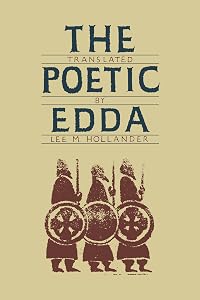
The Poetic Edda
by Anonymous, Saemund Sigfusson (Alleged author)
There is 1 current discussion about this work.
On This Page
Description
The great poetic tradition of pre-Christian Scandinavia is known to us almost exclusively though the Poetic Edda. The poems originated in Iceland, Norway, and Greenland between the ninth and thirteenth centuries, when they were compiled in a unique manuscript known as the Codex Regius.The poems are primarily lyrical rather than narrative. Terry's readable translation includes the magnificent cosmological poem Völuspá ("The Sibyl's Prophecy"), didactic poems concerned with mythology and the show more everyday conduct of life, and heroic poems, of which an important group is concerned with the story of Sigurd and Brynhild.Poems of the Elder Edda will appeal to students of Old Norse, Icelandic, and Medieval literature, as well as to general readers of poetry. show lessTags
Recommendations

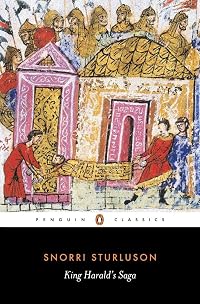
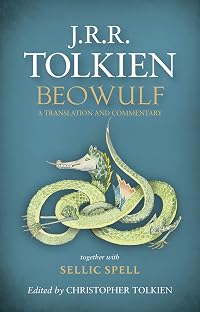
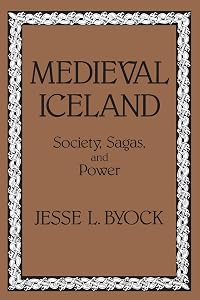
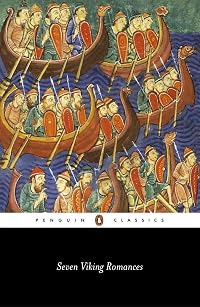





Member Recommendations
andejons Much of the story of Nibelungenlied is also told in the poetic Edda, but in considerably shorter form but with some extra material. There are also many points that differ.
100
guurtjesboekenkast De legende van Sigurd en Gudrún bevat twee epische gedichten die zijn gebaseerd op Oudnoorse mythen die bekendstaan als de Edda.
Tolkien herschreef deze legende in twee modern Engelse gedichten.
Samen vormen deze het verhaal van de drakendoder Sigurd, de wraak van Gudrún en de val van de Nibelungen.
50

Rowntree An interesting examination of skaldic verse forms.
40
Member Reviews
Hollander's translation is the only book that I've ever bought twice; my first copy is locked away in storage and inaccessible, but I had a strong desire to read it, so bit my tongue and put down the money. I'm Norwegian-American down to my socks, but Norse mythology is something that I've had a bit of a love-hate relationship with over the years. While there's a flavor that hits home with me, there's also something distinctly foreign about the pre-Westernized Scandinavians that is off-putting. I think it's the anti-egalitarian, anti-altruism, "might is right" brutal spirit of the Vikings. It's fun for mild-mannered Scandinavians and those of the diaspora to joke about, but in reality Norway, Sweden, and Denmark have long since grown show more beyond that era and left it in the dust. I'm far more familiar with Asbjørnsen and Moe's collection of 19th century folktales, which I find to be more culturally relevant for me.
But the time had come for me to read the Viking-era myths, so I gave the Poetic Edda a read. Some takeaways:
1) I knew that "trolls" had some sort of representation in the Norse era. I did not realize how often the word would be used (alongside others such as "thurs") as a synonym for "giant" (Hollander's "etins"). I also did not realize that the same rule found in Asbjørnsen and Moe, that trolls turn to stone when exposed to daylight, was present in Viking times. I thought that was a development from eight hundred years later.
2) I found that I didn't care much for the Óthin. I found him sinister, not what I would expect for a king of gods. Conversely, I found Thór completely likeable. No wonder the common people in ancient times worshipped Thór, leaving Óthin to the Viking warriors and ruling class.
3) I've read "The Volsunga Saga" before, and I didn't like it. Nor did I like the Sigurd lays in this Edda. I think that, out of all the Old Norse material, the Volsungs story has the least connection to modern Scandinavia.
4) Lee Hollander refers to many different scholars in his translation, but the two that he seems to appreciate the most (based on the quantity of his footnote references) are Sophus Bugge and N.F.S. Grundtvig. There was a coffee shop in Oslo called "Bugges" (Bugge's) that I became fond of while visiting cousins a few years ago (they told me at the time that it was named after a famous writer). And as a Lutheran, I'm very familiar with some of Grundtvig's hymnody ("Built on a rock, the church shall stand, even as temples are falling" and "Den signede dag"). I had no idea that Grundtvig the theologian was also Grundtvig the Norse mythology buff. It was fun to make these two connections. show less
But the time had come for me to read the Viking-era myths, so I gave the Poetic Edda a read. Some takeaways:
1) I knew that "trolls" had some sort of representation in the Norse era. I did not realize how often the word would be used (alongside others such as "thurs") as a synonym for "giant" (Hollander's "etins"). I also did not realize that the same rule found in Asbjørnsen and Moe, that trolls turn to stone when exposed to daylight, was present in Viking times. I thought that was a development from eight hundred years later.
2) I found that I didn't care much for the Óthin. I found him sinister, not what I would expect for a king of gods. Conversely, I found Thór completely likeable. No wonder the common people in ancient times worshipped Thór, leaving Óthin to the Viking warriors and ruling class.
3) I've read "The Volsunga Saga" before, and I didn't like it. Nor did I like the Sigurd lays in this Edda. I think that, out of all the Old Norse material, the Volsungs story has the least connection to modern Scandinavia.
4) Lee Hollander refers to many different scholars in his translation, but the two that he seems to appreciate the most (based on the quantity of his footnote references) are Sophus Bugge and N.F.S. Grundtvig. There was a coffee shop in Oslo called "Bugges" (Bugge's) that I became fond of while visiting cousins a few years ago (they told me at the time that it was named after a famous writer). And as a Lutheran, I'm very familiar with some of Grundtvig's hymnody ("Built on a rock, the church shall stand, even as temples are falling" and "Den signede dag"). I had no idea that Grundtvig the theologian was also Grundtvig the Norse mythology buff. It was fun to make these two connections. show less
The heroic section is like an expanded universe for my favourite saga of all time - the Volsung Saga. I'd been wondering what happened to Helgi and this book of traditional poems tells me that, plus a bunch of other tantalising details not contained in the saga. Despite being translated from old Norse poetry it is surprisingly readable.
From the mythological section I've developed a theory: I'm utterly convinced that Odin and Loki were lovers! Sounds bizarre but I swear the text supports it - they were actually blood brothers (not father and adopted son), when accusations of homosexuality are flying around neither of them denies it, Loki enjoys cross-dressing and switching genders, and they both practise traditionally-feminine types of show more magic. Case closed.
On a more serious note, it's somewhat surprising to see how accepting of disabilities the Vikings apparently were. There's a whole passage about how everyone is useful regardless of disability and most of the gods are maimed in some way or another. Tyr is one-handed, Odin lost an eye, Hod is blind, and at one point it's suggested that Heimdall traded his hearing for better vision (although at another point it's stated he has super-human hearing, so who knows).
Absolutely recommended for any lover of Viking mythology, as it's one of the extremely few original sources. show less
From the mythological section I've developed a theory: I'm utterly convinced that Odin and Loki were lovers! Sounds bizarre but I swear the text supports it - they were actually blood brothers (not father and adopted son), when accusations of homosexuality are flying around neither of them denies it, Loki enjoys cross-dressing and switching genders, and they both practise traditionally-feminine types of show more magic. Case closed.
On a more serious note, it's somewhat surprising to see how accepting of disabilities the Vikings apparently were. There's a whole passage about how everyone is useful regardless of disability and most of the gods are maimed in some way or another. Tyr is one-handed, Odin lost an eye, Hod is blind, and at one point it's suggested that Heimdall traded his hearing for better vision (although at another point it's stated he has super-human hearing, so who knows).
Absolutely recommended for any lover of Viking mythology, as it's one of the extremely few original sources. show less
[This rating and review refers to the Larrington translation.]
A very competent and modern translation, but it just doesn't read (scan) like poetry. The most annoying thing here, though, is the note system. Notes are marked by an asterisk in the text, and then referenced by page number in an appendix. Which makes them practically useless.
A very competent and modern translation, but it just doesn't read (scan) like poetry. The most annoying thing here, though, is the note system. Notes are marked by an asterisk in the text, and then referenced by page number in an appendix. Which makes them practically useless.
I bought this book several years ago and by several I mean many but never got around to reading it in its entirely. I thought it was about time I did that, so.. well, I did. Although it took me ages to finish it, that is in no way a reflection on the quality of the book itself - more my ability to be distracted, etc. So, let's get on with the review.
As someone not terribly familiar with Norse myth, I came away from the book feeling that I understood the essence of it a bit better. Having recently traveled to Austria, and in previous years been to much of the Baltic region, I felt that those trips supplemented my understanding of the text a bit more than the copious notes at the back of the book did.
The way that the book was set up was show more a bit troubling to me. The notes at the back of it, rather than say.. footnotes, or notes on the side of the page, made for much flipping. At times, the notes were just reminders of the meaning of certain words (e.g. norns and disir) rather than truly supplementary or explanatory material.
The translation of the texts was good, if a bit.. heady. Having the translation be rather literal, including phrases such as "slaughter dew" when referencing blood, or "foot twigs" instead of toes always came off as a rather interesting choice. It added to the feel of the text itself - you could never forget you were reading something fairly ancient, rather than bringing the ancient into a more modern time period such as [a:Seamus Heaney|29574|Seamus Heaney|http://photo.goodreads.com/authors/1200407647p2/29574.jpg]'s translation of [b:Beowulf|52357|Beowulf|Unknown|http://photo.goodreads.com/books/1298256739s/52357.jpg|189503] did.
All in all, I did enjoy the book, but it would not be remiss for me to look into more contemporary or, rather, just alternate translations of what I read. I'm tempted to read Snorri's translation of the Prose Edda, though, which would be an even more.. insurmountable sort of task. Perhaps I should look up easier guides to the Nordic mythology prior to doing so, so I'm not jumping in entirely brainlessly. show less
As someone not terribly familiar with Norse myth, I came away from the book feeling that I understood the essence of it a bit better. Having recently traveled to Austria, and in previous years been to much of the Baltic region, I felt that those trips supplemented my understanding of the text a bit more than the copious notes at the back of the book did.
The way that the book was set up was show more a bit troubling to me. The notes at the back of it, rather than say.. footnotes, or notes on the side of the page, made for much flipping. At times, the notes were just reminders of the meaning of certain words (e.g. norns and disir) rather than truly supplementary or explanatory material.
The translation of the texts was good, if a bit.. heady. Having the translation be rather literal, including phrases such as "slaughter dew" when referencing blood, or "foot twigs" instead of toes always came off as a rather interesting choice. It added to the feel of the text itself - you could never forget you were reading something fairly ancient, rather than bringing the ancient into a more modern time period such as [a:Seamus Heaney|29574|Seamus Heaney|http://photo.goodreads.com/authors/1200407647p2/29574.jpg]'s translation of [b:Beowulf|52357|Beowulf|Unknown|http://photo.goodreads.com/books/1298256739s/52357.jpg|189503] did.
All in all, I did enjoy the book, but it would not be remiss for me to look into more contemporary or, rather, just alternate translations of what I read. I'm tempted to read Snorri's translation of the Prose Edda, though, which would be an even more.. insurmountable sort of task. Perhaps I should look up easier guides to the Nordic mythology prior to doing so, so I'm not jumping in entirely brainlessly. show less
I would never have anticipated that I could get so engrossed by old poems, but here we are. Sometimes the poems could be cryptic or boring, but it is totally worth a read for the high points, like the Seeress's Prophecy. This poem spans from the beginning of time all the way until the rebirth of the world following the cataclysmic Ragnarok. I seriously enjoyed my introduction to the strange Norse gods and the tragic humans who worshipped them.
"Do you want to know more, and what?"
"Do you want to know more, and what?"
The Scandis are the best because they cover both extremes. The Norse gods take us on a cosmic journey beyond our imagination, from the birth of the world out of the bones of the ice giant Ymir to its death at the hands of the fire demon Surtr, and then, like, fart on our pillow, or pants us in front of the whole fishing village. Essential if anything is.
[This rating and review refers to the Terry translation.]
This had been my favorite translation until my latest read through off my Eddas, and still ranks right up there. It's accurate, and it mostly scans like poetry should, keeping not only the sense but the feel of the original. A nice introduction and some endnotes on each poem. My only real complaint here is the lack of stanza numbering, or rather, the stanza numbers being referenced as a range at the top of the page. It can make comparative reading a bit of a chore. But still one of the best.
This had been my favorite translation until my latest read through off my Eddas, and still ranks right up there. It's accurate, and it mostly scans like poetry should, keeping not only the sense but the feel of the original. A nice introduction and some endnotes on each poem. My only real complaint here is the lack of stanza numbering, or rather, the stanza numbers being referenced as a range at the top of the page. It can make comparative reading a bit of a chore. But still one of the best.
Members
- Recently Added By
Lists

Narrative verse for pleasure
75 works; 8 members

100 Books to Read in a Lifetime (That Are Older Than 200 Years)
415 works; 175 members

Harold Bloom - The Western Canon: A. The Theocratic Age
97 works; 13 members

Books Read in 2018
4,360 works; 110 members

Heathen Prison Ministry
11 works; 2 members

Western Canon
206 works; 2 members

Before Austen Comes Aesop
318 works; 9 members

Books About Non-Abrahamic Religions
98 works; 2 members

Books Read in 2024
4,623 works; 126 members
Talk Discussions
Current Discussions
The Poetic Edda LE in Folio Society Devotees (April 25)
Author Information
51 Works 14,489 Members
Some Editions
Awards and Honors
Series
Belongs to Publisher Series
Work Relationships
Is contained in
Contains
Inspired
Has as a student's study guide
Common Knowledge
- Canonical title
- The Poetic Edda
- Original title
- Edda
- Alternate titles
- The Elder Edda
- Original publication date
- 800–1000 CE (primarily) (primarily)
- People/Characters
- Gullveig; Freyja; Freyr; Njord; Haenir; Mimir (show all 25); Odin; Balder (as Baldr); Hod; Hel; Loki; Helgi; Sigurd; Gunnar; Hamdir; Thor; Sif; Fenrir; Ymir; Æsir; Lodur; Urd; Verdandi; Skuld; Norns
- Important places
- Yggdrasil; Asgard; Midgard; Ginungagap; Idavoll Plain; Jotunheim (show all 7); Urd's Well, Asgard
- Important events
- Creation of the universe
- Epigraph*
- Wat de ilias is voor de Grieken is de Edda voor de noordse volken.
- Dedication
- FOR JOHN
[Larrington translation] - First words
- Ongeveer vanaf het jaar870 werd Ijsland razendsnel gekoloniseerd.
INTRODUCTION [Larrington Translation] -- the old, one-eyed god Odin hands nine days and nights on the windswept ash-tree Yggdrasill, sacrificing himself to himself; the red-bearded Thor swings his powerful hammer against the ... (show all)giant enemy; the ravening wolf Fenrir leaps forward to seize the Father of the Gods in his slavering jaws, the terrible passion of Brynhild for the dragon-slayer Sigurd culminates in her implacable demand for his murder -- all these famous scenes from Old Norse myth and legend are found in their oldest and most original form in the Poetic Edda.
The Seeress's Prophecy (Voluspa), composed mainly in the fornyrdislag metre, is recited by a seeress who can remember before the beginning of the world and who can see as far ahead as after Ragnarok - the Doom of the G... (show all)ods.
(translated by Carolyne Larrington, 1996) - Last words
- (Click to show. Warning: May contain spoilers.)Gizur laat zijn speer over het vijandelijke leger vliegen om de doden aan Odin te wijden.
(Click to show. Warning: May contain spoilers.)And the mountain-giant woman spoke these words:
'Frodi, we have ground to the point where we must stop,
now the ladies have had a full stint of milling!'.
(translated by Carolyne Larrington, 1996) - Blurbers
- Simrock, Karl
- Original language
- Old Norse
- Disambiguation notice
- Please do not combine with the Prose Edda - a very different work
*Some information comes from Common Knowledge in other languages. Click "Edit" for more information.
Classifications
- Genres
- Poetry, Fiction and Literature
- DDC/MDS
- 839.61 — Literature & rhetoric German & related literatures Other Germanic literatures Old Norse, Old Icelandic, Icelandic, Faroese literatures Old Norse poetry
- LCC
- PT7234 .E5 — Language and Literature German, Dutch and Scandinavian literatures Old Norse literature: Old Icelandic and Old Norwegian Collections Poetry
- BISAC
Statistics
- Members
- 3,060
- Popularity
- 5,747
- Reviews
- 28
- Rating
- (4.12)
- Languages
- 12 — Dutch, English, Estonian, French, German, Icelandic, Italian, Norwegian (Nynorsk), Old Norse, Russian, Spanish, Swedish
- Media
- Paper, Audiobook, Ebook
- ISBNs
- 96
- UPCs
- 1
- ASINs
- 42
