On This Page
Description
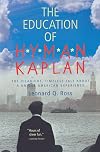
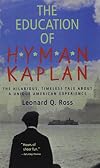
The humorous adventures of Hyman Kaplan, the irrepressible student at the American Night Preparatory School for Adults, and his personal war with the English language. A classic work of american humor.Tags
Recommendations

















Member Reviews
"Mr Parkhill read what some unknown Muse in secret visitation had whispered to Hyman Kaplan"
By sally tarbox on 4 August 2018
Format: Kindle Edition
Probably *3.5 for this highly entertaining little novel, set in an English language class for immigrants to the US in 1937. Mr Parkhill is the harrassed teacher; the students primarily Italian and Jewish. Although the action is all based around classroom exchanges, we nonetheless get an insight into the main personalities, headed by Yiddish speaker Hyman Kaplan.
"In his forties, a plump, red-faced gentleman, with wavy blond hair, TWO fountain pens in his outer pocket and a perpetual smile. It was a strange smile, Mr Parkhill remarked, vague, bland and consistent in its monotony."
Hyman Kaplan is show more an unforgettable character, who reminded me of Hasek's 'Good Soldier Schweik'- either a complete fool or- we come to believe- singularly clever, always leaving the authorities with egg on their face. Thus when corrected for the phrasing of his advice to a relative: "if your eye falls on a bargain, please pick it up", Kaplan emerges victorious with his explanation "Mine oncle has a gless eye."
There is a somewhat combative relationship between Kaplan and his fellow students, notably the quiet but more linguistically adept Miss Minick. But little hints from his class work suggest a logical and warm hearted individual.
The humour hinges on the vagaries of the English language: Kaplan conjugates 'to bite': "If is write 'write, wrote, written', so vy isn't 'bite, bote, bitten?" He gives "a fervent speech extolling the D'Oyley Carte Company's performance of an operetta by two English gentlemen referred to as 'Goldberg and Solomon." He gleefully participates in correcting Miss Mitnick's composition on her job: "Aha! Vaitress!", he cried out."Should be a' V' in vaitress!"
Rosten writes a convincing Yiddish acent; very funny. show less
By sally tarbox on 4 August 2018
Format: Kindle Edition
Probably *3.5 for this highly entertaining little novel, set in an English language class for immigrants to the US in 1937. Mr Parkhill is the harrassed teacher; the students primarily Italian and Jewish. Although the action is all based around classroom exchanges, we nonetheless get an insight into the main personalities, headed by Yiddish speaker Hyman Kaplan.
"In his forties, a plump, red-faced gentleman, with wavy blond hair, TWO fountain pens in his outer pocket and a perpetual smile. It was a strange smile, Mr Parkhill remarked, vague, bland and consistent in its monotony."
Hyman Kaplan is show more an unforgettable character, who reminded me of Hasek's 'Good Soldier Schweik'- either a complete fool or- we come to believe- singularly clever, always leaving the authorities with egg on their face. Thus when corrected for the phrasing of his advice to a relative: "if your eye falls on a bargain, please pick it up", Kaplan emerges victorious with his explanation "Mine oncle has a gless eye."
There is a somewhat combative relationship between Kaplan and his fellow students, notably the quiet but more linguistically adept Miss Minick. But little hints from his class work suggest a logical and warm hearted individual.
The humour hinges on the vagaries of the English language: Kaplan conjugates 'to bite': "If is write 'write, wrote, written', so vy isn't 'bite, bote, bitten?" He gives "a fervent speech extolling the D'Oyley Carte Company's performance of an operetta by two English gentlemen referred to as 'Goldberg and Solomon." He gleefully participates in correcting Miss Mitnick's composition on her job: "Aha! Vaitress!", he cried out."Should be a' V' in vaitress!"
Rosten writes a convincing Yiddish acent; very funny. show less
This is a re-read for me, but since I read it somewhere between 30-37 years ago it's more nostalgic than anything else. I have had H*Y*M*A*N K*A*P*L*A*N on my mind for several weeks as I read books that evoke him. Hyman, an immigrant, takes beginner's night English classes and speaks like your immigrant forebearers did if they were Ashkenazi Jews in New York or New Jersey before 1950. Hyman is an earnest yet immovable object. Reading this as a child, I saw him as the bane of his teacher's existence. Reading it now, having taught or worked in educational settings for most of the intervening years, I took in that Hyman's teacher, Mr. Parkhill, understands that Hyman is both a burden and a genius. This, I think, is something that show more differentiates this episodic comedy from others that rely exclusively on the trope of the dumb greenhorn's hilarious mispronunciation and mangled grammar. Hyman's misunderstandings provide a fresh vision of English, revealing hitherto unseen facets of the language and forging fresh connections. For me, the shining and ineffable utterance, the pinnacle of Jewish philosophy's efflorescence, is Hyman's assertion, "Mine oncle has a gless eye." You'll have to read the story to see why this simple (and untrue) statement is such a hilarious emblem of Talmudic reasoning paired with the Jewish stubbornness necessary to survive in world that seeks to quash the Jewish spirit.
I read The Education of H*Y*M*A*N K*A*P*L*A*N at my grandparents' house, at about the same time as I read Roth's [b:Portnoy's Complaint|43945|Portnoy's Complaint|Philip Roth|http://photo.goodreads.com/books/1170240551s/43945.jpg|911489] and Idries Shah's [b:Mulla Nasrudin|667145|The Exploits of the Incomparable Mulla Nasrudin / The Subtleties of the Inimitable Mulla Nasrudin|Idries Shah|http://photo.goodreads.com/books/1176936303s/667145.jpg|653194] tales. Leaving aside an early adolescent's profound embarrassment at having her mother ask, "Have you gotten to the liver yet?", this is a useful trio, of which Ross/Rosten is the fulcrum. Hyman brings Yiddishkeit to the New World, not just through his language, but in his attitude, world view, and exuberance. His is the optimism of the Jew in the promised land. While he bears the burdens of tsars and World War I, his is not the generation of Hitler's particular horrors. Portnoy holds the angst of post-Holocaust American Jewry that must wrestle with how much to accept and how much to reject the pessimism of such active anti-Semitism. Portnoy would find Kaplan naive, but see this as contemptible, whereas the Mullah Nasrudin might find him companionable, another blessed fool whose nonsense makes reasonable sense, if one is willing to really hear it. show less
I read The Education of H*Y*M*A*N K*A*P*L*A*N at my grandparents' house, at about the same time as I read Roth's [b:Portnoy's Complaint|43945|Portnoy's Complaint|Philip Roth|http://photo.goodreads.com/books/1170240551s/43945.jpg|911489] and Idries Shah's [b:Mulla Nasrudin|667145|The Exploits of the Incomparable Mulla Nasrudin / The Subtleties of the Inimitable Mulla Nasrudin|Idries Shah|http://photo.goodreads.com/books/1176936303s/667145.jpg|653194] tales. Leaving aside an early adolescent's profound embarrassment at having her mother ask, "Have you gotten to the liver yet?", this is a useful trio, of which Ross/Rosten is the fulcrum. Hyman brings Yiddishkeit to the New World, not just through his language, but in his attitude, world view, and exuberance. His is the optimism of the Jew in the promised land. While he bears the burdens of tsars and World War I, his is not the generation of Hitler's particular horrors. Portnoy holds the angst of post-Holocaust American Jewry that must wrestle with how much to accept and how much to reject the pessimism of such active anti-Semitism. Portnoy would find Kaplan naive, but see this as contemptible, whereas the Mullah Nasrudin might find him companionable, another blessed fool whose nonsense makes reasonable sense, if one is willing to really hear it. show less
This book is about a (fictional) adult education class for foreigners wanting to learn English, set in the US in 1937. The long-suffering Mr Parkhill has a passion for teaching, and loves seeing his students (such as the shy Miss Mitnick) picking up the language well. He worries about the sighs and troubles of Mrs Moskowitz... but most of all is by turns bewildered and amused by the larger-than-life Mr Kaplan, who sits in the front row with a beaming smile, and never misses a class.
Mr Kaplan is outgoing, confident - and usually wrong. However his mistakes are not just related to his own language, and are certainly not due to being unintelligent. Instead, he has his own kind of logic which he applies to English.. only to be amazed when show more it doesn't work. Some of the students like him, others find him annoying... and Mr Parkhill really doesn't know what to do with him.
The author was a Polish Jew, and this was written in the days before anyone thought of political correctness. I can imagine that some people might find this offensive, poking fun as it does not just at the English language, but at the foibles of those attempting to learn it. But it's meant as a light-hearted romp, with some very amusing sections. I first read this as a teenager, re-read several times, and then once again about 15 years ago. I was delighted to find the book re-published, and have just enjoyed it again.. although I found that I could remember clearly a lot of the funniest parts, meaning that it didn't seem quite so hilarious as it did the first time I read it.
Recommended for anyone who doesn't mind cultural caricatures and stereotypes... show less
Mr Kaplan is outgoing, confident - and usually wrong. However his mistakes are not just related to his own language, and are certainly not due to being unintelligent. Instead, he has his own kind of logic which he applies to English.. only to be amazed when show more it doesn't work. Some of the students like him, others find him annoying... and Mr Parkhill really doesn't know what to do with him.
The author was a Polish Jew, and this was written in the days before anyone thought of political correctness. I can imagine that some people might find this offensive, poking fun as it does not just at the English language, but at the foibles of those attempting to learn it. But it's meant as a light-hearted romp, with some very amusing sections. I first read this as a teenager, re-read several times, and then once again about 15 years ago. I was delighted to find the book re-published, and have just enjoyed it again.. although I found that I could remember clearly a lot of the funniest parts, meaning that it didn't seem quite so hilarious as it did the first time I read it.
Recommended for anyone who doesn't mind cultural caricatures and stereotypes... show less
Most books which originated as a series of columns do not hold up well when read as a book. This collection got tedious; I should have left it for the occasional read. A friend recommended it because of its ESL connection. Its appeal? It was a window on teaching methods of the 50s. Most of its humor plays off of mispronounced words, but there is at the core a respect for the learner of English.
As the crisis unfolds in Syria (to bomb or not to bomb) this insight (p.50) was timely: "A case of knowing what was wrong, he thought, but not knowing what was right."
As the crisis unfolds in Syria (to bomb or not to bomb) this insight (p.50) was timely: "A case of knowing what was wrong, he thought, but not knowing what was right."
Hyman represents everything an ESL teacher dreads in a student. He's also a bit of a sensitive jerk. Two things that got me to thinking I didn't like the book. But other than that, it's a charming foray into the world of misunderstanding.
Very funny stories of a New York night school class in English for adult immigrants. The Eastern European Jew, Mr. Kaplan, is the star pupil whose enthusiastic and earnest errors are delightfully funny. This is the first book about Mr. Kaplan, the despair and pride of Mr. Parkhill his patient teacher. Sometimes politically incorrect in its stereotypes of Eastern European immigrants, but the humour as the students struggle with the inconsistencies of English spelling and grammar is spot-on.
Sweet and funny. I had to read some of the dialog aloud to understand it which led to concerned looks from my husband. When I finished When Books Went to War I decided to go through the list of American Service Editions and check out some titles I haven't read and this is one of them. A charming book.
Members
- Recently Added By
Lists

Armed Services Editions
150 works; 1 member
Author Information

48+ Works 3,980 Members
He was the author of The Return of H*Y*M*A*N K*P*L*A*N, Captain Newman, M.D., and countless other books, articles, and screenplays. (Bowker Author Biography)
Awards and Honors
Series

Work Relationships
Is abridged in
Common Knowledge
- Original publication date
- 1937
- People/Characters
- Hyman Kaplan; Mr. Parkhill; Rose Mitnick; Carmen Caravello
- Important places
- New York, New York, USA; Night Preparatory School for Adults
- Dedication
- To my Mother and Father
- First words
- In the third week of the new term, Mr. Parkhill was forced to the conclusion that Mr. Kaplan's case was rather difficult.
- Last words
- (Click to show. Warning: May contain spoilers.)ps. I dont care if I dont pass, I love the class.
Classifications
Statistics
- Members
- 408
- Popularity
- 76,316
- Reviews
- 13
- Rating
- (3.75)
- Languages
- English, French
- Media
- Paper, Audiobook, Ebook
- ISBNs
- 10
- ASINs
- 18