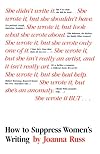
How to Suppress Women's Writing
by Joanna Russ
On This Page
Description
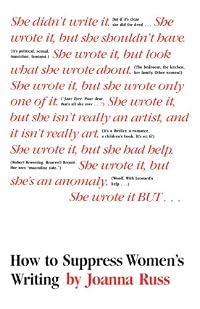
"Are women able to achieve anything they set their minds to? In How to Suppress Women's Writing, award-winning novelist and scholar Joanna Russ lays bare the subtle--and not so subtle--strategies that society uses to ignore, condemn, or belittle women who produce literature. As relevant today as when it was first published in 1983, this book has motivated generations of readers with its powerful feminist critique."--Publisher's description.Tags
Recommendations

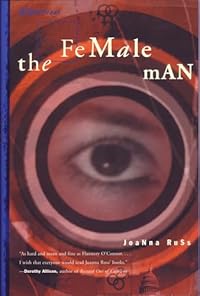


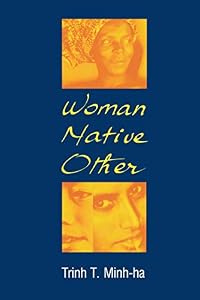
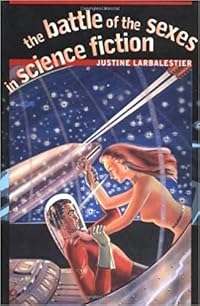
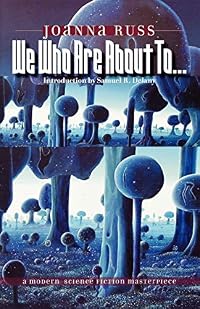











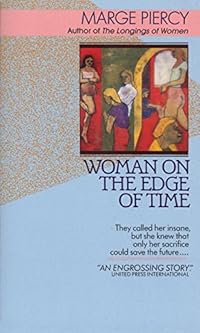
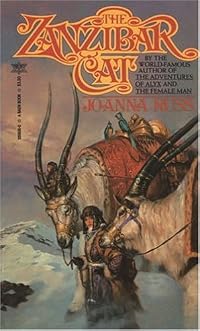
Member Recommendations

Member Reviews
After years of running across references to [b:How to Suppress Women's Writing|1047343|How to Suppress Women's Writing|Joanna Russ|http://photo.goodreads.com/books/1180491625s/1047343.jpg|158173], I have finally read it. (The timing on my acquiring and reading the book and my involvement in certain online arguments that I've stumbled upon lately about how sexism really still exists, no, really is probably not coincidental.)
ANYWAY. About the book. First off, it's a lit crit book with everything that that implies. For those of us without the heavy-duty lit background, this means the reading will be slow. Interesting, yes. Easy, no. The references/allusions/name-checks come fast and furious, but if, like me, you've never read, say Margaret show more Cavendish? The frequent citations of her work that assume a certain level of familiarity will be frustrating.
Keep going. It's worth it.
It's worth figuring out what gets left out or deemed unworthy and how -- and asking why. Because
Each chapter picks apart a tool/belief that keeps women's writing invisible and excluded from the Canon. Misattribution. Impropriety of subject matter. Unimportance of subject matter. False categorization (or judging pieces against the standards of a genre they don't belong to). Exceptionalism. Isolation from (feminine) influences. Denial of agency. And while the title clearly sets these obstacles up as something deliberate... the text itself does a fantastic job of showing how these beliefs permeate culture, how the ideas embed themselves in the minds of essentially well-intentioned critics/authors/readers, men and women alike.
She periodically points out how these same tools of suppression are used to deny a literary history to other marginalized groups -- she may have set out to expose the tools of sexism, but they are also the tools of racism and colonialism and heterosexism and classism and...
In fact, in the afterward of my edition, Russ acknowledged that she'd fallen into the same traps set along racial lines and added an "idiosyncratic" collection of quotes from literary works by members of minority groups that had been similarly ignored and excluded by the gatekeepers of Literature, including herself-as-critic. show less
ANYWAY. About the book. First off, it's a lit crit book with everything that that implies. For those of us without the heavy-duty lit background, this means the reading will be slow. Interesting, yes. Easy, no. The references/allusions/name-checks come fast and furious, but if, like me, you've never read, say Margaret show more Cavendish? The frequent citations of her work that assume a certain level of familiarity will be frustrating.
Keep going. It's worth it.
It's worth figuring out what gets left out or deemed unworthy and how -- and asking why. Because
A mode of understanding life which willfully ignores so much can do so only at the peril of thoroughly distorting the rest. A mode of understanding literature which can ignore the private lives of half the human race is not "incomplete"; it is distorted through and through. Feminist criticism of the early 1970s began by pointing out the simplist of these distortions, that is, that the female characters of even our greatest realistic "classics" by male writers are often not individualized portraits of possible women, but creations of fear and desire.
Each chapter picks apart a tool/belief that keeps women's writing invisible and excluded from the Canon. Misattribution. Impropriety of subject matter. Unimportance of subject matter. False categorization (or judging pieces against the standards of a genre they don't belong to). Exceptionalism. Isolation from (feminine) influences. Denial of agency. And while the title clearly sets these obstacles up as something deliberate... the text itself does a fantastic job of showing how these beliefs permeate culture, how the ideas embed themselves in the minds of essentially well-intentioned critics/authors/readers, men and women alike.
She periodically points out how these same tools of suppression are used to deny a literary history to other marginalized groups -- she may have set out to expose the tools of sexism, but they are also the tools of racism and colonialism and heterosexism and classism and...
In fact, in the afterward of my edition, Russ acknowledged that she'd fallen into the same traps set along racial lines and added an "idiosyncratic" collection of quotes from literary works by members of minority groups that had been similarly ignored and excluded by the gatekeepers of Literature, including herself-as-critic. show less
By examining the progression of bad faith arguments used to belittle writing done by women, each progressively more desperate/illogical, Russ shows how flawed and dangerous much critical analysis of women’s work can be. As someone who doesn’t do a lot of academic reading, this was a slough in parts. However, Russ makes excellent points regarding the literary canon, college syllabi, and cultural values- and this was written in ‘83! While much has changed in the publishing industry, there are still gaps in racial diversity and pay rates, as well as in syllabi around the world. Overall, this was an excellent read, if a little dense for me at times, and is, unfortunately, still very relevant.
What a very good overview of the ways in which European and US women's writing/art has been trivialised or ignored in history and now. This book is the difference between instinctively knowing something to be true and seeing the facts laid out in front of you.
Russ' categories are well thought out and by her own admission not comprehensive (is it even possible to catalogue all the wrongs!) The book lays out the basic ways used to devalue and dismiss these women's works - which feels applicable to so many other forms of suppression.
I'd be interested to see the book expanded and updated to include non-Eurocentric histories, just to see if and how these minimisation attempts differ across cultures. From now on, I'll be keeping a sharper eye show more on reviews for these telltale attempts of belittlements. show less
Russ' categories are well thought out and by her own admission not comprehensive (is it even possible to catalogue all the wrongs!) The book lays out the basic ways used to devalue and dismiss these women's works - which feels applicable to so many other forms of suppression.
I'd be interested to see the book expanded and updated to include non-Eurocentric histories, just to see if and how these minimisation attempts differ across cultures. From now on, I'll be keeping a sharper eye show more on reviews for these telltale attempts of belittlements. show less
This one belongs on the Feminist Classics shelf. I stumbled across a reference to it online, and was intrigued enough to order it through Inter-Library Loan, which should say something right there. A feminist classic about how women's writing is suppressed, written by a woman... that's unavailable at my local library? In Portland, Oregon, yet? So.
I don't know who said "If you're not outraged, you're not paying attention" but after reading this, one suspects it was a woman writer.
Highly recommended if you write or if you read. It'll make you angry enough to spit nails, be warned going in.
I don't know who said "If you're not outraged, you're not paying attention" but after reading this, one suspects it was a woman writer.
Highly recommended if you write or if you read. It'll make you angry enough to spit nails, be warned going in.
http://nwhyte.livejournal.com/1649823.html
A passionate, fairly concise polemic about the way in which women as writers are marginalised by academics, though also about the experience of minority erasure generally. Although towards the end it veered closer to micro-critiques of college course reading lists from over thirty years ago (I would be interested to know how much things have changed since), it's mostly full of wisdom and rage simultaneously. Numerous very good lines, including:
'The social invisibility of women's experience is not "a failure of human communication". It is a socially arranged bias persisted in long after the information about women's experience is available (sometimes even publicly insisted on).'
In other words, a show more book at least as much about society as a whole as it is about literature studies, its ostensible subject. Excellent. show less
A passionate, fairly concise polemic about the way in which women as writers are marginalised by academics, though also about the experience of minority erasure generally. Although towards the end it veered closer to micro-critiques of college course reading lists from over thirty years ago (I would be interested to know how much things have changed since), it's mostly full of wisdom and rage simultaneously. Numerous very good lines, including:
'The social invisibility of women's experience is not "a failure of human communication". It is a socially arranged bias persisted in long after the information about women's experience is available (sometimes even publicly insisted on).'
In other words, a show more book at least as much about society as a whole as it is about literature studies, its ostensible subject. Excellent. show less
Utterly fucking brilliant. I hesitate to be melodramatic, but it's been a few weeks now, I've renewed it from the university library twice, and I may not be over-stating the case to say that this is one of the books that changes my life. It's genuinely altered how I think about criticism, I've got a to-read list that tripled in the period I was reading it, and I've been arguing with professors and blog commenters in a really different way than I used to. It just -- the experience of reading it was overwhelming in the very best way.
Joanna Russ was a science fiction writer who came to prominence in the field in the 1960s, when women in the field were beginning to increase in numbers, but the explosion of women in science fiction of the 1970s was still in the future. She was also one of science fiction's home-grown scholars and critics, doing the work academics and more conventionally "respectable" literary critics were not yet ready to do.
In How to Suppress Women's Writing, she once again takes on work respectable academics and literary critics weren't willing to do: take a long, hard look at how and why women writers and artists, as well as other minority group writers and artists, keep disappearing from the record. Prominent in their own times, they quickly fade show more from view, leaving later generations to believe that only an exceptional few ever existed, or if they did exist, were inferior, forgettable talents. Emily Dickinson, for instance, is generally presented as springing from nothing, influenced by no predecessors or contemporaries, and influencing no women who came after her.
This is simply wrong. Emily Dickinson corresponded with other women writers, and other women writers and artists in every era had other women they knew, corresponded with, met, were aware of. They supported, influenced, competed with each other.
Often what they were doing appears thin, weak, or simply sui generis, because the literary tradition of which they are a part is invisible or forgotten. Or it's about women's experience, women's lives, women's perception of the world, which appear trivial and superficial in a literary tradition and a culture that centers white, male, heterosexual experiences and viewpoints.
This is a groundbreaking work, and yes, even thirty years later, you do want to read it. It will broaden and enrich your experience of literature, even as it alerts you to the ways in which women's creative work is still devalued.
Highly recommended.
I bought this book. show less
In How to Suppress Women's Writing, she once again takes on work respectable academics and literary critics weren't willing to do: take a long, hard look at how and why women writers and artists, as well as other minority group writers and artists, keep disappearing from the record. Prominent in their own times, they quickly fade show more from view, leaving later generations to believe that only an exceptional few ever existed, or if they did exist, were inferior, forgettable talents. Emily Dickinson, for instance, is generally presented as springing from nothing, influenced by no predecessors or contemporaries, and influencing no women who came after her.
This is simply wrong. Emily Dickinson corresponded with other women writers, and other women writers and artists in every era had other women they knew, corresponded with, met, were aware of. They supported, influenced, competed with each other.
Often what they were doing appears thin, weak, or simply sui generis, because the literary tradition of which they are a part is invisible or forgotten. Or it's about women's experience, women's lives, women's perception of the world, which appear trivial and superficial in a literary tradition and a culture that centers white, male, heterosexual experiences and viewpoints.
This is a groundbreaking work, and yes, even thirty years later, you do want to read it. It will broaden and enrich your experience of literature, even as it alerts you to the ways in which women's creative work is still devalued.
Highly recommended.
I bought this book. show less
Members
- Recently Added By
Published Reviews
ThingScore 100
How to Suppress Women’s Writing invites re-reading; on second perusal, I found more than I had the first time. The humor is more obvious, the arguments doubly interesting with repetition, and the culminating effect all together different: the first time, I was understandably upset though struck with the clarity of the argument; the second time, I was pleased to have read it again, to have show more closely read Russ’s brilliant synthesis of information and to have appreciated her genius. The arguments are still great, and still immensely emotional for me as a writer in a tradition that has contributed as much as any to the erasure of women artists, but the book is more a treat. (And I still think it should be assigned reading for starting university students; what a difference it might make in how they see their continuing engagement with “the canon.”) show less
added by PhoenixFalls
Russ never loses her cool or becomes accusatory in the text, though some of the examples might make the reader angry enough that they have to put the book down for a moment (me included). It’s engaging, witty and well-reasoned without ever plunging over the edge into “hopelessly academic.”
added by PhoenixFalls
Lists

Best Feminist Science Fiction
188 works; 35 members

500 Great Books by Women
507 works; 60 members

KayStJ's to-read list
1,616 works; 11 members

Classics you know you should have read but probably haven't
421 works; 407 members

Club Read's Recommended Nonfiction Written by Women
618 works; 30 members

Books published by The Women's Press
14 works; 1 member
Author Information

94+ Works 7,647 Members
Joanna Russ was born in New York City on February 22, 1937. She received a degree in English from Cornell University in 1957 and a MFA in playwriting from the Yale Drama School in 1960. She taught at various colleges and universities during her lifetime including a long stint at the University of Washington in Seattle. She was a critic and science show more fiction writer best known for books of criticism such as The Female Man (1975) and How to Suppress Women's Writing (1984) as well as the novel And Chaos Died (1970). She died on April 29, 2011 at the age of 74. (Bowker Author Biography) show less
Awards and Honors
Awards
Notable Lists
Series
Belongs to Publisher Series
Common Knowledge
- Original publication date
- 1983
- People/Characters
- Joanna Russ
- Dedication
- This book is dedicated to my students.
- First words
- GLOTOLOG, n., stand. Intergalactic, current: Dominant sapients Tau Ceti 8 noted for the practice of frument, an art form combining aspects of Terrestrial hog calling, Martian slipping involuntarily upon the ice, and Uranian <... (show all)i>drof (lovingly nurturing the growth of slowly maturing crystals by enfolding them in all eight of one's limbs).
- Last words
- (Click to show. Warning: May contain spoilers.)Until then I remain impenitent.
- Blurbers
- Rich, Adrienne; Kolodny, Annette; Piercy, Marge; Chester, Phyllis
- Canonical DDC/MDS
- 809.89287
- Canonical LCC
- PN471.R87
Classifications
- Genres
- Literature Studies and Criticism, Nonfiction, Sexuality and Gender Studies
- DDC/MDS
- 809.89287 — Literature & rhetoric Literature, rhetoric & criticism History, description, critical appraisal of more than two literatures By or for groups of persons Cultural theory of the literature of social groups Literature of women
- LCC
- PN471 .R87 — Language and Literature Literature (General) Literature (General) Literary history Biography
- BISAC
Statistics
- Members
- 796
- Popularity
- 34,733
- Reviews
- 20
- Rating
- (4.26)
- Languages
- 6 — Catalan, Chinese, Dutch, English, Italian, Spanish
- Media
- Paper, Audiobook, Ebook
- ISBNs
- 13
- ASINs
- 4