On This Page
Description
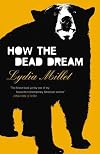
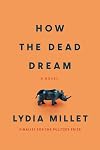
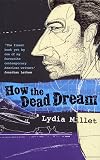
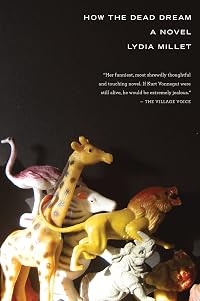
General Adult. T. is a young Los Angeles real estate developer consumed by power and political ambitions. His orderly, upwardly mobile life is thrown into chaos by the sudden appearance of his nutty mother, whos been deserted by T.s now out-of-the-closet father. After his mothers suicide attempt and two other deaths, T. finds himself increasingly estranged from his latest project: a retirement community in the middle of the California desert. As he juggles family, business, and social show more responsibilities, T. begins to nurture a curious obsession with vanishing species. Soon hes living a double life, building sprawling subdivisions by day and breaking into zoos at night to be near the animals. show lessTags
Recommendations








Member Reviews
I really enjoyed this book about a man's growth from self-centered to self-actualized, from a capitalist par excellence to someone who learns to have empathy for others and almost total identification with the natural world. Millet takes ordinary life and turns it on its head with unexpected turns and insights that almost seem too profound except they're not. My favorite part came when T., the protagonist, has befriended his secretary's disabled daughter and admits to himself that he was wrong to believe the friendship was a favor he was doing for her, until he misses her and realizes that it's the opposite after all. Anyway. I am really looking forward to book two in the series and more of MIllet's lovely writing. My full review: show more target="_top">http://www.bostonbibliophile.com/2015/11/review-how-dead-dream-by-lydia-millet.h... show less
I wasn't really sure what I was getting into with this book. Someone recommended it and so I thought I'd give it a try. I like reading titles that I would never think to seek out on my own.
I finished it in one sitting. This book wrapped me in a cocoon of character and words that I didn't want to leave. Millet's prose is poetry - lyrical, beautiful, human. And sardonically funny, which is always good!
From the beginning, I was worried that I wasn't going to like the main character. He's set up to be a selfish, rationalizing capitalist only concerned with his own gain. I worried needlessly. Even before Millet takes him into the true heart of his transformation, she keeps him very sympathetic and genuinely likable (if not always show more relatable).
Millet is an author of deep compassion and profound understanding. I look forward to being wrapped in the characters and words of her other work soon. show less
I finished it in one sitting. This book wrapped me in a cocoon of character and words that I didn't want to leave. Millet's prose is poetry - lyrical, beautiful, human. And sardonically funny, which is always good!
From the beginning, I was worried that I wasn't going to like the main character. He's set up to be a selfish, rationalizing capitalist only concerned with his own gain. I worried needlessly. Even before Millet takes him into the true heart of his transformation, she keeps him very sympathetic and genuinely likable (if not always show more relatable).
Millet is an author of deep compassion and profound understanding. I look forward to being wrapped in the characters and words of her other work soon. show less
If Evelyn Waugh had been an environmentalist you might get something like this. Her style has that wonderful acidic elegance - it never thuds or oversells. I really didn't think there were any younger contemporary American writers who could still write like that. As with Waugh you don't mind the episodic plot, or the dwindling-to-nothing denouement, because most great satire has those characteristics. IMHO we need less gothic, less twee, less quirk and less clueless bourgeois liberalism in our contemporary fiction and more of this.
How the Dead Dream is a surprising dramatization of how one man's consciousness evolves from utilitarian concerns to philosophical insight. The protagonist, T (short for Thomas, although his name seldom appears; especially in the latter half of the novel, he is indicated by pronouns), begins his life fascinated by money: its visual appearance and tactile qualities, the many means by which it might be accumulated, the important differences it can make when effectively disbursed. A series of traumatic personal experiences, however, turns his mind from the ways of getting and spending, and toward matters of existential significance. Intimate instances of disappearance and death de-center T's world, yet it is the process of extinction--or show more rather, his awareness that this phenomenon is well underway and all around us--that changes his worldview.
The existential truth T recognizes is simple and profound: life is always in the process of passing away. Except by not acting in ways that tend to accelerate extinction, no reformation of behavior or attitude will enable us to avoid the inevitable endpoint of global death. The triumph of How the Dead Dream is its success in communicating this dire truth without becoming ponderous, gloomy, or despondent. Still, its vision is dark; defeat is foreordained. The only way to escape despair is to shift one's conception of the predicament: to think of it not as a contest with a loser/winner outcome, but to accept it as a natural process infinitely more powerful than human intention, or desire.
Nothing in Millet's premise is objectionable and her rendition of narrative events is plausible, crisp, insightful, both smart and wise, and often humorous (one perfect scene roughly three-quarters into the book is worth the price of admission all on its own). At the same time, much of what happens feels not just unexpected but downright strange; and T's response, both to specific circumstances and in total, seems unusual--not just idiosyncratic but so weird as to seem forced (by the author) to the end of illustrating a theme. The grief he feels after hitting a coyote with his car and watching it die seems exceptionally disproportionate--unless one reads his response as a welling-up of repressed emotion that is more properly attached to his father's renunciation of their family and his mother's encroaching dementia. This incident occurs early in T's movement from deal-maker and unsentimental "fixer" to existential philosopher, and may be read as the precipitating accident that turns his consciousness from matters associated with the former to ruminations more typical of the latter. As such, it is acceptable in terms of craft, however surprising it seems in terms of verisimilitude. The problem--if it is a problem rather than the novel's point--is that T's strongly compassionate responses to the many sufferings and disappearances of various animals tend to equal in emotional force his reactions to personal losses of human beings, including the sudden death of his fiancée. Are the lives of animals, both individual and species, equal to human lives? For T, the answer seems to be "yes."
One might argue that this equivalence is wholly appropriate, given the novel's premise that "we are all in this together" (my cliché; Millet's language is better): that humans are a part of nature and that when nature dies, people, too, are dying. However, to know something is true is not the same as feeling it to be so. As sincerely, albeit reluctantly, as one might acknowledge the truth that universal extinction is inevitable, it is difficult to take this truth to heart and carry it in one's consciousness moment-by-moment. Like the foreknowledge of one's own death--always impending, swiftly forgotten--it is a truth we repress in order to live a while longer. T's tragedy--and, thanks to the author, his fate--is his inability to repress this awareness. Is it wisdom, or morbid sentimentality? A bit of both, perhaps, more or less so depending on one's ideas of human exceptionalism vis-à-vis species-levelling. By any measure, it is a cruel knowingness that changes T's life and presently ends it. show less
The existential truth T recognizes is simple and profound: life is always in the process of passing away. Except by not acting in ways that tend to accelerate extinction, no reformation of behavior or attitude will enable us to avoid the inevitable endpoint of global death. The triumph of How the Dead Dream is its success in communicating this dire truth without becoming ponderous, gloomy, or despondent. Still, its vision is dark; defeat is foreordained. The only way to escape despair is to shift one's conception of the predicament: to think of it not as a contest with a loser/winner outcome, but to accept it as a natural process infinitely more powerful than human intention, or desire.
Nothing in Millet's premise is objectionable and her rendition of narrative events is plausible, crisp, insightful, both smart and wise, and often humorous (one perfect scene roughly three-quarters into the book is worth the price of admission all on its own). At the same time, much of what happens feels not just unexpected but downright strange; and T's response, both to specific circumstances and in total, seems unusual--not just idiosyncratic but so weird as to seem forced (by the author) to the end of illustrating a theme. The grief he feels after hitting a coyote with his car and watching it die seems exceptionally disproportionate--unless one reads his response as a welling-up of repressed emotion that is more properly attached to his father's renunciation of their family and his mother's encroaching dementia. This incident occurs early in T's movement from deal-maker and unsentimental "fixer" to existential philosopher, and may be read as the precipitating accident that turns his consciousness from matters associated with the former to ruminations more typical of the latter. As such, it is acceptable in terms of craft, however surprising it seems in terms of verisimilitude. The problem--if it is a problem rather than the novel's point--is that T's strongly compassionate responses to the many sufferings and disappearances of various animals tend to equal in emotional force his reactions to personal losses of human beings, including the sudden death of his fiancée. Are the lives of animals, both individual and species, equal to human lives? For T, the answer seems to be "yes."
One might argue that this equivalence is wholly appropriate, given the novel's premise that "we are all in this together" (my cliché; Millet's language is better): that humans are a part of nature and that when nature dies, people, too, are dying. However, to know something is true is not the same as feeling it to be so. As sincerely, albeit reluctantly, as one might acknowledge the truth that universal extinction is inevitable, it is difficult to take this truth to heart and carry it in one's consciousness moment-by-moment. Like the foreknowledge of one's own death--always impending, swiftly forgotten--it is a truth we repress in order to live a while longer. T's tragedy--and, thanks to the author, his fate--is his inability to repress this awareness. Is it wisdom, or morbid sentimentality? A bit of both, perhaps, more or less so depending on one's ideas of human exceptionalism vis-à-vis species-levelling. By any measure, it is a cruel knowingness that changes T's life and presently ends it. show less
I give this book 4 stars, but my dog gives it 5. It didn't take me long to read, because it's both intellectually, emotionally and aesthetically rewarding; but for the two days I was reading it my dog could wheedle pretty much anything she wanted out of me. You want not just the bone, but the whole steak? It's all yours, Bess. You don't want the chopped off bits of celery head and base, but the whole damn heart? Yours, cutie.
This might not be the greatest recommendation in the world, but not many novelists really show how important a non-human companion can be to a person, and Millet does that very well.
More importantly, she blends fairly run of the mill realism (touching, believable characters, who develop well, encounter show more difficulties, change), quirky conceits (part of T's development is that he... erm... breaks into zoos to get in touch with the 'loneliness' of endangered animals, which is--get it!?--just like the 'loneliness' of men and women who live late capitalist lives), and mild satire (. As I said above, she's much smarter than the rest of us, so this doesn't become trite or propagandistic at any point (unless you think "don't destroy animals for no reason" is propaganda). And it's beautifully written.
For all these reasons, I really enjoyed it, even though it tends towards almost Rilke-like levels of the death drive worship (everything would be great if we could just get rid of everything that makes human life worth living and be more like animals, or, at best, matter). There's also a faint country song tinge to the plot (spoilers alert): everyone keeps on dyin'. But that's reasonable considering the theme of extinction and its relationship to loneliness. show less
This might not be the greatest recommendation in the world, but not many novelists really show how important a non-human companion can be to a person, and Millet does that very well.
More importantly, she blends fairly run of the mill realism (touching, believable characters, who develop well, encounter show more difficulties, change), quirky conceits (part of T's development is that he... erm... breaks into zoos to get in touch with the 'loneliness' of endangered animals, which is--get it!?--just like the 'loneliness' of men and women who live late capitalist lives), and mild satire (. As I said above, she's much smarter than the rest of us, so this doesn't become trite or propagandistic at any point (unless you think "don't destroy animals for no reason" is propaganda). And it's beautifully written.
For all these reasons, I really enjoyed it, even though it tends towards almost Rilke-like levels of the death drive worship (everything would be great if we could just get rid of everything that makes human life worth living and be more like animals, or, at best, matter). There's also a faint country song tinge to the plot (spoilers alert): everyone keeps on dyin'. But that's reasonable considering the theme of extinction and its relationship to loneliness. show less
I sort of hated Millet's Oh Pure and Radiant Heart, which was my introduction to her work, but this one I liked quite a lot. While it started off as an oddly distanced portrait of a boy, it wound up being kind of a lovely story about growing up and learning to be a real person with concerns beyond yourself. The prose is effortless and at times beautiful. I liked reading about T's development, even when I didn't believe it's how people actually work in the real world.
Pulitzer finalist Millet begins a loosely connected trilogy with this deliberately paced character study of a novel. Real estate developer T. has always been obsessed with money; he was the first boy his age to have a bank account and he found creative ways to fill it. As a young man, he is already a success, building retirement resorts in the desert and vacation resorts on remote islands. But his entire world is shaken when he first falls in love with a woman and then unexpectedly loses her to a car accident. Now lost and alone except for his increasingly senile mother, his competent but distant secretary, and his secretary’s brash paraplegic daughter, T. becomes obsessed with things that are lost and things that are show more last…specifically, on animals close to the brink of extinction. He begins a series of late-night commando break-ins of zoos, trying to be close to the animals so he can attempt to understand how they feel and therefore, how he feels. When he visits his holdings in South America and attempts to track down the endangered jaguars living on a preserve nearby, his quest comes to a definitive conclusion as he is forced to come face-to-face with his deepest and most bare self.
A lyrical, vivid meditation on self vs world, self vs others, and humanity vs nature, Millet’s novel is involving, disturbing, and insightful. show less
A lyrical, vivid meditation on self vs world, self vs others, and humanity vs nature, Millet’s novel is involving, disturbing, and insightful. show less
Members
- Recently Added By
Lists

Powell's Indiespensable
79 works; 6 members
Author Information

27+ Works 4,440 Members
Lydia Millet is the author of Omnivores and George Bush, Dark Prince of Love. She lives in Tucson, Arizona and New York City. (Bowker Author Biography)
Awards and Honors
Distinctions
Notable Lists
Series

Common Knowledge
- Canonical title
- How the Dead Dream
- First words
- His first idol was Andrew Jackson.
- Last words
- (Click to show. Warning: May contain spoilers.)As, after a while, all the mothers would be.
Classifications
Statistics
- Members
- 328
- Popularity
- 96,895
- Reviews
- 15
- Rating
- (3.69)
- Languages
- English, French, German
- Media
- Paper, Audiobook, Ebook
- ISBNs
- 15
- ASINs
- 2