On This Page
Description
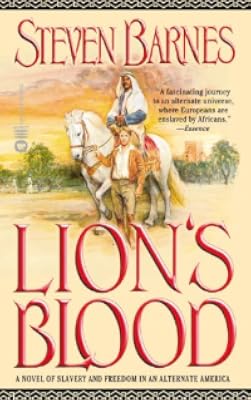
In a work of alternate history in which the peoples of Africa colonize the Americas, the fates of two families--one Islamic African aristocrats, the other Druidic Irish slaves--collide as two young men, one of each dynasty, confront their world and each other.Tags
Recommendations





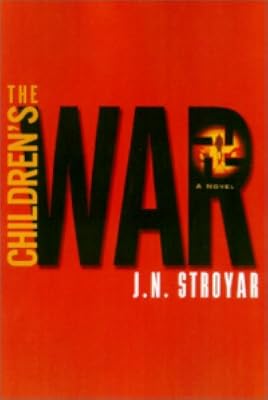
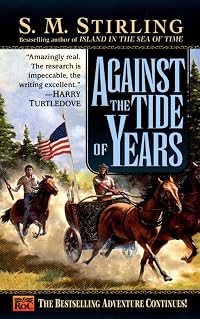
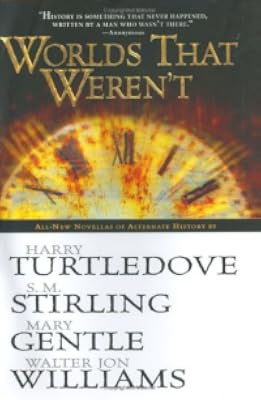
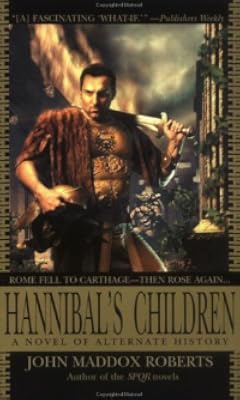

Member Recommendations
Member Reviews
I came to this book via the filk music CD Insh'allah: the Music of Lion's Blood by Heather Alexander. I enjoyed the music, but I wanted to know more about the world that inspired it. So I picked up Lion's Blood, not sure what to expect.
What I got was thoughtful, intriguing alternate history. The premise is that Africa became the center of culture and civilization and Islam became the predominate religion rather than Christianity. Bilalistan (occupying most of the land that the United States did in the mid 1800s) has been colonized. Europe is the source for slaves to work the plantations, provided mostly by Northmen (Vikings) who also have a colony in the northern part of Bilalistan (eastern Canada).
It wasn't always the most comfortable show more book to read. It is an uncompromising look at slavery and how it affects both the owners and the slaves. Can there be friendship between an owner and a slave? Can there be friendship between people who are not equals and can never be equals by the laws of the society? How does an honorable man behave as a slave or as an owner? Can love survive in a structured society, either as a slave or a woman expected to marry for the good of the realm? Throw in a war with the Aztecs to add stress and possibilities into the mix.
This powerful book deserves to be read by those who are thoughtful and wonder about the nature of relationships. It certainly would be enjoyed by readers who enjoy historical novels with a twist as well as fans of alternate histories. Most highly recommended. Although this could easily stand alone, I have already bought the sequel. show less
What I got was thoughtful, intriguing alternate history. The premise is that Africa became the center of culture and civilization and Islam became the predominate religion rather than Christianity. Bilalistan (occupying most of the land that the United States did in the mid 1800s) has been colonized. Europe is the source for slaves to work the plantations, provided mostly by Northmen (Vikings) who also have a colony in the northern part of Bilalistan (eastern Canada).
It wasn't always the most comfortable show more book to read. It is an uncompromising look at slavery and how it affects both the owners and the slaves. Can there be friendship between an owner and a slave? Can there be friendship between people who are not equals and can never be equals by the laws of the society? How does an honorable man behave as a slave or as an owner? Can love survive in a structured society, either as a slave or a woman expected to marry for the good of the realm? Throw in a war with the Aztecs to add stress and possibilities into the mix.
This powerful book deserves to be read by those who are thoughtful and wonder about the nature of relationships. It certainly would be enjoyed by readers who enjoy historical novels with a twist as well as fans of alternate histories. Most highly recommended. Although this could easily stand alone, I have already bought the sequel. show less
This was a difficult read. Difficult in the way, I think, the author wants it to be difficult. It's a convincing alternate history where Africans, not Europeans end up the conquering force of the world. Whites are the slaves, and Blacks are the masters. What makes it so convincing is that it eschews the fantastic, or sci-fi aspects of alternate history, and hinges merely on a few key points different in the past. History is rife with moments where things turned on such small happenstances, and Barnes seems to find just enough of them to shift the globe into a realistic alternative. On a more personal level, one of the main characters, captured as a child and bound into slavery is a young lad from Ireland, land of my own ancestors. It show more made following his horrors all the more poignant. Though mere words can only convey the barest whispers of what that life might have been like for real slaves, even still there were moments I had to take a short break from the story. Dense, luscious language, believable characters, and tense action, I look forward to the next novel in this setting, Zulu Heart. show less
This novel is set in a world controlled by Muslim Africans rather than Christian Europeans.
The richly imagined alternate history in this story is a gem -- the details of the mid-1880s America setting (as well as the characters and pacing) render what could be a straightforward twist on a straightforward American slavery plot into an unputdownable novel. Recommended to anyone the premise intrigues.
The richly imagined alternate history in this story is a gem -- the details of the mid-1880s America setting (as well as the characters and pacing) render what could be a straightforward twist on a straightforward American slavery plot into an unputdownable novel. Recommended to anyone the premise intrigues.
I don't know what to say about this book. There were just so many good things about it. I don't have one negative to say. I
The character were well done. I cared about what happened to all the main characters, even if I did not like their role in the story. I wanted to know what happened to them. The two main characters Aiden (the white slave) and Kai (the black master) were very believable for the time period that the story took place in. Barnes developed the characters (all of them) nicely and seemed to put a lot of thought in what role they played in the story.
I also like how Barnes included references to historical figures in the story (Shaka Zulu, Mozart, Da Vinic) and what their role would have been in his alternative history where show more Islam dominates.
Another plus is that Barnes did not sugar coat the possibility of Islamic slavery. He did not make it seem that slavery in an Islamic America would have been better and more humane. In fact Lion's Blood illustrates that it would have been the same but religious orientation different.
At the end I could not put this book down and basically read the last 200 or so pages in one sitting. I even shed a tear at the end. It's a great story of friendship and slavery. I am going to put the sequel on my wish list. show less
The character were well done. I cared about what happened to all the main characters, even if I did not like their role in the story. I wanted to know what happened to them. The two main characters Aiden (the white slave) and Kai (the black master) were very believable for the time period that the story took place in. Barnes developed the characters (all of them) nicely and seemed to put a lot of thought in what role they played in the story.
I also like how Barnes included references to historical figures in the story (Shaka Zulu, Mozart, Da Vinic) and what their role would have been in his alternative history where show more Islam dominates.
Another plus is that Barnes did not sugar coat the possibility of Islamic slavery. He did not make it seem that slavery in an Islamic America would have been better and more humane. In fact Lion's Blood illustrates that it would have been the same but religious orientation different.
At the end I could not put this book down and basically read the last 200 or so pages in one sitting. I even shed a tear at the end. It's a great story of friendship and slavery. I am going to put the sequel on my wish list. show less
An alternative history novel.......
What if America had been colonialized by people of African descent? What if the Mayan Empire would have flourished? What if Europeans were enslaved by the Africans? What if Islam was the dominant religion of the world’s superpowers?
Lion's Blood is a satire of race relations in this country in the latter half of the 19th century. On one hand, it is an exercise in polemics and rhetoric, but on the other, it tells an engrossing story of two boys who have a complex master-slave relationship. In many ways, it resembles an inverted Roots.
In ancient times, many Greeks, including Socrates, were attracted to Egypt, especially after a wounded Alexander claimed the throne of the Pharaoh. Alexandrian Egypt, show more allied with Kush, established trade routes up the Nile and into southern Africa. When Rome became a commercial and military threat, Egypt and Kush allied with Carthage and defeated Rome, which sank in obscurity. When Islam arose, Bilal, a former Abyssinian slave, saved Muhammad's daughter, Fatima, from the Prophet's enemies, carried her to Abyssinia, and married her. Fatima become an impassioned leader, second only to the Prophet himself, leading her followers on the jihad that established Islam throughout Africa.
When a plague swept through the Egyptian royalty, an Abyssinian gained the throne, giving both empires a black royalty. The plague also swept Europe, killing the bulk of the population, and leaving only small villages and scattered barbarian tribes. In 1863, the Egyptian and Abyssinian empires are the two superpowers. Egypt has colonies in Bilalistan, corresponding to the Gulf states from Alabama to southeastern Texas, but most colonists are Abyssinian or Zulu. It's just a matter of time before the colonists declare their own independence.
This novel explores slavery in a dascinating what if scenario. I liked the plausability of the alternate reality. That history fascinated me as much as the story itself. The story focuses on Bilal and Aidan-friends when they were kids before thier roles as master and slave became so real. I also like the Zulu's in this novel.
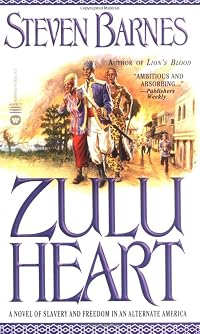
Lion's Blood by Steven Barnes has a sequel-Zulu Heart which I have not yet read. show less
What if America had been colonialized by people of African descent? What if the Mayan Empire would have flourished? What if Europeans were enslaved by the Africans? What if Islam was the dominant religion of the world’s superpowers?
Lion's Blood is a satire of race relations in this country in the latter half of the 19th century. On one hand, it is an exercise in polemics and rhetoric, but on the other, it tells an engrossing story of two boys who have a complex master-slave relationship. In many ways, it resembles an inverted Roots.
In ancient times, many Greeks, including Socrates, were attracted to Egypt, especially after a wounded Alexander claimed the throne of the Pharaoh. Alexandrian Egypt, show more allied with Kush, established trade routes up the Nile and into southern Africa. When Rome became a commercial and military threat, Egypt and Kush allied with Carthage and defeated Rome, which sank in obscurity. When Islam arose, Bilal, a former Abyssinian slave, saved Muhammad's daughter, Fatima, from the Prophet's enemies, carried her to Abyssinia, and married her. Fatima become an impassioned leader, second only to the Prophet himself, leading her followers on the jihad that established Islam throughout Africa.
When a plague swept through the Egyptian royalty, an Abyssinian gained the throne, giving both empires a black royalty. The plague also swept Europe, killing the bulk of the population, and leaving only small villages and scattered barbarian tribes. In 1863, the Egyptian and Abyssinian empires are the two superpowers. Egypt has colonies in Bilalistan, corresponding to the Gulf states from Alabama to southeastern Texas, but most colonists are Abyssinian or Zulu. It's just a matter of time before the colonists declare their own independence.
This novel explores slavery in a dascinating what if scenario. I liked the plausability of the alternate reality. That history fascinated me as much as the story itself. The story focuses on Bilal and Aidan-friends when they were kids before thier roles as master and slave became so real. I also like the Zulu's in this novel.
Lion's Blood by Steven Barnes has a sequel-Zulu Heart which I have not yet read. show less
Very detailed, intriguing story. Great imagery. Depicts how different America would be if African Muslims colonized America and Europeans were slaves. My first introduction into alternate history fiction. Will read more. Book clubs, AA men, read! discuss!
An AU where Africa became the major world power, enslaving white Europeans on their plantations in the American South. It read to me like an inverse Roots.
Members
- Recently Added By
Lists

Best Alternate History
111 works; 60 members

Alternate Americas
15 works; 7 members

SantaThing 2014 Gifts
299 works; 17 members
Author Information

74+ Works 13,172 Members
He is the author of 15 novels & as many teleplays has been nominated for Hugo & Cable Ace Awards. He lives in Longview, Washington, with his novelist wife Tananarive Due & his daughter Nicki. (Bowker Author Biography)
Awards and Honors
Series

Common Knowledge
- Original publication date
- 2002-02-13
- First words
- Spring's first day was a warm, sweet song, a time of companionable silences and comfortably shared labor in Mahon O'Dare's coracle.
- Last words
- (Click to show. Warning: May contain spoilers.)It was also, he decided, the very finest draught of his entire life.
- Blurbers
- Johnson, Charles; Turtledove, Harry; Butler, Octavia E.; Bear, Greg; Silverberg, Robert; Niven, Larry (show all 8); Hopkinson, Nalo; Brin, David
Classifications
Statistics
- Members
- 413
- Popularity
- 75,346
- Reviews
- 11
- Rating
- (3.98)
- Languages
- English
- Media
- Paper, Ebook
- ISBNs
- 3
- ASINs
- 1