The Shadow Over Innsmouth [novella]
by H. P. Lovecraft
On This Page
Description
"The Shadow over Innsmouth" is a classic horror novella written by H.P. Lovecraft, first published in 1936. The story follows a young man who travels to the decaying, isolated town of Innsmouth, Massachusetts. As he delves into the town's dark history and mysterious residents, he uncovers a disturbing secret involving a pact with otherworldly entities known as the Deep Ones. Lovecraft's tale explores themes of forbidden knowledge, ancient cosmic horrors, and the consequences of meddling with show more the unknown. With its eerie atmosphere and psychological tension, "The Shadow over Innsmouth" remains a significant work in Lovecraft's Cthulhu Mythos and a cornerstone of supernatural horror literature. show lessTags
Recommendations








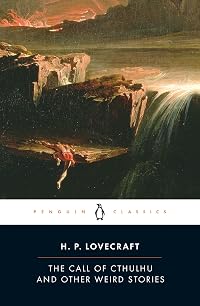
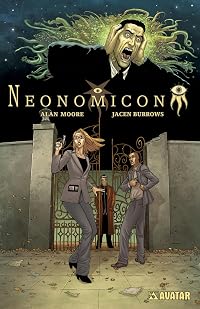
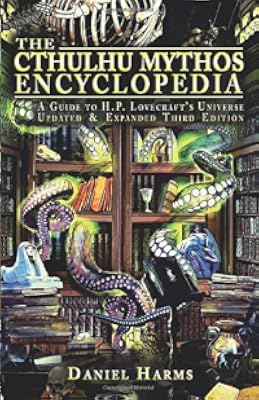
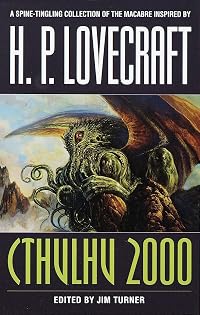







Member Recommendations

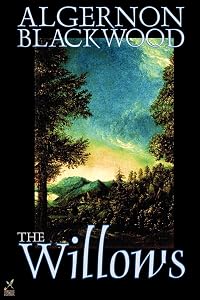
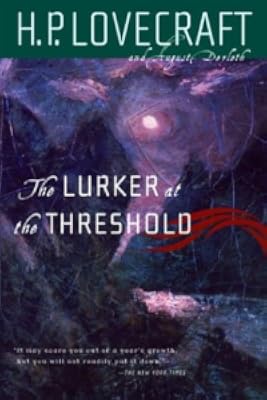
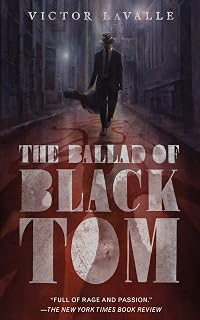
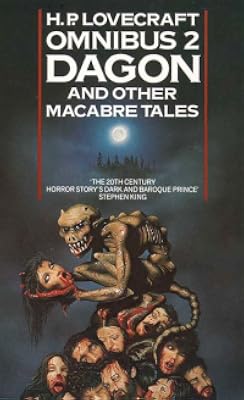
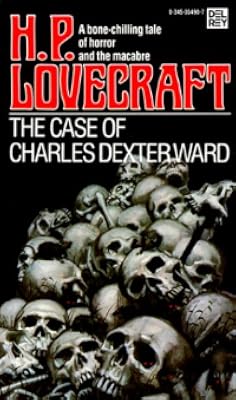
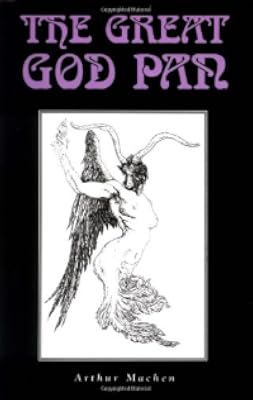
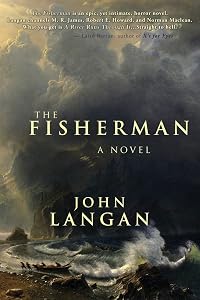
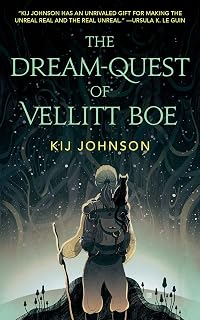
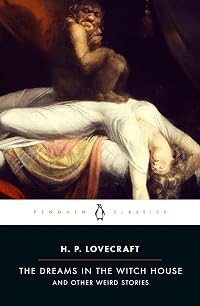
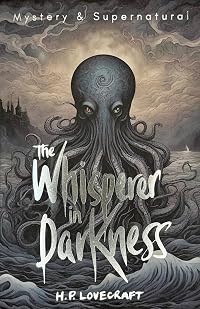
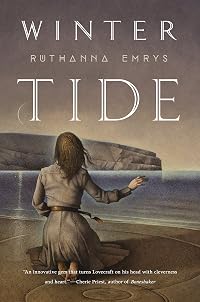
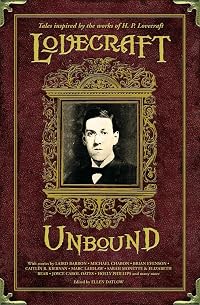
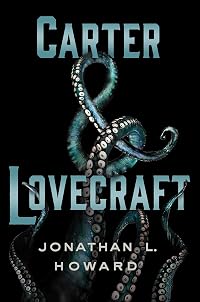
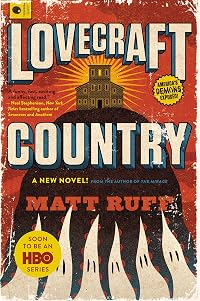
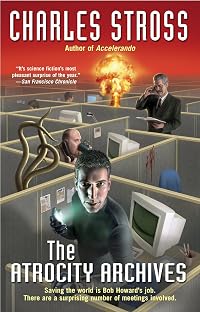
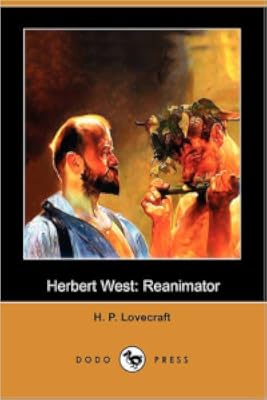
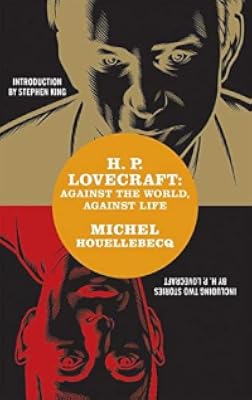
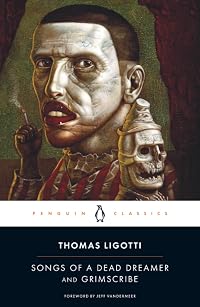
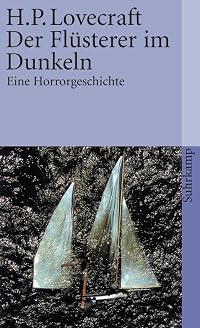
artturnerjr Emrys' tale is something of an "answer" story to Lovecraft's.

artturnerjr Tales of mysterious goings-on in creepy little New England towns by two masters of the horror genre.
Member Reviews
I'd give this one 3.5 stars if I could. This was the first H.P. Lovecraft story I've read. It's a quick little read. I've heard a lot about Lovecraft and his style, so I was paying a lot of attention to that. It's definitely unique. What i like best about his style is how he tries to be vague at first on the description of things - like the things coming out of the sea at night. He eventually gives us more detailed descriptions, but for that moment we get to fee a little anxiety as our mind tries to imagine our own versions of his gruesome, maddening, terrifying creations. I also like the little twist he threw in at the end. It's a common enough trope these days, but he probably invented it - or helped bring it to prominence.
I was warn show more you if this is your first Lovecraft story. Part of his unique style is to use lots of big words and sometimes overly complicated sentence structures. Even for his time, he was quite wordy show less
I was warn show more you if this is your first Lovecraft story. Part of his unique style is to use lots of big words and sometimes overly complicated sentence structures. Even for his time, he was quite wordy show less
Well you can't do any better than Lovecraft read by the inimitable Mike Bennett. He's almost a better voice actor than he is an original writer. Every eldritch purple syllable just oozes from the page as we take our ichthyous narrator down memory lane in Ol' Innsmouth. You'll want to turn the lights out, turn the volume up and make sure the lid to the aquarium is screwed down tight as you wander with Mike down the dilapidated streets of one of Massachusetts oldest sea towns.
Another creepy entry in the Lovecraft series. This one seemed a bit of a departure for H.P., in that it had a pretty solid action sequence, and actually showed people speaking.
One of my biggest complaints with Lovecraft is the dearth of dialogue in any of his stories. In this one, he raises the bar by having two actual characters speak. I don't mean he just tells us what they say, he actually has them speak.
Don't get me wrong, none of it is dialogue...both characters speak in information-dump monologues, and the second of the two's speech is so filled with patois that it's actually at times a quite difficult read. It took me two occurrences of the word "jine" to clue in he was saying "join".
For all that, with the exception of the show more somewhat unbelievable change-in-mindset ending, this was one of the better ones, for me. But yeah, two stars off for the stupid ending, and the info-dump monologues.
Gotta say, though, the blatant racism of the two included stories, Harbor-Master by Robert W. Chambers (of The King In Yellow fame) where the monster is briefly considered a "darkie", and Fishhead by Irvin S. Cobb, that peppers the entire story with some brutal racial stereotypes and a heapin' helpin' of "nigger" took me by surprise.
I can see how both stories appealed to Lovecraft, both from the man-fish angle, and from the slagging of a non-white race, but man...could have happily gone my entire life without reading either story. show less
One of my biggest complaints with Lovecraft is the dearth of dialogue in any of his stories. In this one, he raises the bar by having two actual characters speak. I don't mean he just tells us what they say, he actually has them speak.
Don't get me wrong, none of it is dialogue...both characters speak in information-dump monologues, and the second of the two's speech is so filled with patois that it's actually at times a quite difficult read. It took me two occurrences of the word "jine" to clue in he was saying "join".
For all that, with the exception of the show more somewhat unbelievable change-in-mindset ending, this was one of the better ones, for me. But yeah, two stars off for the stupid ending, and the info-dump monologues.
Gotta say, though, the blatant racism of the two included stories, Harbor-Master by Robert W. Chambers (of The King In Yellow fame) where the monster is briefly considered a "darkie", and Fishhead by Irvin S. Cobb, that peppers the entire story with some brutal racial stereotypes and a heapin' helpin' of "nigger" took me by surprise.
I can see how both stories appealed to Lovecraft, both from the man-fish angle, and from the slagging of a non-white race, but man...could have happily gone my entire life without reading either story. show less
That was the first I ever heard of shadowed Innsmouth. Any reference to a town not shewn on common maps or listed in recent guide-books would have interested me, and the agent’s odd manner of allusion roused something like real curiosity. A town able to inspire such dislike in its neighbours, I thought, must be at least rather unusual, and worthy of a tourist’s attention.
I am really conflicted on this one. The first half is a solid two star read, but that may be because it is so disappointing in comparison to [b:At the Mountains of Madness|32767|At the Mountains of Madness|H.P. Lovecraft|https://images.gr-assets.com/books/1388341769s/32767.jpg|17342821], which I read immediately prior. I am also not a fan of Lovecraft's obsessions show more withinterspecies coupling and genetic degeneration , so I was probably never going to really enjoy this whole story. And, of course, the bigoted world view that wraps Lovecraft's whole deal is back in force and feels oh so much more choking and confined after Mountains. That said, the second half was an absolutely gripping way to spend an afternoon, and I love, love, love that ending. Totally did not see it coming. So, three stars? Three stars. show less
I am really conflicted on this one. The first half is a solid two star read, but that may be because it is so disappointing in comparison to [b:At the Mountains of Madness|32767|At the Mountains of Madness|H.P. Lovecraft|https://images.gr-assets.com/books/1388341769s/32767.jpg|17342821], which I read immediately prior. I am also not a fan of Lovecraft's obsessions show more with
Lovecrafts racism is very clearly on display here, and any review needs to highlight how obvious and off-putting this part of his writing is. Beyond that, there are some positives and negatives. The extended dialogue with Zadok is slightly frustrating to read, partly because of the accented writing, partly because it’s a bit of a clunky exposition dump. The description of the Innsmouth residents is brilliant for the most part - the ‘bulgy eyes’ and ‘arms that dragged against the floor’ are really visually provoking. The escape from the Inn is probably the most atmospheric part of the book, and the most gripping. The escape from the town is also, but doesn’t quite reach this height again. The central idea of the book is show more brilliant, and it is obvious how it has influenced horror writing since. However, some of the flaws of Lovecraft's writing let down the premise. show less
The Shadow Over Innsmouth is a short novel about a weird hybrid race of humans and creatures resembling a cross between a fish and a frog, which lives in the seaside village of Innsmouth, so says the synopsis. In reality, it reads like a journal or a travelogue, and honestly, the writing style kept me with it as much as anything, as it was very matter-of-fact about what the writer went through. I’ve had this on my to-read list for a very long time, having been a goth teenager with a penchant for reading excessive amounts of books, and the books I skipped over in my goth-dom would probably have gotten me kicked out for cardinal sins - I never got around to Lovecraft or Gaiman’s Sandman comics, for instance -- so I’m glad I’ve show more finally gotten to both this year. I think I missed the comics train, unfortunately, but this was very readable and very creepy. show less
Members
- Recently Added By
Lists

NPR Reader Poll: 100 Best Horror Novels and Stories
100 works; 20 members

Best Horror Mega-List
342 works; 6 members

Short and Sweet
246 works; 24 members

Books Read in 2020
4,379 works; 124 members

High Priority
29 works; 1 member
Author Information

Howard Phillips Lovecraft, 1890 - 1937 H. P. Lovecraft was born on August 20, 1890 in Providence, Rhode Island. His mother was Sarah Susan Phillips Lovecraft and his father was Winfield Scott Lovecraft, a traveling salesman for Gorham & Co. Silversmtihs. Lovecraft was reciting poetry at the age of two and when he was three years old, his father show more suffered a mental breakdown and was admitted to Butler Hospital. He spent five years there before dying on July 19, 1898 of paresis, a form of neurosyphillis. During those five years, Lovecraft was told that his father was paralyzed and in a coma, which was not the case. His mother, two aunts and grandfather were now bringing up Lovecraft. He suffered from frequent illnesses as a boy, many of which were psychological. He began writing between the ages of six and seven and, at about the age of eight, he discovered science. He began to produce the hectographed journals, "The Scientific Gazette" (1899-1907) and "The Rhode Island Journal of Astronomy" (1903-07). His first appearance in print happened, in 1906, when he wrote a letter on an astronomical matter to The Providence Sunday Journal. A short time later, he began writing a monthly astronomy column for The Pawtuxet Valley Gleaner - a rural paper. He also wrote columns for The Providence Tribune (1906-08), The Providence Evening News (1914-18), The Asheville (N.C.) Gazette-News (1915). In 1904, his grandfather died and the family suffered severe financial difficulties, which forced him and his mother to move out of their Victorian home. Devastated by this, he apparently contemplated suicide. In 1908, before graduating from high school, he suffered a nervous breakdown. He didn't receive a diploma and failed to get into Brown University, both of which caused him great shame. Lovecraft was not heard from for five years, re-emerging because of a letter he wrote in protest to Fred Jackson's love story in The Argosy. His letter was published in 1913 and caused great controversy, which was noted by Edward F. Daas, President of the United Amateur Press Association (UAPA). Daas invited Lovecraft to join the UAPA, which he did in early 1914. He eventually became President and Official Editor of the UAPA and served briefly as President of the rival National Amateur Press Association (NAPA). He published thirteen issues of his own paper, The Conservative (1915-23) and contributed poetry and essays to other journals. He also wrote some fiction which titles include "The Beast in the Cave" (1905), "The Alchemist" (1908), "The Tomb" and "Dagon" (1917). In 1919, Lovecraft's mother was deteriorating, mentally and physically, and was admitted to Butler Hospital. On May 24, 1921, his mother died from a gall bladder operation. While attending an amateur journalism convention in Boston, Lovecraft met his future wife Sonia Haft Greene, a Russian Jew. They were married on March 3, 1924 and Lovecraft moved to her apartment in Brooklyn. Sonia had a shop on Fifth Avenue that went bankrupt. In 1925, Sonia went to Cleveland for a job and Lovecraft moved to a smaller apartment in the Red Hook district of Brooklyn. In 1926, he decided to move back to Providence. Lovecraft had his aunts bar his wife, Sonia, from going to Providence to start a business because he couldn't have the stigma of a tradeswoman wife. They were divorced in 1929. After his return to Providence, he wrote his greatest fiction, which included the titles "The Call of Cthulhu" (1926), "At the Mountains of Madness" (1931), and "The Shadow Out of Time" (1934-35). In 1932, his aunt, Mrs. Clark, died; and he moved in with his other aunt, Mrs. Gamwell, in 1933. Suffering from cancer of the intestine, Lovecraft was admitted to Jane Brown Memorial Hospital and on March 15, 1937 he died. (Bowker Author Biography) show less
Some Editions
Awards and Honors
Series
Belongs to Publisher Series
Work Relationships
Is contained in
The Arkham Edition of H. P. Lovecraft: Five Classics of Horror and the Supernatural by H. P. Lovecraft (indirect)
H. P. Lovecraft's Tales in the Cthulhu Mythos - A Collection of Short Stories (Fantasy and Horror Classics) by H. P. Lovecraft
Lovecraft Library Volume 2: The Call of Cthulhu and Other Mythos Tales (H.P. Lovecraft) by H. P. Lovecraft
H. P. Lovecraft, Gesammelte Werke: Gebunden in feingeprägter Leinenstruktur auf Naturpapier aus Bayern. Mit Goldprägung (Anaconda Gesammelte Werke 45) (German Edition) by H. P. Lovecraft
Has the adaptation
Common Knowledge
- Canonical title
- The Shadow Over Innsmouth [novella]
- Original title
- The Shadow over Innsmouth
- Original publication date
- 1936-04
- People/Characters
- Zadok Allen; Obed Marsh; Matt Eliot; Walakea; E. Lapham Peabody; Joe Sargent (show all 17); Anna Tilton; Esdras Martin; Dagon; Barnabas Marsh; Eliza Orne; James Williamson; Benjamin Orne; Enoch Marsh; Lydia Marsh; Douglas Williamson; Pth'thya-l'yi
- Important places
- Arkham, Massachusetts, USA; Innsmouth, Massachusetts, USA; Y'ha-nthlei; Devil Reef, North Atlantic; Newburyport, Massachusetts, USA; Manuxet River, Massachusetts, USA (show all 9); Plum Island, Massachusetts, USA; Gilman House, Innsmouth, Massachusetts, USA; Oberlin College, Ohio, USA
- First words
- During the winter of 1927-28 officials of the Federal government made a strange and secret investigation of certain conditions in the ancient Massachusetts seaport of Innsmouth.
- Last words
- (Click to show. Warning: May contain spoilers.)We shall swim out to that brooding reef in the sea and dive down through black abysses to Cyclopean and many-columned Y'ha-nthlei, and in that lair of the Deep Ones we shall dwell amidst wonder and glory for ever.
- Original language
- English
- Disambiguation notice
- This is a short story, do NOT combine with the collection.
Classifications
Statistics
- Members
- 614
- Popularity
- 47,572
- Reviews
- 18
- Rating
- (3.86)
- Languages
- 10 — Catalan, Czech, Danish, English, French, German, Italian, Portuguese, Spanish, Turkish
- Media
- Paper, Audiobook, Ebook
- ISBNs
- 57
- ASINs
- 24