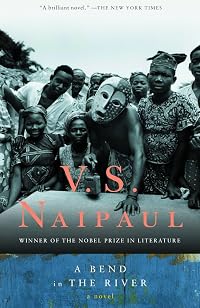
A Bend in the River
by V. S. Naipaul
On This Page
Description
In this incandescent novel, V.S. Naipaul takes us deeply into the life of one man, an Indian who, uprooted by the bloody tides of Third World history, has come to live in an isolated town at the bend of a great river in a newly independent African nation. Naipaul gives us the most convincing and disturbing vision yet of what happens in a place caught between the dangerously alluring modern world and its own tenacious past and traditions.Tags
Recommendations
















Member Reviews
This book is hard for me to review as I had wildly different reactions as I read the 278 pages. It starts out when a young man of Indian descent living on the East coast of Africa buys a shop in an isolated village at "the bend in the river" of a newly forming African country. The beginning was so interesting and beautifully written. I loved the descriptions of the growing town and its inhabitants, especially the various cultures all trying to navigate life. But then, as the town grows and the politics of this newly formed country get messy, the book sort of lost me. The characters didn't feel real anymore as they did in the beginning. They all felt like simple representations of various points of view. So I started to lose interest. show more And then the token woman and violent/passionate love affair happens. I absolutely despise books where an author tries to portray a passionate relationship as needing violence to show how deep the emotions are. So then I wanted to just quit reading.
I persevered to the end, but I never got back to enjoying the book as I did at the beginning. So for me, it just wasn't a great reading experience. show less
I persevered to the end, but I never got back to enjoying the book as I did at the beginning. So for me, it just wasn't a great reading experience. show less
V.S. Naipaul was born in Trinidad but travelled around the world. If this book is anything to judge by, he became immersed in the culture and politics of the countries he visits.
This book is set in an unnamed country in central Africa but it seems clear that the country is fashioned on the Democratic Republic of Congo which called itself Zaire for a while after independence but has reverted to its former name. The time is the 1960s shortly after the country achieved independence from it colonial masters. Salim is a Muslim of East Indian ancestry but he grew up on the east coast of Africa. He comes to the town at the bend of the river to be the proprietor of a small shop that he bought cheaply from a family friend. The town is still show more feeling the effects of the war of independence and business is slow. There are few other non-
African citizens in the town but they tend to band together. Salim has very little interaction with the Africans other than the customers in his shop and the prostitutes he visits. His closest relationship with an African is with his shop assistant, Metty, who is the son of slaves his family owned on the coast. Then one of his customers asks him to look out for her son, Ferdinand, who is coming to the town to attend school. Metty and Ferdinand become quite close friends and Salim is somewhat of a mentor to Ferdinand. The town is becoming more prosperous and Salim’s shop is doing fairly well. However, there is always the threat of violence. The head of the school is decapitated while visiting bush villages looking for African art. Salim’s life is quite lonely and aimless. This period ends when an old friend, Indar, takes a job teaching at the technical school the President of the country has established on the outskirts of town. Indar introduces Salim to the academics at the school and Salim finally feels he is in touch with people who matter. Indar is having an affair with the young wife of the school’s principal, Yvette. When Indar’s job term ends, Salim and Yvette have a passionate affair. Meanwhile the political situation for non-Africans is getting worse. One of the Greek merchants quietly sells out and moves to Australia. However Salim cannot contemplate doing this because of Yvette. Eventually the affair ends and in the final scene between them Salim strikes and verbally abuses Yvette. Salim leaves the town for about 6 weeks to visit the family friend from whom he purchased his store who now lives in London. While there he becomes engaged to the friend’s daughter although they have not even kissed. He returns to the town to sell up but finds that in his absence the store has been taken over by the state and given to an African and he is expected to manage the shop for him. Since he does not expect to receive anything for the shop he goes into smuggling in order to make enough money to leave Africa. When his activities come to the attention of the police he is thrown in jail. Fortuitously, Ferdinand is now the Commissioner of the town and he arranges for Salim’s release and a berth on the river steamer. Salim leaves town with nothing more than he can carry.
I thought this book was very well-written but bleak. Considering this book was written in 1979, well before the horrific events in Rwanda and also the Congo, it clearly shows the roots of those conflicts. One of the passages really struck me as showing how privileged my life is. Indar is speaking to Salim about his world view (page 147):
“There may be some part of the world – dead countries, or secure and by-passed ones – where men can cherish the past and think of passing on furniture and china to their heirs. Men can do that perhaps in Sweden or Canada. Some peasant department of France full of half-wits in chateaux; some crumbling Indian palace-city, or some dead colonial town in a hopeless South American country. Everywhere else men are in movement, the world is in movement, and the past can only cause pain.” And so it becomes for Salim.
I probably would have given this book an even higher rating except for the violence in the last meeting between Yvette and Salim. I never feel there is any good reason for a man to strike a woman and in this case it seemed particularly gratuitous. After, Salim has no remorse about his actions and he is treated by Metty as though he is the one who deserves sympathy. I can’t help but wonder about Naipaul’s own relationships with women. I will probably read more books by Naipaul who did receive the Nobel Prize for literature in 2001. show less
This book is set in an unnamed country in central Africa but it seems clear that the country is fashioned on the Democratic Republic of Congo which called itself Zaire for a while after independence but has reverted to its former name. The time is the 1960s shortly after the country achieved independence from it colonial masters. Salim is a Muslim of East Indian ancestry but he grew up on the east coast of Africa. He comes to the town at the bend of the river to be the proprietor of a small shop that he bought cheaply from a family friend. The town is still show more feeling the effects of the war of independence and business is slow. There are few other non-
African citizens in the town but they tend to band together. Salim has very little interaction with the Africans other than the customers in his shop and the prostitutes he visits. His closest relationship with an African is with his shop assistant, Metty, who is the son of slaves his family owned on the coast. Then one of his customers asks him to look out for her son, Ferdinand, who is coming to the town to attend school. Metty and Ferdinand become quite close friends and Salim is somewhat of a mentor to Ferdinand. The town is becoming more prosperous and Salim’s shop is doing fairly well. However, there is always the threat of violence. The head of the school is decapitated while visiting bush villages looking for African art. Salim’s life is quite lonely and aimless. This period ends when an old friend, Indar, takes a job teaching at the technical school the President of the country has established on the outskirts of town. Indar introduces Salim to the academics at the school and Salim finally feels he is in touch with people who matter. Indar is having an affair with the young wife of the school’s principal, Yvette. When Indar’s job term ends, Salim and Yvette have a passionate affair. Meanwhile the political situation for non-Africans is getting worse. One of the Greek merchants quietly sells out and moves to Australia. However Salim cannot contemplate doing this because of Yvette. Eventually the affair ends and in the final scene between them Salim strikes and verbally abuses Yvette. Salim leaves the town for about 6 weeks to visit the family friend from whom he purchased his store who now lives in London. While there he becomes engaged to the friend’s daughter although they have not even kissed. He returns to the town to sell up but finds that in his absence the store has been taken over by the state and given to an African and he is expected to manage the shop for him. Since he does not expect to receive anything for the shop he goes into smuggling in order to make enough money to leave Africa. When his activities come to the attention of the police he is thrown in jail. Fortuitously, Ferdinand is now the Commissioner of the town and he arranges for Salim’s release and a berth on the river steamer. Salim leaves town with nothing more than he can carry.
I thought this book was very well-written but bleak. Considering this book was written in 1979, well before the horrific events in Rwanda and also the Congo, it clearly shows the roots of those conflicts. One of the passages really struck me as showing how privileged my life is. Indar is speaking to Salim about his world view (page 147):
“There may be some part of the world – dead countries, or secure and by-passed ones – where men can cherish the past and think of passing on furniture and china to their heirs. Men can do that perhaps in Sweden or Canada. Some peasant department of France full of half-wits in chateaux; some crumbling Indian palace-city, or some dead colonial town in a hopeless South American country. Everywhere else men are in movement, the world is in movement, and the past can only cause pain.” And so it becomes for Salim.
I probably would have given this book an even higher rating except for the violence in the last meeting between Yvette and Salim. I never feel there is any good reason for a man to strike a woman and in this case it seemed particularly gratuitous. After, Salim has no remorse about his actions and he is treated by Metty as though he is the one who deserves sympathy. I can’t help but wonder about Naipaul’s own relationships with women. I will probably read more books by Naipaul who did receive the Nobel Prize for literature in 2001. show less
Protagonist and narrator, Salim, lives in central Africa in the 1960s-1970s. He has moved from the coast to run a shop in the interior located at the bend of a great river. It is a postcolonial novel, set in central Africa. The circumstances described in the novel are comparable to what happened in the Congo after the Belgians departed. The country is run by a corrupt President, known as the “Big Man,” who gradually increases his power base to that of a dictator.
This novel is supremely well-written. It is character-driven, so we meet the people in Salim’s circle, and we are privy to his thoughts. The theme is centered on what happens when civilization breaks down. The old rule of colonialism exploited the people. But the new rule show more is that of a Cult of Personality. It is based on corruption, fear, and oppression.
In this case, individuals who were previously striving for financial gain or recognition for their abilities, living in relative security, end up fearing for their lives. This fear negatively impacts their relationships and ways of interacting with others. We see Salim turn from a typical shopkeeper trying to make a decent living to a man of questionable ethics who is only saved from destruction by his status as an outsider.
The book portrays the basic need of all people to find a safe haven to fulfill their dreams and aspirations, and how social upheavals can wreak havoc on this basic need. This type of situation has occurred in history many times, and not solely in Africa. I cannot say it is a particularly “enjoyable” read but I appreciate its relevance. show less
This novel is supremely well-written. It is character-driven, so we meet the people in Salim’s circle, and we are privy to his thoughts. The theme is centered on what happens when civilization breaks down. The old rule of colonialism exploited the people. But the new rule show more is that of a Cult of Personality. It is based on corruption, fear, and oppression.
In this case, individuals who were previously striving for financial gain or recognition for their abilities, living in relative security, end up fearing for their lives. This fear negatively impacts their relationships and ways of interacting with others. We see Salim turn from a typical shopkeeper trying to make a decent living to a man of questionable ethics who is only saved from destruction by his status as an outsider.
The book portrays the basic need of all people to find a safe haven to fulfill their dreams and aspirations, and how social upheavals can wreak havoc on this basic need. This type of situation has occurred in history many times, and not solely in Africa. I cannot say it is a particularly “enjoyable” read but I appreciate its relevance. show less
"Non-fiction can distort; facts can be realigned, but fiction never lies."
Set in an unnamed country which has recently won independence from colonial rule, this novel centres around Salim, a Indian Muslim whose family had settled in an Africa coastal town where they were traders. Salim is impressionable and believes that his family is mired in traditionalism. In an attempt to escape his family's expectations he buys a family friend's business and moves many miles to the interior to a town on 'A Bend in the River'. There he sets himself up as a trader and in doing so becomes an outsider, watching unfolding events with an outsider's nervousness.
The country's President, referred to as the Big Man, initially rules the country and the town show more with a relatively benign hand. Impressive buildings are built, young people are sent to schools and universities where they can earn cadet-ships and there is a boom but increasingly the people come to realise that they, villagers living in the bush, town squatters, traders and even the ruling officials alike, are all dependent on the whim of the Big Man. There is no coherent society in the country. There is only one single source of power, the Big Man.
The town when Salim initially arrives is largely in ruins, a victim of "African rage," against imperial humiliation but gradually rebuilding begins and Salim finds himself a modest niche within it. However, it is only ever a fairly tenuous one. Warned from the beginning to sell up when his stock reaches a certain level but despite this Salim decides to try and hold on.
I have read a few other reviews of this novel in which people complained that nothing really happens but personally I think that that is one of its strengths. Naipaul manages to succinctly portray Salim as a simple man struggling to understand the new Africa around him. It is an insightful piece of observation dotted with a gentle touches of irony. Naipaul has managed to create a sense of moral tension despite, seemingly, very little happens.
Naipaul has also created an interesting troupe of secondary characters. Mahesh, another Indian trader. always on the look out for money making schemes, willing to ride out the country's turbulent up and downs as long as he has his wife beside him. A Belgian priest who collects tribal masks, despite them visibly decaying, like the world from which they originated. A woman trader from the bush, Salim's first customer, who begs Salim to look after her son, Ferdinand, whilst he is a student in the town.
Best of all though is Raymond, a white intellectual, once the Big Man's advisor who has been moved out of the capital and now spends his time lecturing his provincial admirers on the Big Man's greatness. Raymond has been used and discarded by the Big Man but refuses to accept that his time of influence will not come again. The Big Man has a genius for manipulation and his greatest tool is fear. As Mahesh says, "It isn't that there's no right and wrong here. There's no right."
In contrast Salim prefers to try and avoid passing judgement, to be patient and as an 'outsider' to merely observe. However, when he returns from a trip to London to find that his business has been nationalised and then he is arrested and thrown in jail.
He is rescued by Ferdinand, the town's new commissioner, and warned to leave the town before things get any worse.
"We're all going to hell, and every man knows this in his bones. We're being killed. Nothing has any meaning. . . . Everyone wants to make his money and run away. But where? That is what is driving people mad. They feel they're losing the place they can run back to. I began to feel the same thing when I was a cadet in the capital. I felt I had given myself an education for nothing. . .I began to think I wanted to be a child again, to forget books. . .. The bush runs itself. But there is no place to go."
Ultimately Naipaul offers no hope of perspective salvation for the country's and perhaps Africa. There is no neat ending here and that is fitting because, at least in the short term, the mistakes of the past are likely to be repeated over and over again until hopefully a new generation, without the stigma of colonialist baggage are ready to assume power. As it says in the quote at the top of this review: "facts can be realigned, but fiction never lies". show less
Set in an unnamed country which has recently won independence from colonial rule, this novel centres around Salim, a Indian Muslim whose family had settled in an Africa coastal town where they were traders. Salim is impressionable and believes that his family is mired in traditionalism. In an attempt to escape his family's expectations he buys a family friend's business and moves many miles to the interior to a town on 'A Bend in the River'. There he sets himself up as a trader and in doing so becomes an outsider, watching unfolding events with an outsider's nervousness.
The country's President, referred to as the Big Man, initially rules the country and the town show more with a relatively benign hand. Impressive buildings are built, young people are sent to schools and universities where they can earn cadet-ships and there is a boom but increasingly the people come to realise that they, villagers living in the bush, town squatters, traders and even the ruling officials alike, are all dependent on the whim of the Big Man. There is no coherent society in the country. There is only one single source of power, the Big Man.
The town when Salim initially arrives is largely in ruins, a victim of "African rage," against imperial humiliation but gradually rebuilding begins and Salim finds himself a modest niche within it. However, it is only ever a fairly tenuous one. Warned from the beginning to sell up when his stock reaches a certain level but despite this Salim decides to try and hold on.
I have read a few other reviews of this novel in which people complained that nothing really happens but personally I think that that is one of its strengths. Naipaul manages to succinctly portray Salim as a simple man struggling to understand the new Africa around him. It is an insightful piece of observation dotted with a gentle touches of irony. Naipaul has managed to create a sense of moral tension despite, seemingly, very little happens.
Naipaul has also created an interesting troupe of secondary characters. Mahesh, another Indian trader. always on the look out for money making schemes, willing to ride out the country's turbulent up and downs as long as he has his wife beside him. A Belgian priest who collects tribal masks, despite them visibly decaying, like the world from which they originated. A woman trader from the bush, Salim's first customer, who begs Salim to look after her son, Ferdinand, whilst he is a student in the town.
Best of all though is Raymond, a white intellectual, once the Big Man's advisor who has been moved out of the capital and now spends his time lecturing his provincial admirers on the Big Man's greatness. Raymond has been used and discarded by the Big Man but refuses to accept that his time of influence will not come again. The Big Man has a genius for manipulation and his greatest tool is fear. As Mahesh says, "It isn't that there's no right and wrong here. There's no right."
In contrast Salim prefers to try and avoid passing judgement, to be patient and as an 'outsider' to merely observe. However, when he returns from a trip to London to find that his business has been nationalised and then he is arrested and thrown in jail.
He is rescued by Ferdinand, the town's new commissioner, and warned to leave the town before things get any worse.
"We're all going to hell, and every man knows this in his bones. We're being killed. Nothing has any meaning. . . . Everyone wants to make his money and run away. But where? That is what is driving people mad. They feel they're losing the place they can run back to. I began to feel the same thing when I was a cadet in the capital. I felt I had given myself an education for nothing. . .I began to think I wanted to be a child again, to forget books. . .. The bush runs itself. But there is no place to go."
Ultimately Naipaul offers no hope of perspective salvation for the country's and perhaps Africa. There is no neat ending here and that is fitting because, at least in the short term, the mistakes of the past are likely to be repeated over and over again until hopefully a new generation, without the stigma of colonialist baggage are ready to assume power. As it says in the quote at the top of this review: "facts can be realigned, but fiction never lies". show less
V.S. Naipul names neither the river of the title nor the African country where [A Bend in the River] is set. The anonymity fits, as Salim, the narrator of the story, seems to exist almost completely outside of time, history, or cultural identity. After spending his formative years in a more colonial community on the coast, he strikes out for the interior to run a supply store in a small town in a country that has just undergone a revolution. A European upbringing, a Muslim faith, and an Indian ancestry put Salim on the outside of everything in his new home, and it is from this position that he observes and reports with ever more conflicted feelings about the direction of the country and his place in it.
At his best, Naipul’s writing show more evokes Hemingway, with brief and punchy prose, imminently masculine and bleak. The difference is that Naipul sets up his hero to be just an observer, one who rarely takes a side and rarely does anything but engage in equivocal internal dialog. Where Hemingway’s characters run recklessly head-long into life, Naipul’s characters walk the high-wire of inaction, always calculating the minimum necessary to maintain status quo.
Naipul’s examination of African growth and its effect on all the various ethnic and economic strata of the continent suggests that the place had been losing its identity from first outside contact. For Naipul, Africa has been constantly shifting under its people’s feet, lurching forward from the slave trade to colonization to the rise of home-grown, megalomaniac leaders, until they can no longer maintain a consistent cultural identity. So, like Salim, the people of Africa are formed of dozens of different cultural and religious and ethnic bits, the sum never making a whole.
Bottom Line: A story of the identity of Africa – prose that evokes Hemingway and a story as bleak, but absent the reckless characters.
4 bones!!!! show less
At his best, Naipul’s writing show more evokes Hemingway, with brief and punchy prose, imminently masculine and bleak. The difference is that Naipul sets up his hero to be just an observer, one who rarely takes a side and rarely does anything but engage in equivocal internal dialog. Where Hemingway’s characters run recklessly head-long into life, Naipul’s characters walk the high-wire of inaction, always calculating the minimum necessary to maintain status quo.
Naipul’s examination of African growth and its effect on all the various ethnic and economic strata of the continent suggests that the place had been losing its identity from first outside contact. For Naipul, Africa has been constantly shifting under its people’s feet, lurching forward from the slave trade to colonization to the rise of home-grown, megalomaniac leaders, until they can no longer maintain a consistent cultural identity. So, like Salim, the people of Africa are formed of dozens of different cultural and religious and ethnic bits, the sum never making a whole.
Bottom Line: A story of the identity of Africa – prose that evokes Hemingway and a story as bleak, but absent the reckless characters.
4 bones!!!! show less
Another Naipaul down. Not as good as In a Free State which I read earlier this year and which I thought was excellent, but nevertheless a hard-hitting, thought-provoking exploration of the impact of the colonial legacy.
The focus is Salim and the entire book is narrated by him. Starting on the east coast of an (unnamed) East African nation, he migrates inland to a town on the eponymous bend in the river to take over a small shop. From the vantage point of this interior settlement, Salim describes his experiences there, the cast of characters and their various fates as the inevitable post-colonial political pall is cast across the nation.
I found Salim really two-dimensional and felt extremely claustrophobic throughout the novel. He seemed show more really inaccessible to me. He spends almost all his time interpreting and commenting on the characters about him but never really considers his impact on them. For example, there’s a woman he gets involved with and all he can think about is what the affair means to him. He doesn’t seem to give a second thought to what it means to her. I wanted to give him a good slapping on more than one occasion.
And the tension that builds takes forever. I read a 223 page edition and things didn’t really come to a head until the late 190s. Pretty much like life in many isolated towns (not just African ones) not much of note happens except that people go around trying to block out the incredible boredom that sets in from nothing much of note happening. It took me ages to read because of that because it just didn’t motivate me.
Perhaps that’s what the novel is really about. Perhaps Naipaul was trying to say that while the mundane life of millions went on, plots were hatched in far away capitals which would eventually make people long for the mundane. If so, then the novel certainly conveys that.
Salim eventually finds his destiny catching up with him, but by then, I wasn’t really bothered what happened to him. This book, like all of Naipual’s, are essential reads for those who are interested in the complex issues that the post-colonial world struggles with and, for that reason, is still relevant today. But Bend isn’t his most captivating rendition of that theme. show less
The focus is Salim and the entire book is narrated by him. Starting on the east coast of an (unnamed) East African nation, he migrates inland to a town on the eponymous bend in the river to take over a small shop. From the vantage point of this interior settlement, Salim describes his experiences there, the cast of characters and their various fates as the inevitable post-colonial political pall is cast across the nation.
I found Salim really two-dimensional and felt extremely claustrophobic throughout the novel. He seemed show more really inaccessible to me. He spends almost all his time interpreting and commenting on the characters about him but never really considers his impact on them. For example, there’s a woman he gets involved with and all he can think about is what the affair means to him. He doesn’t seem to give a second thought to what it means to her. I wanted to give him a good slapping on more than one occasion.
And the tension that builds takes forever. I read a 223 page edition and things didn’t really come to a head until the late 190s. Pretty much like life in many isolated towns (not just African ones) not much of note happens except that people go around trying to block out the incredible boredom that sets in from nothing much of note happening. It took me ages to read because of that because it just didn’t motivate me.
Perhaps that’s what the novel is really about. Perhaps Naipaul was trying to say that while the mundane life of millions went on, plots were hatched in far away capitals which would eventually make people long for the mundane. If so, then the novel certainly conveys that.
Salim eventually finds his destiny catching up with him, but by then, I wasn’t really bothered what happened to him. This book, like all of Naipual’s, are essential reads for those who are interested in the complex issues that the post-colonial world struggles with and, for that reason, is still relevant today. But Bend isn’t his most captivating rendition of that theme. show less
This book is about a man who moves from the east coast of Africa to the interior to open a store at a bend in the river during unsettled times.
It got me wondering what it takes to leave everything behind and start again somewhere remote. What kind of faith or courage is needed or is it just being open to where life leads you?
(This is not necessarily what the book is about- but I really could not stop thinking about this as a concept)
It got me wondering what it takes to leave everything behind and start again somewhere remote. What kind of faith or courage is needed or is it just being open to where life leads you?
(This is not necessarily what the book is about- but I really could not stop thinking about this as a concept)
Members
- Recently Added By
Lists

1001 Books You Must Read Before You Die
1,448 works; 1,134 members

The Guardian's 1000 Novels Everyone Must Read
1,005 works; 550 members

Best of World Literature
435 works; 52 members

Booker Prize
491 works; 62 members
20th Century Literature
1,161 works; 55 members
Best African Books
126 works; 46 members
Best Political Fiction
92 works; 12 members

The Guardian's 100 greatest novels of all time
100 works; 16 members

Nobel Price Winners
222 works; 20 members

1970s
657 works; 23 members

Books recommended by Barack Obama
295 works; 28 members
Booker Prize Shortlist: Titles Read
103 works; 10 members

Top Five Books of 2016
795 works; 229 members

Harold Bloom - The Western Canon: D. The Chaotic Age
833 works; 24 members
1,001 BYMRBYD Concensus
723 works; 27 members

The Guardian's 100 Best Novels Written in English
105 works; 13 members

TML 200 Best Books 1950-1999
202 works; 10 members

Anthony Burgess 99 Post War Novels
99 works; 7 members

Africa
109 works; 8 members
The Modern Library's 100 Best Novels: The Board's List
85 works; 6 members

Man Booker Prize Longlist 1979
5 works; 1 member

hopes
34 works; 1 member
Elegant Prose
80 works; 4 members

Books Set In Africa
81 works; 4 members

Books Read in 2016
4,666 works; 199 members

SHOULD Read Books!
354 works; 9 members

Read This Next
120 works; 3 members

Swinging Seventies
255 works; 18 members
Most Popular Books Tagged Africa
35 works; 3 members

Books With Water Words in the Title
186 works; 12 members
Global Reads: Books Set in Africa
19 works; 3 members

Allie's Wishlist
217 works; 2 members

AP Lit
363 works; 6 members
Modern Library's 100 Best Novels
100 works; 2 members

The Modern Library (The Two Hundred Best Novels....
202 works; 1 member
Author Information

97+ Works 25,801 Members
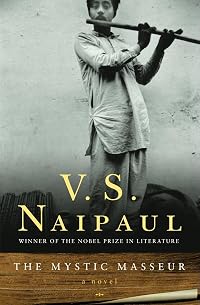
Vidiadhar Surajprasad Naipaul was born of Indian ancestry in Chaguanas, Trinidad on August 17, 1932. He was educated at University College, Oxford and lived in Great Britain since 1950. From 1954 to 1956, he edited a radio program on literature for the British Broadcasting Corporation's Caribbean Service. His first novel, The Mystic Masseur, was show more published in 1957. His other novels included A House for Mr. Biswas, A Bend in the River, Guerrillas, and Half a Life. In a Free State won the Booker Prize in 1971. He started writing nonfiction in the 1960s. His first nonfiction book, The Middle Passage, was published in 1962. His other nonfiction works included An Area of Darkness, Among the Believers, Beyond Belief, and A Turn in the South. He was knighted in 1990 and received the Nobel Prize in Literature in 2001. He died on August 11, 2018 at the age of 85. (Bowker Author Biography) show less
Some Editions
Awards and Honors
Series
Belongs to Publisher Series
Gyldendals små grå (14)
De twintigste eeuw (21)
Work Relationships
Has as a student's study guide
Common Knowledge
- Canonical title
- A Bend in the River
- Original title
- A Bend in the River
- Original publication date
- 1979
- People/Characters
- Salim; Metty; Shoba; Mahesh; Ferdinand; Raymond (show all 11); Yvette; Nazruddin; Kareisha; Indar; Zabeth
- Important places
- Africa
- First words
- The world is what it is; men who are nothing, who allow themselves to become nothing, have no place in it.
- Last words
- (Click to show. Warning: May contain spoilers.)The searchlight, while it was on, had shown thousands, white in the white light.
- Original language
- English
Classifications
Statistics
- Members
- 3,480
- Popularity
- 4,773
- Reviews
- 58
- Rating
- (3.69)
- Languages
- 16 — Chinese, Czech, Danish, Dutch, English, Finnish, French, German, Hungarian, Italian, Norwegian (Bokmål), Norwegian, Portuguese, Spanish, Swedish, Turkish
- Media
- Paper, Audiobook, Ebook
- ISBNs
- 70
- ASINs
- 20