On This Page
Description
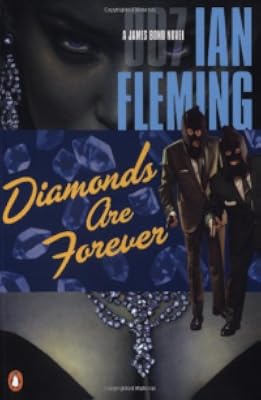
The Spangled Mob are no ordinary American gangsters. They prey on the addictions of the wealthy and treat the poor as collateral. Their ruthless desire for power and fierce brotherly loyalty make them deadly and invincible. Now James Bond must go deep undercover in his urgent new assignment: to destroy their millionaire masterminds, Jack and Seraffimo Spang. But the Spangs' cruel influence is everywhere, from dusty African diamond mines to the frenzied gambling dens of Las Vegas. Can Bond show more find his men before his cover is blown? show lessTags
Recommendations




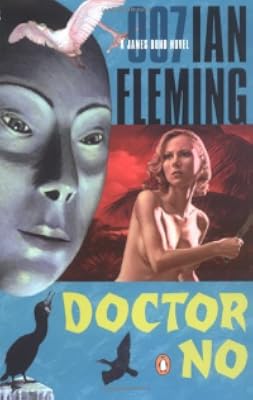
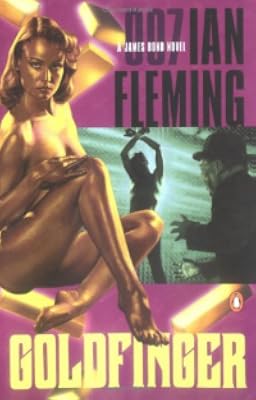


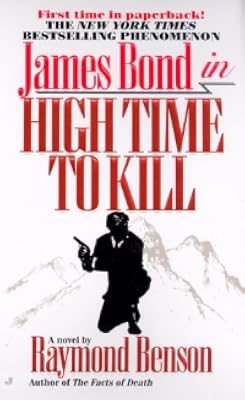
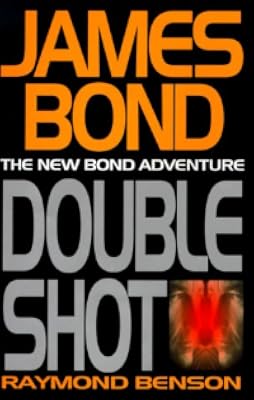




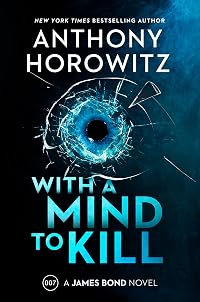





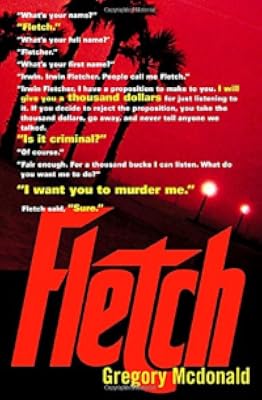





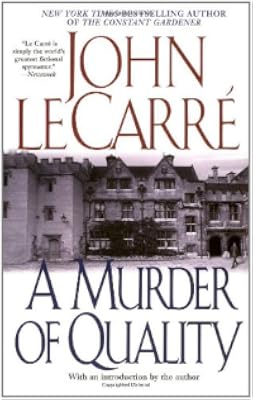

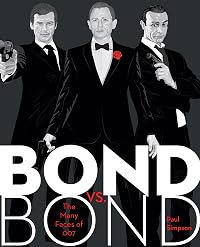


Member Recommendations
Sylak Another story involving a complex central character worth a good read.
Member Reviews
Possible they get worse after this, of course, but thus far this is definitely my least favorite James Bond novel. It's just unpleasant on a number of levels. First is that the whole thing is grotty: Bond is sent to America to find the end of a diamond-smuggling pipeline, but he seems to be sneering about everything in the whole country. I mean, Bond is often kind of a classist jerk, but he usually does things that classist jerks like doing and enjoys them; here, he's always grumbling about how much he doesn't like America, doesn't like horse-racing, doesn't like Vegas. It's not very fun to read about.
Second, the bad guys never convince as being in his league given what he's faced down in the last three books. Diamond smugglers? Hardly show more a threat to king and country. Fleming lays it on a bit thick with a briefing scene early on where M tells Bond how dangerous these American gangs on, which is 1) really over done and 2) kind of weird, given that Bond fought some American gangs two books ago. What Bond goes on to do doesn't seem very 00-agent worthy (the horseracing diversion is particularly pointless), and the pipeline unravels extraordinarily easily. When shortly before his confrontation with the villain, Bond observes that he's "thoroughly bored" and you have to wonder why Fleming wrote that in, since this reader just wanted to agree with him.
Lastly, Bond sinks to new lows in terms of racism and homophobia. I assume Fleming must have taken some flack for Live and Let Die because this book has a scene where Bond 1) explains how much he loves black people, honestly some of his best friends are black people and 2) complains that you can't say the n-word like you used to, because some people just get so offended.* Seriously, Fleming has the audacity to follow a scene where Bond cringes at the very thought of being massaged by a black man with the line, "Bond had a natural affection for coloured people." Like, just own the racism if you're gonna do it! Later on we get a pair of killers, Kidd and Wint, about which Bond's American counterpart (formerly, anyway, as following Live and Let Die, he's gone freelance) Felix Leiter says, "[Kidd] [p]robably shacks up with Wint. Some of these homos make the worst killers." Whoa.
All that said, Fleming can still do good work when it comes to the creation of tension and suspense. The idea that one of the gang leaders is so into Westerns he built his own ghost town, where Bond ends up confronting him, feels like something the movies would do, but it pays off in terms of a harrowing desert escape for Bond and his current love interest, Tiffany Case. I did like the idea of an assassin so terrified of travel he lists his blood group on his luggage (I've no idea what Fleming is on about with a "blood group F," though.)
Bond's interactions with Case make her one of the better "Bond girls" thus far: you can feel the two of them seducing the other as the novel goes, and we once again see (as in Casino Royale) that Bond yearns for a traditional English domesticity he can never have as long as he fights to protect it for others. A funny artifact of reading this 1956 novel exactly sixty years later is that "Tiffany" is supposed to be a weird name (she's named after the jewelers). In the decade I was born, "Tiffany" was in the Top 20 Girl Names in America, so I've always known women named Tiffany. But back in 1956, it wasn't even in the Top 1,000! Apparently it's a pretty recent invention as a first name (inspired by the film Breakfast at Tiffany's), but I had no idea.
* This is told in the form of a flashback to Live and Let Die, actually, but it is original to this novel. show less
Second, the bad guys never convince as being in his league given what he's faced down in the last three books. Diamond smugglers? Hardly show more a threat to king and country. Fleming lays it on a bit thick with a briefing scene early on where M tells Bond how dangerous these American gangs on, which is 1) really over done and 2) kind of weird, given that Bond fought some American gangs two books ago. What Bond goes on to do doesn't seem very 00-agent worthy (the horseracing diversion is particularly pointless), and the pipeline unravels extraordinarily easily. When shortly before his confrontation with the villain, Bond observes that he's "thoroughly bored" and you have to wonder why Fleming wrote that in, since this reader just wanted to agree with him.
Lastly, Bond sinks to new lows in terms of racism and homophobia. I assume Fleming must have taken some flack for Live and Let Die because this book has a scene where Bond 1) explains how much he loves black people, honestly some of his best friends are black people and 2) complains that you can't say the n-word like you used to, because some people just get so offended.* Seriously, Fleming has the audacity to follow a scene where Bond cringes at the very thought of being massaged by a black man with the line, "Bond had a natural affection for coloured people." Like, just own the racism if you're gonna do it! Later on we get a pair of killers, Kidd and Wint, about which Bond's American counterpart (formerly, anyway, as following Live and Let Die, he's gone freelance) Felix Leiter says, "[Kidd] [p]robably shacks up with Wint. Some of these homos make the worst killers." Whoa.
All that said, Fleming can still do good work when it comes to the creation of tension and suspense. The idea that one of the gang leaders is so into Westerns he built his own ghost town, where Bond ends up confronting him, feels like something the movies would do, but it pays off in terms of a harrowing desert escape for Bond and his current love interest, Tiffany Case. I did like the idea of an assassin so terrified of travel he lists his blood group on his luggage (I've no idea what Fleming is on about with a "blood group F," though.)
Bond's interactions with Case make her one of the better "Bond girls" thus far: you can feel the two of them seducing the other as the novel goes, and we once again see (as in Casino Royale) that Bond yearns for a traditional English domesticity he can never have as long as he fights to protect it for others. A funny artifact of reading this 1956 novel exactly sixty years later is that "Tiffany" is supposed to be a weird name (she's named after the jewelers). In the decade I was born, "Tiffany" was in the Top 20 Girl Names in America, so I've always known women named Tiffany. But back in 1956, it wasn't even in the Top 1,000! Apparently it's a pretty recent invention as a first name (inspired by the film Breakfast at Tiffany's), but I had no idea.
* This is told in the form of a flashback to Live and Let Die, actually, but it is original to this novel. show less
Once again, the Bond novel heavily features gambling, and once again, that depiction is going to contribute an entire star to the book's rating. The depiction of this era of horse races and of this era of Las Vegas were some of the most fascinating, if somewhat depressing, parts of this book. Depressing in that you come to realize how much hasn't changed. Fascinating in that you come to realize how much has.
I guess if I were to compare this to the only other Bond I've read, Casino Royale, I'd say this was much the same, plus this one has homophobia sprinkled in for some added flavor. I can't say I was expecting it, but I can't say I was surprised.
This was a frustrating, inherently conflicting reading experience. Bond as a character is show more both a romantic - trusting easily and instinctually in friends both new and old and falling in love deeply and just as easily - and he is a bigot, plain and simple. I had whiplash, essentially. I hate James Bond. This books so badly wants me to like him, and I hate him.
Here's a quote, from Bond's inner monologue, to demonstrate the casual bigotry evident in this book:"Bond had a natural affection for coloured people, but he reflected how lucky England was compared with America where you had to live with the colour problem from your schooldays." - pg. 134-135 (marked spoiler because the quote is pulled from just short of the halfway mark, but has no plot spoilers)
Tiffany Case was the best part of the book, at times leaning into a sort of proto-manic pixie type character, but never fully aligning with that trope. I have to say, knowing the trope of the "Bond girl", I was constantly in fear for her life as I read. I am consistently pleasantly surprised that, despite the way that Bond's inner monologue treats them, the women in these books tend to show more agency and initiative than I remember the women having in the movies. She is the reason for the other star in the rating. More whiplash.
I did not enjoy the character of Leiter, who assumes the same attitudes that cause me to chafe so against Bond. I also did not appreciate that Leiter's existence in this story is to essentially bail Bond out when he gets too far over his head, or lead him along like a lost dog when it becomes clear he has no plans of his own. Annoying. To complete a sort of compliment sandwich, I will add that I did enjoy the friendship between Bond and Leiter, who seem genuinely fond of each other, and I liked the self-aware admission by Bond that he is married to his job. show less
I guess if I were to compare this to the only other Bond I've read, Casino Royale, I'd say this was much the same, plus this one has homophobia sprinkled in for some added flavor. I can't say I was expecting it, but I can't say I was surprised.
This was a frustrating, inherently conflicting reading experience. Bond as a character is show more both a romantic - trusting easily and instinctually in friends both new and old and falling in love deeply and just as easily - and he is a bigot, plain and simple. I had whiplash, essentially. I hate James Bond. This books so badly wants me to like him, and I hate him.
Here's a quote, from Bond's inner monologue, to demonstrate the casual bigotry evident in this book:
Tiffany Case was the best part of the book, at times leaning into a sort of proto-manic pixie type character, but never fully aligning with that trope. I have to say, knowing the trope of the "Bond girl", I was constantly in fear for her life as I read. I am consistently pleasantly surprised that, despite the way that Bond's inner monologue treats them, the women in these books tend to show more agency and initiative than I remember the women having in the movies. She is the reason for the other star in the rating. More whiplash.
I did not enjoy the character of Leiter, who assumes the same attitudes that cause me to chafe so against Bond. I also did not appreciate that Leiter's existence in this story is to essentially bail Bond out when he gets too far over his head, or lead him along like a lost dog when it becomes clear he has no plans of his own. Annoying. To complete a sort of compliment sandwich, I will add that I did enjoy the friendship between Bond and Leiter, who seem genuinely fond of each other, and I liked the self-aware admission by Bond that he is married to his job. show less
M sends Bond after The Spangled Mob, smugglers moving diamonds out of Africa and into the United States. Bond, posing as a mule, meets Tiffany, a beautiful blonde who can be as cold as the ice she helps move. Bond is successful in making the delivery and recieves both payment and a firm dismissal. To achieve his true objective of shutting down the operation, Bond decides to make trouble to see who comes to slap his hand. It's a mission that takes him all the way to Vegas and back across the Atlantic. As always it's a highly physical task but the real mileage may be on his heart.
This is the fourth book in the Bond series. I really felt while reading this one that Fleming had come into his own. He's comfortable with his formula, with his show more protagonist and it shows. It feels polished. And he actually made an effort to develop the female lead this time around! Given her tragic past, Tiffany has a remarkable sense of humor. I loved her romance with Bond. To see him melt her and to see her change him. There's still a lot of humanity in Bond at this point and I'm enjoying that. I was slightly disappointed with the Spang brothers. They weren't scary enough, big enough, bad enough to be villains worth of a double-oh's attention.
Despite that, Diamonds is a solid entry in the Bond saga.... now off to Russia! show less
This is the fourth book in the Bond series. I really felt while reading this one that Fleming had come into his own. He's comfortable with his formula, with his show more protagonist and it shows. It feels polished. And he actually made an effort to develop the female lead this time around! Given her tragic past, Tiffany has a remarkable sense of humor. I loved her romance with Bond. To see him melt her and to see her change him. There's still a lot of humanity in Bond at this point and I'm enjoying that. I was slightly disappointed with the Spang brothers. They weren't scary enough, big enough, bad enough to be villains worth of a double-oh's attention.
Despite that, Diamonds is a solid entry in the Bond saga.... now off to Russia! show less
"Slowly the sting slid home into its sheath and the nerves on the poison sac at its base relaxed. The scorpion had decided. Greed had won over fear."
I won't copy all of the opening scene of Diamonds Are Forever, but this is one of the reasons why I keep reading this series - Fleming's ability to write nature scenes is phenomenal. They even make up for his writing about what passes for romance in these Bond novels. But I'll get to that later.
In Diamonds Are Forever, James Bond is tasked to investigate diamond trafficking that funds the American mafia. There are plenty of typical Bond capers which include passing himself off as someone else, getting entangled with a woman while undercover (haha) and converting her to the right side (i.e. show more Bond's side), blowing things up, gambling, and trying to foil the bad guys while Bond is being rescued himself by his friends.
As you know, I'm not a huge fan of James Bond himself, but in this novel he actually acknowledges how much he owes to his friend Felix Leiter. In fact, we get to know quite a bit about Felix - he has a sense of humor and he is happy to challenge Bond's snobbery. He's straight-talking, homophobic, but can be tactful, and he doesn't burn bridges. Leiter drinks just as much as Bond, which is probably another reason why they are friends.
Anyway, the cast of supporting characters in this book is what I enjoyed most. We have Leiter, and we have Tiffany Case, who is not a push over like her film counterpart but a pretty strong and independent woman with a tough past that leads her to reject other people, especially men.
Throughout the book I actually wondered how scenes might be written differently if they were told from her perspective - I would also have hoped that this might give me a clue about what on earth attracts her to this "Bond person" that she knows is lying to her on their first meeting. But alas, the book follows the adventure of James Bond....and so we get his perspective, which is - surprisingly - less sexist and less patronising than in the previous books.
Yeah. I know. That is not saying much. We still get Bond pondering in the following way:
"But was he prepared for the consequences? Once he had taken her by the hand it would be forever. He would be in the role of the healer, the analyst, to whom the patient had transferred her love and trust on her way out of the illness. There would be no cruelty equal to dropping her hand once he had taken it in his. Was he ready for all that that meant in his life and his career?"
Yeah. I know. Like she needs him to heal her and save her and .....ugh. But, as I said, it looks like he's come a long way since Live and Let Die where he described Solitaire as his "prize".
The characters I enjoyed most were, as in the other books, Bond's evil counterparts, except that in Diamonds Are Forever, the best baddies are not the criminal masterminds but their two henchmen: Wint and Kidd. They are such an unlikely duo, and yet, so evil. There is a scene in a spa that will stick in my memory for quite some time.... show less
I won't copy all of the opening scene of Diamonds Are Forever, but this is one of the reasons why I keep reading this series - Fleming's ability to write nature scenes is phenomenal. They even make up for his writing about what passes for romance in these Bond novels. But I'll get to that later.
In Diamonds Are Forever, James Bond is tasked to investigate diamond trafficking that funds the American mafia. There are plenty of typical Bond capers which include passing himself off as someone else, getting entangled with a woman while undercover (haha) and converting her to the right side (i.e. show more Bond's side), blowing things up, gambling, and trying to foil the bad guys while Bond is being rescued himself by his friends.
As you know, I'm not a huge fan of James Bond himself, but in this novel he actually acknowledges how much he owes to his friend Felix Leiter. In fact, we get to know quite a bit about Felix - he has a sense of humor and he is happy to challenge Bond's snobbery. He's straight-talking, homophobic, but can be tactful, and he doesn't burn bridges. Leiter drinks just as much as Bond, which is probably another reason why they are friends.
Anyway, the cast of supporting characters in this book is what I enjoyed most. We have Leiter, and we have Tiffany Case, who is not a push over like her film counterpart but a pretty strong and independent woman with a tough past that leads her to reject other people, especially men.
Throughout the book I actually wondered how scenes might be written differently if they were told from her perspective - I would also have hoped that this might give me a clue about what on earth attracts her to this "Bond person" that she knows is lying to her on their first meeting. But alas, the book follows the adventure of James Bond....and so we get his perspective, which is - surprisingly - less sexist and less patronising than in the previous books.
Yeah. I know. That is not saying much. We still get Bond pondering in the following way:
"But was he prepared for the consequences? Once he had taken her by the hand it would be forever. He would be in the role of the healer, the analyst, to whom the patient had transferred her love and trust on her way out of the illness. There would be no cruelty equal to dropping her hand once he had taken it in his. Was he ready for all that that meant in his life and his career?"
Yeah. I know. Like she needs him to heal her and save her and .....ugh. But, as I said, it looks like he's come a long way since Live and Let Die where he described Solitaire as his "prize".
The characters I enjoyed most were, as in the other books, Bond's evil counterparts, except that in Diamonds Are Forever, the best baddies are not the criminal masterminds but their two henchmen: Wint and Kidd. They are such an unlikely duo, and yet, so evil. There is a scene in a spa that will stick in my memory for quite some time.... show less
Picks up 6 weeks after the end of the previous book Moonraker.
The ‘hell no you did not just say that’ racism is back in force, with the n-word even making its first ignominious appearance. Fortified with an unhealthy dose of homophobic slurs, and of course it's viley sexist by today's standards.
But worse than that, the book isn't as fun as the previous ones. Bond gets the shit kicked out of him (again), let's the girl get kidnapped (again), gambles a bunch (again), and otherwise doesn't really get anywhere. He's terribly snobbish about the American Mob, and underestimates them at every turn.
Worst of all, there is no supervillian, just a mediocre gangster smuggling blood diamonds. No Russian spies, no nazis, no conspiracies, just show more run of the mill criminals. It's dull. And surprise surprise, there's (a lot) more gambling. This time we get horse racing, and blackjack, and roulette. In excruciating detail. show less
The ‘hell no you did not just say that’ racism is back in force, with the n-word even making its first ignominious appearance. Fortified with an unhealthy dose of homophobic slurs, and of course it's viley sexist by today's standards.
But worse than that, the book isn't as fun as the previous ones. Bond gets the shit kicked out of him (again), let's the girl get kidnapped (again), gambles a bunch (again), and otherwise doesn't really get anywhere. He's terribly snobbish about the American Mob, and underestimates them at every turn.
Worst of all, there is no supervillian, just a mediocre gangster smuggling blood diamonds. No Russian spies, no nazis, no conspiracies, just show more run of the mill criminals. It's dull. And surprise surprise, there's (a lot) more gambling. This time we get horse racing, and blackjack, and roulette. In excruciating detail. show less
Diamonds Are Forever (1956) (Bond #4) by Ian Fleming. This is one of the lesser Bond outings. Sent to uncover and destroy a diamond smuggling operation, Bond must work his way into the good graces of his contact, Tiffany Case. Together they are to smuggle a grouping of diamonds into the U.S. Along the way he meets some interesting characters including a diabolical duo of killers who mask their true identities. In doing so, they keep their features hidden from the world, including Bond.
While the story is a competent one, I find the process flawed. The story is about rich people keeping their riches while those who work for them are kept as near prisoners. I don’t know how much has changed over the years but I assume there isn’t a show more great difference in how the workers are treated. So much suffering inflicted so a few people can fill their bank accounts.
And Bond, as usual, is merely a tool the powerful use to keep their positions. show less
While the story is a competent one, I find the process flawed. The story is about rich people keeping their riches while those who work for them are kept as near prisoners. I don’t know how much has changed over the years but I assume there isn’t a show more great difference in how the workers are treated. So much suffering inflicted so a few people can fill their bank accounts.
And Bond, as usual, is merely a tool the powerful use to keep their positions. show less
Whilst this may not be Fleming strongest work, it does have his hallmarks of action, adventure, pacing, and a cartoonish sense of fun. This is James Bond versus the American gangster genre. Dashiell Hammett and Raymond Chandler would’ve done this proud. Tiffany case is a more interesting bongo than we’ve seen for some time and her backstory makes her the typical born girl with a huge degree of emotional hurts.
Unfortunately Flemings rather limited understanding of emotional connection becomes very evident here. The chapters and sections that are related to when bond and Tiffany become a couple are nauseatingly naive and unpleasant. I think if you can get past those and accept this is a tiny part of the book, you will enjoy that.
Unfortunately Flemings rather limited understanding of emotional connection becomes very evident here. The chapters and sections that are related to when bond and Tiffany become a couple are nauseatingly naive and unpleasant. I think if you can get past those and accept this is a tiny part of the book, you will enjoy that.
Members
- Recently Added By
Lists

Books I need to read
20 works; 1 member

Read the book and saw the movie
1,170 works; 195 members

Books Read in 2015
3,299 works; 127 members

1950s
340 works; 22 members

Books Read in 2022
5,166 works; 114 members
Author Information

253+ Works 56,041 Members
Ian Lancaster Fleming was born on May 28, 1908, in London, England. He attended Eton College and then the Royal Military College at Sandhurst. He left there after a year to go study languages in Munich and Geneva. Fleming served as the Moscow correspondent for the Reuters News Agency from 1929 till 1933. he then became a banker and a stockholder show more in London until the beginning of World War II. When the war began, Fleming became the personal assistant to the Director of British Naval Intelligence, where he learned most of his espionage terms. When the war was over, he worked as the foreign manager of The Sunday Times in London. Fleming wrote twelve James Bond novels, nearly all of which were made into Motion Pictures. His works included: Casino Royale, Live and Let Die, Moonraker, Diamonds Are Forever, Dr. No, Goldfinger, Thunderball, Chitty-Chitty-Bang-Bang, and For Your eyes Only. He of died of a heart attack on August 12, 1964. (Bowker Author Biography) show less

Ian Fleming has a Legacy Library. Legacy libraries are the personal libraries of famous readers, entered by LibraryThing members from the Legacy Libraries group.
Some Editions
Series


Belongs to Publisher Series
Work Relationships
Is contained in
Casino Royale / Live and Let Die / Diamonds Are Forever / From Russia with Love / Dr. No / Goldfinger by Ian Fleming
Casino Royale / Live and Let Die / Diamonds Are Forever / From Russia with Love / Goldfinger by Ian Fleming
Casino Royale / Live and Let Die / Moonraker / Diamonds Are Forever / From Russia with Love / Dr. No / Goldfinger / For Your Eyes Only / Thunderball / The Spy Who Loved Me / On Her Majesty's Secret Service / You Only Live Twice / The Man with the Golden Gun / Octopussy and The Living Daylights by Ian Fleming
Is retold in
Has the adaptation
Common Knowledge
- Canonical title
- Diamonds Are Forever
- Original title
- Diamonds are Forever
- Alternate titles*
- I Diamanti Sono per Sempre
- Original publication date
- 1956-03-26
- People/Characters
- James Bond; Tiffany Case; Jack Spang; Seraffimo Spang; Wint; Kidd (show all 10); Felix Leiter; M; Ernie Cureo; Miss Moneypenny
- Important places
- London, England, UK; Las Vegas, Nevada, USA; New York, New York, USA; Spectreville, Nevada, USA; French Guiana
- Related movies
- Diamonds Are Forever (1971 | IMDb)
- Dedication
- To J.F.C.B. and E.L.C. and to the memory of W.W., Jr. at Saratoga, 1954 and '55
- First words
- With its two fighting claws held forward like a wrestler's arms the big pandinus scorpion emerged with a dry rustle from the finger-sized hole under the rock.
- Last words
- (Click to show. Warning: May contain spoilers.)He could see the passionate, ironical mouth saying the words: 'It reads better than it lives.'
- Original language
- English
*Some information comes from Common Knowledge in other languages. Click "Edit" for more information.
Classifications
Statistics
- Members
- 3,491
- Popularity
- 4,746
- Reviews
- 74
- Rating
- (3.46)
- Languages
- 17 — Czech, Danish, Dutch, English, Finnish, French, German, Hungarian, Italian, Norwegian (Bokmål), Norwegian, Polish, Portuguese, Russian, Spanish, Swedish, Ukrainian
- Media
- Paper, Audiobook, Ebook
- ISBNs
- 120
- UPCs
- 2
- ASINs
- 89