
On This Page
Description
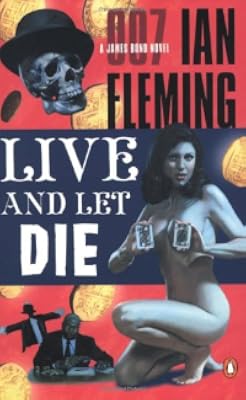
LEGENDARY AGENT JAMES BOND CONFRONTS AN ENEMY UNLIKE ANY HE'S FACED BEFORE James Bond is not an easily intimidated man, but it's hard not to feel unnerved in the presence of Mr. Big. A ruthless Harlem gangster who uses superstition and fear to control his vast criminal empire, he's also one of SMERSH's top American operatives. Mr. Big has been smuggling British pirate treasure to New York from a remote Jamaican island and funneling the proceeds to Moscow. With help from Solitaire, Mr. Big's show more beautiful and enigmatic Creole fortune teller, and his old friend Felix Leiter of the CIA, 007 must locate the crime lord's hideout, sabotage his operation, and reclaim the pirate hoard for England. show lessTags
Recommendations






















Member Reviews
Rating: 3.5* of five
**THIS REVIEW IS OF THE FILM** (The novel doesn't resemble the film too terribly much, being a very Cold-Warry Russkis versus Good Guys in the Caribbean; deeply uninteresting to a 1970s audience)
It's the 1973 first outing by Simon Templar...I mean Roger Moore!...that I review here.
Holy pimpmobile! I'd forgotten this was the blaxploitation Bond flick. Appallingly racist. Horrifyingly insultingly so. And may I just say, "INTRODUCING JANE SEYMOUR" is the most chilling phrase I've ever in all my life seen on a movie screen?
Introducing. Jane. Seymour. As in, "not seen on the big screen before?" She was in some other stuff...but nothing as big as Bond. And the horrible thing is that Jane Seymour's character is only able show more to tell the future as a tarot reader while she's a virgin. Does that clue you in on what Bond's gonna do?
But all that comes after Bond's first African-American love interest. He sleeps with her while in a pale-blue loser suit. With a white belt. Wearing a wife-beater under it. Oh gawd, the seventies.
Then Bond condescends to pop Jane's cherry and takes away he rpowers, which the sexist sociopath clearly doesn't believe in; things go further and further downhill as Geoffrey Holder does a horrifying turn as a voodoo priest in the most ridiculous half-white makeup...well.
So of course Bond solves the identity puzzle, rescues now-slutty Jane from her life of luxury, and brings down the (black, of course) drug dealer. Then Geoffrey Holder laughs his unique laugh as we head for the credits.
Wow. Forty years really makes a lot of difference in how things look. I never liked Simon Templar...I mean Roger Moore!...as Bond. From the get-go, I found him too TV for the role of the big screen's biggest baddest spy. What was charming and roguish in other performances was slippery and oleaginous in Moore's performances. But I had no memory of how revoltingly racist this film was. I shudder to say it, but I was probably blind to it because it was...ulp...the way I saw the lily-white privileged Republican world I lived in.
*gaaak*
Well, that's enough of that. The dumbest car chase ever put on film takes place in an alternate New York where there are only Chevrolet Caprices, Chevrolet Impalas, and Cadillac Eldorados on the roads. Except one elderly Ford truck, which the lone Chevrolet Biscayne in New York, carrying Bond, hits head-on and somehow Bond isn't even scratched despite not wearing a seat belt. Yeah! Now that's the Bond we all love!
And the title tune. Oh my goodness, the title tune. It's one of the indelible memories of 1973, along with the Rayburn Committee hearings and the Energy Crisis. Pretty good tune. But earwormy as all hell! Once in your mind, it ain't a-comin' out easy.
"Enjoy." show less
**THIS REVIEW IS OF THE FILM** (The novel doesn't resemble the film too terribly much, being a very Cold-Warry Russkis versus Good Guys in the Caribbean; deeply uninteresting to a 1970s audience)
It's the 1973 first outing by Simon Templar...I mean Roger Moore!...that I review here.
Holy pimpmobile! I'd forgotten this was the blaxploitation Bond flick. Appallingly racist. Horrifyingly insultingly so. And may I just say, "INTRODUCING JANE SEYMOUR" is the most chilling phrase I've ever in all my life seen on a movie screen?
Introducing. Jane. Seymour. As in, "not seen on the big screen before?" She was in some other stuff...but nothing as big as Bond. And the horrible thing is that Jane Seymour's character is only able show more to tell the future as a tarot reader while she's a virgin. Does that clue you in on what Bond's gonna do?
But all that comes after Bond's first African-American love interest. He sleeps with her while in a pale-blue loser suit. With a white belt. Wearing a wife-beater under it. Oh gawd, the seventies.
Then Bond condescends to pop Jane's cherry and takes away he rpowers, which the sexist sociopath clearly doesn't believe in; things go further and further downhill as Geoffrey Holder does a horrifying turn as a voodoo priest in the most ridiculous half-white makeup...well.
So of course Bond solves the identity puzzle, rescues now-slutty Jane from her life of luxury, and brings down the (black, of course) drug dealer. Then Geoffrey Holder laughs his unique laugh as we head for the credits.
Wow. Forty years really makes a lot of difference in how things look. I never liked Simon Templar...I mean Roger Moore!...as Bond. From the get-go, I found him too TV for the role of the big screen's biggest baddest spy. What was charming and roguish in other performances was slippery and oleaginous in Moore's performances. But I had no memory of how revoltingly racist this film was. I shudder to say it, but I was probably blind to it because it was...ulp...the way I saw the lily-white privileged Republican world I lived in.
*gaaak*
Well, that's enough of that. The dumbest car chase ever put on film takes place in an alternate New York where there are only Chevrolet Caprices, Chevrolet Impalas, and Cadillac Eldorados on the roads. Except one elderly Ford truck, which the lone Chevrolet Biscayne in New York, carrying Bond, hits head-on and somehow Bond isn't even scratched despite not wearing a seat belt. Yeah! Now that's the Bond we all love!
And the title tune. Oh my goodness, the title tune. It's one of the indelible memories of 1973, along with the Rayburn Committee hearings and the Energy Crisis. Pretty good tune. But earwormy as all hell! Once in your mind, it ain't a-comin' out easy.
"Enjoy." show less
It's fascinating how low-key many of these early James bond novels are. Unlike the thrill-a-minute rides that are the films, Live and Let Die is much more about surveillance and suspense: Bond and his American counterpart Felix Leiter spend the beginning of this book eating fried chicken in Harlem as they get the lowdown on a criminal mastermind; then Bond and his newest girl, Solitaire, ride a train. Things do get violent in both cases, but it's a far cry from the chases and explosions you see on screen.
My two main takeaways from reading this book were 1) I really wanted to eat some fried chicken and 2) the final action sequence, where Bond and Solitaire are dragged by a boat through shark-filled waters, is hugely intense. Fleming show more knows how to write some action. show less
My two main takeaways from reading this book were 1) I really wanted to eat some fried chicken and 2) the final action sequence, where Bond and Solitaire are dragged by a boat through shark-filled waters, is hugely intense. Fleming show more knows how to write some action. show less
After his disastrous performance in the first book, Bond is Back, Baby! Having grown up with the movies and not the books, this has been a shocking experience, as the character is more Austin Powers than Sean Connery. The supervillian even has a trap door over a tank full of ravenous sharks (sadly no frickin laser beams though). It's refreshing in that everyone else is smarter and more capable than Bond, and he struggles to keep up, makes a lot of terrible decisions, and barely muddles his way through. But at least he's a bit less of a sociopath than he was in the first book.
The book is brazenly racist, lasciviously sexist, and wildly over the top. But still, the writing is excellent, the action taut, the tension palpable. There's even show more a Rocky style training montage in which Bond swims, runs, cuts down on smoking, gets a daily massage, and goes an entire week without a drink!
Here we see the timeless Bond formula being constructed in front of our eyes, with an arch-rival, a criminal conspiracy, a damsel in distress, multiple exotic locales, and Bond relying on his innate ability to stay cool under fire to survive. show less
The book is brazenly racist, lasciviously sexist, and wildly over the top. But still, the writing is excellent, the action taut, the tension palpable. There's even show more a Rocky style training montage in which Bond swims, runs, cuts down on smoking, gets a daily massage, and goes an entire week without a drink!
Here we see the timeless Bond formula being constructed in front of our eyes, with an arch-rival, a criminal conspiracy, a damsel in distress, multiple exotic locales, and Bond relying on his innate ability to stay cool under fire to survive. show less
Bond seems more fallible and vulnerable in the books than in the earlier films, and so more human. He's still as hard as nails, though, and the Daniel Craig movie iteration seems to be the closest to Bond as written by Fleming.
Inevitably, the story is of its time and there are racial epithets and stereotypes that don't sit too well with the modern reader, but as far as I can tell racism isn't the intent. CIA agent Felix Leiter's immersion in the jazz culture of Harlem is borne from a love of the music and a respect for the musicians, not simply because it's part of his cover. The vibrancy of black New York is starkly contrasted with the anodyne and ailing white culture of the Florida retirement villages. Fleming's scathing description show more of life amongst the "oldsters" is the most affecting part of the book.
The story itself is as fast-paced as you'd expect, with Bond flitting from one near-death experience to the next with hardly a breath, though his injuries are not glossed over - he's not a superhuman by any means.
To a post-war austerity-stricken Britain, the American and Caribbean locations must have been strange and exotic, the people of those places wonderful and alien. It's little surprise that these exciting stories set in far-away places resonated so keenly in the imaginations of Bond's parochial countrymen.
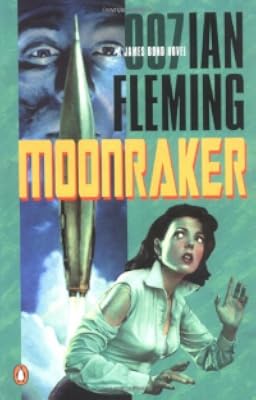
I'm two books into the series and slowly collecting the 60s Pan editions, because I like the covers. Moonraker next, once I track it down. show less
Inevitably, the story is of its time and there are racial epithets and stereotypes that don't sit too well with the modern reader, but as far as I can tell racism isn't the intent. CIA agent Felix Leiter's immersion in the jazz culture of Harlem is borne from a love of the music and a respect for the musicians, not simply because it's part of his cover. The vibrancy of black New York is starkly contrasted with the anodyne and ailing white culture of the Florida retirement villages. Fleming's scathing description show more of life amongst the "oldsters" is the most affecting part of the book.
The story itself is as fast-paced as you'd expect, with Bond flitting from one near-death experience to the next with hardly a breath, though his injuries are not glossed over - he's not a superhuman by any means.
To a post-war austerity-stricken Britain, the American and Caribbean locations must have been strange and exotic, the people of those places wonderful and alien. It's little surprise that these exciting stories set in far-away places resonated so keenly in the imaginations of Bond's parochial countrymen.
I'm two books into the series and slowly collecting the 60s Pan editions, because I like the covers. Moonraker next, once I track it down. show less
Bond's latest mission takes him to Harlem, Tampa, and Jamaica, and he trades the casual sexism of Casino Royale for casual racism and caricatures of the "negro race".
It's got it all: referring to Black women as "negress". Trying to mimic the Black voice / slang. Talk about the "negro race" as if it was one unified body. "The sixth sense of negroes". "Negroids". Voodoo and Juju. It's got a lot of elements of a Blaxploitation film.
Having said all that, this book (unlike Casino Royale) is where we can see the Bond formula start to develop. Fleming does an excellent job weaving multiple scenes and locations into a well-paced plot that maintains tension and keeps the interest of the reader. It's the same well-balanced amount of plot and show more action that people come to love about the Bond films. show less
It's got it all: referring to Black women as "negress". Trying to mimic the Black voice / slang. Talk about the "negro race" as if it was one unified body. "The sixth sense of negroes". "Negroids". Voodoo and Juju. It's got a lot of elements of a Blaxploitation film.
Having said all that, this book (unlike Casino Royale) is where we can see the Bond formula start to develop. Fleming does an excellent job weaving multiple scenes and locations into a well-paced plot that maintains tension and keeps the interest of the reader. It's the same well-balanced amount of plot and show more action that people come to love about the Bond films. show less
The masterpiece of this installment of the James Bond Series, Live and Let Die, is in its eccentric plotline. As a reader accustomed to the wild, psychologically engaged thrillers that mark contemporary mystery fiction, I still find myself fascinated by the African culture of Harlem and dark voodoo of the Caribbean that Fleming portrays. I can only imagine my reaction as a relatively naive fiction reader in the mid-1900's. The juxtaposition of the fearlessly eloquent Bond in such a fear-inducing environment builds up the reader's affection for Bond as a hero. Bond becomes something more than just a British spy, but a hero capable of lifting the spell of the supernatural Voodoo which plagues the innocent Bahamian island. Bond effectively show more transcends the natural world to fight evil in this, and in my opinion the best, installment of the series. show less
There's much to be said for actually reading the Bond books in order.
[b: Live and Let Die|3763|Live and Let Die (James Bond #2)|Ian Fleming|https://d.gr-assets.com/books/1327953982s/3763.jpg|171188] picks up where [b: Casino Royale|5824|Casino Royale |Anthony Hern|https://d.gr-assets.com/books/1348841258s/5824.jpg|21967797] left off rather nicely. Here we have Bond face off against a crime overlord whose reach stretches from Harlem to Jamaica. Controlling his subjects through a mix of terror and - for the time - surprisingly well researched Voodoo legends Mr. Big is a pretty damn terrifying villain. The descriptions of him just get better as the book goes on.
So, before we had KGB spies and high stakes gambling. Now we have lost pirate show more treasure, voodoo, and a well established crime syndicate. Oh how the times change. Also, a fight with an octopus. Yeah.
[b: Live and Let Die|3763|Live and Let Die (James Bond #2)|Ian Fleming|https://d.gr-assets.com/books/1327953982s/3763.jpg|171188] was slightly less compelling than [b: Casino Royale|5824|Casino Royale |Anthony Hern|https://d.gr-assets.com/books/1348841258s/5824.jpg|21967797] but still a very fun book. I think where the book suffered for me was the lack of a more introspective Bond. I wanted him to suffer more for what he went through in the previous installment, but that just wasn't there. There was the brief drama with Felix, which was good, but I just didn't feel there was quite enough character considering the mad amount of action that took place.
Still. Thoroughly enjoyed the book. show less
[b: Live and Let Die|3763|Live and Let Die (James Bond #2)|Ian Fleming|https://d.gr-assets.com/books/1327953982s/3763.jpg|171188] picks up where [b: Casino Royale|5824|Casino Royale |Anthony Hern|https://d.gr-assets.com/books/1348841258s/5824.jpg|21967797] left off rather nicely. Here we have Bond face off against a crime overlord whose reach stretches from Harlem to Jamaica. Controlling his subjects through a mix of terror and - for the time - surprisingly well researched Voodoo legends Mr. Big is a pretty damn terrifying villain. The descriptions of him just get better as the book goes on.
So, before we had KGB spies and high stakes gambling. Now we have lost pirate show more treasure, voodoo, and a well established crime syndicate. Oh how the times change. Also, a fight with an octopus. Yeah.
[b: Live and Let Die|3763|Live and Let Die (James Bond #2)|Ian Fleming|https://d.gr-assets.com/books/1327953982s/3763.jpg|171188] was slightly less compelling than [b: Casino Royale|5824|Casino Royale |Anthony Hern|https://d.gr-assets.com/books/1348841258s/5824.jpg|21967797] but still a very fun book. I think where the book suffered for me was the lack of a more introspective Bond. I wanted him to suffer more for what he went through in the previous installment, but that just wasn't there. There was the brief drama with Felix, which was good, but I just didn't feel there was quite enough character considering the mad amount of action that took place.
Still. Thoroughly enjoyed the book. show less
Members
- Recently Added By
Lists

Folio Society
831 works; 48 members

A Novel Cure
742 works; 23 members

Books I need to read
20 works; 1 member

The Worst Bestsellers Podcast
294 works; 5 members

Read the book and saw the movie
1,170 works; 195 members

1950s
340 works; 22 members

Books Read in 2020
4,379 works; 123 members

Books Read in 2022
5,166 works; 114 members
Author Information

253+ Works 56,041 Members
Ian Lancaster Fleming was born on May 28, 1908, in London, England. He attended Eton College and then the Royal Military College at Sandhurst. He left there after a year to go study languages in Munich and Geneva. Fleming served as the Moscow correspondent for the Reuters News Agency from 1929 till 1933. he then became a banker and a stockholder show more in London until the beginning of World War II. When the war began, Fleming became the personal assistant to the Director of British Naval Intelligence, where he learned most of his espionage terms. When the war was over, he worked as the foreign manager of The Sunday Times in London. Fleming wrote twelve James Bond novels, nearly all of which were made into Motion Pictures. His works included: Casino Royale, Live and Let Die, Moonraker, Diamonds Are Forever, Dr. No, Goldfinger, Thunderball, Chitty-Chitty-Bang-Bang, and For Your eyes Only. He of died of a heart attack on August 12, 1964. (Bowker Author Biography) show less

Ian Fleming has a Legacy Library. Legacy libraries are the personal libraries of famous readers, entered by LibraryThing members from the Legacy Libraries group.
Some Editions
Awards and Honors
Notable Lists
Series


Belongs to Publisher Series
Work Relationships
Is contained in
Casino Royale / Live and Let Die / Diamonds Are Forever / From Russia with Love / Dr. No / Goldfinger by Ian Fleming
Casino Royale / Live and Let Die / Diamonds Are Forever / From Russia with Love / Goldfinger by Ian Fleming
Casino Royale / Live and Let Die / Moonraker / Diamonds Are Forever / From Russia with Love / Dr. No / Goldfinger / For Your Eyes Only / Thunderball / The Spy Who Loved Me / On Her Majesty's Secret Service / You Only Live Twice / The Man with the Golden Gun / Octopussy and The Living Daylights by Ian Fleming
Common Knowledge
- Canonical title*
- Moord onder water
- Original title
- Live and Let Die
- Original publication date
- 1954-04-05
- People/Characters
- James Bond; Felix Leiter; Mr Big; Solitaire; Quarrel; M (show all 7); John Strangways
- Important places
- New York, New York, USA; St. Petersburg, Florida, USA; Jamaica
- Related movies
- Live and Let Die (1973 | IMDb)
- Epigraph
- [None]
- Dedication
- [None]
- First words
- There are moments of great luxury in the life of a secret agent.
- Quotations
- 'Don't go stirring up trouble for us. This case isn't ripe yet. Until it is, our policy is "live and let live".'
Bond looked quizzically at Captain Dexter.
'In my job,' he said, 'when I come up against a man like this o... (show all)ne, I have another motto. It's "live and let die".' - Last words
- (Click to show. Warning: May contain spoilers.)'What about my back?' she said.
- Original language
- English
- Disambiguation notice
- This work is by Ian Fleming. Patrick Nobles is the editor of some editions.
*Some information comes from Common Knowledge in other languages. Click "Edit" for more information.
Classifications
Statistics
- Members
- 4,021
- Popularity
- 3,866
- Reviews
- 86
- Rating
- (3.42)
- Languages
- 19 — Catalan, Czech, Danish, Dutch, English, Estonian, Finnish, French, German, Hungarian, Italian, Korean, Norwegian (Bokmål), Polish, Portuguese, Russian, Spanish, Swedish, Ukrainian
- Media
- Paper, Audiobook, Ebook
- ISBNs
- 141
- ASINs
- 93