Pericles
by Plutarch
On This Page
Description
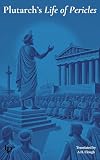
The Life of Pericles by Plutarch: A Timeless Tale of Leadership and Vision (Featuring 10 Exclusive, Original Illustrations) Step into the Golden Age of Athens with The Life of Pericles by Plutarch--a gripping account of one of history's most iconic leaders. This classic biography brings to life the visionary statesman who transformed Athens into a cultural and political powerhouse. Pericles' enduring legacy of democracy, art, and philosophy is vividly explored through Plutarch's timeless show more prose, making this work as relevant today as it was in antiquity. Now, for the first time, this special edition is brought to life with 10 original illustrations that capture the most pivotal moments of Pericles' life. From his eloquent funeral oration to his leadership during the construction of the Acropolis, each image immerses readers in the drama, triumph, and tragedy of 5th-century BC Athens. Why Readers Will Love This Edition: * Plutarch's Rich Storytelling: A masterful blend of history and character study, offering deep insights into Pericles' life and leadership. * Stunning Visuals: Exclusive, black and white illustrations that bring ancient Athens to life, ideal for history enthusiasts and art lovers alike. * Perfect for Modern Audiences: A timeless story of ambition, resilience, and vision that resonates with leaders, thinkers, and dreamers today. Whether you're a lover of ancient history, a fan of Plutarch, or new to the story of Pericles, this edition offers a unique and enriching experience. Dive into the world of Athens' greatest statesman and witness the man who shaped an era of innovation, democracy, and cultural brilliance. Rediscover history through story and art. Order your copy of The Life of Pericles today! show lessTags
Recommendations

















Member Reviews
Is democracy important?
Plutarch’s The Life of Pericles, translated by A.H. Clough, is a biographical account of one of ancient Athens’ most influential statesmen, offering insight into the political, military, and cultural developments of Classical Greece.
Pericles (c. 495–429 BCE) was a general, orator, and leader whose vision shaped Athens’ democracy, public works, and cultural achievements during its Golden Age.
Readers interested in political philosophy, ethics, and the dynamics of civic leadership will find in Pericles a figure of enduring relevance: he demonstrates how intellect, strategy, and moral reasoning can intersect in the exercise of public responsibility.
The book’s central purpose is to present Pericles’ show more character and accomplishments as a model of leadership, highlighting his intelligence, foresight, and rhetorical skill. Plutarch organizes the narrative around both achievements and moral qualities:
Pericles’ patronage of the arts, management of wartime crises, and promotion of civic engagement are emphasized alongside his personal virtues and flaws. The biography also situates Pericles within the broader historical context of Athens, offering readers an understanding of how social, political, and philosophical currents—such as the influence of pre-Socratic thought and emerging civic ethics—shaped his actions.
Plutarch draws on anecdotes, speeches, and historical records to illustrate both practical governance and ethical reflection.
Distinctive aspects of this biography include its attention to the interplay of character and circumstance, making Pericles not only a historical figure but a lens through which readers can explore classical political thought and civic responsibility.
For someone interested in vegetarian or philosophical traditions of the Classical World, it is noteworthy that the book occasionally references the ethical and intellectual life of Athenians, although it does not explicitly dwell on dietary or vegan practices (as with the Pythagoreans).
The narrative is rich with interpretive commentary, yet some historical details remain uncertain, reflecting gaps in surviving sources; Plutarch often blends well-established historical events with anecdotal or moralizing elements, which readers should distinguish carefully.
Limitations include occasional reliance on anecdotal evidence, the translator’s 19th-century language, and a focus on elite leadership that leaves the perspectives of ordinary Athenians largely unexplored. Nevertheless, it is a clear and accessible entry into Classical biography, political thought, and ethical reflection.
The Life of Pericles is best suited for readers interested in Greek history, leadership ethics, classical philosophy, and the moral dimensions of civic life. Scholars of the pre-Socratics, Pythagorean influence, and the intellectual milieu of Athens will find the biography particularly valuable.
Star rating: 4.5 out of 5 stars
* Strengths: combines historical detail, ethical reflection, and political insight; makes Pericles’ character vivid and instructive.
* Limitations: anecdotal material sometimes blends speculation with fact; limited attention is given to everyday Athenians or non-political perspectives. show less
Plutarch’s The Life of Pericles, translated by A.H. Clough, is a biographical account of one of ancient Athens’ most influential statesmen, offering insight into the political, military, and cultural developments of Classical Greece.
Pericles (c. 495–429 BCE) was a general, orator, and leader whose vision shaped Athens’ democracy, public works, and cultural achievements during its Golden Age.
Readers interested in political philosophy, ethics, and the dynamics of civic leadership will find in Pericles a figure of enduring relevance: he demonstrates how intellect, strategy, and moral reasoning can intersect in the exercise of public responsibility.
The book’s central purpose is to present Pericles’ show more character and accomplishments as a model of leadership, highlighting his intelligence, foresight, and rhetorical skill. Plutarch organizes the narrative around both achievements and moral qualities:
Pericles’ patronage of the arts, management of wartime crises, and promotion of civic engagement are emphasized alongside his personal virtues and flaws. The biography also situates Pericles within the broader historical context of Athens, offering readers an understanding of how social, political, and philosophical currents—such as the influence of pre-Socratic thought and emerging civic ethics—shaped his actions.
Plutarch draws on anecdotes, speeches, and historical records to illustrate both practical governance and ethical reflection.
Distinctive aspects of this biography include its attention to the interplay of character and circumstance, making Pericles not only a historical figure but a lens through which readers can explore classical political thought and civic responsibility.
For someone interested in vegetarian or philosophical traditions of the Classical World, it is noteworthy that the book occasionally references the ethical and intellectual life of Athenians, although it does not explicitly dwell on dietary or vegan practices (as with the Pythagoreans).
The narrative is rich with interpretive commentary, yet some historical details remain uncertain, reflecting gaps in surviving sources; Plutarch often blends well-established historical events with anecdotal or moralizing elements, which readers should distinguish carefully.
Limitations include occasional reliance on anecdotal evidence, the translator’s 19th-century language, and a focus on elite leadership that leaves the perspectives of ordinary Athenians largely unexplored. Nevertheless, it is a clear and accessible entry into Classical biography, political thought, and ethical reflection.
The Life of Pericles is best suited for readers interested in Greek history, leadership ethics, classical philosophy, and the moral dimensions of civic life. Scholars of the pre-Socratics, Pythagorean influence, and the intellectual milieu of Athens will find the biography particularly valuable.
Star rating: 4.5 out of 5 stars
* Strengths: combines historical detail, ethical reflection, and political insight; makes Pericles’ character vivid and instructive.
* Limitations: anecdotal material sometimes blends speculation with fact; limited attention is given to everyday Athenians or non-political perspectives. show less
 This review was written for LibraryThing Early Reviewers.
I know that Plutarch is supposed to be an important writer/philospher, bringing to light the life of Pericles as a truly powerful leader in Athens during a time of a major cultural and democratic transformation of Greece.
Unfortunately, I found his writing style so confusing that I was constantly back tracking to make sure I had any given sentence sorted out properly. In college I thought Vasari's Lives of the Artists was dry and I am truly grateful that I didn't have to read Plutarch.
Unfortunately, I found his writing style so confusing that I was constantly back tracking to make sure I had any given sentence sorted out properly. In college I thought Vasari's Lives of the Artists was dry and I am truly grateful that I didn't have to read Plutarch.
This review was written for LibraryThing Early Reviewers.For anyone who loves history, politics, or a combination of it, I would recommend this as a must read. It helps give insight to our own government and how we can learn from the past to help our present.
This review was written for LibraryThing Early Reviewers.Having not read Plutarch before (one of my many flaws), I'm not in a position to judge the translation of his biography of Pericles. A. H. Clough may rest easy. I am primarily reviewing this edition, and there's not that much to say about it; this is a public-domain text that has had a few AI-generated illustrations added to it in an uninspiring fashion. The illustrations themselves are okay as such things go, but they've been simply placed in a series after the end of the text. It would have been more interesting and helpful to try to insert them interlinearly at the relevant points of illustration. On my devices (Mac and iPad) the captions to the illustrations are cut off and incomplete, but I'll give the publisher the benefit of the show more doubt there and assume that's a draft issue that will be corrected in time. show less
This review was written for LibraryThing Early Reviewers.Ratings
Members
- Recently Added By
Author Information

1,618+ Works 25,876 Members
PLUTARCH. c.46--c.125 Considered by many to be the most important Greek writer of the early Roman period, Plutarch was a member of a well-to-do Greek family, a chief magistrate, a priest at Delphi, and an exceptionally well-read individual. His philosophical views were based on those of Plato and, although a Greek, he esteemed the achievements and show more attributes of the Romans. By the time Plutarch's works were published for the first time in the eleventh century, some had already been lost. He wrote innumerable essays on philosophical, historical, political, religious, and literary subjects, 78 of which survive today and are known collectively as the "Moralia." He is known primarily, however, for his Parallel Lives of Greeks and Romans, which consists of 50 biographies---23 of prominent Greeks, 23 of Roman leaders, and 4 separate lives---accompanied at intervals by short comparative essays. Although historical information is included in the work, Plutarch wrote it originally to inspire emulation in youth, so the emphasis is on character, moral choice, and anecdote. Sir Thomas North's 1579 translation into English of Parallel Lives became an important source for William Shakespeare which he used for three plays, Julius Caesar, Antony and Cleopatra, and Coriolanus. (Bowker Author Biography) show less
Some Editions
Classifications
- Genres
- Nonfiction, Biography & Memoir, History, General Nonfiction
- DDC/MDS
- 920.038 — History & geography Biography & genealogy Biography, genealogy, insignia General and collective by localities Ancient
- LCC
- DF229 — History of Europe, Asia, Africa and Oceania Greece History of Greece History By period Peloponnesian War, 431-404 B.C.
- BISAC
Statistics
- Members
- 20
- Popularity
- 1,275,855
- Reviews
- 4
- Rating
- (3.40)
- Languages
- English, Greek (Ancient)
- Media
- Paper, Ebook
- ISBNs
- 3
- ASINs
- 2