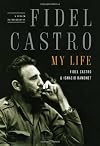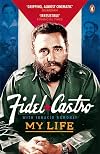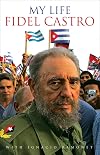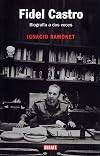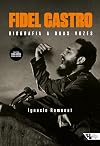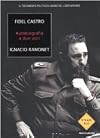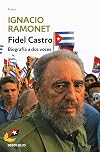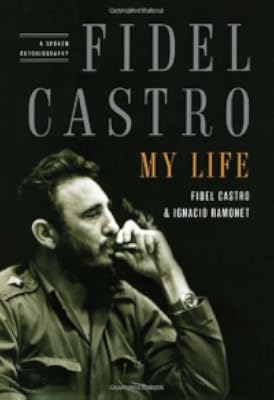
My Life: A Spoken Autobiography
by Ignacio Ramonet, Fidel Castro
On This Page
Description
Fidel Castro is perhaps the most charismatic and controversial head of state in modern times. A dictatorial pariah to some, he has become a hero and inspiration for many of the world's poor, defiantly charting an independent and revolutionary path for Cuba over nearly half a century. Numerous attempts have been made to get Castro to tell his own story, but only now, in the twilight of his years, has he been prepared to set out the details for the world to read. Drawing on more than one show more hundred hours of interviews with journalist Ignacio Ramonet, a knowledgeable and trusted interlocutor, this spoken autobiography will stand as the definitive record of an extraordinary life lived in turbulent times.--From publisher description. show lessTags
Recommendations















Member Recommendations

by anonymous user
Member Reviews
I rather like this reworking of the idea of a biography. Instead of an enhanced timeline: George Smith was born on... and ..., this is based upon approximately 100 hours of discussions between the author and the subject.
Hearing Fidel Castro's own views is fascinating. One has to accept that the final text was checked by him before publication, but even so, the person who comes out of this story is a warm hearted man acting for the betterment of the people of Cuba. It is strange that the USA talks so much about freedom, but only gives the freedom to follow its lead. As soon as any person/country wants freedom, they must be exterminated.
Hearing Fidel Castro's own views is fascinating. One has to accept that the final text was checked by him before publication, but even so, the person who comes out of this story is a warm hearted man acting for the betterment of the people of Cuba. It is strange that the USA talks so much about freedom, but only gives the freedom to follow its lead. As soon as any person/country wants freedom, they must be exterminated.
Very surprising book. I'm not a fan of the Cuban politics and not generally a fan of politicians' biographies, but Fidel Castro, regardless of any disagreements I might have with him, is apparently an interesting person. There is much I didn't know about the past and present situation in Cuba, and while of course everything in such a book should be taken with a grain of salt, an important part of a political leader is the way they choose to present themselves to the world. And Fidel Castro turned out to be quite different than I expected from the mainstream media.
I think everyone with an interest in politics who does not know Cuba beyond what western media says, should read this book and get a taste of the other side of the story. It show more won't "convert" you to the other side, but it will give you a more complete picture. show less
I think everyone with an interest in politics who does not know Cuba beyond what western media says, should read this book and get a taste of the other side of the story. It show more won't "convert" you to the other side, but it will give you a more complete picture. show less
For years people have tried to persuade the leader of the Cuban Revolution to tell his own life story. Here, finally, Ignacio Ramonet, well-known activist and editor of Le Monde Diplomatique, has succeeded. For the first time, in a series of probing interviews, Fidel Castro describes his life, from the 1950s all the way up to the present day. He discusses his parents, his earliest influences, the beginnings of the revolution, his relationship with Che Guevara, the Bay of Pigs, the Carter years, Cuban migration to the US. And along the way, Ramonet challenges Castro to discuss his views on a number of controversial questions, from human rights and freedom of the press to the repression of homosexuality and the survival of the death show more penalty, and he gives his opinion of other leaders, alive and dead, including George Bush and Tony Blair. show less
I ran into a wall halfway through this. It was very readable and interesting and I think it is very important to get perspectives from outside America on things we accept as black and white as we do Cuba, but I need more context about the country's history before I know what to do with words from someone in power in it.
Seven out of ten.
A biography of Fidel Castro based on hours of interviews with him. Very interesting in his early life and the start of the revolution. Dwindles toward the end.
Ægte Cubansk charme!
Ignacio Ramonet, el director de Le Monde Diplomatique, desvela con su habitual rigor intelectual las claves de la revolución cubana, su deriva actual y su incierto porvenir. Indagando "a dos voces" en la vida del controvertido líder político, el resultado son más de 100 horas de entrevistas que arrojan inéditas revelaciones extraídas de la memoria oral del comandante. Posiblemente, esta Biografía a dos voces es el libro definitivo sobre Fidel Castro. Un libro esencial para comprender el pensamiento de uno de los políticos más importantes del siglo XX.
Sep 12, 2011Spanish
Members
- Recently Added By
Author Information

55 Works 977 Members

382+ Works 2,330 Members
Fidel Alejandro Castro Ruz was born on August 13, 1926 in province of Oriente, Cuba. He entered the University of Havana's law school in 1945 and became involved in radical politics. After receiving his law degree, Castro briefly represented the poor, often bartering his services for food. In 1952, he ran for Congress as a candidate for the show more opposition Orthodox Party. However, the election was rushed because of a coup staged by Fulgencio Batista. Castro's initial response to the Batista government was to challenge it with a legal appeal, claiming that Batista's actions had violated the Constitution. The attempt failed. On July 26, 1953, Castro led a group of radical students in an attack on the Moncada barracks in Santiago de Cuba. Many of the rebels were killed. He was arrested and sentenced to 15 years in prison. To show the people that he was not a dictator, Batista released Castro and his followers in an amnesty after the 1954 presidential election. Once Castro returned to Cuba after an exile in Mexico, he began a campaign of harassment and guerrilla warfare against Batista. Batista fled Cuba on January 1, 1959. Under Castro's rule, more than 500 Batista-era officials were brought before courts-martial and special tribunals, convicted, and shot to death. Castro cut ties with the United States after President Dwight D. Eisenhower cut the American sugar quota and turned to the Soviet Union for assistance, eventually becoming a Communist. The Escambray Revolt, led by peasants and anti-Communist insurgents against the Castro government, lasted from 1959 to 1965, before it was crushed by Castro's army. Cuban exiles arrived in the United States by the thousands. The Central Intelligence Agency helped train an exile army to retake Cuba by force. On April 17, 1961, 1,500 Cuban fighters landed at the Bay of Pigs. Castro was waiting for them and most of the invaders were either captured or killed. Castro was the leader of Cuba until stepping down in 2006 due to diverticulitis. He died on November 25, 2016 at the age of 90. (Bowker Author Biography) show less
Awards and Honors
Distinctions
Common Knowledge
- Canonical title
- My Life: A Spoken Autobiography
- People/Characters
- Fidel Castro
- Important places
- Cuba; Havana, Cuba; Sierra Maestra, Cuba
Classifications
- Genres
- Biography & Memoir, Nonfiction, History, General Nonfiction
- DDC/MDS
- 972.9106 — History & geography History of North America Mexico, Central America, West Indies, Bermuda West Indies (Antilles) and Bermuda; Caribbean Cuba Cuba
- LCC
- F1788.22 .C3 .A513 — Local History of the United States, Canada and Latin America Latin America. Spanish America Greater Antilles Cuba Communist regime
- BISAC
Statistics
- Members
- 524
- Popularity
- 57,145
- Reviews
- 7
- Rating
- (3.96)
- Languages
- 11 — Czech, Danish, English, Finnish, French, German, Galician, Italian, Portuguese, Spanish, Turkish
- Media
- Paper, Audiobook, Ebook
- ISBNs
- 34
- ASINs
- 5