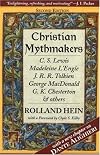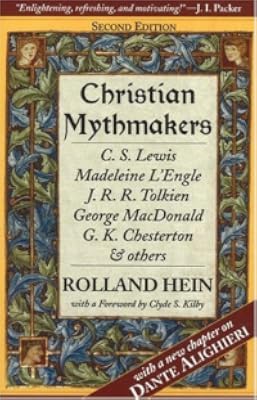
Christian Mythmakers: C.S. Lewis, Madeleine L'Engle, J.R.R. Tolkien, George Madonald, G.K. Chesterton, and Others
by Rolland Hein
On This Page
Description
Plunge into the soul of Lewis's Space Trilogy, L'Engle's A Wrinkle in Time, and Tolkien's The Lord of the Rings. Dwarves, elves, princes and princesses, dark powers, unlikely heroes and fantastic places open up to us in this excellent introduction to Christian mythopoeia. This overview of the major Christian mythmakers explores how they influenced and inspired one another, and identifies the symbols and emblems in their works.Rediscover the characters and worlds of authors such as- C. S. show more Lewis - George MacDonald- G. K. Chesterton - J. R. R. Tolkien- John Bunyan - Madeleine L'Engle- Charles Williams - Walter Wangerin show lessTags
Recommendations






Member Reviews
I am an avowed atheist, but to discover why I was reading a book about Christian myth makers, you need look no further than the subtitle of the book. Tolkien, L'Engle, MacDonald, and Lewis are all authors I have enjoyed. Although this book looks at them primarily as Christian writers, the discussion of each of those authors writings was enjoyable.
Also enjoyable was Clyde Kilby's forward on the nature of myth. Myth in the writings of these authors is not the low definition of discredited stories. Rather, this book discusses the higher meaning of myth. In the words of Kilby, "Myth is the name of a way of seeing, a way of knowing in depth, a way of experiencing -- a way that in being disinterested contains the freedom of unending and vital show more interest." Myth is necessary because "Systematizing flattens, but myth rounds out. Systematizing drains away color and life, but myth restores." Any translation of idea into language, reality into system loses some depth. Myth is what recaptures that depth by providing sidelong glimpses of some sensed truth.
Hein makes the assumption that the truth that myth points to is embodied in Christianity -- the Bible presents myth that is also factual truth. This is not a bad assumption in so far as it is what the authors under discussion believed. However, it is an assumption and one that fails to carry its own weight upon further examination.
In the end, this book was a worthwhile read, but the large number of authors surveyed and lack of willingness to examine the basic assumptions Christianity's relationship to myth made it somewhat shallow. show less
Also enjoyable was Clyde Kilby's forward on the nature of myth. Myth in the writings of these authors is not the low definition of discredited stories. Rather, this book discusses the higher meaning of myth. In the words of Kilby, "Myth is the name of a way of seeing, a way of knowing in depth, a way of experiencing -- a way that in being disinterested contains the freedom of unending and vital show more interest." Myth is necessary because "Systematizing flattens, but myth rounds out. Systematizing drains away color and life, but myth restores." Any translation of idea into language, reality into system loses some depth. Myth is what recaptures that depth by providing sidelong glimpses of some sensed truth.
Hein makes the assumption that the truth that myth points to is embodied in Christianity -- the Bible presents myth that is also factual truth. This is not a bad assumption in so far as it is what the authors under discussion believed. However, it is an assumption and one that fails to carry its own weight upon further examination.
In the end, this book was a worthwhile read, but the large number of authors surveyed and lack of willingness to examine the basic assumptions Christianity's relationship to myth made it somewhat shallow. show less
Ratings
Members
- Recently Added By
Author Information

13 Works 580 Members
Rolland Hein professor emeritus from Wheaton College, also graduated from Wheaton in 1954. Having recieved a B. D. degree from Grace Theological Seminary and a B.D. from Purdue University, he taught English at Bethel College, St: Paul, until 1970. His writings include George MacDonald: Victorian Mythmaker and Christian Mythmakers. He currently show more conducts a class in myth at the Wade Center on Saturday mornings. He and his wife Dorothy live near St. Charles, IL. show less
Awards and Honors
Awards
Common Knowledge
- People/Characters
- Dante Alighieri; John Bunyan; George MacDonald; G. K. Chesterton; Charles Williams; J. R. R. Tolkien (show all 11); C. S. Lewis; Madeleine L'Engle; Walter Wangerin, Jr; Robert Siegel; Hannah Hurnard
- Epigraph
- "I am a debtor to all, to all I am bounden"--Edwin Muir
- Dedication
- To my students
- First words
- (Foreward) Myth needs to be seen in a certain context if it is not to appear negligible or silly.
(Introduction) "I wonder what sort of tale we've fallen into?" Sam muses to his master Frodo in J. R. R. Tolkien's The Lord of the Rings, as they near the completion of their courageous epic journey.
(Chapter 1) The Pilgrim's Progress has consistently fascinated not only people who are in general agreement with Bunyan's strong doctrinal views, but also many who would surely have quarreled with several of them, such as Win... (show all)ston Churchill, George Bernard Shaw, and e. e. cummings. - Last words
- (Click to show. Warning: May contain spoilers.)The imagination in its highest reaches must have myths; it is a bridge that spans the gap between man and the eternal.
Classifications
- Genres
- Literature Studies and Criticism, Nonfiction, Fiction and Literature
- DDC/MDS
- 820.93823 — Literature & rhetoric English & Old English literatures English and Old English (Anglo-Saxon) literatures History, description, critical appraisal of works in more than one form Literature dealing with specific themes and subjects Philosophic and abstract themes Religious themes
- LCC
- PN49 .H345 — Language and Literature Literature (General) Literature (General) Theory. Philosophy. Esthetics
- BISAC
Statistics
- Members
- 200
- Popularity
- 162,269
- Reviews
- 1
- Rating
- (3.93)
- Languages
- English
- Media
- Paper, Ebook
- ISBNs
- 5