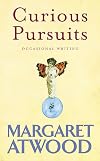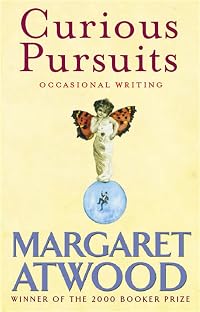
Curious Pursuits: Occasional Writings, 1970-2005
by Margaret Atwood
On This Page
Description
By the author of The Handmaid's Tale and Alias Grace Curious Pursuits is a collection of personal essays, book reviews and articles from the fierce, ingenious mind of Margaret Atwood, ranging from 1970 to the present. Atwood remembers moving to London as a starry-eyed teenager in 1964 and her first attempts at gardening; she discusses feminist utopias in fiction, and writes moving odes on beloved classics like Anne of Green Gables. Personal life and fiction are shelved side by side in this show more revealing, insightful collection of Atwood's non-fiction writing. PRAISE FOR Curious Pursuits 'A goldmine' Sunday Times 'Reminds one that Atwood is a superbly funny (as well as serious) writer; her wit is winningly relaxed and genial as well as sharp' Spectator 'The glimpses into the writing process and her reflections on identity will delight fans of her novels, who will also recognise flashes of her mordant wit' Times show lessTags
Recommendations



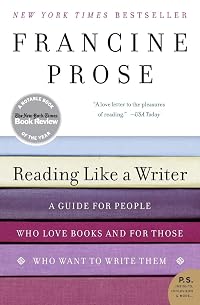
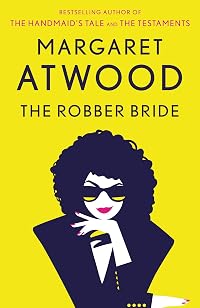
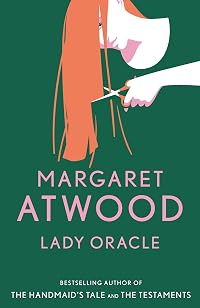
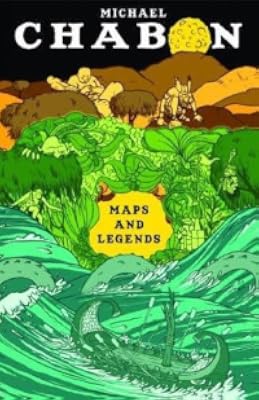




Member Reviews
Curious Pursuits is a collection of some of Atwood's shorter non-fiction writing, including some forty seven separate pieces — reviews, speeches, essays and obituaries — which were written between 1970 and 2005. Some of the pieces were about books which I had already read, while others concerned people I had never heard of before, but I found all of them interesting, some of them compassionate, and some of them outright hilarious. 'Writing the Male Character' was probably my favourite - very insightful, with enough bite to make it terrifically funny. I would love to have been a fly on the wall when she first gave it, just to see how many people in the audience squirmed and looked uncomfortable. If you're a fan of her work at all, show more this is well worth dipping in to show less
Curious Pursuits is a collection of reviews, forewords and essays by Margaret Atwood. The pieces, written between 1970 and 2005, have been collected into a single volume and seem to have no connecting link between them other than their author. There are definitely reoccuring themes--such as the state of Canadian literature/culture, feminism and, more towards the end, environmentalism--but overall, it doesn’t seem strong enough to hang together.
In the acknowledgements section, Atwood describes overhearing four Irish women discussing her books and complaining that they were becoming too long. She points to the short length of some of the pieces in the book as a peace offering. The book itself, however, is rather chunky. This left it in show more a weird space for me. It was too big to take travelling with me, but the stories were too short to engage me for an extended reading session at home. I found myself putting this book down a lot and wandering off to do other things.
And yet I read the book all the way through. Part of this is probably due to my own stubborness--I’m always very reluctant to put a book down once I’ve started. But the book held interest for me as a writer. A writer, it seems, will write and write a profusion of different things. It was interesting to me to see all the different forms Atwood’s writing has taken apart from her novels (and made me feel better that I am not the only one with diverse writing interests). Her comments about writing had potential for further rumination on my part. I found her book reviews interesting on a couple of levels--discovering both what she had been reading, what her thoughts on it were and the improvement over the years in how she wrote the reviews. I found her essay on The Island of Doctor Moreau particularly interesting and a stronger note to finish the book on.
However, I don’t think it revealed all that much about Atwood as a person, though there was some personal detail, and overall I was left wondering what the point of the book was. show less
In the acknowledgements section, Atwood describes overhearing four Irish women discussing her books and complaining that they were becoming too long. She points to the short length of some of the pieces in the book as a peace offering. The book itself, however, is rather chunky. This left it in show more a weird space for me. It was too big to take travelling with me, but the stories were too short to engage me for an extended reading session at home. I found myself putting this book down a lot and wandering off to do other things.
And yet I read the book all the way through. Part of this is probably due to my own stubborness--I’m always very reluctant to put a book down once I’ve started. But the book held interest for me as a writer. A writer, it seems, will write and write a profusion of different things. It was interesting to me to see all the different forms Atwood’s writing has taken apart from her novels (and made me feel better that I am not the only one with diverse writing interests). Her comments about writing had potential for further rumination on my part. I found her book reviews interesting on a couple of levels--discovering both what she had been reading, what her thoughts on it were and the improvement over the years in how she wrote the reviews. I found her essay on The Island of Doctor Moreau particularly interesting and a stronger note to finish the book on.
However, I don’t think it revealed all that much about Atwood as a person, though there was some personal detail, and overall I was left wondering what the point of the book was. show less
Well lets accept it, Atwood is perhaps one of the select woman writers out there who can be considered to be of substance. It is the refinery of her prose and her well developed observational skills that pulls her away from the mediocre horde.
This book is a decent collection of some her non-fiction writings over a period of time, ranging from various subjects- Edinburgh Fringe to Atarnajuat.
I would say it also makes a good introduction to anyone who is looking to start with Atwood.
This book is a decent collection of some her non-fiction writings over a period of time, ranging from various subjects- Edinburgh Fringe to Atarnajuat.
I would say it also makes a good introduction to anyone who is looking to start with Atwood.
Ratings
Members
- Recently Added By
Author Information

282+ Works 198,814 Members
Margaret Atwood was born on November 18, 1939 in Ottawa, Canada. She received a B.A. from Victoria College, University of Toronto in 1961 and an M.A. from Radcliff College in 1962. Her first book of verse, Double Persephone, was published in 1961 and was awarded the E. J. Pratt Medal. She has published numerous books of poetry, novels, story show more collections, critical work, juvenile work, and radio and teleplays. Her works include The Journals of Susanna Moodie, Power Politics, Cat's Eye, The Robber Bride, Morning in the Buried House, the MaddAdam trilogy, and The Heart Goes Last. She has won numerous awards including the Prince of Asturias Award for Literature, the Booker Prize in 2000 for The Blind Assassin, the Giller Prize and the Premio Mondello for Alias Grace, and the Governor General's Award in 1966 for The Circle Game and in 1986 for The Handmaid's Tale, which also won the very first Arthur C. Clarke Award in 1987. She won the PEN Pinter prize in 2016 for her political activism. She was awarded the 2016 PEN Pinter Prize for the outstanding literary merit of her body of work. (Bowker Author Biography) show less
Common Knowledge
- Canonical title
- Curious Pursuits: Occasional Writings, 1970-2005
Classifications
Statistics
- Members
- 168
- Popularity
- 194,388
- Reviews
- 3
- Rating
- (3.81)
- Languages
- English, German, Spanish, Swedish
- Media
- Paper, Ebook
- ISBNs
- 6
- ASINs
- 2