On This Page
Description
Describes changes in eating customs throughout the centuries and the origins of table manners.Tags
Recommendations














Member Reviews
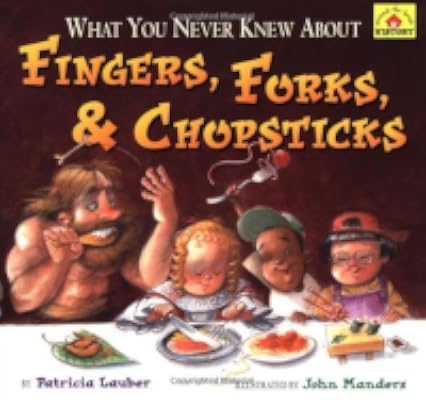
This book was an easy read, the layout flowed easily from page to page. I enjoyed the content but was hoping for a little more depth into the history surrounding the developments of the new eating utensils. The art style was very amusing. Especially the starting and ending families depicted. Having them at both ends really helped tie it together.
Summary:
Showing different cultures and the passage of time though history in the confines of food.
Personal Reaction:
An excellent way to introduce multi cultures to children at a young age. How one would eat and their time in history or nation of origin.
Classroom Extension Ideas:
1. This can be used in an early geography class for young children, I would add some of the food and they can experience eating the way depicted in the book.
2. Class discussion so children of different background are able to talk about their native recipes or how they eat a specific food
3. I would add a potluck of native food from the children in the class. Each student could teach their classmates about their native foods and customs in a safe way.
Showing different cultures and the passage of time though history in the confines of food.
Personal Reaction:
An excellent way to introduce multi cultures to children at a young age. How one would eat and their time in history or nation of origin.
Classroom Extension Ideas:
1. This can be used in an early geography class for young children, I would add some of the food and they can experience eating the way depicted in the book.
2. Class discussion so children of different background are able to talk about their native recipes or how they eat a specific food
3. I would add a potluck of native food from the children in the class. Each student could teach their classmates about their native foods and customs in a safe way.
This is a clever book written to give the history of utencils and how the manners of people in the past have developed to now. It goes through things like in France they use to throw their bones on the floor. Great information on history dating back to the middle ages and done to keep students interest.
Genre: Informational
Critique of Genre: This is a witty example of an informational book because it tells about all of the ways of eating and manners have changed over time.
Media: mixed
Age Appropriateness: secondary
Critique of Genre: This is a witty example of an informational book because it tells about all of the ways of eating and manners have changed over time.
Media: mixed
Age Appropriateness: secondary
Age Appropriateness: Primary
Genre: Multicultural, Informational
Media: Acrylics
Plot: There is no real plot, character, or setting for this book because it is mainly informational.
Review: This book presents the history of eating of many different cultures in a humorous manner. This book even gives a few pointers for children for being polite and proper while they eat also, which I thought was a good way to integrate the book into their daily lives.
Genre: Multicultural, Informational
Media: Acrylics
Plot: There is no real plot, character, or setting for this book because it is mainly informational.
Review: This book presents the history of eating of many different cultures in a humorous manner. This book even gives a few pointers for children for being polite and proper while they eat also, which I thought was a good way to integrate the book into their daily lives.
- Age: Intermediate
- About the history of how forks and chopsticks became to be. They start in the caveman time and go through the stone age all the way to modern times.
- I probably would not have this in my classroom as it is really detailed and long talking about both about utensils and the era. It might be interesting to read after learning about the different eras as it is bridges them all together.
- About the history of how forks and chopsticks became to be. They start in the caveman time and go through the stone age all the way to modern times.
- I probably would not have this in my classroom as it is really detailed and long talking about both about utensils and the era. It might be interesting to read after learning about the different eras as it is bridges them all together.
A book centered around food and the history of food but through the lense of different cultures.
Members
- Recently Added By
Author Information

118+ Works 13,262 Members
Patricia Lauber was born in New York City and graduated from Wellesley College. During her lifetime, she wrote more than 125 children's books including the Around-the-House History series, the Clarence the TV Dog series, and contributions to the Let's-Read-and-Find-Out Science series. Volcano: Eruption and Healing of Mount St. Helens received a show more Newbery Honor in 1986. In 1983, she received The Washington Post/Children's Book Guild Award for her overall contribution to children's nonfiction literature. Besides being an author, she was also an editor of Junior Scholastic and editor-in-chief of Science World. She died on March 12, 2010 at the age of 86. (Bowker Author Biography) show less
All Editions
Awards and Honors
Series

Common Knowledge
- Canonical title
- What You Never Knew About Fingers, Forks, & Chopsticks
Classifications
- Genres
- Nonfiction, Picture Books
- DDC/MDS
- 394.1 — Society, government, & culture Customs, etiquette & folklore General customs Eating, drinking, using drugs
- LCC
- GT2948 .L39 — Geography, Anthropology and Recreation Manners and customs (General) Manners and customs (General) Customs relative to private life
- BISAC
Statistics
- Members
- 161
- Popularity
- 203,310
- Reviews
- 12
- Rating
- (4.09)
- Languages
- English
- Media
- Paper
- ISBNs
- 5