On This Page
Description
Abandoned by both her parents, nine-year-old Wise Child goes to live with the witch woman Juniper, who begins to train her in the ways of herbs and magic.Tags
Recommendations




Member Reviews
I read this because it was a friend's beloved childhood book, and I'm so glad I did. It hit me right in my pagan, "living in the rhythm," kitchen-witch heart. I have aspired to be Juniper my entire adult life, and I didn't even know it.
This would be a hard sell for most contemporary kids I know. It's slow. The pacing feels old-fashioned: languorous descriptions of the light falling across the floor, the milking of the cow, the gradual coming to terms with being Juniper's ward... punctuated by occasional adventures. The GR description makes it sound like Wise Child choosing between Maeve and Juniper is the major story arc. It is part of the main emotional arc, which is Wise Child choosing Juniper over both Maeve and her village, but as show more a plot point Maeve is one two-chapter adventure among others. I probably wouldn't try it on anyone who isn't used to reading old-school agricultural-adventure books. It's most akin in feel to "what if [b:Understood Betsy|347151|Understood Betsy|Dorothy Canfield Fisher|https://images.gr-assets.com/books/1388985862s/347151.jpg|3234038] were set in [b:The Mists of Avalon|402045|The Mists of Avalon (Avalon, #1)|Marion Zimmer Bradley|https://images.gr-assets.com/books/1388857089s/402045.jpg|806813]?" I am here. for. that, it turns out, but I'm not sure most current kids are. show less
This would be a hard sell for most contemporary kids I know. It's slow. The pacing feels old-fashioned: languorous descriptions of the light falling across the floor, the milking of the cow, the gradual coming to terms with being Juniper's ward... punctuated by occasional adventures. The GR description makes it sound like Wise Child choosing between Maeve and Juniper is the major story arc. It is part of the main emotional arc, which is Wise Child choosing Juniper over both Maeve and her village, but as show more a plot point Maeve is one two-chapter adventure among others. I probably wouldn't try it on anyone who isn't used to reading old-school agricultural-adventure books. It's most akin in feel to "what if [b:Understood Betsy|347151|Understood Betsy|Dorothy Canfield Fisher|https://images.gr-assets.com/books/1388985862s/347151.jpg|3234038] were set in [b:The Mists of Avalon|402045|The Mists of Avalon (Avalon, #1)|Marion Zimmer Bradley|https://images.gr-assets.com/books/1388857089s/402045.jpg|806813]?" I am here. for. that, it turns out, but I'm not sure most current kids are. show less
Summary: When Wise Child's grandmother died, there was no one in the small Celtic village to take her in: her mother had abandoned her and her father was frequently gone on long sea voyages. She is taken in by Juniper, who was a friend of her father's, but is widely feared among the village folk as a witch. Wise Child's afraid to leave the village and go live with Juniper in her house on the cliff, but under Juniper's warm and loving care, she soon comes to feel at home. Juniper teaches Wise Child to read, write, tend the herbs in the garden that are used to cure the ill, and the beginnings of her magical lore. However, Wise Child isn't truly safe, for her mother, the powerful sorceress Maeve, wants to control her, and the village show more priest is becoming increasingly intolerant of Juniper's presence. If she ever wants to live safely and happily, Wise Child will first have to determine where her loyalties truly lie.
Review: From what I can gather, it seems as though whether people love Wise Child (published first) or Juniper (a prequel, published second) more is entirely dependent on which one they read first. Since I read Juniper (repeatedly) as a child, and only found out that sequels existed once I was well into my twenties, Juniper gets my devotion.
Wise Child is a good read, though, don't get me wrong. It - like Juniper - is an interesting blend of historical fiction with some very plausible fantasy elements woven in. Both books also have a very sensible worldview about life and death and magic and power and love woven through them, motivating the story without beating you over the head with its Morals. The writing's geared for mid-grade readers, but doesn't feel facile to an adult, and the tone of the book manages to be simultaneously light and serious, when appropriate.
Wise Child loses to Juniper on two fronts, though. First, the title character manages to be even brattier than Juniper was at the start of her book, and even by the end, she's never entirely un-bratty. Secondly, the plot didn't seem to hang together very well; the danger that motivates most of the middle of the book is not the danger that eventually leads to the climax, making the whole thing feel a little episodic and disjointed. Overall, though, it's a quick-reading and enjoyable mid-grade fantasy, and I'm sad that this series isn't more widely appreciated. 4 out of 5 stars.
Recommendation: I'd recommend this to kids (and adults!) who like historical fantasy, stories involving witch trials, or ancient Britain. show less
Review: From what I can gather, it seems as though whether people love Wise Child (published first) or Juniper (a prequel, published second) more is entirely dependent on which one they read first. Since I read Juniper (repeatedly) as a child, and only found out that sequels existed once I was well into my twenties, Juniper gets my devotion.
Wise Child is a good read, though, don't get me wrong. It - like Juniper - is an interesting blend of historical fiction with some very plausible fantasy elements woven in. Both books also have a very sensible worldview about life and death and magic and power and love woven through them, motivating the story without beating you over the head with its Morals. The writing's geared for mid-grade readers, but doesn't feel facile to an adult, and the tone of the book manages to be simultaneously light and serious, when appropriate.
Wise Child loses to Juniper on two fronts, though. First, the title character manages to be even brattier than Juniper was at the start of her book, and even by the end, she's never entirely un-bratty. Secondly, the plot didn't seem to hang together very well; the danger that motivates most of the middle of the book is not the danger that eventually leads to the climax, making the whole thing feel a little episodic and disjointed. Overall, though, it's a quick-reading and enjoyable mid-grade fantasy, and I'm sad that this series isn't more widely appreciated. 4 out of 5 stars.
Recommendation: I'd recommend this to kids (and adults!) who like historical fantasy, stories involving witch trials, or ancient Britain. show less
This is a historical fantasy about an orphaned (or abandoned, as her parents are living but absent) girl known as Wise Child, who is adopted by Juniper, essentially the village witch. Wise Child struggles first with her own fear, then between the joy in her new life and the disapproval and fear of the villagers - especially the priest - and later between her love for Juniper and the temptation of living like a lady with her real mother, Maeve.
Wise Child has been one of my favorite books for twenty years, since I was a child myself. Fulong is not shy about letting Wise Child act like a child. She is stubborn, proud, and makes all manner of silly and dangerous mistakes throughout the story, some of which put her and even Juniper in show more serious danger. But she also matures from a selfish, spoiled child into an intelligent, thoughtful, loving (though still sometimes exasperating) young woman.
One of my favorite lines in the book is something Juniper says to Wise Child: 'You always feel someone must be to blame when you are tired or miserable or frightened, Wise Child. It may not be so at all - it may just be the weather of life - but even if they are to blame...does it matter?' show less
Wise Child has been one of my favorite books for twenty years, since I was a child myself. Fulong is not shy about letting Wise Child act like a child. She is stubborn, proud, and makes all manner of silly and dangerous mistakes throughout the story, some of which put her and even Juniper in show more serious danger. But she also matures from a selfish, spoiled child into an intelligent, thoughtful, loving (though still sometimes exasperating) young woman.
One of my favorite lines in the book is something Juniper says to Wise Child: 'You always feel someone must be to blame when you are tired or miserable or frightened, Wise Child. It may not be so at all - it may just be the weather of life - but even if they are to blame...does it matter?' show less
Absolutely lovely. Juniper seems a tiny bit too good to be true, but the young girl is utterly believable. And though the story takes place in an historical time, it is not at all dusty. I love the complex treatment of the two kinds of spiritual living, and especially of their intersection. Those poor benighted villagers, falling for the mad priest's obsessions . And I'm glad that Maeve had a relatively small role, at least by page count .
I did wince at the ending, but now that I see that there's at least one sequel it makes more sense. I will look for it, and will consider others by the author.
Highly recommended to fans of literary fantasy and to anyone who has ever seen any value herb-lore or the concept of Gaia, that kind of thing. If show more I had known this book as a teen I would have reread it and tried to get others to read it, too. show less
I did wince at the ending, but now that I see that there's at least one sequel it makes more sense. I will look for it, and will consider others by the author.
Highly recommended to fans of literary fantasy and to anyone who has ever seen any value herb-lore or the concept of Gaia, that kind of thing. If show more I had known this book as a teen I would have reread it and tried to get others to read it, too. show less
This was one of my most beloved books as a child and I'm gratified that it is still a delight to read as an adult.
Due to her grandmother's demise, her father's being away at sea and her mother's....well, not being around, young Wise Child is suddenly in need of adult supervision and a home in which to live. Juniper offers to take her in, and though Wise Child is, like others in the village, wary of the mysterious woman (witch?), she swallows her fear and agrees. The somewhat spoiled but definitely precocious Wise Child is taught the cultivation of herbs, mixing of healing potions, teas and elixirs as well as how to do simple household chores. She's a bit of a brat, but that's kind of to be expected considering her circumstances. show more Juniper is patient, kind and wise as well as loving and understanding and the relationship between the two grows. Conflict comes from without, though, when Wise Child's mother suddenly decides to reappear.
Furlong's world is well-built, her characters are engaging and dynamic and the subject matter is fascinating. I would recommend this book to all young readers. show less
Due to her grandmother's demise, her father's being away at sea and her mother's....well, not being around, young Wise Child is suddenly in need of adult supervision and a home in which to live. Juniper offers to take her in, and though Wise Child is, like others in the village, wary of the mysterious woman (witch?), she swallows her fear and agrees. The somewhat spoiled but definitely precocious Wise Child is taught the cultivation of herbs, mixing of healing potions, teas and elixirs as well as how to do simple household chores. She's a bit of a brat, but that's kind of to be expected considering her circumstances. show more Juniper is patient, kind and wise as well as loving and understanding and the relationship between the two grows. Conflict comes from without, though, when Wise Child's mother suddenly decides to reappear.
Furlong's world is well-built, her characters are engaging and dynamic and the subject matter is fascinating. I would recommend this book to all young readers. show less
“Wise Child” is the first in a young adult trilogy set in ancient Scotland. The Wise Child of the title does not bear that nickname out of respect at first; it’s a sarcastic term for a child who thinks they know more than others. She’s spoiled and lazy. In the care of her grandmother because her father is at sea and her mother has run away to greener pastures, she finds herself out of a home when the old woman dies. When the nine year old is ‘auctioned’, she finds herself taken in by Juniper, an outsider who does healing and follows the old, pre-Christian religion. Wise Child is terrified; rumor has it that Juniper is in league with Satan, and that horrible things will happen to anyone go is taken to her house. Thankfully, show more like much of the wisdom children share with each other, these things are untrue. Wise Child has to do a lot of work at Juniper’s house and doesn’t like that, but it’s a far cry from being a human sacrifice. With Juniper, she starts learning things- to read and write and work with herbs- and finds it enjoyable- most of the time. Her life is peaceful, until her mother- who has powers herself and uses them for personal gain - decides she wants her daughter to come live with her, and then village priest decides it’s time to get rid of the local witch.
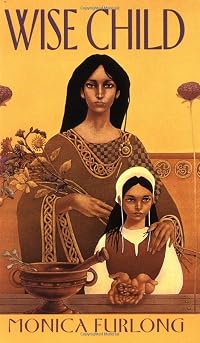
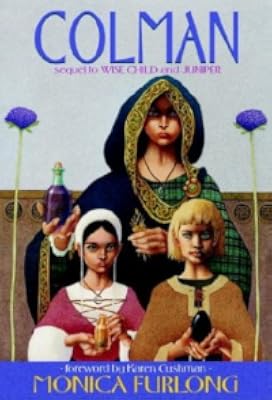
It’s a very good story, written for ages 10 and up, and interesting enough for adults. It captures what life was like in that era; the enormous amount of work it took to stay alive, the superstitions, the power that Christian priests had even back then when the church young, and in a setting that far away from Rome. The description of Wise Child’s education and introduction to the old religion is fascinating. I had a couple of problems with the book; there are a few anachronisms (there were no fuchsias in the old world in that time and place) and the fact that while the other characters seemed realistic (Wise Child vacillates between happy and fretful at having to work so hard, which any 8 year old would), Juniper seems too good to be true. Not one, no matter what Wise Child or the villagers do, does she ever get mad, frightened or even mildly irritated. Was her training to be a doran so thorough that she attained a complete state of Zen composure? I know that the old religion is being portrayed as being all positivity and love, but Juniper could have stood to have a little bit of negative emotion to make her more human. And, this is not a problem but an observation: while the cover is beautiful in most ways with the herbs and the Celtic designs, the big eyes and facial expressions reminded me of those paintings by Keane in the 1960s, the ones with children with the big, dead, eyes that always creeped me out. But that’s just me. show less
It’s a very good story, written for ages 10 and up, and interesting enough for adults. It captures what life was like in that era; the enormous amount of work it took to stay alive, the superstitions, the power that Christian priests had even back then when the church young, and in a setting that far away from Rome. The description of Wise Child’s education and introduction to the old religion is fascinating. I had a couple of problems with the book; there are a few anachronisms (there were no fuchsias in the old world in that time and place) and the fact that while the other characters seemed realistic (Wise Child vacillates between happy and fretful at having to work so hard, which any 8 year old would), Juniper seems too good to be true. Not one, no matter what Wise Child or the villagers do, does she ever get mad, frightened or even mildly irritated. Was her training to be a doran so thorough that she attained a complete state of Zen composure? I know that the old religion is being portrayed as being all positivity and love, but Juniper could have stood to have a little bit of negative emotion to make her more human. And, this is not a problem but an observation: while the cover is beautiful in most ways with the herbs and the Celtic designs, the big eyes and facial expressions reminded me of those paintings by Keane in the 1960s, the ones with children with the big, dead, eyes that always creeped me out. But that’s just me. show less
This is an excellent book and deserves to be more widely known. It was described to me as a more witchy Secret Garden mixed with the Crucible.
It takes place in Scotland at an unspecified time (maybe the 1500s or 1600s). The main character, nicknamed Wise Child, is a young spoiled girl who has been abandoned by her mother, and her father is a sailor and usually away. Wise Child is adopted by the local witch (or Doran) nicknamed Juniper. Juniper is mostly a healer, called in only when midwives, doctors, and priests have failed. Despite Juniper's usually success where others have failed, she is shunned by the people of her village. When Wise Child goes to live with Juniper, she has much to learn about life, work, magic, religion, show more acceptance, and intolerance. Even though it is ostensibly meant for children, the book deals with deep and sometimes disturbing themes. Adults would be able to read and appreciate it even more than children. show less
It takes place in Scotland at an unspecified time (maybe the 1500s or 1600s). The main character, nicknamed Wise Child, is a young spoiled girl who has been abandoned by her mother, and her father is a sailor and usually away. Wise Child is adopted by the local witch (or Doran) nicknamed Juniper. Juniper is mostly a healer, called in only when midwives, doctors, and priests have failed. Despite Juniper's usually success where others have failed, she is shunned by the people of her village. When Wise Child goes to live with Juniper, she has much to learn about life, work, magic, religion, show more acceptance, and intolerance. Even though it is ostensibly meant for children, the book deals with deep and sometimes disturbing themes. Adults would be able to read and appreciate it even more than children. show less
Members
- Recently Added By
Lists

Fantasy/Scifi Heroines Without Love Intrests
46 works; 10 members

Historical Fantasy
93 works; 14 members

Books Read in 2018
4,360 works; 110 members

Books Read in 2026
2,036 works; 68 members
Author Information

40+ Works 4,168 Members
Monica Furlong has worked as a religious programmes producer for the BBC.
Some Editions
Awards and Honors
Awards
Notable Lists
Series

Common Knowledge
- Canonical title
- Wise Child
- Original title
- Wise Child
- Original publication date
- 1987
- People/Characters
- Wise Child (Margot); Juniper (Ninnoc); Euny; Maeve; Colman; Cormac (show all 8); Finbar; Fillan Priest
- Important places
- Scotland, UK
- Dedication
- To my grandmother, Neni, and to Nina Coltart, with gratitude and love.
- First words
- Juniper was different from us.
- Last words
- (Click to show. Warning: May contain spoilers.)At that moment I knew, beyond a shadow of doubt, that I should become a doran.
- Original language*
- Engels
*Some information comes from Common Knowledge in other languages. Click "Edit" for more information.
Classifications
- Genres
- Fiction and Literature, Fantasy, Tween, Kids, Teen, Young Adult
- DDC/MDS
- 823.914 — Literature & rhetoric English & Old English literatures English fiction 1900- 1901-1999 1945-1999
- LCC
- PZ7 .F96638 .W — Language and Literature Fiction and juvenile belles lettres Fiction and juvenile belles lettres Juvenile belles lettres
- BISAC
Statistics
- Members
- 1,317
- Popularity
- 18,359
- Reviews
- 28
- Rating
- (4.14)
- Languages
- Dutch, English
- Media
- Paper, Audiobook, Ebook
- ISBNs
- 14
- ASINs
- 3