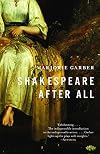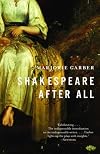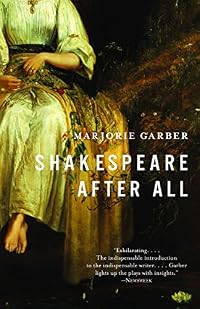
Shakespeare after All
by Marjorie Garber
On This Page
Description
Contains all 38 plays.Tags
Recommendations











Member Reviews
Really rather good, although - as with so many books of this type - its target audience is a little ... vague.
In terms of accessibility for a general reader, Garber gives us a neat precis of Shakespeare's life and times, followed by analyses of all the plays in the canon. No play misses out, and all are treated fairly. At the same time, this is not an "introduction to Shakespeare", no matter what the blurb may try to sell you. All of the chapters assume at least some familiarity with the play in question, or are obscure enough about plot that you'd need to have some detail to begin with. This is not an account of the play's sources, history, or fate on the stage and screen; it's a popular academic treatise. With that said, if you're show more building up an amateur's Shakespeare library, this is an interesting read. What may be frustrating is an inevitability: there is so much to talk about with each play that, like most books of "essays", Garber tends to pick a few points about each play and then discuss them. This is not anything like a comprehensive overview (after all, most chapters are about 30 pages), but it tackles some of the key questions academics and directors ask about each work.
For the academic reader, I'm not sure how I feel. It seems as if Garber got the commission for the book by promising a general introduction, but she can't quite keep her intelligence at bay. And, hey, I'm not complaining; her insights are valid and well-written. Unlike most Shakespeare writers, I almost never feel as if she's wandering down a rabbit-hole of philosophical ramblings. No, Garber's analyses are - although decidedly deskbound - certainly drawn from real examination of the plays in the context of William Shakespeare's time. There are a few niggles depending on your taste (for me, I dislike that old-school scholar thing of describing a character using dashes, e.g. "Lear is her father-king"), but each to their own.
The challenge is that I'm not sure if the book unites the two worlds very well. Some of the chapters are quite high-minded, and reveal little to the general reader about the play. At the same time, there were very few surprises in the book for me (and thus, I'd assume, even fewer for the full-time Shakespeare academic). It doesn't seem as if Garber is really adding to the hefty discussion on the Bard, but nor is she a Richard Dawkins, able to illuminate a fascinating-but-niche world for the general public.
I should note this is a positive review, indeed a 5-star review (well, 4.6) - in part because I admire Garber's writing, her intelligence, and her views, and in part because as a Shakespeare lover, I was engaged on every single damn page. I heartily recommend this book to people in an "in-between" stage of Shakespeare scholarship, but I'd champion the great populists like Stephen Greenblatt and Stanley Wells for those looking to get their head around the plays in an intellectual-but-understandable way. show less
In terms of accessibility for a general reader, Garber gives us a neat precis of Shakespeare's life and times, followed by analyses of all the plays in the canon. No play misses out, and all are treated fairly. At the same time, this is not an "introduction to Shakespeare", no matter what the blurb may try to sell you. All of the chapters assume at least some familiarity with the play in question, or are obscure enough about plot that you'd need to have some detail to begin with. This is not an account of the play's sources, history, or fate on the stage and screen; it's a popular academic treatise. With that said, if you're show more building up an amateur's Shakespeare library, this is an interesting read. What may be frustrating is an inevitability: there is so much to talk about with each play that, like most books of "essays", Garber tends to pick a few points about each play and then discuss them. This is not anything like a comprehensive overview (after all, most chapters are about 30 pages), but it tackles some of the key questions academics and directors ask about each work.
For the academic reader, I'm not sure how I feel. It seems as if Garber got the commission for the book by promising a general introduction, but she can't quite keep her intelligence at bay. And, hey, I'm not complaining; her insights are valid and well-written. Unlike most Shakespeare writers, I almost never feel as if she's wandering down a rabbit-hole of philosophical ramblings. No, Garber's analyses are - although decidedly deskbound - certainly drawn from real examination of the plays in the context of William Shakespeare's time. There are a few niggles depending on your taste (for me, I dislike that old-school scholar thing of describing a character using dashes, e.g. "Lear is her father-king"), but each to their own.
The challenge is that I'm not sure if the book unites the two worlds very well. Some of the chapters are quite high-minded, and reveal little to the general reader about the play. At the same time, there were very few surprises in the book for me (and thus, I'd assume, even fewer for the full-time Shakespeare academic). It doesn't seem as if Garber is really adding to the hefty discussion on the Bard, but nor is she a Richard Dawkins, able to illuminate a fascinating-but-niche world for the general public.
I should note this is a positive review, indeed a 5-star review (well, 4.6) - in part because I admire Garber's writing, her intelligence, and her views, and in part because as a Shakespeare lover, I was engaged on every single damn page. I heartily recommend this book to people in an "in-between" stage of Shakespeare scholarship, but I'd champion the great populists like Stephen Greenblatt and Stanley Wells for those looking to get their head around the plays in an intellectual-but-understandable way. show less
A worthwhile Shakespeare commentary for each play. Garber's insights are useful, not simply a retelling of the story. She directs attention to the text as she walks the reader through the play. This book is very similar to her lectures widely available on the internet, so if you aren't sure you want to invest in the book, check out the lectures. (I watched the lectures first, and then went looking for everything she had written. She's a master teacher.)
In the very first paragraph of Shakespeare After All, Marjorie Garber sets the caliber for the insights that fill her book:
What is often described as the timelessness of Shakespeare, the transcendent qualities for which his plays have been praised around the world across the centuries, is perhaps better understood as an uncanny timeliness….the plays and their characters seem always to be “modern,” always to be “us.”
Shakespeare After All is a masterpiece of explication. Its genesis was is in the undergraduate Shakespeare course the author taught at Yale in the 1970s. At Harvard since 1981, her lectures became so renowned that she began to give them in a campus theatre that could accommodate interested alumni and the general show more public. The book takes the form of a close reading of all Shakespeare’s plays in chronological order. Preceding coverage of the plays is an introduction covering Shakespeare’s life and career, the culture and theatre of his times, and a survey of the ways audiences and readers have responded to him over the past four centuries.
One important point Garber makes is that Shakespeare’s plays have always invited quotation, whether for the beauty of selected passages or for their cultural authority in reinforcing a point. However, taking words out of context is never so dangerous a business as in Shakespeare, where in the context of the play, the words can have quite a different meaning. One classic example of this is Polonius’s parting advice to his son Laertes in Hamlet (I.iii.58-80). Polonius’s words, so often taken to be Shakespearean proverbs on the proper comportment for a young man, are within the context of the play, a weary collection of platitudes from a tiresome old fool and court spy.
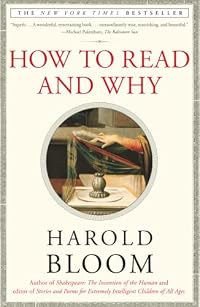
One way of measuring the strength of Shakespeare After All is to compare it with Harold Bloom’s study of the plays, Shakespeare: the Invention of the Human. Garber’s work is at once more accessible and more demanding than Bloom’s. Bloom’s book is the reflections of a great critic on the works that have occupied his mind for over fifty years. Garber’s is the work of a great teacher who leads the reader to look ever more deeply into the texts of the plays. Her analyses recall Hamlet’s advice to the players about “the purpose of playing, whose end, both at the first and now, was and is, to hold, as ’twere, the mirror up to nature…” Garber’s method is to hold up a mirror to Shakespeare’s plays, revealing their multiple facets and levels of meaning. She does not give her personal interpretation, for that would end the active participation of the reader to discover meaning through multiple readings.
On the final page of her study, in the acknowledgements, Professor Garber finally explains the evocative title of her book: “Shakespeare After All. After centuries of discussion, production, and analysis… we return, always to Shakespeare’s plays. Critics come and critics go; so do literary movements and theories. But the rich world of the plays—plays approached of necessity, differently in every generation—remains.” Critics and movements may come and go, but Shakespeare After All seems destined to live on in the permanent canon of Shakespeare criticism.
Published in Regent University Library Link, June 2006 (http://www.regent.edu/lib/news-archives/2006_06.cfm#book) show less
What is often described as the timelessness of Shakespeare, the transcendent qualities for which his plays have been praised around the world across the centuries, is perhaps better understood as an uncanny timeliness….the plays and their characters seem always to be “modern,” always to be “us.”
Shakespeare After All is a masterpiece of explication. Its genesis was is in the undergraduate Shakespeare course the author taught at Yale in the 1970s. At Harvard since 1981, her lectures became so renowned that she began to give them in a campus theatre that could accommodate interested alumni and the general show more public. The book takes the form of a close reading of all Shakespeare’s plays in chronological order. Preceding coverage of the plays is an introduction covering Shakespeare’s life and career, the culture and theatre of his times, and a survey of the ways audiences and readers have responded to him over the past four centuries.
One important point Garber makes is that Shakespeare’s plays have always invited quotation, whether for the beauty of selected passages or for their cultural authority in reinforcing a point. However, taking words out of context is never so dangerous a business as in Shakespeare, where in the context of the play, the words can have quite a different meaning. One classic example of this is Polonius’s parting advice to his son Laertes in Hamlet (I.iii.58-80). Polonius’s words, so often taken to be Shakespearean proverbs on the proper comportment for a young man, are within the context of the play, a weary collection of platitudes from a tiresome old fool and court spy.
One way of measuring the strength of Shakespeare After All is to compare it with Harold Bloom’s study of the plays, Shakespeare: the Invention of the Human. Garber’s work is at once more accessible and more demanding than Bloom’s. Bloom’s book is the reflections of a great critic on the works that have occupied his mind for over fifty years. Garber’s is the work of a great teacher who leads the reader to look ever more deeply into the texts of the plays. Her analyses recall Hamlet’s advice to the players about “the purpose of playing, whose end, both at the first and now, was and is, to hold, as ’twere, the mirror up to nature…” Garber’s method is to hold up a mirror to Shakespeare’s plays, revealing their multiple facets and levels of meaning. She does not give her personal interpretation, for that would end the active participation of the reader to discover meaning through multiple readings.
On the final page of her study, in the acknowledgements, Professor Garber finally explains the evocative title of her book: “Shakespeare After All. After centuries of discussion, production, and analysis… we return, always to Shakespeare’s plays. Critics come and critics go; so do literary movements and theories. But the rich world of the plays—plays approached of necessity, differently in every generation—remains.” Critics and movements may come and go, but Shakespeare After All seems destined to live on in the permanent canon of Shakespeare criticism.
Published in Regent University Library Link, June 2006 (http://www.regent.edu/lib/news-archives/2006_06.cfm#book) show less
Articulated Shakespeare: "Shakespeare After All" by Marjorie Garber I've always tried to avoid judging a 16th-17th century playwright by 21st century standards. To truly appreciate Shakespeare's work one has to make the effort of being conversant with 16th-17th century ecosystem (literature, culture, etc.). In so many ways, Shakespeare’s characters created the archetypes that define who we are (or at least give us a language to understand ourselves). What I liked the most about Garber's book was her ability to reading into the plays in some plays and reading out of them in some others. At the end of the book, almost all of her choices seemed right to me. In some instances I didn't agree with her reading. "Pericles" ("The Incest show more Riddle" seemed far-fetched to say the least) and the "Winter's Tale" come to mind.
Read the rest on my blog if you feel so inclined. show less
Read the rest on my blog if you feel so inclined. show less
Garber, Marjorie. Shakespeare After All. Anchor, 2005.
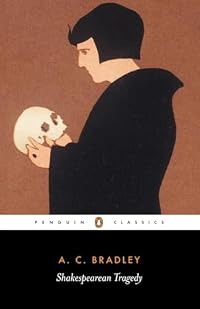
I have been reading at Shakespeare After All for almost a year—a chapter now and then, especially if I had a chance to read or view one of the plays. So, I may have missed any general argument Marjorie Garber was making. But play by play, the discussions were engaging and insightful. She was especially good on Lear and Anthony and Cleopatra. One reviewer compared the book to the work of A. C. Bradley. Yes, but of course much more current. 4 stars.
I have been reading at Shakespeare After All for almost a year—a chapter now and then, especially if I had a chance to read or view one of the plays. So, I may have missed any general argument Marjorie Garber was making. But play by play, the discussions were engaging and insightful. She was especially good on Lear and Anthony and Cleopatra. One reviewer compared the book to the work of A. C. Bradley. Yes, but of course much more current. 4 stars.
Hands down, the best book on Shakespeare's plays I've ever read. Profound and concise, witty and easy to read, this is a book you can curl up with for fun or use to write any paper or understand a play. Her essays on Hamlet and Twelfth Night are especially intriguing.
This book represents 30 years of teaching the Bard by a Harvard professor of English. All of the plays have a chapter devoted to them, including introductions to their content, original production, etc. My only complaint about this large book is that it isn't larger: she doesn't deal with the sonnets. Oh well, we can't have everything.
There are many, many commentaries on Shakespeare. This is one of the best, in my opinion. Far superior to Bloom's attempt.
There are many, many commentaries on Shakespeare. This is one of the best, in my opinion. Far superior to Bloom's attempt.
Members
- Recently Added By
Lists

Top Five Books of 2016
795 works; 228 members
Author Information

30+ Works 2,846 Members
Marjorie Garber is William R. Kenan Jr. Professor of English and of Visual and Environmental Studies at Harvard University. Her many books include Loaded Words (Fordham); Symptoms of Culture; Quotation Marks; Shakespeare After All; Vested Interests: Cross-Dressing and Cultural Anxiety; and The Use and Abuse of Literature.
Awards and Honors
Work Relationships
Is a commentary on the text of
Common Knowledge
- Canonical title
- Shakespeare after All
- Original publication date
- 2005
- People/Characters
- William Shakespeare
- Dedication
- For B.J., the onlie begetter
- First words
- Every age creates its own Shakespeare.
- Last words
- (Click to show. Warning: May contain spoilers.)It is fitting that the final tableau displays both the triangle of rivalry and, in the end, the death that thus anchors union.
Classifications
Statistics
- Members
- 839
- Popularity
- 32,539
- Reviews
- 11
- Rating
- (4.20)
- Languages
- English
- Media
- Paper, Ebook
- ISBNs
- 3
- ASINs
- 3