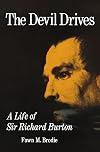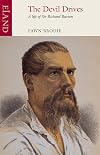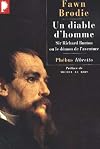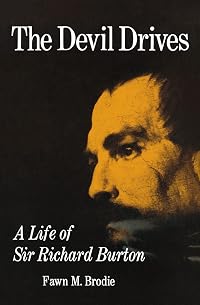
The Devil Drives : A Life of Sir Richard Burton
by Fawn Brodie
On This Page
Description
By the author of the beloved Schmidt series, "Memories of a Marriage" is a penetrating look at class and privilege, shifting from Paris to Manhattan, Long Island to Newport. Mourning his wife and daughter, and on the edge of old age, Philip reencounters an astonishing woman from his past: Lucy De Bourgh, an heiress who was once a passionate debutante and the intimate of many men, including Philip himself. As she reveals the startling details of her failed marriage to Thomas Snow a townie show more turned powerful international banker, liked by many but to her a loathsome monster Philip discovers a story that will challenge his assumptions about those he has known, admired, and desired. A triumph by an author expert in revealing the good breeding and bad behavior of the moneyed elite, "Memories of a Marriage" is an eloquent and irresistible book that explores all the varieties of love and the very concept of truth. Look for special features inside. Join the Random House Reader s Circle for author chats and more. Praise for "Memories of a Marriage" Among contemporary novelists, Begley] may be the wryest, most devastating critic of class in American society. "The Washington Post" Engrossing . . . Louis Begley gives us a chance to see into . . . the most private recesses of another couple s marriage. " The New York Times Book Review" This delicious, dazzling novel about the rise and fall of a great American debutante kept me up all night. Susan Cheever "" A consummately constructed monument to human imperfection. " San Francisco Chronicle" "" Begley is] an elegant stylist with a dry wit and a merciless eye. " The Wall Street Journal" "" A fiendishly clever, Fitzgeraldesque tale about marriage, friendship, gossip, and self-justification. "Booklist" "From the Trade Paperback edition."" show lessTags
Recommendations
















Member Reviews
But he is not intentionally irreverent...he speaks the things that others think and hide"
By sally tarbox on 26 Feb. 2016
Format: Paperback
I started off deciding to just read a chapter a day, while focussing mainly on a great novel I was reading simultaneously.
But found myself unable to put down this wonderful account of the fascinating Richard Burton: fearless explorer, amazing linguist, soldier, anthropologist and writer. He went on a mission to look for gold. He published highly learned works and poetry, but also a book on bayonet exercises and the Kama Sutra. He was frequently out of favour with the establishment, who cold-shouldered him. And beside him all the way was his adoring wife Isabel, his polar opposite in character, being a show more highly proper devout Catholic - and the one who would burn great swathes of his diaries and final translation of 'The Perfumed Garden' shortly after his death, in an attempt to keep his name 'forever unsullied and without stain.'
This is an extremely compelling work and the author really brings the enigmatic Burton to life. show less
By sally tarbox on 26 Feb. 2016
Format: Paperback
I started off deciding to just read a chapter a day, while focussing mainly on a great novel I was reading simultaneously.
But found myself unable to put down this wonderful account of the fascinating Richard Burton: fearless explorer, amazing linguist, soldier, anthropologist and writer. He went on a mission to look for gold. He published highly learned works and poetry, but also a book on bayonet exercises and the Kama Sutra. He was frequently out of favour with the establishment, who cold-shouldered him. And beside him all the way was his adoring wife Isabel, his polar opposite in character, being a show more highly proper devout Catholic - and the one who would burn great swathes of his diaries and final translation of 'The Perfumed Garden' shortly after his death, in an attempt to keep his name 'forever unsullied and without stain.'
This is an extremely compelling work and the author really brings the enigmatic Burton to life. show less
Here we have a fascinating book about a rather fascinating chap. I will not get into a rant (promise!) about the status of celebrity and this obsession with fame that seems to seep into all aspects of modern culture but here we have a story (even though it is an autobiography it sometimes reads like a piece of fiction) about a gentleman who everyone should know about or at least be aware of.
Sir Richard Burton was simply a unique character, the like of which we will never see again, a true adventurer with an almost unquenchable thirst for knowledge. A man who amongst his many accolades could speak 25 languages, travelled to and infiltrated the forbidden cities of Mecca and Harar, went in search of the source of the Nile, wrote numerous show more books about his travels and interests and translated the entire Arabian Nights as well as the Kama Sutra and other erotic literature of which he was a somewhat avid collector. He was also a poet, amateur doctor, quite adept at hypnotism and something of a dab hand with a sword.
His range of interests and enthusiasms was truly astounding, as his published books will attest to, but the main thread of this autobiography deals with his travels and his curiosity with other cultures, recording their customs, traditions and way of life. Quite the anthropologist and linguist, Burtons’ fascination with other societies was not simply one of outside observation however, he lived and breathed his obsession. Where fellow travellers would not take the time to learn a few words of Urdu, Persian or Swahili and point blank refused to wear any item of attire that even slightly resembled native dress, Burton mastered these languages and was only too willing to look the part becoming part of the societies and tribes he came across (to such an extent that he was often accused of “going native”) always treating them with respect, dignity and deference. Yes, he zealously wrote about everything he saw and experienced but not out of exploitation, fame and greed but out of a need to feed his desire for knowledge. Not once do we see him look down on these tribes as lesser beings or savages. There are obviously times where he finds some of their customs a touch barbaric but he scrutinises and writes about these events with the unbiased eyes of the uninhibited adventurer.
We follow Burtons’ extraordinary life through his youth, the army days, his travels to Mecca, Medina, Harar, Central Africa and the USA and his numerous appointments with the British consul all the while sharing in his victories and more often than not his failures. Amongst all this there are two episodes that stand out; Mecca and the Nile.
The description of his venture into the holy city of Mecca is both thrilling and terrifying. A trip that could end in death if he was ever discovered becomes a tale of daring and utter belief in his own destiny. Burton had become so entrenched in Arabic culture that he not only entered Mecca but gained access to the Kaaba, the most sacred point in Islam and thus forbidden to infidels. Such was Burtons’ courage and blind faith in his abilities that he even managed to sketch an outline of the inner sanctum.
At the time the source of the Nile was one of the great undiscovered mysteries and a great prize to whoever managed to locate it. Fame and fortune awaited the intrepid adventurer who could finally solve this most illustrious and elusive of mysteries. The sheer scale of the expedition and the brutal conditions that Burton and his companions faced again reads like a piece of fiction. Such was the desire to be the first that no matter the horrors and tribulations faced they staggered on seemingly without a thought for their own safety or well-being. Burton himself suffered from over 20 bouts of vicious fever and temporarily lost the use of his legs whilst one of his party (John Speke, another explorer who had a tragic part to play in the story of Burton) went blind. It is a shocking tale of unbelievable suffering and courage in the face of disaster, through unimaginably harsh conditions yet apparently par for the course on such expeditions. A rare breed of men indeed…
Throughout the book his wife Isobel looms large. The marriage seems to have been a happy one and one that was destined from the first time they met yet this is no fairy tale. From the outside they seem to be complete opposites, one agnostic and unconstrained the other respectable and pious, each one trying to mould the other into an idealised partner. They spend a great deal of time apart with Burton often abandoning his wife abroad with the simple command “pay, pack and follow” and upon Burtons death Isobel burns a great deal of his manuscripts and almost the entirety of his diaries robbing us of a wealth of knowledge and perhaps more importantly to her, destroying any evidence of his real thoughts and feelings concerning his marriage. Wild rumours of homosexuality had hounded Burton since his army days and the author does little to dispel these rumours, and to be honest Burtons taste for the exotic didn’t help either, but sees them as perhaps the reason for the unconventional pairing. Burton had on the outside a perfectly respectable wife thus making him somewhat easier to digest for those in society (not to mention someone he could leave in charge of the household while he went off travelling) and Isobel saw someone that she could “save” through her religion. With the burning of the diaries we will never know the truth but I would like to think that there was a great platonic love between the two for they argued little and when they were together seemed devoted to each other.
The book is brimming with anecdotes which only go to intensify the legend. As well as being an educated man and one of the foremost linguists of his day Burton loved to drink, brawl and generally be as shocking as he could in defiance of what he called the “slavery of civilization”, from his first day at Oxford, where within the first hour he had challenged a fellow student to a duel for laughing at his already magnificent moustache (hence acquiring the moniker “Ruffian Dick”), to his travails with Mormons in America, cannibals in Africa, his research into the sexual practices of other cultures and, to put it delicately, purveyors of erotic literature in France where one such “gentleman” requested that Burton acquire him a human skin!
The Victorians saw Burton as something of a wild, outlandish, opinionated, headstrong man who had little or no time for those he saw as beneath him intellectually or those he saw as in his way. He took great pleasure in telling tall tales and seemed to positively revel in his reputation as a delinquent ruffian with dubious interests in the taboo and a man known for his peccadillos. However, no matter how much of a brute and scoundrel Burton was seen as (and he had his fair share of enemies, usually other Englishmen and more often than not his superiors), he inspired fanatical loyalty among a great many people and those that were friends were friends for life, loving him for his skills as a raconteur and for the fact that he was never, ever dull.
So an autobiography that is a tale of wild, fantastic travel and adventure, full of scandal and yet a record of brilliant scientific enquiry and a strange love story. A love of himself maybe but here we have a man of undoubted genius and intellect with an insatiable desire for learning and knowledge, prepared to go extremes in his quest no matter the cost. A man like no other who gave the world further insight into those dark undiscovered places, who unlocked and translated mysterious Eastern literature and did much to enhance the Victorian tradition of exploration along with Livingstone and Stanley. show less
Sir Richard Burton was simply a unique character, the like of which we will never see again, a true adventurer with an almost unquenchable thirst for knowledge. A man who amongst his many accolades could speak 25 languages, travelled to and infiltrated the forbidden cities of Mecca and Harar, went in search of the source of the Nile, wrote numerous show more books about his travels and interests and translated the entire Arabian Nights as well as the Kama Sutra and other erotic literature of which he was a somewhat avid collector. He was also a poet, amateur doctor, quite adept at hypnotism and something of a dab hand with a sword.
His range of interests and enthusiasms was truly astounding, as his published books will attest to, but the main thread of this autobiography deals with his travels and his curiosity with other cultures, recording their customs, traditions and way of life. Quite the anthropologist and linguist, Burtons’ fascination with other societies was not simply one of outside observation however, he lived and breathed his obsession. Where fellow travellers would not take the time to learn a few words of Urdu, Persian or Swahili and point blank refused to wear any item of attire that even slightly resembled native dress, Burton mastered these languages and was only too willing to look the part becoming part of the societies and tribes he came across (to such an extent that he was often accused of “going native”) always treating them with respect, dignity and deference. Yes, he zealously wrote about everything he saw and experienced but not out of exploitation, fame and greed but out of a need to feed his desire for knowledge. Not once do we see him look down on these tribes as lesser beings or savages. There are obviously times where he finds some of their customs a touch barbaric but he scrutinises and writes about these events with the unbiased eyes of the uninhibited adventurer.
We follow Burtons’ extraordinary life through his youth, the army days, his travels to Mecca, Medina, Harar, Central Africa and the USA and his numerous appointments with the British consul all the while sharing in his victories and more often than not his failures. Amongst all this there are two episodes that stand out; Mecca and the Nile.
The description of his venture into the holy city of Mecca is both thrilling and terrifying. A trip that could end in death if he was ever discovered becomes a tale of daring and utter belief in his own destiny. Burton had become so entrenched in Arabic culture that he not only entered Mecca but gained access to the Kaaba, the most sacred point in Islam and thus forbidden to infidels. Such was Burtons’ courage and blind faith in his abilities that he even managed to sketch an outline of the inner sanctum.
At the time the source of the Nile was one of the great undiscovered mysteries and a great prize to whoever managed to locate it. Fame and fortune awaited the intrepid adventurer who could finally solve this most illustrious and elusive of mysteries. The sheer scale of the expedition and the brutal conditions that Burton and his companions faced again reads like a piece of fiction. Such was the desire to be the first that no matter the horrors and tribulations faced they staggered on seemingly without a thought for their own safety or well-being. Burton himself suffered from over 20 bouts of vicious fever and temporarily lost the use of his legs whilst one of his party (John Speke, another explorer who had a tragic part to play in the story of Burton) went blind. It is a shocking tale of unbelievable suffering and courage in the face of disaster, through unimaginably harsh conditions yet apparently par for the course on such expeditions. A rare breed of men indeed…
Throughout the book his wife Isobel looms large. The marriage seems to have been a happy one and one that was destined from the first time they met yet this is no fairy tale. From the outside they seem to be complete opposites, one agnostic and unconstrained the other respectable and pious, each one trying to mould the other into an idealised partner. They spend a great deal of time apart with Burton often abandoning his wife abroad with the simple command “pay, pack and follow” and upon Burtons death Isobel burns a great deal of his manuscripts and almost the entirety of his diaries robbing us of a wealth of knowledge and perhaps more importantly to her, destroying any evidence of his real thoughts and feelings concerning his marriage. Wild rumours of homosexuality had hounded Burton since his army days and the author does little to dispel these rumours, and to be honest Burtons taste for the exotic didn’t help either, but sees them as perhaps the reason for the unconventional pairing. Burton had on the outside a perfectly respectable wife thus making him somewhat easier to digest for those in society (not to mention someone he could leave in charge of the household while he went off travelling) and Isobel saw someone that she could “save” through her religion. With the burning of the diaries we will never know the truth but I would like to think that there was a great platonic love between the two for they argued little and when they were together seemed devoted to each other.
The book is brimming with anecdotes which only go to intensify the legend. As well as being an educated man and one of the foremost linguists of his day Burton loved to drink, brawl and generally be as shocking as he could in defiance of what he called the “slavery of civilization”, from his first day at Oxford, where within the first hour he had challenged a fellow student to a duel for laughing at his already magnificent moustache (hence acquiring the moniker “Ruffian Dick”), to his travails with Mormons in America, cannibals in Africa, his research into the sexual practices of other cultures and, to put it delicately, purveyors of erotic literature in France where one such “gentleman” requested that Burton acquire him a human skin!
The Victorians saw Burton as something of a wild, outlandish, opinionated, headstrong man who had little or no time for those he saw as beneath him intellectually or those he saw as in his way. He took great pleasure in telling tall tales and seemed to positively revel in his reputation as a delinquent ruffian with dubious interests in the taboo and a man known for his peccadillos. However, no matter how much of a brute and scoundrel Burton was seen as (and he had his fair share of enemies, usually other Englishmen and more often than not his superiors), he inspired fanatical loyalty among a great many people and those that were friends were friends for life, loving him for his skills as a raconteur and for the fact that he was never, ever dull.
So an autobiography that is a tale of wild, fantastic travel and adventure, full of scandal and yet a record of brilliant scientific enquiry and a strange love story. A love of himself maybe but here we have a man of undoubted genius and intellect with an insatiable desire for learning and knowledge, prepared to go extremes in his quest no matter the cost. A man like no other who gave the world further insight into those dark undiscovered places, who unlocked and translated mysterious Eastern literature and did much to enhance the Victorian tradition of exploration along with Livingstone and Stanley. show less
An engagingly written biography of one of the most interesting men in English history. Burton wrote so much and so little is published in easily available selections that having the guided tour of his long and eventful career by a biographer is crucial. Brodie writes well and has an appreciation and critical distance for and from her subject. What Burton had done, learned, seen and achieved by the age of 43 puts most of us shame. His thirst for the world's variety and colour was immense and he slaked that thirst at a time - the mid nineteenth century - when the world was full of mysteries.
Daring explorer and indefatigable traveller, prolific writer, soldier, diplomat and all-round scholar – Richard Burton was the very essence of a polymath, who crammed several lifetimes of excitement and achievement into his 80-year span. Driven, dauntless, stubborn and opinionated – Burton’s explanation of why he risked life and sanity on so many occasions, was that “the devil drives.” – the title of Fawn Brodie’s admirable biography. The main stages of Burton’s life are covered: Army career (1842–1853), First explorations and journey to Mecca (1851–53), Early explorations in Africa (1854–55), Exploring the African Great Lakes, with John Hanning Speke (1856–1860), Diplomatic service and scholarship show more (1861–1890).
His wife Isabel (née Arundell) was herself a formidable person – supportive of Richard but deeply religious, with steadfast opinions and an author in her own right. Left to publish Richard’s manuscript on one occasion, she inserted a preface to the book (without telling him), stating clearly that she did not agree with some of her husband’s views. As an illustration of Burton's prolific output, during 1872-1880, he published eight new works in thirteen volumes, totalling over 5,000 pages, as well as more than 800 pages of magazine articles. Altogether Burton wrote forty-three volumes about his exploration and travels. He mastered twenty-five languages, with dialects that brought the number to forty. show less
His wife Isabel (née Arundell) was herself a formidable person – supportive of Richard but deeply religious, with steadfast opinions and an author in her own right. Left to publish Richard’s manuscript on one occasion, she inserted a preface to the book (without telling him), stating clearly that she did not agree with some of her husband’s views. As an illustration of Burton's prolific output, during 1872-1880, he published eight new works in thirteen volumes, totalling over 5,000 pages, as well as more than 800 pages of magazine articles. Altogether Burton wrote forty-three volumes about his exploration and travels. He mastered twenty-five languages, with dialects that brought the number to forty. show less
OK biography of Richard Francis Burton, explorer and linguist.
Gifted by:
Felix Haas - 16.10.2024
Felix Haas - 16.10.2024
J'avais lu ce livre en 1993 et il m'avait laissé une très forte impression. Je l'ai relu dernièrement et je dois dire que l'impression de l'époque est confirmé. C'est à une grande biographie que s'est attelée Fawn Brodie et qui réussit à rendre claire et passionnante une vie qui n'a pas manqué de complexité. Sur Richard Burton, les qualificatifs ne manquent pas car une seule des thématiques à laquelle il s'est attelé aurait suffit à remplir largement l'existence d'une personne qui n'a pas eu la capacité de polymathe de Burton, c'est à dire cette faculté d'absorber et de synthétiser des connaissances avec une facilité déconcertante. Son simple goût des langues avec lesquelles il jongle avec facilité montre bien que show more nous sommes face à une personnalité que le cadre du monde dans lequel il a évolué ne lui convenait pas. Les scandales à répétition dont il a été la cause fait de lui une personnalité spéciale car son but n'était pas de scandalisé mais de montrer la réalité humaine au delà des préjugés de la race et de la religion. Burton fut un des premiers ethnologues avant que ce terme soit reconnu.
Il faudrait beaucoup de bavardages inutiles pour reprendre ici les éléments de la vie de Burton et ce pour quoi il nous touche. Que le lecteur sache simplement que cette biographie se lit comme un roman d'aventure, qu'elle est très neutre vis-à-vis de Burton, et même plutôt bienveillante envers le personnage. Fawn Brodie s'est attachée à nous montrer l'homme sous ses multiples déguisements et postures et c'est avec regret que j'ai refermé, pour la seconde fois, ce livre. show less
Il faudrait beaucoup de bavardages inutiles pour reprendre ici les éléments de la vie de Burton et ce pour quoi il nous touche. Que le lecteur sache simplement que cette biographie se lit comme un roman d'aventure, qu'elle est très neutre vis-à-vis de Burton, et même plutôt bienveillante envers le personnage. Fawn Brodie s'est attachée à nous montrer l'homme sous ses multiples déguisements et postures et c'est avec regret que j'ai refermé, pour la seconde fois, ce livre. show less
Oct 28, 2012French
1
Members
- Recently Added By
Published Reviews
Fawn Brodie Un diable d'homme. Sir Richard Burton ou le démon de l'aventure
Richard Burton est surtout connu pour sa version non expurgée des Mille et une nuits. Il était aussi écrivain, linguiste, aventurier, militaire, ethnologue. Toute sa vie, il porte des déguisements qui l'aident dans ses enquêtes, mais comme ces masques deviennent une seconde nature, on ne sait plus s'il cherche à show more travers eux à se perdre ou à se trouver. Fawn Brodie trace le portrait d'un homme secret et violent chez qui la soif compulsive de connaissance ne laisse nulle place aux épanchements sentimentaux. Il poursuit une folle chimère, cette zone sombre en l'homme qui en constituerait la clé, en l'occurrence, la sexualité, d'où nombre de textes érotiques publiés et traduits par lui-même. Burton fut qualifié de «personnage le plus intéressant du XIXe siècle» par un journal de l'époque. C'est une litote; l'homme était assurément une véritable légende, une sorte de Dieu au visage de brigand. show less
Richard Burton est surtout connu pour sa version non expurgée des Mille et une nuits. Il était aussi écrivain, linguiste, aventurier, militaire, ethnologue. Toute sa vie, il porte des déguisements qui l'aident dans ses enquêtes, mais comme ces masques deviennent une seconde nature, on ne sait plus s'il cherche à show more travers eux à se perdre ou à se trouver. Fawn Brodie trace le portrait d'un homme secret et violent chez qui la soif compulsive de connaissance ne laisse nulle place aux épanchements sentimentaux. Il poursuit une folle chimère, cette zone sombre en l'homme qui en constituerait la clé, en l'occurrence, la sexualité, d'où nombre de textes érotiques publiés et traduits par lui-même. Burton fut qualifié de «personnage le plus intéressant du XIXe siècle» par un journal de l'époque. C'est une litote; l'homme était assurément une véritable légende, une sorte de Dieu au visage de brigand. show less
added by Joop-le-philosophe
Author Information

9+ Works 2,696 Members
The late Fawn M. Brodie was professor of history at the University of California, Los Angeles, and author of several other noted biographies, including The Devil Drives: A Life of Sir Richard Burton, also published in Norton paperback.
Common Knowledge
- Canonical title
- The Devil Drives : A Life of Sir Richard Burton
- People/Characters
- Sir Richard Francis Burton; Isabel Burton
- Dedication
- For Bernard
- First words
- Starting in a hollowed log of wood - some thousand miles up a river, with an infinitesimal prospect of returning! I ask myself "Why?" and the only echo is "damned fool! . . . the Devil drives."
- Last words
- (Click to show. Warning: May contain spoilers.)But on the contrary it was the complication, the anguish and perplexity, the desperate quest for identity as a man, as well as the heroism, brilliance and erudition, that made Burton's life greater than all his books and adventures and strangely more rewarding for us than the lives of most of his contemporaries who were less haunted, and less demon-driven.
- Blurbers
- Plumb, J.H.
- Original language
- English
Classifications
- Genres
- Biography & Memoir, Nonfiction, Travel, General Nonfiction
- DDC/MDS
- 941.0810924 — History & geography History of Europe British Isles Historical periods of British Isles 1837- Period of Victoria and House of Windsor Victoria 1837-1901
- LCC
- G246 .B8 .B7 — Geography, Anthropology and Recreation Geography (General) History of discoveries, explorations, and travel
- BISAC
Statistics
- Members
- 416
- Popularity
- 74,787
- Reviews
- 8
- Rating
- (4.16)
- Languages
- English, French, Russian, Spanish
- Media
- Paper, Audiobook
- ISBNs
- 12
- ASINs
- 9