On This Page
Description
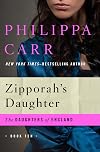
With France on the brink of revolution, one woman finds her destiny as a true daughter of England in the bestselling author's multigenerational saga. Discovering that the man who raised her was not her birth father comes as a great shock to teenage Lottie. She always thought she'd marry her childhood love, Dickon, and stay at the family estate, Eversleigh. But fate takes Lottie across the sea to France and the mysterious palace of Versailles. As the daughter of Comte Gerard d'Aubigné, show more Lottie encounters a world far different from her cloistered existence at Eversleigh. Here, she meets her half-sister and marries gallant patriot Charles de Tourville. As Louis XVI takes the throne with his queen, Marie Antoinette, Lottie is called back to England, where she finds that Dickon may not be the man she thought he was. Meanwhile, France descends into revolution and Lottie's family becomes increasingly endangered. Historical Fiction. Fiction. Romance. show lessTags
Recommendations
















Member Reviews
This has none of the previous book’s fast-paced originality or compelling storyline. Instead, we have a plodding narrative that builds to the first outbreaks of the French Revolution in 1789.
Some quality scenes emerge in places, though too often the first-person narrative rambles on to no great effect.
This author – under all her pseudonyms – is guilty of several annoying traits. One is repetition, another is using the passive voice, and the worst is “telling” instead of “showing”.
In many works, be it as Philippa Carr or Victoria Holt, there’s one male character who’s invariably referred to by both his names. In this case, it’s Léon Blanchard. Why she can’t use one name or the other I don’t know, but the show more continual use of both names soon grows annoying, as well as sounding unnatural at times.
Another annoying trait is the author’s lack of pinpointing time. In most of her books I’m picturing certain characters at a specific age, only to suddenly learn that someone who was twenty during the previous dozen or so pages is suddenly forty-five.
It’s worse still with child characters. For example, the character Claudine is a toddler for quite some time, therefore I had a “What the hell?” moment when – still thinking Claudine was about three – I read this:
“The children are growing up. Claudine is nearly thirteen years old.”
Thirteen! I had to pause, readjust, and digest this unexpected info. It’s a bit like forcing someone running a marathon to leap a few hurdles halfway through their run.
If the author chaptered her novels properly instead of cramming what should be ten or more chapters together as one, maybe the reader would gain a better sense of time. She seldom mentions what year we’re in, which doesn’t help matters.
Despite the above criticisms, this novel is not without merits. As mentioned, certain scenes are quality reading. Some plot lines were predictable, but more than once the author surprised me, which is a good thing. Elements in the last chapter are very good, though in places the “telling” instead of “showing” trait spoils the mood.
Of the characters, I rate Dickon as the strongest creation. He stars in the previous book, and like with that story, he adds a lot of colour to this one. He’s also more likeable in this novel.
In short, this isn’t the best in the Daughters of England series, but it’s not the worst, either. show less
Some quality scenes emerge in places, though too often the first-person narrative rambles on to no great effect.
This author – under all her pseudonyms – is guilty of several annoying traits. One is repetition, another is using the passive voice, and the worst is “telling” instead of “showing”.
In many works, be it as Philippa Carr or Victoria Holt, there’s one male character who’s invariably referred to by both his names. In this case, it’s Léon Blanchard. Why she can’t use one name or the other I don’t know, but the show more continual use of both names soon grows annoying, as well as sounding unnatural at times.
Another annoying trait is the author’s lack of pinpointing time. In most of her books I’m picturing certain characters at a specific age, only to suddenly learn that someone who was twenty during the previous dozen or so pages is suddenly forty-five.
It’s worse still with child characters. For example, the character Claudine is a toddler for quite some time, therefore I had a “What the hell?” moment when – still thinking Claudine was about three – I read this:
“The children are growing up. Claudine is nearly thirteen years old.”
Thirteen! I had to pause, readjust, and digest this unexpected info. It’s a bit like forcing someone running a marathon to leap a few hurdles halfway through their run.
If the author chaptered her novels properly instead of cramming what should be ten or more chapters together as one, maybe the reader would gain a better sense of time. She seldom mentions what year we’re in, which doesn’t help matters.
Despite the above criticisms, this novel is not without merits. As mentioned, certain scenes are quality reading. Some plot lines were predictable, but more than once the author surprised me, which is a good thing. Elements in the last chapter are very good, though in places the “telling” instead of “showing” trait spoils the mood.
Of the characters, I rate Dickon as the strongest creation. He stars in the previous book, and like with that story, he adds a lot of colour to this one. He’s also more likeable in this novel.
In short, this isn’t the best in the Daughters of England series, but it’s not the worst, either. show less
Read during Spring 2003
The lovers of The Adulteress are reunited but this is the story of their daughter, Lottie. Zipporah marries Gerard and moves to France, bringing 11 year old Lottie to get her away from the influence of Dickon, who wishes to marry her to gain her estate, Eversleigh. Dickon was an unbearable brat of a child in the previous book and turns into a outwardly charming but still unbearable young and middle aged man throughout the book. Lottie adapts to her new life in France but the American and French revolutions are brewing. She marries but Dickon schemes to send her husband to fight (and die) in the American revolution. She resists his advances, even though she admits to being attracted to the little swine, but the show more final page did it in for me. She accuses him of wanting her French fortunes and, when she looses it all in the French revolution, he berates her for not seeing that he loved her and not her money, and she finally admits all. Ugh. It is hard to imagine this man will become the doting father of Jessica in The Return of the Gypsy, show less
The lovers of The Adulteress are reunited but this is the story of their daughter, Lottie. Zipporah marries Gerard and moves to France, bringing 11 year old Lottie to get her away from the influence of Dickon, who wishes to marry her to gain her estate, Eversleigh. Dickon was an unbearable brat of a child in the previous book and turns into a outwardly charming but still unbearable young and middle aged man throughout the book. Lottie adapts to her new life in France but the American and French revolutions are brewing. She marries but Dickon schemes to send her husband to fight (and die) in the American revolution. She resists his advances, even though she admits to being attracted to the little swine, but the show more final page did it in for me. She accuses him of wanting her French fortunes and, when she looses it all in the French revolution, he berates her for not seeing that he loved her and not her money, and she finally admits all. Ugh. It is hard to imagine this man will become the doting father of Jessica in The Return of the Gypsy, show less
The characters are as morally bankrupt (male) and/or naive (female) as always in Carr's novels, however this is one of the more enjoyable installments of the series.
Ratings
Members
- Recently Added By
Author Information

257+ Works 37,476 Members
Jean Plaidy was a British writer who wrote under various pen names. Her real name is Eleanor Alice Burford Hibbert. She was born in London on September 1, 1906. Most of the books written as Jean Plaidy are historical romances based on English history featuring historical figures. The first, Beyond the Blue Mountains, was published in 1947. Hibbert show more also wrote five nonfiction histories and two children's books. Besides Jean Plaidy, Hibbert wrote under Victoria Holt, Phillipa Carr, Elbur Ford, Kathleen Kellow, Ellalice Tate, and her maiden name, Eleanor Burford. Hibbert died on January 18, 1993. (Bowker Author Biography) show less
Some Editions
Series

Belongs to Publisher Series
Heyne - Tip des Monats (105)
Work Relationships
Is contained in
Common Knowledge
- Canonical title*
- La hija de Zipporah
- Original title
- Zipporah's Daughter
- Alternate titles
- Knave of Hearts
- Original publication date
- 1983
- People/Characters
- Lottie; Dickon
- Disambiguation notice
- Original title: "Zipporah's daughter" reedited as "Knave of hearts".
*Some information comes from Common Knowledge in other languages. Click "Edit" for more information.
Classifications
Statistics
- Members
- 91
- Popularity
- 344,019
- Reviews
- 3
- Rating
- (3.71)
- Languages
- English, German, Spanish
- Media
- Paper, Ebook
- ISBNs
- 20
- ASINs
- 3