On This Page
Description
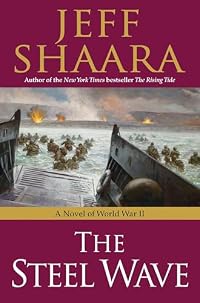
Fiction. Literature. Thriller. Historical Fiction. HTML:BONUS: This edition contains an excerpt from Jeff Shaara's No Less Than Victory.Jeff Shaara, America’s premier author of military historical fiction, brings us the centerpiece of his epic trilogy of the Second World War.
General Dwight Eisenhower once again commands a diverse army that must find its single purpose in the destruction of Hitler’s European fortress. His primary subordinates, Omar Bradley and Bernard Montgomery, must show more prove that this unique blend of Allied armies can successfully confront the might of Adolf Hitler’s forces, who have already conquered Western Europe. On the coast of France, German commander Erwin Rommel fortifies and prepares for the coming invasion, acutely aware that he must bring all his skills to bear on a fight his side must win. But Rommel’s greatest challenge is to strike the Allies on his front, while struggling behind the lines with the growing insanity of Adolf Hitler, who thwarts the strategies Rommel knows will succeed.
Meanwhile, Sergeant Jesse Adams, a no-nonsense veteran of the 82nd Airborne, parachutes with his men behind German lines into a chaotic and desperate struggle. And as the invasion force surges toward the beaches of Normandy, Private Tom Thorne of the 29th Infantry Division faces the horrifying prospects of fighting his way ashore on a stretch of coast more heavily defended than the Allied commanders anticipate–Omaha Beach.
From G.I. to general, this story carries the reader through the war’s most crucial juncture, the invasion that altered the flow of the war, and, ultimately, changed history. show less
Tags
Recommendations


Member Reviews
Another masterpiece by the incomparable master of the genre, Jeff Shaara, The Steel Wave was originally intended as volume 2 of a trilogy of World War 2 in Europe and focuses entirely on the year 1944, concluding with Erwin Rommel’s suicide in September.
Superbly written, Jeff Shaara knows how to engross the reader not only in the events of the story, but also in the lives of the characters being featured, whether they be the major players like Dwight Eisenhower, George Patton, Erwin Rommel, or lesser characters like Sergeant Jesse Adams or Tom Thorne, all of whom were authentic with brief bios and the conclusion of the book describing their post war fates.
Jeff Shaara also heightens the pulse of his description of combat when he uses show more short, choppy sentences to simulate the confusion and even terror of active combat, helping the reader to imagine himself caught in the action.
Despite this being a novel of historical fiction, Jeff Shaara shows a remarkable grasp of historical insight. I reference the following simulated conversation between Dwight Eisenhower and Winston Churchill (remember, this is historical fiction, so this conversation is a product of Shaara’s imagination), found on page 114, Churchill is speaking: “’There will be time for truth later on. I’ve learned that, you know. People always assume politicians lie, that’s it’s part of the job, part of our bloody makeup. Sooner or later, a lot of truth will come out. That should keep us on our toes. Slapton Sands or Ultra. Whatever the hell kind of weapon Hitler has, whatever the hell an atom bomb is. It’s all just … truth. Difficult, that. Should make us do the right thing, I suppose. We’ll be judged for it, by history or by God, if you believe that sort of thing.’
He stopped, looked down into his empty glass, sniffed. He sat heavily and stared across the table at Eisenhower.
‘In 1940, people died from a Nazi air raid in Coventry, people we could have warned. Because of Ultra, we knew the planes were coming and which city they were going to bomb. But the secret was more valuable to us than people’s lives. And so we let the bombers come. We didn’t warn anyone.’
‘Yes, I know that.’
‘I suppose you do. So now we send pilots over Nuremberg, after we tell the enemy they’re coming. We sacrifice our own, our good trained men, just so we can hold on to our secrets.’
Eisenhower didn’t want this conversation. He knew the answers already, knew Churchill did as well.
‘Your General Patton. Caused a big damned row, all over the place. His crime? He said we were destined to rule the world, you, me, and the Russians. Bloody gigantic mistake. But not because he was wrong. His crime was, he told the truth. Stupid bastard.’”
The truth. Always a casualty in war. Unfortunately, it seems to be more and more a casualty in peacetime as well. I’m not sure what this says about humanity, but I know what this type of insight tells me about Jeff Shaara. When it comes to military historical fiction, there is no better author than Jeff Shaara. Not even his late Pulitzer Prize winning father. No one. show less
Superbly written, Jeff Shaara knows how to engross the reader not only in the events of the story, but also in the lives of the characters being featured, whether they be the major players like Dwight Eisenhower, George Patton, Erwin Rommel, or lesser characters like Sergeant Jesse Adams or Tom Thorne, all of whom were authentic with brief bios and the conclusion of the book describing their post war fates.
Jeff Shaara also heightens the pulse of his description of combat when he uses show more short, choppy sentences to simulate the confusion and even terror of active combat, helping the reader to imagine himself caught in the action.
Despite this being a novel of historical fiction, Jeff Shaara shows a remarkable grasp of historical insight. I reference the following simulated conversation between Dwight Eisenhower and Winston Churchill (remember, this is historical fiction, so this conversation is a product of Shaara’s imagination), found on page 114, Churchill is speaking: “’There will be time for truth later on. I’ve learned that, you know. People always assume politicians lie, that’s it’s part of the job, part of our bloody makeup. Sooner or later, a lot of truth will come out. That should keep us on our toes. Slapton Sands or Ultra. Whatever the hell kind of weapon Hitler has, whatever the hell an atom bomb is. It’s all just … truth. Difficult, that. Should make us do the right thing, I suppose. We’ll be judged for it, by history or by God, if you believe that sort of thing.’
He stopped, looked down into his empty glass, sniffed. He sat heavily and stared across the table at Eisenhower.
‘In 1940, people died from a Nazi air raid in Coventry, people we could have warned. Because of Ultra, we knew the planes were coming and which city they were going to bomb. But the secret was more valuable to us than people’s lives. And so we let the bombers come. We didn’t warn anyone.’
‘Yes, I know that.’
‘I suppose you do. So now we send pilots over Nuremberg, after we tell the enemy they’re coming. We sacrifice our own, our good trained men, just so we can hold on to our secrets.’
Eisenhower didn’t want this conversation. He knew the answers already, knew Churchill did as well.
‘Your General Patton. Caused a big damned row, all over the place. His crime? He said we were destined to rule the world, you, me, and the Russians. Bloody gigantic mistake. But not because he was wrong. His crime was, he told the truth. Stupid bastard.’”
The truth. Always a casualty in war. Unfortunately, it seems to be more and more a casualty in peacetime as well. I’m not sure what this says about humanity, but I know what this type of insight tells me about Jeff Shaara. When it comes to military historical fiction, there is no better author than Jeff Shaara. Not even his late Pulitzer Prize winning father. No one. show less
Author Jeff Shaara incorporates two real-life quotes in the early pages of his World War II novel, "The Steel Wave", that help set the tone for their respective country's approach, aims and well-known results:
"In war, there is no prize for runner-up."
U.S. General Omar Bradley
"We Germans have far greater and more urgent duty towards civilization to perform...WE, like the Japanese, can only fulfill it by the sword. War is a biological necessity."
Friedrich Von Bernhardi
"Steel Wave" is the second in Shaara's World War II trilogy and it excites me on two levels. The first is that it's simply good story-telling. The plots move steadily and the battle 'ambience' is three-dimensional. The second is that Shaara's successfully managed to blend show more narrative and real-world history. I feel more knowledge about the time period, and my horizons are broadened, without feeling the damning weight of a very dense period in time.
Shaara does a capable job of describing the vibes and aura of war and how it encapsulates an individual: the smells, the sites, the emotions. The fictional Jesse Adams, a paratrooper who's dropped behind the German lines on D-Day, and who made his first wartime jump in Shaara's 'The Rising Tide', is about to step into the airplane that will introduce he and his unit to this phase of World War II: "Across the field, the engines began to fire, a growing roar, and he put a hand out against the cold metal of the plane, and put his foot on the bottom step of the ladder. The engines had filled every space in his brain, no room for voices, for music or fears. He looked up, high overhead, and realized the sky had filled with stars. He stared for a brief moment -- cold perfection, vast emptiness -- then took another breath, touched the Thompson (machine gun) again, and pressed one hand against the reserve chute on his chest, and climbed up into the plane."
D-Day is the center-point of the plot that provides focus for "The Steel Wave". The invasion at Omaha beach is told through the eyes of grunts on the ground (on both sides of the lines). The staccato narrative builds an undeniable tension, and evokes what can only be imagined for those of us who've never experienced something like it.
Shaara has an eye for the resource management conflicts that must face any scaled wartime effort, and the personalities and relationships that often drive decision making. World War II had a full slate of big personalities, ranging from the overstated arrogance of Britain's General Montgomery to the brashly outspoken U.S. General Patton. Many of these personality 'difficulties' drive smaller elements of the stories' plot, but Shaara certainly conveys that unique individuals and their respective relationships gave General Eisenhower more than a few tightropes to walk.
Through the stress and very real life-threatening fear that pervades the wartime experience, Shaara expresses how many soldiers could simply 'let go' even when given the chance. In an exchange with one of his men while recuperating in England, following 30 straight days in the field starting on D-Day, Adams discusses what's next:
Unger nodded again. "Awful darned quiet in that barracks." He paused. "You think they''ll send us to France again? I really wanna go back, Sarge. I think I miss it."
Adams absorbed the words, saw the dark in Unger's eyes. 'That's it, kid. You miss it. So do I."
Shaara's characterizations are not the strength of the book, but the plot and the seamlessly interwoven history and story-telling is was makes "Steel Wave" a terrific and edifying read. show less
"In war, there is no prize for runner-up."
U.S. General Omar Bradley
"We Germans have far greater and more urgent duty towards civilization to perform...WE, like the Japanese, can only fulfill it by the sword. War is a biological necessity."
Friedrich Von Bernhardi
"Steel Wave" is the second in Shaara's World War II trilogy and it excites me on two levels. The first is that it's simply good story-telling. The plots move steadily and the battle 'ambience' is three-dimensional. The second is that Shaara's successfully managed to blend show more narrative and real-world history. I feel more knowledge about the time period, and my horizons are broadened, without feeling the damning weight of a very dense period in time.
Shaara does a capable job of describing the vibes and aura of war and how it encapsulates an individual: the smells, the sites, the emotions. The fictional Jesse Adams, a paratrooper who's dropped behind the German lines on D-Day, and who made his first wartime jump in Shaara's 'The Rising Tide', is about to step into the airplane that will introduce he and his unit to this phase of World War II: "Across the field, the engines began to fire, a growing roar, and he put a hand out against the cold metal of the plane, and put his foot on the bottom step of the ladder. The engines had filled every space in his brain, no room for voices, for music or fears. He looked up, high overhead, and realized the sky had filled with stars. He stared for a brief moment -- cold perfection, vast emptiness -- then took another breath, touched the Thompson (machine gun) again, and pressed one hand against the reserve chute on his chest, and climbed up into the plane."
D-Day is the center-point of the plot that provides focus for "The Steel Wave". The invasion at Omaha beach is told through the eyes of grunts on the ground (on both sides of the lines). The staccato narrative builds an undeniable tension, and evokes what can only be imagined for those of us who've never experienced something like it.
Shaara has an eye for the resource management conflicts that must face any scaled wartime effort, and the personalities and relationships that often drive decision making. World War II had a full slate of big personalities, ranging from the overstated arrogance of Britain's General Montgomery to the brashly outspoken U.S. General Patton. Many of these personality 'difficulties' drive smaller elements of the stories' plot, but Shaara certainly conveys that unique individuals and their respective relationships gave General Eisenhower more than a few tightropes to walk.
Through the stress and very real life-threatening fear that pervades the wartime experience, Shaara expresses how many soldiers could simply 'let go' even when given the chance. In an exchange with one of his men while recuperating in England, following 30 straight days in the field starting on D-Day, Adams discusses what's next:
Unger nodded again. "Awful darned quiet in that barracks." He paused. "You think they''ll send us to France again? I really wanna go back, Sarge. I think I miss it."
Adams absorbed the words, saw the dark in Unger's eyes. 'That's it, kid. You miss it. So do I."
Shaara's characterizations are not the strength of the book, but the plot and the seamlessly interwoven history and story-telling is was makes "Steel Wave" a terrific and edifying read. show less
"The Steel Wave," the second book in Jeff Shaara’s proposed World War II trilogy, covers a key period of the war, January-September 1944, months during which plans for the Normandy Invasion were finalized and a successful invasion of France allowed Allied troops to begin the push that would ultimately rid France of the occupying German army. This may sound like just another dry bit of American history, but Jeff Shaara does such a remarkable job of capturing the nerve-wracking tension experienced by those who lived through those nine months that this 493-page book is a page-turner from start to finish.
Shaara does a huge amount of research in preparation for each of his historical novels, largely relying on primary sources such as show more diaries, interviews, radio transcripts and memoirs in order to place his readers in the minds of those who saw the making of history firsthand. In The Steel Wave, he primarily uses three voices, in alternating chapters, to tell the story of the planning and successful execution of the Normandy Invasion: General Dwight Eisenhower, Field Marshall Erwin Rommel and Sergeant Jesse Adams, a paratrooper of the 82nd Airborne.
The book opens several months prior to the actual invasion with the description of a three-man commando raid on Normandy whose sole purpose was to obtain rock samples from the beach. Even at that late date, Eisenhower and his staff remained uncertain that the surface of the beaches of Normandy could physically support the tanks and heavy artillery pieces that needed to be unloaded there in support of the invading ground troops, and they hoped the gathered rocks would answer that question. But that was only one of the unknowns faced by the Allies as they worked toward a plan that they hoped would surprise the German defenders.
Therein lays the beauty of Shaara’s style of historical fiction. The way that he contrasts the day-to-day activities and mindsets of Eisenhower, the aggressor, and Rommel, the defender, emphasizes the precarious nature of the invasion and just how big a gamble it really was on the part of the Allies. As Eisenhower worries about storm forecasts, German gun emplacements and making the Germans believe that the invasion will happen at Calais rather than at Normandy, Rommel is desperately trying to convince Hitler and Hitler’s staff that the entire French coast needs to be defended, not just the port of Calais. Both men fear failure as the invasion approaches and takes on a life of its own, and the reader gets to spend time in both their heads.
Shaara also uses Rommel and Eisenhower to explore the politics and internal power struggles that nagged at both sides as the war progressed. Eisenhower unexpectedly finds himself defending Montgomery’s lack of success when Churchill and British officers are calling for his head while at the same time he tries to keep George Patton, Montgomery’s opposite in almost every way, under control. Rommel, on the other hand, is determined to do his duty to the German nation without being implicated in a plot to assassinate Hitler, something he was unable to do and which, of course, cost him his life.
"The Steel Wave" is one of those books that make history come alive and it will be enjoyed by more than just the history buffs who will be most likely to pick it up, but it will likely disappoint some readers because of the very limited number of pages it devotes to describing the beach landings themselves, a minor quibble, perhaps, but a noticeable omission.
Rated at: 4.0 show less
Shaara does a huge amount of research in preparation for each of his historical novels, largely relying on primary sources such as show more diaries, interviews, radio transcripts and memoirs in order to place his readers in the minds of those who saw the making of history firsthand. In The Steel Wave, he primarily uses three voices, in alternating chapters, to tell the story of the planning and successful execution of the Normandy Invasion: General Dwight Eisenhower, Field Marshall Erwin Rommel and Sergeant Jesse Adams, a paratrooper of the 82nd Airborne.
The book opens several months prior to the actual invasion with the description of a three-man commando raid on Normandy whose sole purpose was to obtain rock samples from the beach. Even at that late date, Eisenhower and his staff remained uncertain that the surface of the beaches of Normandy could physically support the tanks and heavy artillery pieces that needed to be unloaded there in support of the invading ground troops, and they hoped the gathered rocks would answer that question. But that was only one of the unknowns faced by the Allies as they worked toward a plan that they hoped would surprise the German defenders.
Therein lays the beauty of Shaara’s style of historical fiction. The way that he contrasts the day-to-day activities and mindsets of Eisenhower, the aggressor, and Rommel, the defender, emphasizes the precarious nature of the invasion and just how big a gamble it really was on the part of the Allies. As Eisenhower worries about storm forecasts, German gun emplacements and making the Germans believe that the invasion will happen at Calais rather than at Normandy, Rommel is desperately trying to convince Hitler and Hitler’s staff that the entire French coast needs to be defended, not just the port of Calais. Both men fear failure as the invasion approaches and takes on a life of its own, and the reader gets to spend time in both their heads.
Shaara also uses Rommel and Eisenhower to explore the politics and internal power struggles that nagged at both sides as the war progressed. Eisenhower unexpectedly finds himself defending Montgomery’s lack of success when Churchill and British officers are calling for his head while at the same time he tries to keep George Patton, Montgomery’s opposite in almost every way, under control. Rommel, on the other hand, is determined to do his duty to the German nation without being implicated in a plot to assassinate Hitler, something he was unable to do and which, of course, cost him his life.
"The Steel Wave" is one of those books that make history come alive and it will be enjoyed by more than just the history buffs who will be most likely to pick it up, but it will likely disappoint some readers because of the very limited number of pages it devotes to describing the beach landings themselves, a minor quibble, perhaps, but a noticeable omission.
Rated at: 4.0 show less
Just about to finish and I have to admit, not being a big fan of the style J.Shaara writes in, this book is really quite good. Just finished new biography about Eisenhower the bits about Ike were quite good. Embellishment and fiction, as no one can really tell us what he was thinking, but true to form. Good perspective of on the para drops and landings at Omaha. Would have like to see more ground level views at Omaha, instead got one grunts perspective of the landing. Still was good and it was obvious the author did his research. Will be interesting to see how this series of books unfolds.
Good research and a quite compelling story. Shaara does a good job of capturing Eisenhower's key role of getting the best out of generally a bad lot of general officers among the Allied Commanders. Fortunately, there were "a few good men" supported by an incredible lot of citizen soldiers that made it work. Shaara aptly portrays several of them as the US Army evolved into a potent fighting force. Mistakes such as not closing the Falaise Gap will redound later in the Hurtgen Forest but we were moving ahead.
A good personal history of the war in Europe in 1944, focusing exclusively on the invasion of France and the weeks after. Like all Shaara novels, this more of a story told from the first person perspective of actual historical figures, based on their writings or writings about them. It is light on facts and details, but the personal viewpoint is very illuminating. Good stuff if you are not looking for lists, figures, tactical analysis. It also focuses almost exclusively on the infantry and very little on the air or naval forces. I enjoyed it as I do all of his, but I wished for more detail.
Maybe I'm alone in this, but I really found this book to be rudimentary and frustrating, although I found The Rising Tide to be okay. The characters were shallow - I just did not really care about them at all. How much of his research included watching famous films? I really felt like numerous scenes were lifted - almost word for word - from award-winning movies such as Patton, The Longest Day and the mini-series Band of Brothers. He retold one of the most famous stories in world history while adding NOTHING to it. I really cannot recommend this book at all.
Members
- Recently Added By
Lists

ALA The Reading List
490 works; 28 members
Author Information

33+ Works 18,448 Members
Jeff Shaara was born in New Brunswick, New Jersey on February 21, 1952. He received a degree in criminology from Florida State University in 1974. He was a professional dealer in rare coins for many years and operated his own business in Tampa until the death of his father, Michael Shaara, in 1988, when he became actively involved in the elder show more Shaara's literary estate. He continued his father's work by researching the history of the characters his father had brought to life in The Killer Angels, and in 1996 his prequel, Gods and Generals, was published. The book was awarded the American Library Association's Boyd Award for Excellence in Military Fiction and was adapted into a motion picture in 2003. His other works include The Last Full Measure, Rise to Rebellion, The Glorious Cause, The Steel Wave, No Less Than Victory, The Final Storm, A Blaze of Glory, A Chain of Thunder, The Smoke at Dawn, and The Fateful Lightning. He received another Boyd Award for To the Last Man. (Bowker Author Biography) show less
Awards and Honors
Awards
Distinctions
Series

Work Relationships
Common Knowledge
- Canonical title
- The Steel Wave
- Original publication date
- 2009
- People/Characters
- Henry Dundee; Erwin Rommel; Vice Admiral Friedrich Ruge; Dwight David Eisenhower; Air Chief Marshal Arthur "Bomber" Harris, RAF; Gen. Walter Bedell "Beetle" Smith, USA (show all 37); CDR Harry Butcher, USNR; George S. Patton; Winston Churchill; Bernard Law Montgomery; Omar N. Bradley; Gerd von Rundstedt; Manfred Rommel; Dr. Karl Strolin; Jesse Adams; Air Chief Marshal Sir Trafford Leigh-Mallory; Lt. Monroe Pullman, USA; Pvt. Wallace Unger; Capt. Ed Scofield, USA; Gen. Hans Speidel; Gen. Baron Leo Geyr von Schweppenburg; Heinz Guderian; Col. Rory McLeod, RA; Sgt. Alex Stiller; George VI, King of the United Kingdom; Capt. Mattie Pinette, USA; Gen. Jan Smuts; Adm.Bertram Ramsay, RN; Charles de Gaulle; Jim Gavin; Corp. Tommy Thorne; Hans Schmidt; Pvt. Dex Marley; Field Marshal Hans von Kluge; Lucy Rommel; LTC Charles Codman, USA; Gen.Wilhelm Burgdorf
- Important places
- Normandy, France; Omaha Beach, Normandy, France; Saint-Laurent-sur-Mer, France; London, England, UK; Saint Germaine, France; Herrlingen, Germany (show all 15); Braunstone Park, Leicester, UK; Bonnieres-sur-Seine, France; Dover, Kent, England, UK; Knutsford, Cheshire, England, UK; Portsmouth, Hampshire, England, UK; Market Harborough, Leicestershire, England, UK; Collerville-sur-Mer, France; Sainte-Mère-Église, Normandy, France; Vierville-sur-Mer, France
- Important events
- Normandy Invasion
- Epigraph
- If you are going through hell, keep going.
-Winston Churchill - Dedication
- For Lisa
- First words
- This book is the second volume of a trilogy, focusing primarily on America's involvement in World War Two in Europe. (To the Reader)
In December 1941, only days after the Japanese launch their devastating surprise attach on the United States at Pearl Harbor, Hawaii, Japan's ally Germany declares war on the United States. (Introduction)
The air underwater was foul and wet, five men pulling against the thinning oxygen. - Last words
- (Click to show. Warning: May contain spoilers.)Another story for another time. (Afterword)
(Click to show. Warning: May contain spoilers.)To those soldiers, this is my respectful offering. (To the Reader)
(Click to show. Warning: May contain spoilers.)If Hitler insists on an impregnable defense along the coast of France, Rommel will do all he can to provide it. (Introduction)
(Click to show. Warning: May contain spoilers.)He stared ahead, his throat tightening, no air in his lungs, a cold hard claw curling through his chest, the car swirling, his mind holding to a brief glow of sky, sand and tanks, and Africa. - Original language
- English
Classifications
Statistics
- Members
- 958
- Popularity
- 27,430
- Reviews
- 20
- Rating
- (3.91)
- Languages
- English
- Media
- Paper, Audiobook, Ebook
- ISBNs
- 11
- ASINs
- 9