151 Members (4.33)
On This Page
Description
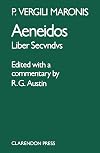
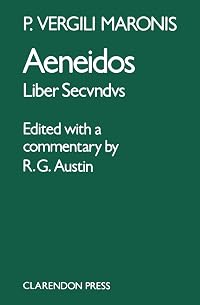
In Book II of the Aeneid, Aeneas relates to Dido his own account of Troy's destruction and his escape, including the episode of the Wooden Horse. It is some of the best Latin poetry ever written, and thus makes an ideal introduction to the Aeneid. This completely new edition aims to provide students with help in translation, encourage them to consider the sound of the poetry, and appreciate the emotional impact of the story as Virgil portrays it. The text also includes a general show more introduction, a select bibliography, notes and a full vocabulary; appendices deal with meter and scansion. show lessTags
Recommendations
















Member Reviews
Members
- Recently Added By
Author Information

534+ Works 38,500 Members
Virgil was born on October 15, 70 B.C.E., in Northern Italy in a small village near Mantua. He attended school at Cremona and Mediolanum (Milan), then went to Rome, where he studied mathematics, medicine and rhetoric, and finally completed his studies in Naples. He entered literary circles as an "Alexandrian," the name given to a group of poets show more who sought inspiration in the sophisticated work of third-century Greek poets, also known as Alexandrians. In 49 BC Virgil became a Roman citizen. After his studies in Rome, Vergil is believed to have lived with his father for about 10 years, engaged in farm work, study, and writing poetry. After the battle of Philippi in 42 B.C.E. Virgil¿s property in Cisalpine Gaul, was confiscated for veterans. In the following years Virgil spent most of his time in Campania and Sicily, but he also had a house in Rome. During the reign of emperor Augustus, Virgil became a member of his court circle and was advanced by a minister, Maecenas, patron of the arts and close friend to the poet Horace. He gave Virgil a house near Naples. Between 42 and 37 B.C.E. Virgil composed pastoral poems known as Bucolic or Eclogues and spent years on the Georgics. The rest of his life, from 30 to 19 B.C., Virgil devoted to The Aeneid, the national epic of Rome, and the glory of the Empire. Although ambitious, Virgil was never really happy about the task. Virgil died in 19 B. C. (Bowker Author Biography) show less
Some Editions
Series

Belongs to Publisher Series
Work Relationships
Is contained in
Has as a student's study guide
Common Knowledge
- Canonical title
- Aeneid, book 2 (Latin) (Latin)
- Original title
- Aeneidos Liber Secvndvs
- Original publication date
- 19 BCE
- Disambiguation notice
- This is book 2 of 12 of the Aeneid in Latin. Please do not combine it with translations. Some multi-volume editions of the Aeneid may have a "volume 2" that contains different books; please do not combine those ... (show all)with this work.
Classifications
- Genres
- Poetry, Fiction and Literature
- DDC/MDS
- 873.01 — Literature & rhetoric Latin & Italic literatures Latin epic poetry and fiction to ca. 499, Roman period
- LCC
- PA6803 .B22 .A8 — Language and Literature Greek language and literature. Latin language and literature Roman literature Individual authors Vergilius Maro, Publius (Virgil)
- BISAC
Statistics
- Members
- 151
- Popularity
- 216,443
- Rating
- (4.33)
- Languages
- 5 — Dutch, English, Italian, Latin, Spanish
- Media
- Paper
- ISBNs
- 11
- ASINs
- 3