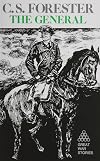
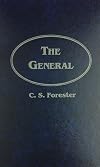
The General
by C. S. Forester
On This Page
Description
The book John Kelly reads every time he gets a promotion to remind him of 'the perils of hubris, the pitfalls of patriotism and duty unaccompanied by critical thinking' The most vivid, moving - and devastating - word-portrait of a World War One British commander ever written, here re-introduced by Max Hastings. C.S. Forester's 1936 masterpiece follows Lt General Herbert Curzon, who fumbled a fortuitous early step on the path to glory in the Boer War. 1914 finds him an honorable, decent, show more brave and wholly unimaginative colonel. Survival through the early slaughters in which so many fellow-officers perished then brings him rapid promotion. By 1916, he is a general in command of 100,000 British soldiers, whom he leads through the horrors of the Somme and Passchendaele, a position for which he is entirely unsuited and intellectually unprepared. Wonderfully human with Forester's droll relish for human folly on full display, this is the story of a man of his time who is anything but wicked, yet presides over appalling sacrifice and tragedy. In his awkwardness and his marriage to a Duke's unlovely, unhappy daughter, Curzon embodies Forester's full powers as a storyteller. His half-hero is patriotic, diligent, even courageous, driven by his sense of duty and refusal to yield to difficulties. But also powerfully damned is the same spirit which caused a hundred real-life British generals to serve as high priests at the bloodiest human sacrifice in the nation's history. A masterful and insightful study about the perils of hubris and unquestioning duty in leadership, The General is a fable for our times. show lessTags
Recommendations

















Member Reviews
The General has achieved a recent notoriety as the book White House Chief of Staff (for now) General John Kelley reads after every promotion. And since I'm a long-time fan of Forester's Horatio Hornblower books, I decided to check it out. What we have is a lean, ironic, and acerbic picture of an exemplar of British military leadership during the First World War. Our protagonist, Curzon, is a cavalry officer of the old school: Red-faced, energetic, stiffly honorable, utterly unimaginative. Sent into line at the Battle of Mons, Major Curzon distinguishes himself through unyielding defense and is promoted to Major-General. He marries a duke's daughter, trains a new division of Kitchener's Army, and is promoted to Corps level. At Ypres, at show more the Somme, at Arras, he proceeds in the best tradition of the British Army, sending thousands of Tommies to their deaths in the trenches in futile attacks. Curzon is untroubled by the slaughter, by innovations like gas and tanks, unable to see victory beyond brutal attrition. He participates in intrigues at G.H.Q. and the dining table, until at the end of the war, his lines broken by new German stormtrooper tactics, he rides out to meet his fate, and loses a leg to a random shell. Death before comprehension, for this general.
The kindle edition has a solid introduction by Max Hasting, placing it in historiographic context of interpreting the first World War, the popularity of generals like Haig at the time, and their subsequent erasure as donkeys and butchers. Two passages, the description of Curzon in the beginning, and the metaphor of the general staff trying to win offensives like someone who had never seen a screw before try and remove one by pulling, are legendary. The book as a whole is a strong contribution to military literature, and a fascinating character study of a vanished breed. show less
The kindle edition has a solid introduction by Max Hasting, placing it in historiographic context of interpreting the first World War, the popularity of generals like Haig at the time, and their subsequent erasure as donkeys and butchers. Two passages, the description of Curzon in the beginning, and the metaphor of the general staff trying to win offensives like someone who had never seen a screw before try and remove one by pulling, are legendary. The book as a whole is a strong contribution to military literature, and a fascinating character study of a vanished breed. show less
I was surprised by how much I enjoyed this book. Of course I was favourably disposed to it from the outset because it was recommended to me by a co-worker who has often given me good recommendations, but I was certainly not expecting to love the dry-witted narration so much. The only reason it took me so long to read was that I had to keep stopping to write down amusing quotes, such as:
"A complete record in detail of those twelve years would need twelve years in the telling to do it justice, so as to make it perfectly plain that nothing whatever happened during those twelve years."
and:
"Men who stopped to think about their chances of being killed were a nuisance to their superior officers."
and this dialogue, which made me actually laugh show more out loud:
"Two men to carry up each gas cylinder? We've only been using one for the empty ones."
"Yes, sir. These are full and they're heavier in consequence."
"Nonsense. Everyone knows that gas makes things lighter. They put it in balloons and things."
"That's coal gas, sir. This is chlorine, and heavily compressed."
As to what this novel is actually about, it chronicles the career of one Herbert Curzon as he rises through the ranks during the Boer War and the first few years of the First World War. It's an excellent portrayal of the typical commander during the Great War, the ones who were not necessarily bad men per se but sincerely believed they were doing their duty and that there was no need to change their strategy -- just send in more young men to die (needlessly) at Ypres, the Somme and Passchendaele. Forester really puts us in Curzon's boots and we can see how easy it was for Curzon to believe that what he was doing was right.
My only criticism of this book is that the ending was rather too abrupt for my liking. It did come full circle, which was nice, but I just felt like there should have been a few more pages. As I was coming to the end, I thought "Jeez, we're running out of book." But the rest of it was very good, and I would definitely recommend it to WW1 history enthusiasts in particular. show less
"A complete record in detail of those twelve years would need twelve years in the telling to do it justice, so as to make it perfectly plain that nothing whatever happened during those twelve years."
and:
"Men who stopped to think about their chances of being killed were a nuisance to their superior officers."
and this dialogue, which made me actually laugh show more out loud:
"Two men to carry up each gas cylinder? We've only been using one for the empty ones."
"Yes, sir. These are full and they're heavier in consequence."
"Nonsense. Everyone knows that gas makes things lighter. They put it in balloons and things."
"That's coal gas, sir. This is chlorine, and heavily compressed."
As to what this novel is actually about, it chronicles the career of one Herbert Curzon as he rises through the ranks during the Boer War and the first few years of the First World War. It's an excellent portrayal of the typical commander during the Great War, the ones who were not necessarily bad men per se but sincerely believed they were doing their duty and that there was no need to change their strategy -- just send in more young men to die (needlessly) at Ypres, the Somme and Passchendaele. Forester really puts us in Curzon's boots and we can see how easy it was for Curzon to believe that what he was doing was right.
My only criticism of this book is that the ending was rather too abrupt for my liking. It did come full circle, which was nice, but I just felt like there should have been a few more pages. As I was coming to the end, I thought "Jeez, we're running out of book." But the rest of it was very good, and I would definitely recommend it to WW1 history enthusiasts in particular. show less
Outstanding writing combined with Forester's deep empathy for the kind of man portrayed make this a gem of a book.
Excellent insight into the psyche of a general during WW1
Forester aptly captures and characterizes the mentality and hubris required to be seen as a successful senior officer during the chaos and casualties of “The War to End All Wars..
Forester aptly captures and characterizes the mentality and hubris required to be seen as a successful senior officer during the chaos and casualties of “The War to End All Wars..
A novel that apparently fully describes the mind of the unimaginative army officer. Read in staff colleges as a warning. But he's a good officer, just hopelessly beyond his ability in the latter stages of his career. There's a bit of dead-pan humour, and sympathy with the central character, who gets on with his life, as he sees it. This book is useful to contrast with Hornblower's mental framework, and with that of Bush.
Outstanding book, makes me want to frog-march Haig out and shoot him. But then, such feelings were common at the time.
Ratings
Members
- Recently Added By
Lists

THE WAR ROOM
813 works; 24 members
Author Information

182+ Works 34,773 Members
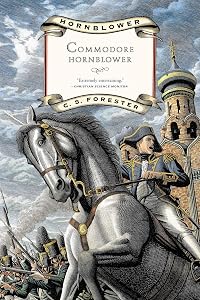
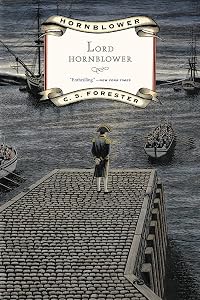
Born Cecil Louis Troughton Smith on August 27, 1899, in Cairo, Egypt, where his father was a government official, C. S. Forester grew up mainly in England. He was educated at Dulwich College, studying medicine briefly before decidint to become a writer. Forester moved to the United States before the start of World War II, and lived in Berkeley, show more California, until his death in 1966. Although Forester was a journalist, a novelist and a Hollywood scriptwriter, he is probably best known for his historical fiction, particularly the series of novels that feature Horatio Hornblower. The eleven-book series begins with Mr. Midshipmen Hornblower, in which the seventeen-year old Hornblower joins the British navy in 1793, just as the Napoleonic Wars are about to begin. Hornblower's continuing adventures, as well as his advancement to the highest ranks of the navy, are chronicled in further books, including Beat to Quarters, Flying Colours, Commodore Hornblower, Lord Hornblower, The Happy Return, and A Ship of the Line, for which Forester recived the James Tait Black Memorial Prize in 1939. Several of Forester's novels were made into films, most notably Payment Deferred (his first novel published in 1926), Eagle Squadron, The Commandos (the movie title was The Commandos Strike at Dawn), Captain Horatio Hornblower, Sink the Bismarck!, and The African Queen, starring Katharine Hepburn and Humphrey Bogart. Forester's nonfiction includes The Age of Fighting Sail: The Story of the Naval War of 1812, as well as biographies of Lord Nelson, Napoleon, Josephine, and King Louis XIV. He also wrote an autobiography, Long Before Forty. (Bowker Author Biography) show less
Some Editions
Work Relationships
Common Knowledge
- Original publication date
- 1936-06
- People/Characters
- Herbert Curzon
- Important events
- World War I (1914 | 1918); First Battle of Ypres (1914-10-29 | 1914-11-15); Battle of Loos (1915)
Classifications
Statistics
- Members
- 388
- Popularity
- 80,894
- Reviews
- 6
- Rating
- (3.84)
- Languages
- Czech, English, German, Italian
- Media
- Paper, Ebook
- ISBNs
- 11
- ASINs
- 27