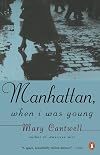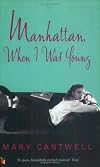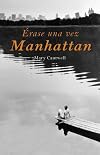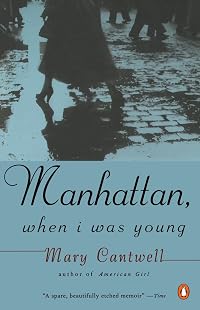
Manhattan, when I Was Young
by Mary Cantwell
On This Page
Description
Mary Cantwell, who has been a writer and editor at Mademoiselle and Vogue and a writer at the New York Times, gives us an elegant and lyrical autobiographical account of a time and place that for some exists only in imagination. But this is a life as it was actually lived, with romance, passion, and no little share of pain. Like her earlier, warmly received American Girl: Scenes from a Small-Town Childhood, Cantwell's new book "offers many of the pleas-ures more usually associated with the show more novel" (Washington Post Book World). In five different apartments in Manhattan, each with its own character and charm, Cantwell's story winds through its phases, from single working girl to young wife and mother, from career choices and divorce to rediscovery. The world Cantwell inhabits - that of magazine and book publishing and fashion and the middle-class bohemia of downtown New York at a golden moment in time - is brought beautifully to life in a memoir that is sure to win her new readers and ren. show lessTags
Recommendations


















Member Recommendations

Member Reviews
This book first caught my eye in a charity shop. I’d never heard of Mary Cantwell, but I thought the title was evocative. Closer inspection revealed it to be not a novel but a memoir, but it began with a pleasing reference to The Bell Jar, my favourite book. Since I was trying to be “good” about book-buying at the time, I left it on the shelf, only to regret it soon afterwards. When I returned to the shop a few days later, it had gone and I ended up putting it on my Amazon wishlist for my husband to buy.
I did some research on the Internet and discovered that Mary Cantwell had been a writer for The New York Times, after spending much of her career working at the now defunct magazine Mademoiselle, a period covered in this memoir, show more and that she’d died in 2000, at the relatively young age of 69, just five years after this memoir was published. It’s not necessary to know any of that to enjoy this account of a young woman beginning her career and adult life in New York City in the early 1950s.
The memoir is divided into sections corresponding to each of the addresses at which Cantwell resided during the twenty or so years covered here, and Cantwell’s love of Manhattan, in particular Greenwich Village, shines throughout. Although I would count New York as one of my favourite cities, I have visited it just once, seven years ago, spending only an afternoon in Greenwich Village. Nevertheless, with my dim memories of that holiday and just a little assistance from Google Maps, Cantwell’s vivid descriptions put me right there with her. It doesn’t matter that I don’t know the shops, bars or restaurants she refers to. As someone who grew up in a provincial town and who still can’t quite believe she’s living in London, I was able to share in Cantwell’s exhilaration and identify with the feeling that, by living somewhere else, it is possible to become a different person.
One of my favourite paragraphs from the book is this:
"Maybe it’s different if you were born here. Maybe then you are deaf to the buzzing and the beating of wings. But I had come from out of town, and to me New York was a hive. You could not just live here. You had to be somebody, do something, it didn’t matter what. You were not a part of the city unless you were on a bus or a subway and on your way to an office or a factory or a schoolroom. How could you know New York if you had not bolted your lunch in a coffee shop or had not had your subway stall under the East River or had not had to stand on the bus for thirty blocks because it was rush hour? You could not. The best way to know New York, to learn to love New York was to let it wear you out."
This is also an intensely personal memoir. As a young woman, Cantwell is unable to accept the death of her father and continues to worry about whether she is living up to his expectations. Lacking self-confidence, she looks to her husband for guidance, believing she would be nothing without him, while resenting the fact that she has never really been allowed to be herself or to be by herself. Cantwell unflinchingly lays bare her younger self, managing to write in a way that is both moving and drily amusing.
So there we have it: if you’re in a second-hand bookshop and come across an unfamiliar title that somehow speaks to you, you should probably buy it. It just may turn out to be an unexpected gem. show less
I did some research on the Internet and discovered that Mary Cantwell had been a writer for The New York Times, after spending much of her career working at the now defunct magazine Mademoiselle, a period covered in this memoir, show more and that she’d died in 2000, at the relatively young age of 69, just five years after this memoir was published. It’s not necessary to know any of that to enjoy this account of a young woman beginning her career and adult life in New York City in the early 1950s.
The memoir is divided into sections corresponding to each of the addresses at which Cantwell resided during the twenty or so years covered here, and Cantwell’s love of Manhattan, in particular Greenwich Village, shines throughout. Although I would count New York as one of my favourite cities, I have visited it just once, seven years ago, spending only an afternoon in Greenwich Village. Nevertheless, with my dim memories of that holiday and just a little assistance from Google Maps, Cantwell’s vivid descriptions put me right there with her. It doesn’t matter that I don’t know the shops, bars or restaurants she refers to. As someone who grew up in a provincial town and who still can’t quite believe she’s living in London, I was able to share in Cantwell’s exhilaration and identify with the feeling that, by living somewhere else, it is possible to become a different person.
One of my favourite paragraphs from the book is this:
"Maybe it’s different if you were born here. Maybe then you are deaf to the buzzing and the beating of wings. But I had come from out of town, and to me New York was a hive. You could not just live here. You had to be somebody, do something, it didn’t matter what. You were not a part of the city unless you were on a bus or a subway and on your way to an office or a factory or a schoolroom. How could you know New York if you had not bolted your lunch in a coffee shop or had not had your subway stall under the East River or had not had to stand on the bus for thirty blocks because it was rush hour? You could not. The best way to know New York, to learn to love New York was to let it wear you out."
This is also an intensely personal memoir. As a young woman, Cantwell is unable to accept the death of her father and continues to worry about whether she is living up to his expectations. Lacking self-confidence, she looks to her husband for guidance, believing she would be nothing without him, while resenting the fact that she has never really been allowed to be herself or to be by herself. Cantwell unflinchingly lays bare her younger self, managing to write in a way that is both moving and drily amusing.
So there we have it: if you’re in a second-hand bookshop and come across an unfamiliar title that somehow speaks to you, you should probably buy it. It just may turn out to be an unexpected gem. show less
A truly lovely read as the NY magazine editor takes us through her list of homes...and her evolving life.. her first flat share with a girlfriend after college (first job; tight funds...but aspirations; first love) ...her first marital home (kitting out a grown up home; career success; travel) ...and on....
Over her life was a sense of loss at her father's early death. Depression....two children...meeting Big Names...and the gradual failing of a marriage. The magic of New York, which is ever present..the awareness of the gulf between a working mother and her children, living so much of their lives under the care of othes..
Just beautiful. Resounds with me, looking bac,k age 60, on early "married life" where we thought we knew it show more all...
Googled the characters when I finished (they become so real) and sad to see not only are both parents deceased but also the younger daughter....
Just a lovely read show less
Over her life was a sense of loss at her father's early death. Depression....two children...meeting Big Names...and the gradual failing of a marriage. The magic of New York, which is ever present..the awareness of the gulf between a working mother and her children, living so much of their lives under the care of othes..
Just beautiful. Resounds with me, looking bac,k age 60, on early "married life" where we thought we knew it show more all...
Googled the characters when I finished (they become so real) and sad to see not only are both parents deceased but also the younger daughter....
Just a lovely read show less
I don't remember what led me to this, but it was a perfect fit for the reading window I had today. It's a little self-indulgent, but deliciously name-droppy. There's some fine, therapy-earned insights into her failing relationship with her husband, but I was less interested in the build-up to divorce than I was in the gorgeous descriptions of Greenwich Village in the 50s and 60s and the insider view of the magazine business back then.
This is another book I had to think about before attempting to review it. Parts of it I loved and parts I found uncomfortable to read. Cantwell has written three memoirs and this is the middle one which recalls her years from college graduation to her mid thirties. She cleverly divides the sections into the five apartments she lived in and tells her stories by location. This is the wonderful part of the book; the looks, smells and even tastes of New York, and especially Greenwich Village, in the 1960's. The way she described the first apartment she shared with her college roommate is so sharp. She loved the one room apartment with the communal hall toilet and her stack of lps with a decent turntable. She had a job at Mademoiselle and show more all of NYC to explore. Unfortunately, this freedom lasted only a few months until her marriage at 21. The remainder of the book is her progress up the career ladder and her family's moves to bigger and better locations. I would have preferred it if she stuck to writing about her involvement with NYC, her editorial work with the fashion magazines, and her on-target profiles of celebs.
But this is a memoir and Cantwell is merciless in discussing her personal life and her mental illness. She is a depressive and under analysis for years. She has enough guilt to bring a much stronger person down and the fact that she doesn't top herself is to her credit. First, she has overwhelming Catholic guilt. She marries outside her faith to a very strong Jewish boy she dated in college. She is guilty about the civil marriage; about not keeping religious rituals, about using birth control and about disappointing her father. And that is another major problem. She cannot accept her father's death and feels she was not a good enough daughter to him. The fact that he never stated he was disappointed in her and only praised her makes her feel worse... like she conned him into loving her so much. She has zero self-esteem and is constantly demeaning her abilities until her husband is so frustrated he has to bully her into accepting her talents. Finally, she loves her husband, but freezes at the physical side of the relationship. (She is committing a mortal sin every time she allows her husband to have sex with her, more Catholic guilt.)
Both aspects of the book are an excellent; the exploration of New York City at its most seductive and the turmoil of a woman raised with the values of the 1950's who is living in the fast-changing climate of the 1960's. She knows she belongs in the city but feels terrible that she is putting aside the ideals of her small town. No wonder she is a mental mess!
Having gone through the Catholic guilt trip myself, I really didn't want to read so much about it...been there, done that. But, oh, her Manhattan is worth a reread every few years1 show less
But this is a memoir and Cantwell is merciless in discussing her personal life and her mental illness. She is a depressive and under analysis for years. She has enough guilt to bring a much stronger person down and the fact that she doesn't top herself is to her credit. First, she has overwhelming Catholic guilt. She marries outside her faith to a very strong Jewish boy she dated in college. She is guilty about the civil marriage; about not keeping religious rituals, about using birth control and about disappointing her father. And that is another major problem. She cannot accept her father's death and feels she was not a good enough daughter to him. The fact that he never stated he was disappointed in her and only praised her makes her feel worse... like she conned him into loving her so much. She has zero self-esteem and is constantly demeaning her abilities until her husband is so frustrated he has to bully her into accepting her talents. Finally, she loves her husband, but freezes at the physical side of the relationship. (She is committing a mortal sin every time she allows her husband to have sex with her, more Catholic guilt.)
Both aspects of the book are an excellent; the exploration of New York City at its most seductive and the turmoil of a woman raised with the values of the 1950's who is living in the fast-changing climate of the 1960's. She knows she belongs in the city but feels terrible that she is putting aside the ideals of her small town. No wonder she is a mental mess!
Having gone through the Catholic guilt trip myself, I really didn't want to read so much about it...been there, done that. But, oh, her Manhattan is worth a reread every few years1 show less
Mary is a strange one. But her love of New York and the Village kept me going. How lucky to be in NYC in the 60s.
Not my favorite memoir. One perspective, tightly focused, told with little passion.
Ratings
Members
- Recently Added By
Author Information

5+ Works 463 Members
Series
Belongs to Publisher Series
Virago Modern Classics (478)
Work Relationships
Common Knowledge
- Original publication date
- 1995
- People/Characters
- Mary Cantwell; B.
- Important places
- Manhattan, New York, New York, USA
- Dedication
- For Katie and Margaret, the best part of the journey
- First words
- "It was a queer, sultry summer the summer they electrocuded the Rosenbergs. ..." That's how Sylvia Plath started The Bell Jar and how I wanted to start this. Because that's the way I remember my first summer in New York, too.
- Blurbers
- Jong, Erica; Calisher, Hortense
Classifications
Statistics
- Members
- 216
- Popularity
- 151,801
- Reviews
- 6
- Rating
- (3.76)
- Languages
- English, Spanish
- Media
- Paper, Ebook
- ISBNs
- 5
- UPCs
- 1
- ASINs
- 1