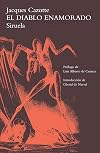
The Devil in Love
by Jacques Cazotte
On This Page
Description
" A brief but sparkling bon-bon from the French writer Jacques Cazotte, who was guillotined in 1792. A young captain, stationed in Naples, is tempted into summoning up Beelzebub, who appears first in the guise of a hideous camel, then as a cute spaniel, and lastly - and most dangerously - as a gorgeous, pouting nymphette who declares herself enamoured of the young man and follows him everywhere. This is an amusing study of temptation, with sinister undertones."Anne Billson in Time Out"In show more Biondetta there remains no trace of the monstrous apparition conjured up by Alvaro in the ruins of Portico. The satanic seductress is hidden behind the face of the tormented and plaintive beauty until the end of the fable."Jorges Luis Borges"The Devil in Love is famous on various counts: for its charm and the perfection of its scenes, but above all for the originality of its conception. "Gerard de Nerval show lessTags
Recommendations


























Member Recommendations
Jannes The Monk is generally considered to be heavily influenced by Le Diable amoureux, and the novels share several themes, most obviously the idea of the devil in the form of a seductive woman.
Member Reviews
Jacques Cazotte's tale of the devil falling in love with a mortal and transforming into a beautiful woman to seduce him is one that's been known to me for a while but that I've only just gotten around to reading, and it's a lot of fun. Surprisingly more depth than I expected from what I thought would be mostly an enjoyable Gothic romp, exploring issues of self, religion, gender, love etc. The devil ends up coming across a lot more sympathetic than expected too, buttressed by the cop-out moralistic ending that undercuts what came before a fair bit, and along with some digressions that I tuned out of these were the main obstacles to me considering this more highly - still enjoyable though.
Jacques Cazotte, as the story goes, predicted whom among his friends would be meeting Madame Guillotine as the horrors of the French Revolution unfolded; sadly, his prescience didn't include himself.
Luckily, he's left behind this little gem of a book in which Beelzebub is summoned by a rank amateur (109 pages, 1772), and which although short, is a delight from beginning to end. The ending itself leaves much pause for thought and actually sent me back to the start for a second read. Within that 109 pages issues arise around self/other, gender identity, sexual desire, deception, reality vs. nonreality, all of which make their way through this tale; however, it's also a book that can be read totally just for fun, and one that I can show more definitely recommend. show less
Luckily, he's left behind this little gem of a book in which Beelzebub is summoned by a rank amateur (109 pages, 1772), and which although short, is a delight from beginning to end. The ending itself leaves much pause for thought and actually sent me back to the start for a second read. Within that 109 pages issues arise around self/other, gender identity, sexual desire, deception, reality vs. nonreality, all of which make their way through this tale; however, it's also a book that can be read totally just for fun, and one that I can show more definitely recommend. show less
This Marsilio Classics volume offers about as complete a perspective on Jacques Cazotte as one can hope for in English. The chief attraction is the short novel The Devil in Love, for which translator Stephen Sartarelli supplies both the full 1776 ending and (in a long endnote) the briefer original version of 1772. I somewhat preferred the original, in which Beelzebub/Biondetta remained as ambivalent to moral (evil/good) and metaphysical (demon/elemental) status as he/she did to gender. The text's debt to the "Rosicrucian" Comte de Gabalis of Montfaucon de Villars has often been noted, but Cazotte develops a few key themes through genuine plot and character into a real story, whereas de Villars basically wrote an occult treatise in a show more dialogue with light narrative framing. Cazotte's Spanish protagonist Alvaro experiments with magical evocation and suffers the consequences. The author claimed that "It was dreamt in one night and written in one day" (170).
Nearly as long as The Devil in Love itself is Gerard de Nerval's biographical essay on Cazotte, originally published as an introduction to an 1845 edition of the novel, but here translated from the version in Les Illuminés. Since I had recently read the latter in Peter Valente's complete 2022 translation, I skipped over Sartarelli's, just spot-checking to see that the text was substantially the same. Nerval compared The Devil in Love to the Metamorphoses of Apuleius, and he also embroidered and codified into canon the anecdotes that Sartarelli sources to an 1845 novel about Cazotte (191, n. 7). Much of the biography is trained on Cazotte's role as a Cassandra of the Revolution.
The influential occult novel Zanoni by Edward Bulwer-Lytton was almost certainly composed with an eye to Cazotte, both in terms of his fictional techniques presenting supernatural phenomena and his actual life at the close of the eighteenth century. I think that link is where Cazotte is best placed in terms of his legacy for modern occultism, despite Eliphas Levi's repeated references to his tragic career. ("The Gordian Knot of the terrible drama of '93 is still concealed in the darkest sanctuary of the Secret Societies." --Transcendental Magic, 156).
Richard Sieburth translated the 1792 Cazotte text "Revelations" included in the appendices, and he compares it to William Blake's revolutionary prophecies, although observing that the royalist Cazotte took the "reverse point of view" (195). For all that Cazotte had become a Martinist initiated through the illuminati of Lyon, his "Revelations" are thoroughly lacking in esoteric content. In substance and rhetorical form, they reminded me of nothing so much as Cold War US American Evangelical readings of the Apocalypse, substituting French Revolutionary republicans for the Soviet Union. Sieburth also contributes a fairly detailed biographical chronology for Cazotte.
Sartarelli's editorial apparatus is very robust, and in addition to his preface and dozens of explanatory notes to both Cazotte and Nerval, he reproduces the printed illustrations and a musical score from the 1772 edition of Le Diable Amoureux. There is a full bibliography. show less
Nearly as long as The Devil in Love itself is Gerard de Nerval's biographical essay on Cazotte, originally published as an introduction to an 1845 edition of the novel, but here translated from the version in Les Illuminés. Since I had recently read the latter in Peter Valente's complete 2022 translation, I skipped over Sartarelli's, just spot-checking to see that the text was substantially the same. Nerval compared The Devil in Love to the Metamorphoses of Apuleius, and he also embroidered and codified into canon the anecdotes that Sartarelli sources to an 1845 novel about Cazotte (191, n. 7). Much of the biography is trained on Cazotte's role as a Cassandra of the Revolution.
The influential occult novel Zanoni by Edward Bulwer-Lytton was almost certainly composed with an eye to Cazotte, both in terms of his fictional techniques presenting supernatural phenomena and his actual life at the close of the eighteenth century. I think that link is where Cazotte is best placed in terms of his legacy for modern occultism, despite Eliphas Levi's repeated references to his tragic career. ("The Gordian Knot of the terrible drama of '93 is still concealed in the darkest sanctuary of the Secret Societies." --Transcendental Magic, 156).
Richard Sieburth translated the 1792 Cazotte text "Revelations" included in the appendices, and he compares it to William Blake's revolutionary prophecies, although observing that the royalist Cazotte took the "reverse point of view" (195). For all that Cazotte had become a Martinist initiated through the illuminati of Lyon, his "Revelations" are thoroughly lacking in esoteric content. In substance and rhetorical form, they reminded me of nothing so much as Cold War US American Evangelical readings of the Apocalypse, substituting French Revolutionary republicans for the Soviet Union. Sieburth also contributes a fairly detailed biographical chronology for Cazotte.
Sartarelli's editorial apparatus is very robust, and in addition to his preface and dozens of explanatory notes to both Cazotte and Nerval, he reproduces the printed illustrations and a musical score from the 1772 edition of Le Diable Amoureux. There is a full bibliography. show less
That was somewhat disappointing. Any story where a Devil (or Death) turn up in human form, tends to be pretty awesome. Thats an aesthetic or plot-point or whatever that i quite enjoy.
This however was fairly bland given the setup. I'm absolutely sure its losing something in the translation but it can't be losing THAT much.
One issue plot wise is that the protagonist is constantly trying not to sleep with this woman, because it would be dishonorable or something. Ok, thats a little strange given this is written by a french guy and given the time period when things were a little more liberal.
I was thinking our hero is spanish so maybe this is a commentary on the spanish being more uptight than the french, but then he clearly sleeps with a show more lot of other women!
So the rule seems to be its only wrong to sleep with someone if there's a chance you might marry them later? Bit confusing.
Anyway, this story just never did enough with the supernatural elements, it never created that air of wrongness that you usually have in these kinds of stories and frankly the ending was very anti-climactic.
I guess it sounds like i'm completely trashing it but its still ok but far below my expectations. show less
This however was fairly bland given the setup. I'm absolutely sure its losing something in the translation but it can't be losing THAT much.
One issue plot wise is that the protagonist is constantly trying not to sleep with this woman, because it would be dishonorable or something. Ok, thats a little strange given this is written by a french guy and given the time period when things were a little more liberal.
I was thinking our hero is spanish so maybe this is a commentary on the spanish being more uptight than the french, but then he clearly sleeps with a show more lot of other women!
So the rule seems to be its only wrong to sleep with someone if there's a chance you might marry them later? Bit confusing.
Anyway, this story just never did enough with the supernatural elements, it never created that air of wrongness that you usually have in these kinds of stories and frankly the ending was very anti-climactic.
I guess it sounds like i'm completely trashing it but its still ok but far below my expectations. show less
The Devil in Love is indeed about the devil’s romance with the narrator, a young Spanish soldier, Alvaro, who gets into black magic through a friend and gets in over his head when he summons the androgynous Biondetta/Biondetto. Instead of a dark Gothic tale, this is a light social romance, just with some devil love and temptation thrown in. Biondetto/a agrees to be Alvaro’s servant which starts some bedroom comedy – Alvaro initially wonders where he/she is going to sleep and others speculate about whether Alvaro’s new servant is really a man. There’s a feel of a picaresque in the parts where Alvaro and Biondetta wander around Italy and Spain and a melodrama when they get embroiled in a violent love triangle. Biondetta falls in show more love with Alvaro but he’s wary at first because she is, after all, a devil. However, Alvaro can’t resist and soon their relationship starts developing in a conventional way with jealousy, tears, fears about what his family will say. Alvaro actively deceives himself even without Biondetta’s help.
Cazotte made several revisions to The Devil in Love; this edition had the longer version which is preferable – the shorter one ends as a pat morality tale and even though the longer one has something of this, there’s a late scene that is a bit shocking considering when it was written. Cazotte influenced some more popular Gothic writers and works – Matthew Lewis’s The Monk, E.T.A. Hoffmann, Theophile Gautier. This version includes an account of Cazotte’s life written by Gerard de Nerval which is very helpful. Cazotte was executed during the French Revolution and his Revelations, where he compares the Revolution to the prophecies in Revelations, is given. It’s rather long-winded and an example of fitting pretty much anything to some given prophecy. The Devil in Love is rather odd but worth reading. show less
Cazotte made several revisions to The Devil in Love; this edition had the longer version which is preferable – the shorter one ends as a pat morality tale and even though the longer one has something of this, there’s a late scene that is a bit shocking considering when it was written. Cazotte influenced some more popular Gothic writers and works – Matthew Lewis’s The Monk, E.T.A. Hoffmann, Theophile Gautier. This version includes an account of Cazotte’s life written by Gerard de Nerval which is very helpful. Cazotte was executed during the French Revolution and his Revelations, where he compares the Revolution to the prophecies in Revelations, is given. It’s rather long-winded and an example of fitting pretty much anything to some given prophecy. The Devil in Love is rather odd but worth reading. show less
oh hi weird french book
En hängiven betjänt som kanske, kanske inte är djävulen själv. Som kanske, kanske inte är en kvinna. Som kanske, kanske inte är förälskad i en vanlig dödlig människa. Det mesta är osäkert i Jacques Cazottes roman ”Den förälskade djävulen” från 1772. Litteraturteoretikern Todorov framhävde verket som ett bra exempel på sin definition av ”fantastisk litteratur” där fantastiken utmärks av en tvekan inför om det övernaturliga är verkligt eller inte.
Och nog är det en fantastisk roman som nu för första gången föreligger på svenska. Nystartade Malört förlag ger ut boken i en vackert inbunden volym med en fyllig introduktion av religionshistorikern Per Faxneld.
”Den förälskade djävulen” rör sig show more elegant i gränslandet mellan dröm och verklighet. Den unge officeren Alvare lockas av ett gäng ljusskygga ockultister att frammana självaste djävulen. Avsikten är att dra den onde i öronen men efter att först ha manifesterat sig som en långörad kamel ändrar mörkrets furste form till en vacker kvinna som envisas med att vilja vara Alvares betjänt. Alvare dras in i en spiral av åtrå och tvivel.
Är Satan verkligen så ond som det påstås? Och är denne Satan verkligen en kvinna? Betjänten, omväxlande kallad Biondetto och Biondetta, förblir länge undflyende i sin sexuella identitet vilket gör boken till mumma för alla queerteoretiker.
Spekulationerna kring magiska ritualer, elementarandar och riter som kan frammana dolda krafter förebådar skräckromantiken. Men Cazottes handlag är spirituellt och underhållande, mer maskeradbal än nattsvart gotik.
På ett plan låter sig boken läsas som en stridsskrift riktad mot upplysningsfilosofin. Biondetta ifrågasätter i Alvares strikta katolska moral i en retorisk stil som påminner om de samtida filosoferna. Den konservativa Cazottes avsikt var väl att förbinda dessa resonemang med mörkrets makter. Men greppet är vanskligt. För läsare som inte delar Cazottes värderingar låter Biondettas ord onekligen bestickande. Faxneld konstaterar i sin introduktion att boken på så vis föregriper den litterära satanism som romantiker, främst i England skulle utveckla med Satan som en frihetens hjältefigur.
Inget nytt i det. Liknande kantringar har skett gång på gång i litteraturhistorien. Dante beskriver både himmel och helvete men det är bilderna från de underjordiska kretsarna som dröjer sig kvar. Milton ger djävulen röst i Paradis Lost och skapar en hel genre av vältaliga satansfigurer. Djävulen har helt enkelt alltid inspirerat till de bästa sångerna.
Så även den här gången. I samband med bokutgivningen ger förlaget nämligen ut en dubbelskiva med titeln ”The Devil In Love”. Svenska och internationella artister som Jarboe, Gavin Friday och Differnet har fått läsa boken och låta sig inspireras av Cazottes fabel. Resultatet är en blandning av neofolk, kraut och ambient, det mesta sprött och svävande, precis som berättelsen om Biondetta. Djävulskt förföriskt, helt enkelt. show less
Och nog är det en fantastisk roman som nu för första gången föreligger på svenska. Nystartade Malört förlag ger ut boken i en vackert inbunden volym med en fyllig introduktion av religionshistorikern Per Faxneld.
”Den förälskade djävulen” rör sig show more elegant i gränslandet mellan dröm och verklighet. Den unge officeren Alvare lockas av ett gäng ljusskygga ockultister att frammana självaste djävulen. Avsikten är att dra den onde i öronen men efter att först ha manifesterat sig som en långörad kamel ändrar mörkrets furste form till en vacker kvinna som envisas med att vilja vara Alvares betjänt. Alvare dras in i en spiral av åtrå och tvivel.
Är Satan verkligen så ond som det påstås? Och är denne Satan verkligen en kvinna? Betjänten, omväxlande kallad Biondetto och Biondetta, förblir länge undflyende i sin sexuella identitet vilket gör boken till mumma för alla queerteoretiker.
Spekulationerna kring magiska ritualer, elementarandar och riter som kan frammana dolda krafter förebådar skräckromantiken. Men Cazottes handlag är spirituellt och underhållande, mer maskeradbal än nattsvart gotik.
På ett plan låter sig boken läsas som en stridsskrift riktad mot upplysningsfilosofin. Biondetta ifrågasätter i Alvares strikta katolska moral i en retorisk stil som påminner om de samtida filosoferna. Den konservativa Cazottes avsikt var väl att förbinda dessa resonemang med mörkrets makter. Men greppet är vanskligt. För läsare som inte delar Cazottes värderingar låter Biondettas ord onekligen bestickande. Faxneld konstaterar i sin introduktion att boken på så vis föregriper den litterära satanism som romantiker, främst i England skulle utveckla med Satan som en frihetens hjältefigur.
Inget nytt i det. Liknande kantringar har skett gång på gång i litteraturhistorien. Dante beskriver både himmel och helvete men det är bilderna från de underjordiska kretsarna som dröjer sig kvar. Milton ger djävulen röst i Paradis Lost och skapar en hel genre av vältaliga satansfigurer. Djävulen har helt enkelt alltid inspirerat till de bästa sångerna.
Så även den här gången. I samband med bokutgivningen ger förlaget nämligen ut en dubbelskiva med titeln ”The Devil In Love”. Svenska och internationella artister som Jarboe, Gavin Friday och Differnet har fått läsa boken och låta sig inspireras av Cazottes fabel. Resultatet är en blandning av neofolk, kraut och ambient, det mesta sprött och svävande, precis som berättelsen om Biondetta. Djävulskt förföriskt, helt enkelt. show less
Jun 9, 2025Swedish
Members
- Recently Added By
Published Reviews
ThingScore 75
För en modern läsare, van vid lekfulla tvetydigheter i den postmodernistiska litteraturen, är de eventuellt esoteriska inslagen kanske mindre intresseväckande än den skissartade, och till sina delar splittrade, gestaltningen av Alvares andliga och psykologiska slitningar, vilken inbjuder till alternativa tolkningsmöjligheter.
added by Jannes
Lists

Speculative Fiction from around the World
610 works; 18 members

Books in The Club Dumas
72 works; 1 member

Favorite French Fiction
226 works; 109 members
Author Information

32+ Works 478 Members
Some Editions
Series
Belongs to Publisher Series
Work Relationships
Is contained in
The Devil in Love: Followed by Jacques Cazotte : His Life, Trial, Prophecies, and Revelations by Jacques Cazotte
Common Knowledge
- Canonical title
- The Devil in Love
- Original title
- Le Diable Amoureux
- Alternate titles*
- De verliefde duivel : een Spaansch vertelsel
- Original publication date
- 1772
- People/Characters*
- Don Álvaro; Biondetta
- Important places*
- Nápoles, Italia; Venecia, Italia; Extremadura, España
- First words
- J'étais à vingt-cinq ans capitaine aux gardes du roi de Naples: nous vivons beaucoup entre camarades, et comme des jeunes gens, c'est-à-dire des femmes, du jeu, tant que la bourse pouvait y suffire; et nous philosophions d... (show all)ans nos quartiers quand nous n'avions plus d'autre ressource.
- Last words*
- (Click to show. Warning: May contain spoilers.)Croyez-moi, formez des liens légitimes avec une personne du sexe : que votre respectable mère préside à votre choix : et dût celle que vous tiendrez de sa main avoir des grâces et des talents célestes, vous ne serez jamais tenté de la prendre pour le Diable.
- Original language
- French
*Some information comes from Common Knowledge in other languages. Click "Edit" for more information.
Classifications
Statistics
- Members
- 374
- Popularity
- 84,239
- Reviews
- 13
- Rating
- (3.77)
- Languages
- 13 — Czech, Dutch, English, Estonian, French, German, Italian, Portuguese, Croatian, Slovenian, Spanish, Swedish, Turkish
- Media
- Paper, Audiobook, Ebook
- ISBNs
- 57
- ASINs
- 8