My Fantoms
by Théophile Gautier
On This Page
Description
Romantic provocateur, flamboyant bohemian, precocious novelist, perfect poet--not to mention an inexhaustible journalist, critic, and man-about-town--Théophile Gautier is one of the major figures, and great characters, of French literature. In My Fantoms Richard Holmes, the celebrated biographer of Shelley and Coleridge, has found a brilliantly effective new way to bring this great bu too-little-known writer into English. My Fantoms assembles seven stories spanning the whole of Gautier's show more career into a unified work that captures the essence of his adventurous life and subtle art. From the erotic awakening of "The Adolescent" through "The Poet," a piercing recollection of the mad genius Gérard de Nerval, the great friend of Gautier's youth, My Fantoms celebrates the senses and illuminates the strange disguises of the spirit, while taking readers on a tour of modernity at its most mysterious. "What ever would the Devil find to do in Paris?" Gautier wonders. "He would meet people just as diabolical as he, and find himself taken for some naïve provincial..." Tapestries, statues, and corpses come to life; young men dream their way into ruin; and Gautier keeps his faith in the power of imagination: "No one is truly dead, until they are no longer loved." show lessTags
Recommendations




























Member Recommendations


Member Reviews
My Fantoms is the selection and translation, by Richard Holmes, of six stories and one biographical sketch, from the writings of Theophile Gautier. Each "story" may be said to recount the return by a spirit to haunt a specific individual. Holmes constructed a faux facade to unite the stories, by renaming each according to the person being haunted. Thus "Omphale" becomes "The Adolescent", "La Morte Amoureuse" becomes "The Priest" and so forth, until in the last piece, a beautiful, detailed, and loving remembrance of his friend Gerard Nerval, Gautier himself becomes the one haunted, "The Poet".
I would propose taking the liberty one step further, and imagining this collection as a series of thirteen French nesting dolls wherein a nightmare show more doll encloses a doll portraying a beautiful vision. The largest doll, on the outside, would be painted to illustrate the decline of Gerard Nerval's sanity. This doll would enclose a doll with images of the carefree, blue-sky days when Nerval and Gautier shared an apartment and wrote together as G.G.
For "The Tourist" I propose a doll of the ruins of a lava encrusted Pompeii would enclose Octavius in Arria's embrace. And so on, reversing the order of stories in My Fantoms. I would change only the final, smallest doll. It should be "The Opium Pipe Smoker" and contain a compressed ball of opium tar.
I suspect that at the least, several vials of tincture of laudanum, and cubes of hashish, went into the inspiration of each of the first six Fantoms. Look no further than the dream atmospheres, the exquisitely rich details, the warm glow, the enchanting seductresses, the promises, ...THEN the promise betrayed...and, as Poe put it in the House of Usher, " the after-dream of the reveller upon opium - the bitter lapse into everyday life - the hideous dropping off of the veil."
The final Fantom, The Poet, is an exception...but not really. Stylistically, the "Poet" does not resemble an opium dream and its aftermath. "The Poet' is distinct from the earlier pieces in that it is not a fiction. But Gautier is haunted, and not simply by the loss of his dearest friend Nerval, but it would seem by the very nature of the artistic ideal they chased. Euphoric visions, whether created by opium or purely by the power of the imagination that these two genuises shared, cannot be repeatedly evoked and denied, summoned and lost without a corresponding debilitation of the spirit. I suspect that for Gautier, that destructive effect was depression and for Nerval, madness.
This book is a beautiful and focused collection which leaves you contemplating, not only the images rendered in each story, but also the greater question, the forlorn question, as posed by Keats, in Ode to a Nightingale,
Forlorn!.....
Adieu! the fancy cannot cheat so well - As she is famed to do, deceiving elf...
. Was it a vision, or a waking dream? - Fled is that music:—do I wake or sleep? show less
I would propose taking the liberty one step further, and imagining this collection as a series of thirteen French nesting dolls wherein a nightmare show more doll encloses a doll portraying a beautiful vision. The largest doll, on the outside, would be painted to illustrate the decline of Gerard Nerval's sanity. This doll would enclose a doll with images of the carefree, blue-sky days when Nerval and Gautier shared an apartment and wrote together as G.G.
For "The Tourist" I propose a doll of the ruins of a lava encrusted Pompeii would enclose Octavius in Arria's embrace. And so on, reversing the order of stories in My Fantoms. I would change only the final, smallest doll. It should be "The Opium Pipe Smoker" and contain a compressed ball of opium tar.
I suspect that at the least, several vials of tincture of laudanum, and cubes of hashish, went into the inspiration of each of the first six Fantoms. Look no further than the dream atmospheres, the exquisitely rich details, the warm glow, the enchanting seductresses, the promises, ...THEN the promise betrayed...and, as Poe put it in the House of Usher, " the after-dream of the reveller upon opium - the bitter lapse into everyday life - the hideous dropping off of the veil."
The final Fantom, The Poet, is an exception...but not really. Stylistically, the "Poet" does not resemble an opium dream and its aftermath. "The Poet' is distinct from the earlier pieces in that it is not a fiction. But Gautier is haunted, and not simply by the loss of his dearest friend Nerval, but it would seem by the very nature of the artistic ideal they chased. Euphoric visions, whether created by opium or purely by the power of the imagination that these two genuises shared, cannot be repeatedly evoked and denied, summoned and lost without a corresponding debilitation of the spirit. I suspect that for Gautier, that destructive effect was depression and for Nerval, madness.
This book is a beautiful and focused collection which leaves you contemplating, not only the images rendered in each story, but also the greater question, the forlorn question, as posed by Keats, in Ode to a Nightingale,
Forlorn!.....
Adieu! the fancy cannot cheat so well - As she is famed to do, deceiving elf...
. Was it a vision, or a waking dream? - Fled is that music:—do I wake or sleep? show less
 This review was written for LibraryThing Early Reviewers.
I’m always interested in reading Gothic/horror/sensational novels of the 18th and 19th c, but oftentimes they disappoint. Too much anti-Catholicism (The Monk, Melmoth the Wanderer), cardboard-thin characters (The Monk, Dracula), paper-thin characters (Otranto), misogyny (Monk) – plenty of reasons to leave one feeling dissatisfied. However, I thoroughly enjoyed NYRB’s new translation of Gautier’s My Fantoms, a collection of supernatural stories.
The stories themselves are entertaining, wildly creative, and – a pleasant surprise – funny. Gautier’s prose is quite vivid – I enjoyed just reading his descriptions of the characters – and when it gets occasionally overheated and over the top, it just matches the events of the show more plot. A number of the stories feature women coming back from the dead in some way, which helps unite the collection. There’s a very informative intro and postscript which gives a good amount of background – clearly a labor of love for the translator. He changed the titles of the stories to make the collection more cohesive (referring to each of the main characters by occupation) – a bit odd – but the stories, for the most part, are well-chosen.
“The Adolescent” and “The Actor” are gem-like short tales – neatly written, perfectly wrapped up at the end and containing a good dose of comedy. The first is about a young man who finds that the tapestry on his wall comes to life and is, in fact, quite attractive while the second is about an actor who, while playing the devil, unwittingly insults the original.
“The Painter” and “The Opium Smoker” are less structured and considerably more disturbing. In the former, a superstitious artist has a streak of bad luck and begins to see horrific visions – is he crazy or plagued by demons? A lot of creative imagery in this story – the artist’s dream of his death, where his friend takes over his former life, his decapitation by his reflection, which also causes all his ideas to escape, and a disastrous poetry reading, where his nemesis replaces his beautiful phrases with “a pink, frothy substance not unlike cream meringue-filling…he could do nothing but helplessly spit out the vile concoction of mythological fripperies and flowery extract of compliment.” Still, there was some humor to be found – mostly in Gautier’s description of the painter’s anti-social behavior and his idea of himself as A Serious Artist. The latter story is a drug trip with more hallucinogenic imagery.
In “The Priest”, Gautier is at his most melodramatic. A formerly pious young priest, Romuald, is seduced by a beautiful woman – his love brings her back from the dead, but as a vampire. However, although Clarimonde is described by the old abbot as an evil harlot, she is actually loving and faithful – she won’t even go off with other men just for a meal. The abbot, by contrast, is a menacing and obsessive figure. He gets a little too enthusiastic after convincing Romuald that they need to dig up her grave. Even after Romauld destroys her body, Clarimonde is not angry – her final response is one of sadness and regret, which turns out to be true for Romauld as well. He narrates the story as an old man and still admits his unhappiness over her loss. As he notes – “the love of God has not been over much to replace hers.” The story is a sharp contrast to something like The Monk which also has a pious priest seduced by a woman. In that one though, the woman is actually an agent of the devil and leads the priest to start practicing magic and commit rape, incest and murder.
“The Tourist” was, I felt, the weakest of the bunch. A young man of Romantic disposition becomes infatuated with an unknown woman who died in Pompeii and his love brings the city briefly back to life. Some good descriptions and a nicely humorous ending, but it felt a little like the author had gone to Pompeii, thought it was great, and was like “I should write a story about this - Pompeii tourist + supernatural dead-women-coming-to-life”
“The Poet” is Gautier’s memories of his friend Gerard de Nerval, who committed suicide. A well-written portrait of an unconventional artist – might have to come back to that after reading some Nerval. show less
The stories themselves are entertaining, wildly creative, and – a pleasant surprise – funny. Gautier’s prose is quite vivid – I enjoyed just reading his descriptions of the characters – and when it gets occasionally overheated and over the top, it just matches the events of the show more plot. A number of the stories feature women coming back from the dead in some way, which helps unite the collection. There’s a very informative intro and postscript which gives a good amount of background – clearly a labor of love for the translator. He changed the titles of the stories to make the collection more cohesive (referring to each of the main characters by occupation) – a bit odd – but the stories, for the most part, are well-chosen.
“The Adolescent” and “The Actor” are gem-like short tales – neatly written, perfectly wrapped up at the end and containing a good dose of comedy. The first is about a young man who finds that the tapestry on his wall comes to life and is, in fact, quite attractive while the second is about an actor who, while playing the devil, unwittingly insults the original.
“The Painter” and “The Opium Smoker” are less structured and considerably more disturbing. In the former, a superstitious artist has a streak of bad luck and begins to see horrific visions – is he crazy or plagued by demons? A lot of creative imagery in this story – the artist’s dream of his death, where his friend takes over his former life, his decapitation by his reflection, which also causes all his ideas to escape, and a disastrous poetry reading, where his nemesis replaces his beautiful phrases with “a pink, frothy substance not unlike cream meringue-filling…he could do nothing but helplessly spit out the vile concoction of mythological fripperies and flowery extract of compliment.” Still, there was some humor to be found – mostly in Gautier’s description of the painter’s anti-social behavior and his idea of himself as A Serious Artist. The latter story is a drug trip with more hallucinogenic imagery.
In “The Priest”, Gautier is at his most melodramatic. A formerly pious young priest, Romuald, is seduced by a beautiful woman – his love brings her back from the dead, but as a vampire. However, although Clarimonde is described by the old abbot as an evil harlot, she is actually loving and faithful – she won’t even go off with other men just for a meal. The abbot, by contrast, is a menacing and obsessive figure. He gets a little too enthusiastic after convincing Romuald that they need to dig up her grave. Even after Romauld destroys her body, Clarimonde is not angry – her final response is one of sadness and regret, which turns out to be true for Romauld as well. He narrates the story as an old man and still admits his unhappiness over her loss. As he notes – “the love of God has not been over much to replace hers.” The story is a sharp contrast to something like The Monk which also has a pious priest seduced by a woman. In that one though, the woman is actually an agent of the devil and leads the priest to start practicing magic and commit rape, incest and murder.
“The Tourist” was, I felt, the weakest of the bunch. A young man of Romantic disposition becomes infatuated with an unknown woman who died in Pompeii and his love brings the city briefly back to life. Some good descriptions and a nicely humorous ending, but it felt a little like the author had gone to Pompeii, thought it was great, and was like “I should write a story about this - Pompeii tourist + supernatural dead-women-coming-to-life”
“The Poet” is Gautier’s memories of his friend Gerard de Nerval, who committed suicide. A well-written portrait of an unconventional artist – might have to come back to that after reading some Nerval. show less
In his introduction to My Fantoms, Richard Holmes characterizes Théophile Gautier’s primary achievement as “combining the German ghost story with the French erotic tale.” Consider the seven stories in this volume a collection of Poe’s stories with their sexuality amped up: they focus on compulsive, hyperarticulate men who are faced with supernatural events involving seductive female spirits. The result is a compulsively entertaining read.
It’s surprising that this collection – first published in 1976 -- hasn’t yet been published in the United States, and the New York Review of Books does us a service by bringing it here. The appearance now of My Fantoms may be in part the result of renewed interest in Gautier in France, show more where in 2002 his novels and stories were published in the Editions Pléiade. That effectively marked his ascension, 130 years after his death, into the French canon.
This long delay may also be linked to Holmes’s claim that Gautier’s prose isn’t flattered by translation into English: where Poe’s English, he says, achieved a greater poetry in French – albeit in Baudelaire’s French, with all the improvements that entailed – Gautier’s stories, “with their high decorative finish, and their various deflections of wit and lubricity,” suffer from being rendered into English. Holmes is probably being too modest, or he wants to express a bit of regret about translations he did earlier in his career. As they appear here, these stories have a mannerism and artificiality that don’t quite achieve the fluency and effortlessness of Poe, but that doesn’t detract from their readability.
The tone Holmes achieves is appropriate for a story such as “The Priest,” in which a young priest grapples with – and succumbs to -- the temptations of Clarimonde, one of the earliest female vampires in Western literature. Romuald, the narrator, is the priest of the story’s title; he sees Clarimonde during his ordination and falls painfully, disastrously in love with her. As Holmes renders one moment of Romuald’s torment:
She seemed to grow aware of the martyrdom I was suffering, and almost as if to give me heart, she cast me a look full of exquisite promises. Her eyes were like an epic poem in which every glance composed a new canto.
Romuald then imagines what Clarimonde might be saying to him through that look:
Throw the wine from the chalice and you are free. I will take you to unknown isles, and you shall drowse upon my breasts in a massive bed of beaten gold, and there will be a silver canopy above us.
Later, when Romuald is called to perform last rites on Clarimonde, although she seems to have died just before his arrival:
[T]here swam sweetly through the silky air the langorous fume of oriental essences, and who knows what amorous feminine odours. The pale and glimmering candle flame had the quality of soft twilight arranged for love-making, rather than the yellow reflections of a vigil candle flickering beside a corpse.
Gautier was 23 when this story was first published, in 1834; Holmes was about 30 when he translated it. There’s a youthful, overwrought energy from both of them that makes the eerie weirdness of this story work, despite – or perhaps because of -- moments like these.
In his introduction Holmes also explains his choice of the word fantom, a word that is largely his own invention. He explains that he intended it as an echo of Gautier’s fantomes, a word that Gautier used to refer to his female spirits, who, temptresses all, return after death to take up male lovers. Fantom is a “decorous, slightly arch word,” Holmes says, and he seems proud of its coinage. It may, however, do Gautier something of a disservice by slotting him solely as a chronicler of the sexy undead. Holmes notes that Gautier did not provide his stories with an overarching title; so too, he explains, in France Gautier’s stories “are known generically as his Contes Fantastiques.” Does Holmes’ volume by itself provide an adequate view of the writer to whom Baudelaire dedicated Les Fleurs de Mal?
Holmes’s introduction and afterword – the former new to this edition, the latter taken from the original publication of My Fantoms – are valuable introductions to Gautier. My Fantoms also includes a useful, up-to-date bibliography of biographies and studies in English and French. A list of the original titles under which each story was published – which also, helpfully, lists the years and places of original publication -- shows how Holmes has imposed an artificial coherency onto a collection of disparate stories from across Gautier’s career: where Holmes has granted these stories titles such as “The Adolescent,” “The Priest,” and “The Painter,” and so forth, Gautier’s original titles were “Omphale,” “La Morte Amoureuse,” and “Onuphrius Wphly.”
Perhaps as befits a non-scholarly edition, My Fantoms lacks explanatory notes: in “The Adolescent,” for instance, Epistle to Zetulbea – the only literary work the narrator’s uncle admires – is left unglossed, as is a list of literary references rattled off by the narrator. Glosses would help a reader unfamiliar with French literature and culture to understand Gautier’s depiction of these characters.
But the absence of such notes is ultimately not a shortcoming of My Fantoms. The pleasure of these stories is not the depth of their individual characters but the driving, spooky action of their plots. In a story in which a young man falls in love with a woman who steps out of a wall tapestry and into his bed, do we really care about his uncle’s literary tastes? show less
It’s surprising that this collection – first published in 1976 -- hasn’t yet been published in the United States, and the New York Review of Books does us a service by bringing it here. The appearance now of My Fantoms may be in part the result of renewed interest in Gautier in France, show more where in 2002 his novels and stories were published in the Editions Pléiade. That effectively marked his ascension, 130 years after his death, into the French canon.
This long delay may also be linked to Holmes’s claim that Gautier’s prose isn’t flattered by translation into English: where Poe’s English, he says, achieved a greater poetry in French – albeit in Baudelaire’s French, with all the improvements that entailed – Gautier’s stories, “with their high decorative finish, and their various deflections of wit and lubricity,” suffer from being rendered into English. Holmes is probably being too modest, or he wants to express a bit of regret about translations he did earlier in his career. As they appear here, these stories have a mannerism and artificiality that don’t quite achieve the fluency and effortlessness of Poe, but that doesn’t detract from their readability.
The tone Holmes achieves is appropriate for a story such as “The Priest,” in which a young priest grapples with – and succumbs to -- the temptations of Clarimonde, one of the earliest female vampires in Western literature. Romuald, the narrator, is the priest of the story’s title; he sees Clarimonde during his ordination and falls painfully, disastrously in love with her. As Holmes renders one moment of Romuald’s torment:
She seemed to grow aware of the martyrdom I was suffering, and almost as if to give me heart, she cast me a look full of exquisite promises. Her eyes were like an epic poem in which every glance composed a new canto.
Romuald then imagines what Clarimonde might be saying to him through that look:
Throw the wine from the chalice and you are free. I will take you to unknown isles, and you shall drowse upon my breasts in a massive bed of beaten gold, and there will be a silver canopy above us.
Later, when Romuald is called to perform last rites on Clarimonde, although she seems to have died just before his arrival:
[T]here swam sweetly through the silky air the langorous fume of oriental essences, and who knows what amorous feminine odours. The pale and glimmering candle flame had the quality of soft twilight arranged for love-making, rather than the yellow reflections of a vigil candle flickering beside a corpse.
Gautier was 23 when this story was first published, in 1834; Holmes was about 30 when he translated it. There’s a youthful, overwrought energy from both of them that makes the eerie weirdness of this story work, despite – or perhaps because of -- moments like these.
In his introduction Holmes also explains his choice of the word fantom, a word that is largely his own invention. He explains that he intended it as an echo of Gautier’s fantomes, a word that Gautier used to refer to his female spirits, who, temptresses all, return after death to take up male lovers. Fantom is a “decorous, slightly arch word,” Holmes says, and he seems proud of its coinage. It may, however, do Gautier something of a disservice by slotting him solely as a chronicler of the sexy undead. Holmes notes that Gautier did not provide his stories with an overarching title; so too, he explains, in France Gautier’s stories “are known generically as his Contes Fantastiques.” Does Holmes’ volume by itself provide an adequate view of the writer to whom Baudelaire dedicated Les Fleurs de Mal?
Holmes’s introduction and afterword – the former new to this edition, the latter taken from the original publication of My Fantoms – are valuable introductions to Gautier. My Fantoms also includes a useful, up-to-date bibliography of biographies and studies in English and French. A list of the original titles under which each story was published – which also, helpfully, lists the years and places of original publication -- shows how Holmes has imposed an artificial coherency onto a collection of disparate stories from across Gautier’s career: where Holmes has granted these stories titles such as “The Adolescent,” “The Priest,” and “The Painter,” and so forth, Gautier’s original titles were “Omphale,” “La Morte Amoureuse,” and “Onuphrius Wphly.”
Perhaps as befits a non-scholarly edition, My Fantoms lacks explanatory notes: in “The Adolescent,” for instance, Epistle to Zetulbea – the only literary work the narrator’s uncle admires – is left unglossed, as is a list of literary references rattled off by the narrator. Glosses would help a reader unfamiliar with French literature and culture to understand Gautier’s depiction of these characters.
But the absence of such notes is ultimately not a shortcoming of My Fantoms. The pleasure of these stories is not the depth of their individual characters but the driving, spooky action of their plots. In a story in which a young man falls in love with a woman who steps out of a wall tapestry and into his bed, do we really care about his uncle’s literary tastes? show less
This review was written for LibraryThing Early Reviewers.Well, I'm glad I read the stories before I got too far into the introduction. By page xi, he is translating a "mischevious little poem" of Gautier's in the "vers libre style of Ezra Pound." Why? So as not to be "outdone" by T.S. Eliot, who "once rendered" the poem "as a hymn to the somnolent Anglican church in adversity."
That's how you end up with phrases such as "Hercules was holding a distaff entwined with a rose-coloured favour, and twirling between his thumb and fore-finger a white spray of flax" (p. 5), etc., etc. Along with a decidedly British cast to what is supposed to be French literature.
The stories themselves, when they transcend the translation, can be very compelling. Stories such as "The Painter," in which the title show more character slowly but completely loses his grip on reality, have a true nightmare character to them.
Gautier (I don't think Holmes has it in him) also manages, on occasion, to use a modern, ironic tone to describe even the supernatural events. This adds to the feeling of dread in the better stories even if just because it brings them "closer" to the 21st century.
Gautier is also able to pull off strong conclusions to some of the stories, wrapping them up in the kind of neat packages that earn extra style points from me. For example, in "The Opium Smoker," in which we follow the title hashhead through one of his wild hallucinations, culminating in some romantic necrophilia. The story ends:
"Thus I came to the end of my opium dream, which left me no other memento than a vague and persistent sense of melanchology.
It is not an unsual consequence of this form of hallucination."
I guess I should mention here that the majority of the stories involve men falling in love with (or at the least coming under the spell of) women who are a bit on the uncanny side.
Overall, I definitely recommend the book, although it's definitely despite the translation. show less
That's how you end up with phrases such as "Hercules was holding a distaff entwined with a rose-coloured favour, and twirling between his thumb and fore-finger a white spray of flax" (p. 5), etc., etc. Along with a decidedly British cast to what is supposed to be French literature.
The stories themselves, when they transcend the translation, can be very compelling. Stories such as "The Painter," in which the title show more character slowly but completely loses his grip on reality, have a true nightmare character to them.
Gautier (I don't think Holmes has it in him) also manages, on occasion, to use a modern, ironic tone to describe even the supernatural events. This adds to the feeling of dread in the better stories even if just because it brings them "closer" to the 21st century.
Gautier is also able to pull off strong conclusions to some of the stories, wrapping them up in the kind of neat packages that earn extra style points from me. For example, in "The Opium Smoker," in which we follow the title hashhead through one of his wild hallucinations, culminating in some romantic necrophilia. The story ends:
"Thus I came to the end of my opium dream, which left me no other memento than a vague and persistent sense of melanchology.
It is not an unsual consequence of this form of hallucination."
I guess I should mention here that the majority of the stories involve men falling in love with (or at the least coming under the spell of) women who are a bit on the uncanny side.
Overall, I definitely recommend the book, although it's definitely despite the translation. show less
This review was written for LibraryThing Early Reviewers.In these seven examples of the short Gothic work by 19th Century French writer Theophile Gautier, tapestries, statues, and corpses come to life, and young men are seduced and ruined by other-worldly visitors – labeled "fantoms" by translator Richard Holmes.
The stories, especially "The Adolescent," have a very Edgar Allan Poe feel about them, but are much more overtly erotic than Poe's tales. As Holmes says in his Introduction, Gautier's fantoms "are all seductresses, ravishing mischief-makers, soft-hearted vampires, generous courtesans, fatal temptresses, or simply ardent thousand year-old muses. What they have in common is that all of them come back from the dead, seeking human lovers."
The stories also have a witty and, at times, show more almost whimsical quality that you would not find in Poe's work. This doesn't mean they're not creepy – they most definitely are that. Holmes says that "catching the exact pitch and tone of Gautier's stories, with their high decorative finish, and their various deflections of wit and lubricity, was not easy." But he seems to have done a laudable job.
Holmes also provides quite a lot of background information on Gautier and his times, and the history of his own involvement with Gautier's works. I would definitely recommend reading all of this (especially his Postscript) before undertaking the stories themselves.
This review refers to an uncorrected advance proof of the book. show less
The stories, especially "The Adolescent," have a very Edgar Allan Poe feel about them, but are much more overtly erotic than Poe's tales. As Holmes says in his Introduction, Gautier's fantoms "are all seductresses, ravishing mischief-makers, soft-hearted vampires, generous courtesans, fatal temptresses, or simply ardent thousand year-old muses. What they have in common is that all of them come back from the dead, seeking human lovers."
The stories also have a witty and, at times, show more almost whimsical quality that you would not find in Poe's work. This doesn't mean they're not creepy – they most definitely are that. Holmes says that "catching the exact pitch and tone of Gautier's stories, with their high decorative finish, and their various deflections of wit and lubricity, was not easy." But he seems to have done a laudable job.
Holmes also provides quite a lot of background information on Gautier and his times, and the history of his own involvement with Gautier's works. I would definitely recommend reading all of this (especially his Postscript) before undertaking the stories themselves.
This review refers to an uncorrected advance proof of the book. show less
This review was written for LibraryThing Early Reviewers.The New York Review of Books publishers continue their great series of classics revivals with My Fantoms by Theophile Gautier. The short stories were published in France from 1832 to 1867 and are wonderfully introduced, translated, and updated by Richard Holmes. The stories involve the undead and unholy manipulating and interfering with the lives of adolescents, painters, clergy, journalists, actors, tourists, and poets.
Gautier’s style is romantic, humorous, and ironic and quickly involves the reader in the fantasies of the characters. These fantasies often occur in dreams that lead to temporary or permanent madness. They are worth the stress, though, because of the sexual ecstasy and obsessive love that often result.
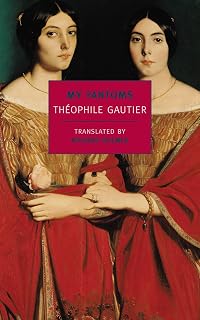
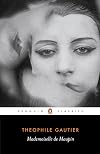
There is a show more fundamental tension in each story between the characters’ rational work and irrational experiences. Holmes points out in the Introduction that the tension is somewhat autobiographical. Gautier was a hard working journalist who wrote a weekly column for a Paris publication for thirty years and also was a free spirited author of many works of fiction. My Fantoms' cover art represents the two beautiful Italian sisters Gautier loved: one was an opera singer who lived with him and shared his day to day routines, and the other was a dancer who traveled internationally frequently sending him love letters.
Holmes writes in the Postscript that the seven stories are strange and mysterious implying they are somewhat difficult to interpret from a rational point of view. But, in the following passage from the story “The Painter,” Gautier shows the reader how to understand the characters’ experiences in all the stories. “…he was capable of becoming one of the greatest of our artists; but instead he only became one of the strangest of our madmen. He had questioned his own existence too closely and too curiously; almost invariably he injected everyday events with some grotesque element of his own fantasy.”
You can enter the realm of madness in a number of dimensions as you read the great collection of stories written by a master of the rational/irrational. Gautier will show you that the demons most threatening to sanity are the desires that dwell within our minds. show less
Gautier’s style is romantic, humorous, and ironic and quickly involves the reader in the fantasies of the characters. These fantasies often occur in dreams that lead to temporary or permanent madness. They are worth the stress, though, because of the sexual ecstasy and obsessive love that often result.
There is a show more fundamental tension in each story between the characters’ rational work and irrational experiences. Holmes points out in the Introduction that the tension is somewhat autobiographical. Gautier was a hard working journalist who wrote a weekly column for a Paris publication for thirty years and also was a free spirited author of many works of fiction. My Fantoms' cover art represents the two beautiful Italian sisters Gautier loved: one was an opera singer who lived with him and shared his day to day routines, and the other was a dancer who traveled internationally frequently sending him love letters.
Holmes writes in the Postscript that the seven stories are strange and mysterious implying they are somewhat difficult to interpret from a rational point of view. But, in the following passage from the story “The Painter,” Gautier shows the reader how to understand the characters’ experiences in all the stories. “…he was capable of becoming one of the greatest of our artists; but instead he only became one of the strangest of our madmen. He had questioned his own existence too closely and too curiously; almost invariably he injected everyday events with some grotesque element of his own fantasy.”
You can enter the realm of madness in a number of dimensions as you read the great collection of stories written by a master of the rational/irrational. Gautier will show you that the demons most threatening to sanity are the desires that dwell within our minds. show less
This review was written for LibraryThing Early Reviewers.Théophile Gautier (1811-1872), one of the giants of 19th century French literature, author of novels, short stories, essays, plays and poetry was also a journalist who wrote reviews on literature, theater, dance and art, especially art since in his younger years was himself a painter, a background that served him well as his writing is visually stunning. This fine collection of seven Gautier tales includes Omphale (The Adolescent), Clairmonde (The Priest) and Gérard de Nerval (The Poet); however, for the purpose of this review and in order to share a taste of Gautier, I will focus on my favorite: The Opium Smoker.
The story begins with the narrator paying a call to the home of his friend, one Alphonse Karr, who happens to be smoking a show more pipe of opium. Thinking nothing of the practice, the narrator accepts the pipe from Karr and, in turn, tales several puffs, inhaling the smoke into his lungs. After his brief relaxed visit with Karr, he goes home for dinner, then to the theater so he can write his obligatory newspaper review and finally returns for a well-deserved sleep.
He has some sleep but the fantastic happens and our narrator relates the details of his vivid dream: He’s back at Karr’s apartment. Karr is on his bed smoking his opium pipe and all is similar to his afternoon visit but for one exception – a decided lack of sunlight. Repeating the sequence of events as if a mirror, the narrator smokes his opium and lies down to feel the effects. We read, “I was half-immersed in a heap of cushions, and lazily stretched back my head to watch the blue smoke-rings rise swirling through the air and dissolve after a moment or two into a diffused haze of cotton-wool. By degrees my gaze shifted upwards to the ebony-black ceiling with its design of golden arabesques. As I stared up at it with that ecstatic intensity that precedes visionary experience, I had the impression that the ceiling was now blue, a deep inky blue, like a strip torn out of the night sky.” This graphic passage exemplifies Gautier’s painterly background.
He notes the ceiling’s change of color to his friend. Karr remarks such is the very nature of a ceiling, so very much like a woman, sheer caprice, wanting to change all the time. The narrator remains only half convinced by this line of reasoning and, with a tincture of unease, continues to closely observe the ceiling. As if in response to his scrutiny, the ceiling turns a deeper blue and stars began to appear, stars having delicate golden threads stretching down, filling the room with light, while, in the meantime, the entire house had become as clear and as transparent as glass.
Slightly unsettled by such mystical transformations, the narrator wonders what his childhood friend, Esquiros the Magician, would have to say about this instant shapeshifting. No sooner does he have this reflection then to his stupefaction Esquiros is standing before him. Wow, now that's magic! He asks Karr how Esquiros entered the room since the door is closed, to which Karr explains magicians always walk through closed doors. The narrator takes such a well formulated statement to be an obvious example of sound logic.
At this point, Esquiros’ eye become enormous, round and glowing and his body dissolves and turns into swirls of sparkling light, winding around the narrator’s body with a progressively tighter grip. In this restricted state, the narrator sees whiffs of rising white smoke taking humanlike form and hears a voice whisper in his ear that they are spirits. He also sees for the first time a beautiful young barefoot girl sitting up in the corner of the ceiling who tells those rising white smoke spirits that she does not want to join them but would rather live for another six months.
The young beauty explains to the narrator that if he goes into town and gives her a kiss on the lips of her dead body she will live for six more months and live for him alone. Upon hearing her promise, without the slightest hesitation, the narrator sets off in a carriage pulled by two magical black horses. During his travels, he relates, “We sped across a dark and dismal plain. There was a low leaded sky and an endless procession of small, spindly trees flying away on both sides of the road in the opposite direction to the coach, for all the world like a routed army of broomsticks. Nothing could have been more sinister than the huge, brooding greyness of that sky, scored by the black silhouettes of those skeletal flying trees.” Sidebar: this entire coach sequence has much in common with a similar opium induced coach ride in Sdegh Hedyat’s The Blind Owl.
The opium dream continues, related in vintage Théophile Gautier vibrant language. And this tale is but one of seven. There is also an informative introduction by Richard Holmes, who did an excellent job translating from the French. Lastly, this New York Review Book edition has a striking detail of Théodore Chassériau’s Two Sisters on the cover. If you are a romantic at heart, this book is for you. show less
Members
- Recently Added By
Author Information

383+ Works 3,974 Members
Theophile Gautier (1811-1872) was a French author whose works encompassed horror and the supernatural.
Series
Belongs to Publisher Series
Common Knowledge
- Canonical title
- My Fantoms
- Dedication
- To Robert de Bosmelet
Classifications
Statistics
- Members
- 251
- Popularity
- 129,893
- Reviews
- 12
- Rating
- (4.21)
- Languages
- English
- Media
- Paper
- ISBNs
- 2