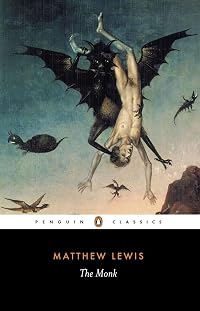
The Monk
by Matthew Lewis
There is 1 current discussion about this work.
On This Page
Description
The Monk: A Romance tells of the spectacular downfall of a Spanish monk. Ambroio lusts for the woman Matilda, who is disguised as a monk, but once he has had her he becomes infatuated with the innocent Antonia. This novel was the first to villainize a priest, and has all the trappings of the Gothic novel, including ruined castles, rape, incest, demonic contracts and the Spanish Inquisition. Lewis wrote the novel in ten weeks at the age of 19.Tags
Recommendations
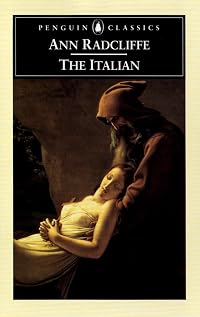
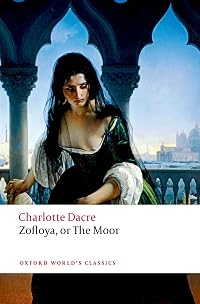
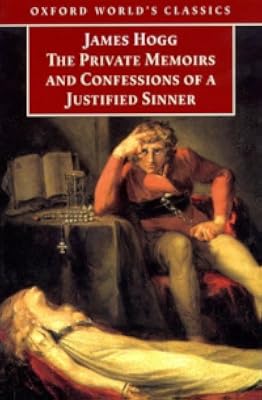
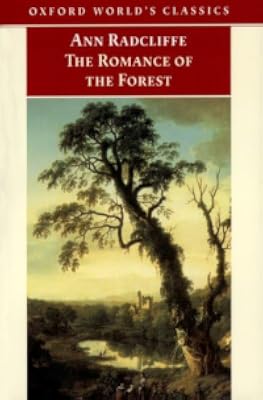
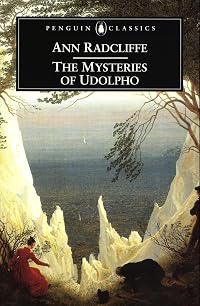
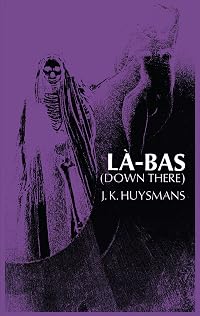

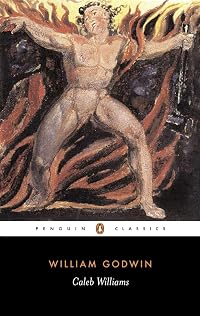




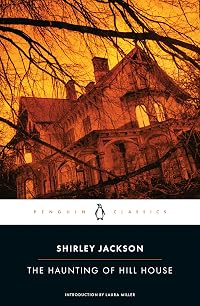
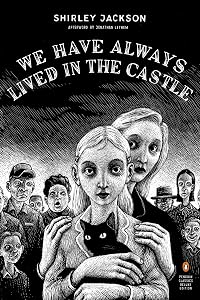

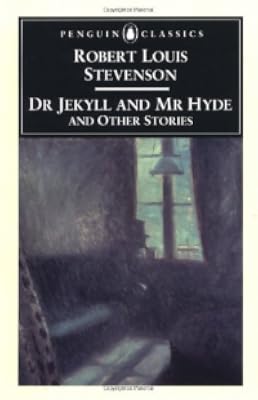




Member Recommendations
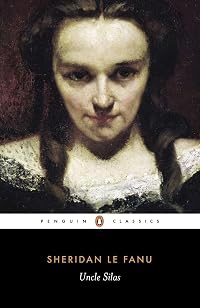
DanLovesAlice Both texts share the notion of the duplicity of man, and study how society and social roles can imprison our most primitive urges.
50

Jannes The Monk is generally considered to be heavily influenced by Le Diable amoureux, and the novels share several themes, most obviously the idea of the devil in the form of a seductive woman.
40
Member Reviews
I can't decide if this is mock-goth or just really over-the-top-goth. I know Gothic is extreme by definition, but this one includes every cliché of the genre you can think of, plus a few elements that read really modern and self-aware. Kind of like late noir films, except with nuns, ghosts and dungeons (so, way better than late noir films).
The thesis, inasmuch as there is one, is rather revolutionary for its time: ignorance isn't virtue, it's just ignorance. So basically, integrists who go around judging others are just scared, repressed people who should get over themselves and join the rest of us in, you know, life. And I thought I had patented that idea.
The thesis, inasmuch as there is one, is rather revolutionary for its time: ignorance isn't virtue, it's just ignorance. So basically, integrists who go around judging others are just scared, repressed people who should get over themselves and join the rest of us in, you know, life. And I thought I had patented that idea.
A monk who seems to be thoroughly pious and divinely virtuous is tempted by lust into a hideous, compounding spiral of depravity and evil. At each stage of his descent, the monk rationalizes clearly what is good and evil and chooses further evil out of greater regard for his vices and the belief that he can always ask forgiveness later. The book is full of supernatural horrors including demons, ghosts, the torments of the damned, and Lucifer himself. And these are set in the context of the horrors of human depravity including murder, rape, and other crimes that would be spoilers to reveal.
The book is astoundingly bold in its treatment of the church and in its portrayals of human evil. I gather that it was scandalous when published in show more 1796.
The tale is good and fast moving. Some characters are bit uneven in their development. Lorenzo, Raymond, Antonia, Elvira are most notably kind of bland. However, this is (mostly) made up for by the portrayals of Matilda/Rosario, Ambrosio, and the Prioress. show less
The book is astoundingly bold in its treatment of the church and in its portrayals of human evil. I gather that it was scandalous when published in show more 1796.
The tale is good and fast moving. Some characters are bit uneven in their development. Lorenzo, Raymond, Antonia, Elvira are most notably kind of bland. However, this is (mostly) made up for by the portrayals of Matilda/Rosario, Ambrosio, and the Prioress. show less
There seems to be no bounds to the depravity in which the human condition can hide. What Matthew Lewis created with his 1796 Pre Gothic masterpiece “The Monk” vividly lays our vices and desires out to bear. Lewis initially had this story truncated so it would not interfere with his standing as a member of English Parliament, but later released the whole manuscript. A young woman obsessed with a highly praised and respected monk in Madrid infiltrates a monastery as a man and seduces the highest example of piety of the time. And what ensues is way beyond any of the known vices and many unknown. Lechery, deceit and self damnation are only the beginning steps of the journey our characters place their feet on their path to what is surely show more a not so cozy place in perdition. Knowing you are wrong for a misdeed is the first step to repentance. Knowing you are wrong for a misdeed and seeking to bury not only yourself but everyone around you is something else. Sounds Cliché? Not hardly. This story offers way more than the typical temptation yarn. The ending will have you squatting in a field of thorns while trying to decide if you are just as evil as the fictional characters you just read about and how you could possibly be redeemed for taking part in such a journey. That is if you want to be redeemed or choose to push the thorns deeper to see what it feels like. The flames await. show less
Once in a while it's very pleasant to read a story where the ghosts, witches, dissembling demons, Wandering Jew, evil nuns, cross-dressers, murderous brigands, Inquisitional tortures, violated maidens, mad monks, mouldering corpses (or "Corses" to use the quaint vernacular), secret passages, dank dungeons, all-pervading air of carnality and Satan himself are not just implied, metaphorical, or artifacts of a disordered psyche, but actually real.
Here's Old Nick in all his pomp:
He appeared in all that ugliness which since his fall from heaven had been his portion: His blasted limbs still bore marks of the Almighty’s thunder: A swarthy darkness spread itself over his gigantic form: His hands and feet were armed with long Talons: Fury show more glared in his eyes, which might have struck the bravest heart with terror: Over his huge shoulders waved two enormous sable wings; and his hair was supplied by living snakes, which twined themselves round his brows with frightful hissings. In one hand He held a roll of parchment, and in the other an iron pen. Still the lightning flashed around him, and the Thunder with repeated bursts, seemed to announce the dissolution of Nature. show less
Here's Old Nick in all his pomp:
He appeared in all that ugliness which since his fall from heaven had been his portion: His blasted limbs still bore marks of the Almighty’s thunder: A swarthy darkness spread itself over his gigantic form: His hands and feet were armed with long Talons: Fury show more glared in his eyes, which might have struck the bravest heart with terror: Over his huge shoulders waved two enormous sable wings; and his hair was supplied by living snakes, which twined themselves round his brows with frightful hissings. In one hand He held a roll of parchment, and in the other an iron pen. Still the lightning flashed around him, and the Thunder with repeated bursts, seemed to announce the dissolution of Nature. show less
Gosh, where to start? This late eighteenth century (1796) shocker by Matthew Lewis is still surprisingly readable. It rattles along at quite a pace despite the occasional weird meandering to insert a horror or new angle. Altogether not bad for a bored nineteen year old acting as a diplomatic intern.
Given that William Beckford's 'Vathek' (1782), another lush horror though orientalist in tone, was begun by a rich youngster at 22 and that Mary Shelley knocked out 'Frankenstein' (1818) before she was 21, we have a phenomenon here of youthful imagination exorcising its anxieties in gothick mode.
As Beckford used the world of the Arabian Nights so Lewis goes into the collective imagination of the English in order to express strangeness and show more horror - the alien Spain of the Catholic Church and the Inquisition which held the same fearful fascination as the red peril of communism would do later.
Beckford is writing well over a century after the panic over the Popish Plot and two centuries after the Armada but Spanish Catholicism, its 'superstition' and its alleged totalitarian cruelties could still send a shiver down the spines of any Englishman. There but for the grace of God and all that.
Underlying the text is an Anglo-Saxon empiricist's sense of superiority over a culture that believes in saints' relics and uses incense which he then subverts by using it to play on the equally superstitious sensibilities of his readers with tales of ghosts and examples of sorcery.
An amazing sequence (written for a cinema that could not exist) has a religious procession cascading into mayhem, an assault on a convent, the tearing to shreds of an errant prioress and the burning of nuns guilty and innocent alike.
On this atavistic framework, Lewis builds a story of aristocratic honour and love, of the sin of pride and the roots of hypocrisy, of cruel superstition and of dark magic in which a rather Catholic conception of the Devil and Hell plays its role to deliver a true horror novel.
Subversion lies in using a ready-made atmosphere of cultural fear to introduce more basic fears - of the mob, of the hypocrisy of evil (the other minds problem), premature burial, seduction in a shame culture, ghosts, loss of sexual control, rape, entrapment in a totalitarian institution and more.
But what struck this reader was not so much how Lewis took the Gothick to new levels of extremity for the time (and introduced fairly transgressive sexual themes) but how mature his reading of human psychology was beneath the formal literary narrative expectations we might have.
At one point we get a detailed account of a woman waking in a sepulchre amongst suppurating corpses and at another a carefully drawn account of how a naive woman might be captured by a seducer and how the women around her work to protect her.
We get an interpolated ghost story after a conventional tale of banditti in the German forest but within this again we see an almost filmic interplay of our hero Lorenzo and the attempt of the bandit leader's wife to warn him of the plot to murder him.
There is a lot of this interplay between a melodramatic story line and acute understanding (remarkable given the age of the author) of human psychology. By the end of the book I came to feel that it had been underrated and deserved much more attention.
The book is certainly not classically proportioned. The tormented super villain of the story (also treated with sophistication in regard to his complex inner life) disappears for a huge chunk of the book after his introduction in order to permit more sensation.
However, somehow it all hangs together. Its sheer momentum gives us a series of succeeding climaxes of increasing horror. Its reception was to be much like that of the video nasties of the early 1980s.
Quite a bit of self censorship was necessary for later editions especially as Lewis was to become an MP (in the age of rotten boroughs) not too long after. He, like Beckford, was from a slave-owning family whose wealth came from sugar. He died in 1818 of yellow fever returning from Jamaica.
Nevertheless, the book was immensely popular on publication. It set the tone (if later muted) for the rise of the Gothick as horror rather than terror. It might perhaps even be seen as an inventor of the 'jump scare' that is now a cliche in cinema.
It is the subject matter that sustains the horror. The Gothick tropes are intensified beyond the clanking chain, sins of the past, dungeons and moonlight (with owls hooting) into rape, incest, carefully described murder, starvation, sex (surprisingly explicit), corpses and demonology.
With many characters excellently drawn and feeling very real despite the fantastic framework, Lewis' adolescent sensibility seems itself to be expressed in the passions of the characters. He seems to be imagining himself into extreme situations in a most remarkable way.
The character of Ambrosio, the monk of the title, is of course central and critical. At one level conventional (his fall comes from the sin of pride from which all else springs), this perpetrator of evil is far from one dimensional. He has a rich internal life if a self-deluding one.
His pride makes him lack self awareness. He slides from dark act to dark act with the unleashing of his 'shadow', passions that he ultimately cannot control while periodically recognising his predicament. And yet he is also manipulated - victim almost as much as perpetrator.
The cause of his doom lies in Rosario/Matilda who seems not to be a demon (but who may be) but more a sorcerer in the dark arts with a prodigious and manipulative libido whose transgressive sexuality has a certain libertarian integrity to it. She personifies absolute moral rebellion.
As to the other characters (Don Lorenzo, his sister Agnes (imprisoned in a sepulchre with her dead child) and lover of Lorenzo's friend Don Raymond, Lorenzo's love Antonia (raped and murdered) and her family network, these are interweaved artfully. You care about their condition.
Yes, the boys can appear exceptionally dim and self-absorbed at the expense of the girls (always the victims, our scream queens) but this is a group of young adults - the eighteenth century version of the world of the High School. Antonia has been criticised as just too perfect but she is only 15.
Of course, Ambrosio gets his comeuppance in ways that might genuinely have frightened its audience far more than the more visceral body horror but the book's conclusion is pragmatically cynical just we might expect in the period of Choderlos de Laclos and the Barber of Seville.
Let us not do any more detailed spoiler here. Let us just say that Lorenzo does rather well for himself, possibly better than if Ambrosio had never existed, and leave it like that. The young aristocrats (barring one who lost her honour and had to be dealt with accordingly by Lewis) survive and prosper. show less
Given that William Beckford's 'Vathek' (1782), another lush horror though orientalist in tone, was begun by a rich youngster at 22 and that Mary Shelley knocked out 'Frankenstein' (1818) before she was 21, we have a phenomenon here of youthful imagination exorcising its anxieties in gothick mode.
As Beckford used the world of the Arabian Nights so Lewis goes into the collective imagination of the English in order to express strangeness and show more horror - the alien Spain of the Catholic Church and the Inquisition which held the same fearful fascination as the red peril of communism would do later.
Beckford is writing well over a century after the panic over the Popish Plot and two centuries after the Armada but Spanish Catholicism, its 'superstition' and its alleged totalitarian cruelties could still send a shiver down the spines of any Englishman. There but for the grace of God and all that.
Underlying the text is an Anglo-Saxon empiricist's sense of superiority over a culture that believes in saints' relics and uses incense which he then subverts by using it to play on the equally superstitious sensibilities of his readers with tales of ghosts and examples of sorcery.
An amazing sequence (written for a cinema that could not exist) has a religious procession cascading into mayhem, an assault on a convent, the tearing to shreds of an errant prioress and the burning of nuns guilty and innocent alike.
On this atavistic framework, Lewis builds a story of aristocratic honour and love, of the sin of pride and the roots of hypocrisy, of cruel superstition and of dark magic in which a rather Catholic conception of the Devil and Hell plays its role to deliver a true horror novel.
Subversion lies in using a ready-made atmosphere of cultural fear to introduce more basic fears - of the mob, of the hypocrisy of evil (the other minds problem), premature burial, seduction in a shame culture, ghosts, loss of sexual control, rape, entrapment in a totalitarian institution and more.
But what struck this reader was not so much how Lewis took the Gothick to new levels of extremity for the time (and introduced fairly transgressive sexual themes) but how mature his reading of human psychology was beneath the formal literary narrative expectations we might have.
At one point we get a detailed account of a woman waking in a sepulchre amongst suppurating corpses and at another a carefully drawn account of how a naive woman might be captured by a seducer and how the women around her work to protect her.
We get an interpolated ghost story after a conventional tale of banditti in the German forest but within this again we see an almost filmic interplay of our hero Lorenzo and the attempt of the bandit leader's wife to warn him of the plot to murder him.
There is a lot of this interplay between a melodramatic story line and acute understanding (remarkable given the age of the author) of human psychology. By the end of the book I came to feel that it had been underrated and deserved much more attention.
The book is certainly not classically proportioned. The tormented super villain of the story (also treated with sophistication in regard to his complex inner life) disappears for a huge chunk of the book after his introduction in order to permit more sensation.
However, somehow it all hangs together. Its sheer momentum gives us a series of succeeding climaxes of increasing horror. Its reception was to be much like that of the video nasties of the early 1980s.
Quite a bit of self censorship was necessary for later editions especially as Lewis was to become an MP (in the age of rotten boroughs) not too long after. He, like Beckford, was from a slave-owning family whose wealth came from sugar. He died in 1818 of yellow fever returning from Jamaica.
Nevertheless, the book was immensely popular on publication. It set the tone (if later muted) for the rise of the Gothick as horror rather than terror. It might perhaps even be seen as an inventor of the 'jump scare' that is now a cliche in cinema.
It is the subject matter that sustains the horror. The Gothick tropes are intensified beyond the clanking chain, sins of the past, dungeons and moonlight (with owls hooting) into rape, incest, carefully described murder, starvation, sex (surprisingly explicit), corpses and demonology.
With many characters excellently drawn and feeling very real despite the fantastic framework, Lewis' adolescent sensibility seems itself to be expressed in the passions of the characters. He seems to be imagining himself into extreme situations in a most remarkable way.
The character of Ambrosio, the monk of the title, is of course central and critical. At one level conventional (his fall comes from the sin of pride from which all else springs), this perpetrator of evil is far from one dimensional. He has a rich internal life if a self-deluding one.
His pride makes him lack self awareness. He slides from dark act to dark act with the unleashing of his 'shadow', passions that he ultimately cannot control while periodically recognising his predicament. And yet he is also manipulated - victim almost as much as perpetrator.
The cause of his doom lies in Rosario/Matilda who seems not to be a demon (but who may be) but more a sorcerer in the dark arts with a prodigious and manipulative libido whose transgressive sexuality has a certain libertarian integrity to it. She personifies absolute moral rebellion.
As to the other characters (Don Lorenzo, his sister Agnes (imprisoned in a sepulchre with her dead child) and lover of Lorenzo's friend Don Raymond, Lorenzo's love Antonia (raped and murdered) and her family network, these are interweaved artfully. You care about their condition.
Yes, the boys can appear exceptionally dim and self-absorbed at the expense of the girls (always the victims, our scream queens) but this is a group of young adults - the eighteenth century version of the world of the High School. Antonia has been criticised as just too perfect but she is only 15.
Of course, Ambrosio gets his comeuppance in ways that might genuinely have frightened its audience far more than the more visceral body horror but the book's conclusion is pragmatically cynical just we might expect in the period of Choderlos de Laclos and the Barber of Seville.
Let us not do any more detailed spoiler here. Let us just say that Lorenzo does rather well for himself, possibly better than if Ambrosio had never existed, and leave it like that. The young aristocrats (barring one who lost her honour and had to be dealt with accordingly by Lewis) survive and prosper. show less
Perhaps no other novel written in the 18th century ever described the pangs of post-nut clarity with such acuity; the vehement disgust Ambrosio has for liberties all too recently indulged in is incredible. He is a man forever unsatisfied, but he is too proud and vain to ever take a step outside of the circuitry of desire once he gives himself over to it — his verbose pleadings and moralisings after committing various heinous acts only ever come off as smokescreens thrown up to conceal his own lack of self-reflection. Lewis probably deserves to be in conversations relating to Sade/Bataille, but I imagine that his work would only need to be briefly touched upon in the grand scheme of transgressive literature.
This was one amazing book, the kind that are hard to really hard to put down. I first came across this book when I must have been about 14, after having read Devil's Elixirs, but for some reason I gave up on it after the first chapter. I really should have persevred because it really was right down my alley- I was thirsting for a book like this to read, with images of sin and redemption and villainous protagonists. Still, I loved reading this book even now. Big revelations in the last chapter that I didn't see coming, and that made every crime even more horrifying, I am talking about the incest . It really says a lot about my self image that I used to find these fallen men relatable. The climax part in the dungeon was really thrilling, show more and the last moments of Ambrosio very touching. Agnes' sufferings were very vividly painted. I even found de las Cisternas' story very interesting and a pleasure to read. show less
Members
- Recently Added By
Lists

1001 Books You Must Read Before You Die
1,448 works; 1,134 members

The Guardian's 1000 Novels Everyone Must Read
1,005 works; 548 members

Best Gothic Fiction
110 works; 31 members

18th Century
42 works; 12 members

Favourite Books
1,819 works; 316 members

Books featuring monks and/or nuns
166 works; 33 members

100 Books to Read in a Lifetime (That Are Older Than 200 Years)
415 works; 175 members
Scary Stories for the Season
160 works; 94 members

Pleasant Surprises: Books That Exceeded Our Expectations
418 works; 143 members

Gothicissisme I : Classics
24 works; 3 members

It Just Wasn't Worth the Effort
21 works; 8 members
Lovecraft's 'Supernatural Horror in Literature' Reading List
216 works; 8 members

Out of Copyright
244 works; 14 members

Cawthorn and Moorcock's Fantasy: The 100 Best Books
110 works; 7 members

Mentioned by H.P. Lovecraft
11 works; 1 member

1,001 BYMRBYD Concensus
723 works; 27 members

I Can't Finish This Book
189 works; 22 members

SHOULD Read Books!
354 works; 9 members

1790s
6 works; 1 member
Monastic life
31 works; 1 member

Ghosts
278 works; 18 members

Devilish Books
15 works; 3 members
Reading LIst
648 works; 1 member
School Made Us Read It
380 works; 196 members

Books Read in 2025
4,128 works; 98 members
Kate & Cheyanne's Horror Extravaganza
144 works; 6 members

Lucy's Long List
69 works; 1 member

Best Books Involving Satan
63 works; 26 members

KayStJ's to-read list
1,616 works; 11 members
el
1,139 works; 1 member

Evil Lurks Among Us
10 works; 1 member

Books You Couldn't Finish
202 works; 32 members

Novels that you shouldn't waste your time on
94 works; 50 members
First Novels
373 works; 17 members

Best Horror Mega-List
342 works; 6 members

Jones and Newman's Horror: The 100 Best Books
100 works; 4 members
Folio Society
831 works; 48 members

Favourite 19th century fiction
257 works; 60 members
Talk Discussions
Current Discussions
The Monk on Radio 4 Extra in Gothic Literature (October 2025)
Past Discussions
Folio Archives 322: The Monk by Matthew Lewis 1984 in Folio Society Devotees (November 2024)
The Monk: A Romance in Gothic Literature (November 2021)
Group Read, May 2019: The Monk in 1001 Books to read before you die (May 2019)
The Monk by Matthew Gregory Lewis - lyzard tutoring SqueakyChu in 75 Books Challenge for 2012 (January 2015)
Author Information

6+ Works 5,134 Members
Some Editions
Awards and Honors
Notable Lists
Series
Belongs to Publisher Series
El Club Diógenes (CD-004)
Penguin English Library, 2012 series (2012-06)
Oxford English Novels (1796)
Gli struzzi [Einaudi] (241)
Grote ABC (107)
Work Relationships
Is contained in
Contains
Has the adaptation
Is abridged in
Is parodied in
Has as a reference guide/companion
Common Knowledge
- Canonical title
- The Monk
- Original title
- Ambrosio; or, The Monk: A Romance; The monk; Le moine
- Original publication date
- 1796
- People/Characters
- Ambrosio; Antonia; Don Lorenzo de Medina; Agnes de Medina (Lorenzo's sister); Don Christoval, Conde d'Ossorio; Donna Elvira (Antonia's mother) (show all 21); Raymond, Marquis de las Cisternas (aka Alphonso d'Alvarada); Matilda de Villanegas (aka Rosario); Julian; Father Pablos; Baroness Inesilla de Medina of Castle Lindenberg (Lorenzo's mother); Baron Gaston de Medina of Castle Lindenberg (Lorenzo's father); Donna Rodolpha (Agnes' aunt); Claude; Marguerite; Baptiste; Stephano; Theodore (servant to Raymond); The Bleeding Nun; Donna Leonella (Antonia's aunt); Donna Cunegonda
- Important places
- Madrid, Spain; Strasbourg, Bas-Rhin, Grand-Est, France
- Related movies
- The Monk (1990 | IMDb); Le moine (1972 | IMDb); Le moine (2011 | IMDb)
- Epigraph
- Somnia, terrores magicos, miracula,sagas,
Nocturnos lemures, portentaque.
HORAT
Dreams, magic terrors, s... (show all)pells of mighty power,
Witches, and ghosts who rove at midnight hour. - First words
- Scarcely had the abbey-bell tolled for five minutes, and already was the church of the Capuchins thronged with auditors.
- Quotations
- None sleep so profoundly, as those who are determined not to wake.
An Author, whether good or bad, or between both, is an Animal whom every body is privileged to attack, For though All are not able to write books, all conceive themselves able to judge them.
Agnes! Agnes! Thou art mine! / Agnes! Agnes! I am thine! / In my veins while blood shall roll / Thou art mine! / I am thine! / Thine thy body! / Thine my soul!
Raymond! Raymond! Thou art mine! / Raymond! Raymond! I am thine! / In my veins while blood shall roll / I am thine! / Thou art mine! / Mine thy body! / Mine thy soul! - Last words
- (Click to show. Warning: May contain spoilers.)Blind, maimed, helpless, and despairing, venting his rage in blasphemy and curses, execrating his existence, yet dreading the arrival of death destined to yield him up to greater torments, six miserable days did the villain languish. On the seventh a violent storm arose: the winds in fury rent up rocks and forests: the sky was now black with clouds, now sheeted with fire: the rain fell in torrents; it swelled the stream; the waves overflowed their banks; they reached the spot where Ambrosio lay, and, when they abated, carried with them into the river the corse of the despairing monk.
- Original language
- English
- Canonical DDC/MDS
- 823.08731
- Disambiguation notice
- Although some early editions give the title as "Ambrosio, or the Monk," both the first edition and the overwhelming majority of later editions give the give merely as "The Monk". See the facsimile of the first edition's titl... (show all)e-page in the 1952 Grove Press reprint.
Classifications
- Genres
- Fiction and Literature, Horror, General Fiction
- DDC/MDS
- 823.08731 — Literature & rhetoric English & Old English literatures English fiction By type Genre fiction Adventure fiction Horror and ghost fiction Gothic fiction
- LCC
- PR4887 .M7 — Language and Literature English English Literature 19th century , 1770/1800-1890/1900
- BISAC
Statistics
- Members
- 5,075
- Popularity
- 2,737
- Reviews
- 103
- Rating
- (3.80)
- Languages
- 14 — Czech, Dutch, English, Finnish, French, German, Greek, Hungarian, Italian, Polish, Portuguese, Russian, Spanish, Swedish
- Media
- Paper, Audiobook, Ebook
- ISBNs
- 221
- UPCs
- 1
- ASINs
- 86