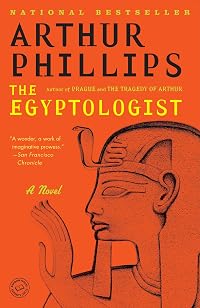
The Egyptologist
by Arthur Phillips 
On This Page
Description
Just as Howard Carter unveils the tomb of Tutankhamun, making the most dazzling find in the history of archaeology, Oxford-educated Egyptologist Ralph Trilipush is digging himself into trouble, having staked his professional reputation and his fianc©Øee's fortune on a scrap of hieroglyphic pornography. Meanwhile, a relentless Australian detective sets off on the case of his career, spanning the globe in search of a murderer. And another murderer. And possibly another murderer. The show more confluence of these seemingly separate stories results in an explosive ending, at once inevitable and utterly unpredictable. show lessTags
Recommendations
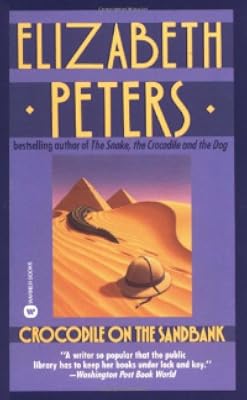
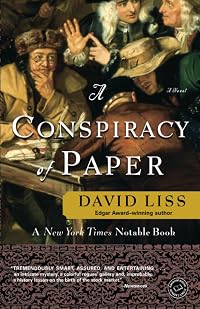

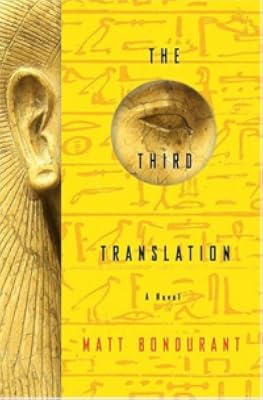
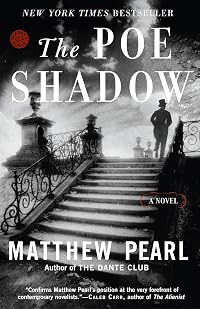
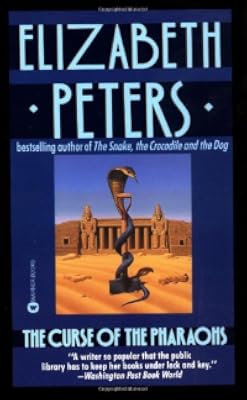
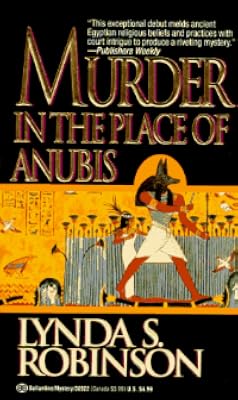
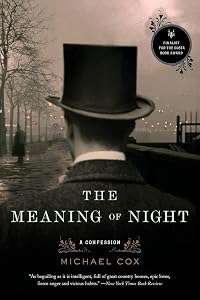
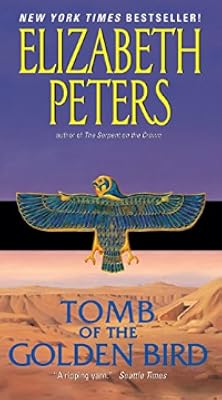
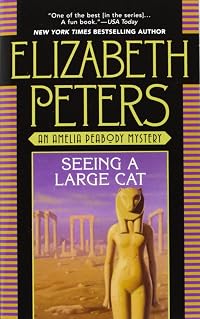
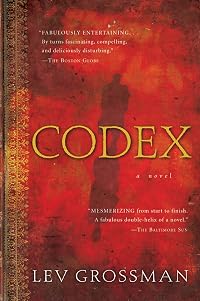
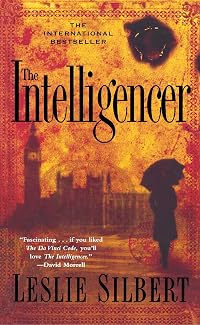
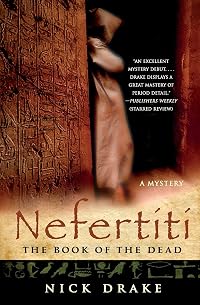
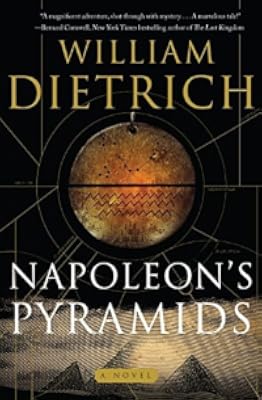
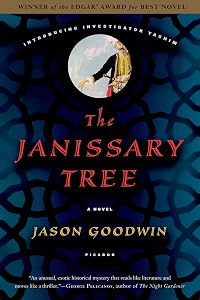

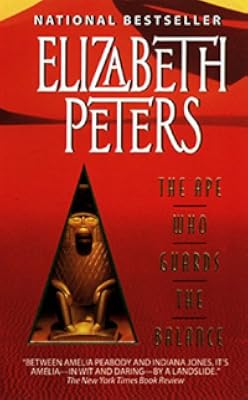
Member Recommendations
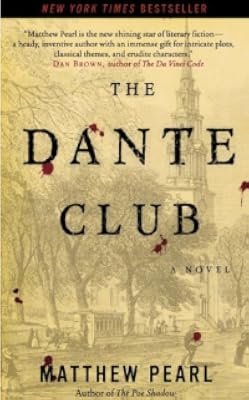
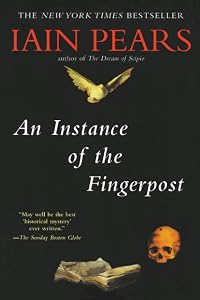
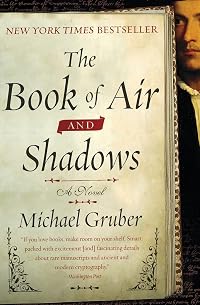
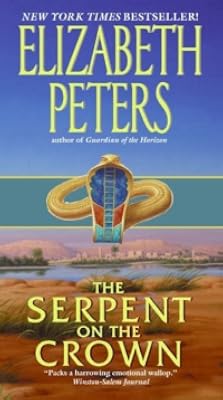
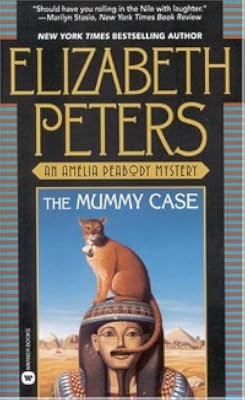
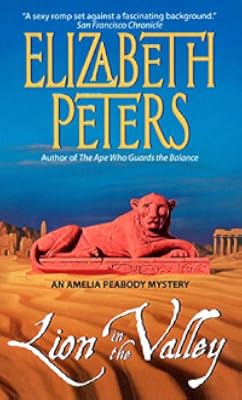
ehines This farcical accout of a dig might put you in the mood for a much more realistic one fset just a decade or so later. based on a real english barrow dig.
ehines Another epistolary novel with an unreliable narrator. Phillips' novel is out-and-out parody, while Dibdin is only, I suspect, being very subtly parodic of a certain set of literary expectations.
Member Reviews
The Egyptolist is a wonderfully constructed story. I think the last book I read that was written in letters and diaries was Dracula. You just don't see that very often because it's so hard to write action convincingly that way. But here it works. The Egyptologist is told primarily by two characters, Harold Ferrell, an Australian detective, and Ralph Trilipush, the Egyptologist, who each get to tell the story from their own perspective. It's like two stories in one. And neither of the narrators is very reliable.
The thing about this book is that you, the reader, have a job of work to do in reading this book. Because there are two first person perspective narratives going on here, you have a lot of filtering and evaluating to do. You have show more to keep asking yourself, what is really going on? You have to add these two stories together and try to come up with four, which at times is really hard. I noticed a lot of times when I thought I was started to get a handle on what was really going on and who was lying, about what, and why–and then someone would say or do something and it would completely throw me off track. Rest assured, though, all will be revealed at the end. Thank God for those last two dozen pages or so. I would have been pissed if the book ended without a complete resolution.
When I first started reading this, I thought I was going to be annoyed and/or disappointed with it. It was hard to get a handle on the characters and the plot, but I got completely sucked into this book. I was amazed at the talent that Phillips displayed in writing this book. Not only are the characters great and the plot well thought out and quick paced, but it was skillfully written. I can only imagine how hard it is to write a novel in letters, diaries and telegrams. In addition, it's one of the most intellectually interesting and stimulating book I've read since I graduated from college. :)
I think I'm going to have to go and find Phillips other book, Prague. If it's as good as this book I know I won't be disappointed. show less
The thing about this book is that you, the reader, have a job of work to do in reading this book. Because there are two first person perspective narratives going on here, you have a lot of filtering and evaluating to do. You have show more to keep asking yourself, what is really going on? You have to add these two stories together and try to come up with four, which at times is really hard. I noticed a lot of times when I thought I was started to get a handle on what was really going on and who was lying, about what, and why–and then someone would say or do something and it would completely throw me off track. Rest assured, though, all will be revealed at the end. Thank God for those last two dozen pages or so. I would have been pissed if the book ended without a complete resolution.
When I first started reading this, I thought I was going to be annoyed and/or disappointed with it. It was hard to get a handle on the characters and the plot, but I got completely sucked into this book. I was amazed at the talent that Phillips displayed in writing this book. Not only are the characters great and the plot well thought out and quick paced, but it was skillfully written. I can only imagine how hard it is to write a novel in letters, diaries and telegrams. In addition, it's one of the most intellectually interesting and stimulating book I've read since I graduated from college. :)
I think I'm going to have to go and find Phillips other book, Prague. If it's as good as this book I know I won't be disappointed. show less
One of the strangest pieces of fiction I've ever read, but enjoyable. This epistolary novel moves back and forth from 1922 Egypt and America and 1954 Sydney, Australia. It consists of entries in a journal of an archaeologist, Ralph Trilipush, on the track on the tomb of an obscure king, Atum hadu [Atum-is-Aroused] who has written erotic verse; letters and cables to and from his [Ralph's] betrothed; and correspondence from a retired detective, Ferrell, in an old folks' home in Sydney to a certain Mr. Macy, who wishes to fill in gaps in his family history, mostly relating to events surrounding a great-aunt. 1922 is the year Howard Carter astonished the world with the discovery of King Tut's tomb. Our archaeologist wishes to outshine show more Carter, with a greater discovery. There are 4 murders involved. The novel traces the feckless archaeologist and his bumbling as well as giving us Ferrell's memories. Early on, I figured out NONE of the narrators was reliable. What was true and what was false in their telling? There were certainly questions in Ralph's background and he revealed himself as a confidence trickster. How much of what we hear or read should we believe? How much do we delude ourselves? I took the book as a wicked satire on archaeologists and their funding. Note: I played around with the letters in our hero's name; it's an anagram for the author's name. show less
Summary: Ralph Trilipush, a British archaeologist, sets out in 1922 to search for the tomb of King Atum-hadu, whose very existence is doubted by most scholars, but who Ralph believes is the author of a scroll of erotic poetry that he translated several years previously. Ralph is not particularly honest, scrupulous, or trustworthy, and to complicate matters, there is an investigator poking around his background and stirring up doubts in the mind of his fiancée, Margaret, and her father, Ralph's financial backer. The entire book is in an epistolary format; a combination of Ralph's journals and notes for his book about the discovery of Atum-hadu's tomb, letters from the investigator to Margaret's nephew thirty years after the fact, and show more miscellaneous correspondence between other characters.
Review: This book is not quite like anything I've ever read before. It's a unique experience to read a book where the story is never - never - told straight-out, and the only way to get at the truth of the events is to look at the distorted reflections of it filtered through various unreliable narrators, each with their own unique biases. The reader has to guess what really happened through detective work of their own, but unlike most mystery novels, those guesses are never really confirmed one way or another. The skill of writing involved to pull this off is incredible; each of the narrators has a clear voice, and a particularly unique way of lying, of bending the truth, so that as the book progresses and we become more familiar with them, we can see the underlying reality more and more clearly. There's also a wonderful black humor running underneath everything, as we watch the narrators descend further and further into ambition, jealousy, and above all else, self-deception as they variously seek immortality.
Recommendation: Requires a fair bit of attention from the reader, so it's not an easy-going, kicked-back kind of book, but the unique and masterfully crafted characters, story, and tone make it well worth the effort. show less
Review: This book is not quite like anything I've ever read before. It's a unique experience to read a book where the story is never - never - told straight-out, and the only way to get at the truth of the events is to look at the distorted reflections of it filtered through various unreliable narrators, each with their own unique biases. The reader has to guess what really happened through detective work of their own, but unlike most mystery novels, those guesses are never really confirmed one way or another. The skill of writing involved to pull this off is incredible; each of the narrators has a clear voice, and a particularly unique way of lying, of bending the truth, so that as the book progresses and we become more familiar with them, we can see the underlying reality more and more clearly. There's also a wonderful black humor running underneath everything, as we watch the narrators descend further and further into ambition, jealousy, and above all else, self-deception as they variously seek immortality.
Recommendation: Requires a fair bit of attention from the reader, so it's not an easy-going, kicked-back kind of book, but the unique and masterfully crafted characters, story, and tone make it well worth the effort. show less
I listened to this on audio a couple of years ago and absolutely loved it, and I've been meaning to read it in hard copy but just hadn't gotten around to it. So, in April 2008, when I had a chance to buy it in book form (trade paperback) at the L.A. Times Festival of Books and have the author sign it, I jumped at the chance. Mr. Phillips is a delightful man, very polite and soft-spoken, with the most beautiful azure blue eyes I've ever seen. I told him how much I enjoyed The Egyptologist, and he admitted with a shy smile that it is probably his secret favorite too. :) Anyway, The Egyptologist is a darkly funny novel mostly told by utterly unreliable narrators about the way the truth can be twisted to make reality unrecognizable. All of show more the characters ~ from the brilliant and ambitious but ultimately pathetic Ralph Trilipush & the wily but slimy detective to Egypt of the early 1900s ~ are well-drawn and spot-on. The Egyptologist reminded me of The Great Gatsby in some ways ~ the writing is fabulous, the narrators unreliable, their quests for immortality and their reinventions of themselves very reminiscent of Fitzgerald's masterpiece, yet it's also great adventure with undertones of horror a la H. Rider Haggard. show less
THIS is one of my favorite books of all time. With a sense of humor akin to Douglas Adams, this novel hosts some bizarre characters who speak the most ludicrous dialogue. The digs at academia and the role of authored history itself are fascinating, honest at times, and always funny. The labyrinthine plot snakes across continents with a mix of ancient Egypt, gum-shoe detective work and layers and layers of elaborate lies that would make Baron Muchanhausen blush and cry. The finale involving the 'discovery' of the tomb is dementedly funny and pathetic at once. My copy is autographed, from a session where I went to see Phillips and it was attended by.....four people. Yes, a major author event at the Broward County Main Library and only 4 show more people showed up. It was sad in way, but Phillips was very articulate and funny. We enjoyed immensely. show less
In addition to numerous conventional virtues, what makes this book extraordinary is its use of not one but two unreliable narrators. Each of them misapprehends events in a different way, and yet through their misguided narratives the author allows the reader to glimpse the truth.
It's almost as if we were looking through two panes of glass, each with an amorphous shape painted on it, and discerning a figure only in the area where the two overlap--imperceptible if you see just one of them (and also if you fail to look at the reflections in the shiny surfaces). A remarkable achievement.
It's almost as if we were looking through two panes of glass, each with an amorphous shape painted on it, and discerning a figure only in the area where the two overlap--imperceptible if you see just one of them (and also if you fail to look at the reflections in the shiny surfaces). A remarkable achievement.
In 1922 while Howard Carter is uncovering King Tut’s tomb, Ralph Trilipush, also an Egyptologist, is obsessed with finding the tomb of Atum-hadu, supposed Egyptian king and erotic poet. Trilipush is engaged to marry Margaret Finneran, a Boston socialite, whose father is bank rolling the expedition. Australian detective, Harold Ferrell, sticks his nose into their business while investigating the death of Paul Caldwell, an Australian soldier stationed in Egypt at the same time as Trilipush. He finds inconsistencies in Trilipush’s background and starts to believe he killed Caldwell.
The story is told through journal entries, letters and cables. Most of the narrative comes from Trilipush’s journal from 1922. The other half of the show more narrative comes from Ferrell’s letters to Margaret’s nephew written in 1955. Both narrators are unreliable. Trilipush’s narrative can not be relied upon because he is so focused and sure of Atum-hadu’s existence that he can’t accept when the expedition starts to fall apart. Ferrell’s letters are also unreliable because he is writing from a rest home and piecing the story together from thirty-three year old notes and his own memories.
The theme of the story is immortality. Egyptian kings thought they would achieve immortality through the Egyptian burial rituals; being buried in tombs with objects that would help them in the afterlife and mummification. Trilipush believes his immortality lies in finding Atum-hadu’s tomb. As Ferrell writes to Macy, he talks about how they can team up to publish Ferrell’s cases as a series of detective stories.
There are no heroes in this novel. All of the characters are flawed; Margaret is a drug addict and her father hopes Trilipush’s find will pay off his underworld debts. Ferrell falls for Margaret and tries to sabotage her engagement to Trilipush.
Some of Trilipush’s journal entries are tedious. I found myself looking ahead to see when Margaret or Ferrell would add one of their letters to the narrative. Near the end though, Trilipush’s entries became so interesting I couldn’t put the book down. I highly recommend this novel to anyone interested in the psychology of obsession. show less
The story is told through journal entries, letters and cables. Most of the narrative comes from Trilipush’s journal from 1922. The other half of the show more narrative comes from Ferrell’s letters to Margaret’s nephew written in 1955. Both narrators are unreliable. Trilipush’s narrative can not be relied upon because he is so focused and sure of Atum-hadu’s existence that he can’t accept when the expedition starts to fall apart. Ferrell’s letters are also unreliable because he is writing from a rest home and piecing the story together from thirty-three year old notes and his own memories.
The theme of the story is immortality. Egyptian kings thought they would achieve immortality through the Egyptian burial rituals; being buried in tombs with objects that would help them in the afterlife and mummification. Trilipush believes his immortality lies in finding Atum-hadu’s tomb. As Ferrell writes to Macy, he talks about how they can team up to publish Ferrell’s cases as a series of detective stories.
There are no heroes in this novel. All of the characters are flawed; Margaret is a drug addict and her father hopes Trilipush’s find will pay off his underworld debts. Ferrell falls for Margaret and tries to sabotage her engagement to Trilipush.
Some of Trilipush’s journal entries are tedious. I found myself looking ahead to see when Margaret or Ferrell would add one of their letters to the narrative. Near the end though, Trilipush’s entries became so interesting I couldn’t put the book down. I highly recommend this novel to anyone interested in the psychology of obsession. show less
Members
- Recently Added By
Published Reviews
ThingScore 50
The cast of Arthur Phillips's comic novel "The Egyptologist" could have come from one of those deliciously campy old Hollywood mummy movies.
added by jlelliott
Lists

Epistolary Books
105 works; 27 members

Favorite Epistolary Fiction
143 works; 144 members
Author Information

6+ Works 5,244 Members
Arthur Phillips was born in Minneapolis and educated at Harvard. He has been a child actor, a jazz musician, a speechwriter, a failed entrepreneur and a five-time Jeopardy champion. He lived in Budapest from 1990 to 1992 and now lives in Paris with his wife and son. (Publisher Fact Sheets)
Arthur Phillips is a LibraryThing Author, an author who lists their personal library on LibraryThing.
Some Editions
Awards and Honors
Series
Belongs to Publisher Series
Common Knowledge
- Canonical title
- The Egyptologist
- Original title
- The Egyptologist
- Original publication date
- 2004
- People/Characters
- Ralph Trilipush; Margaret Finneran; Harry Ferrell; Howard Carter; Paul Caldwell; Hugo Marlowe (show all 8); Beverly Quint; Chester Finneran
- Important places
- Australia; Boston, Massachusetts, USA; Egypt; Massachusetts, USA; New South Wales, Australia; Sydney, New South Wales, Australia
- Dedication
- FOR JAN, OF COURSE
- First words
- 31 Dec. Sunset. Outside the tomb of Atum-hadu. On the Victrola 50: "I'm Sitting on the Back Porch Swing (Wont You Come Sit by Me, Dear?)."
- Quotations
- If, Margaret, you are reading this letter, sobbing, horrified at your double loss but girding yourself and your pen for the vital tasks ahead of you, then I do not hesitate to accuse from here, before the commission of the dr... (show all)eadful crime itself, the maniacal Howard Carter, whose name you may perhaps have heard in recent weeks, the half-mad, congenitally lucky bumbler who tripped over a stair and fell into the suspiciously well-preserved tomb of some minor XVIIIth-Dynasty boy-kinglet named Trite-and-Common and who, in crippling jealousy, has several times threatened my person in the past months, both whilst sober and whilst intoxicated on a variety of local narcotic inhalants.
"Boy, how can you think it wise to truck with this culture of death?" Even at ten I knew the correct answer to that cataclysmic catechism: "Right you are, Father. Much better to stick with the life-embracing imagery of a cu... (show all)lt that worships a bleeding corpse nailed to bits of wood." - Last words
- (Click to show. Warning: May contain spoilers.)His mysteries and riddles remain unsolved for millennia stacked upon millennia until another should find him, and win, for discoverer and king alike, the eternal love due an immortal name, Atum-hadu and Trilipush, Trilipush and Atum-hadu, Trilipush, Trilipush, Trilipush.
- Blurbers
- Shteyngart, Gary; Saunders, George; King, Stephen; Pearl, Matthew
- Original language*
- Amerikanisch
*Some information comes from Common Knowledge in other languages. Click "Edit" for more information.
Classifications
Statistics
- Members
- 1,859
- Popularity
- 11,696
- Reviews
- 82
- Rating
- (3.32)
- Languages
- 16 — Catalan, Danish, Dutch, English, Estonian, French, German, Hungarian, Italian, Lithuanian, Polish, Portuguese, Russian, Spanish, Swedish, Turkish
- Media
- Paper, Audiobook, Ebook
- ISBNs
- 41
- UPCs
- 1
- ASINs
- 10