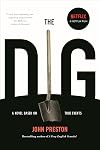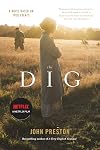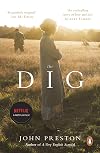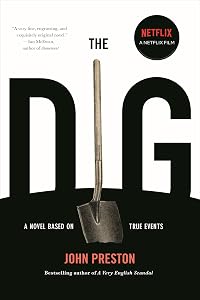
The Dig
by John Preston
On This Page
Description
THE BASIS FOR THE NETFLIX FILM STARRING CAREY MULLIGAN, RALPH FIENNES, AND LILY JAMESA literary adventure that tells the story of a priceless buried treasure discovered in England on the eve of World War II
In the long, hot summer of 1939, Britain is preparing for war, but on a riverside farm in Suffolk there is excitement of another kind. Mrs. Pretty, the widowed owner of the farm, has had her hunch confirmed that the mounds on her land hold buried treasure. As the dig proceeds, it show more becomes clear that this is no ordinary find.
This fictional recreation of the famed Sutton Hoo dig follows three months of intense activity when locals fought outsiders, professionals thwarted amateurs, and love and rivalry flourished in equal measure. As the war looms ever closer, engraved gold peeks through the soil, and each character searches for answers in the buried treasure. Their threads of love, loss, and aspiration weave a common awareness of the past as something that can never truly be left behind. show less
Tags
Recommendations

















Member Recommendations
Gateaupain A little love found while a "Judgement" wall painting is being restored in a country church.
Member Reviews
Plodding but thoughtful fictionalised account of the Sutton Hoo Anglo Saxon burial site, first excavated in 1939. The narrative is shared between Mrs Edith Pretty, the landowner whose health is failing, local archaeologist Basil Brown, and female archaeologist Peggy Piggot who is drafted in with her husband Stuart to aid with 'the dig'. I watched the Netflix film adaptation first and I was dismayed to discover that the portrayal of Peggy by Lily James - never a good sign! - as a young archaeology 'amateur' who is rebuffed by her husband and finds love with Edith Pretty's nephew, the site photographer - played by Johnny Flynn, equally poor casting - is both inaccurate and insulting. I understand that the book doesn't really have a lot of show more action beyond discoveries made at the excavation, but why waste the only female archaeologist on a romantic subplot?
Adaptation aside, I really enjoyed spending time with the characters in the book - all based on real people. Edith is a widower who welcomes the dig as a distraction from worries about the future and the welfare of her young son. She is distant but caring with her staff and wonderfully imperious with officials interfering on her property, yet forms an intellectual bond with gruff archaeologist Basil Brown. He and lead archaeologist Charles Phillips provide helpful exposition on the history of the site and the treasures unearthed. Not sure why John Preston suggests that Phillips was obese and a threat to the fragile excavation, however! Peggy is happy to cut short her dismal honeymoon to join the dig and finds the first artefact. She is initially dismissed by Phillips but they later form a working alliance over the artefacts from the burial chamber.
I also liked the fragile nostalgia of the pre war years in which the book is set, and was shocked by how Sutton Hoo was treated during WW2! According to the epilogue, the burial site was used for training and target practice, which beggars belief.
A pleasant introduction to a historical discovery which I must admit to knowing little about. show less
Adaptation aside, I really enjoyed spending time with the characters in the book - all based on real people. Edith is a widower who welcomes the dig as a distraction from worries about the future and the welfare of her young son. She is distant but caring with her staff and wonderfully imperious with officials interfering on her property, yet forms an intellectual bond with gruff archaeologist Basil Brown. He and lead archaeologist Charles Phillips provide helpful exposition on the history of the site and the treasures unearthed. Not sure why John Preston suggests that Phillips was obese and a threat to the fragile excavation, however! Peggy is happy to cut short her dismal honeymoon to join the dig and finds the first artefact. She is initially dismissed by Phillips but they later form a working alliance over the artefacts from the burial chamber.
I also liked the fragile nostalgia of the pre war years in which the book is set, and was shocked by how Sutton Hoo was treated during WW2! According to the epilogue, the burial site was used for training and target practice, which beggars belief.
A pleasant introduction to a historical discovery which I must admit to knowing little about. show less
"The Dig" depicts the events of the excavation of Sutton Hoo in Suffolk: The tentative, hopeful beginnings, the spectacular finds, and the fight over the treasure and where it should go. However, while it includes the important persons associated with the archeological dig, it is not a faithful account, but a novel, and it is foremost about the characters. The story is narrated by alternating voices, who narrate long parts of it before the narrator changes. Like this, it is possible to experience the events from various perspectives, each with different focus.
It is also a rather quiet and slow novel, and the atmosphere is very serious. There is always the impression of impending doom: On a large scale, because it is 1939 and war is show more coming, which is never dwelt on too much, but which is visible in small details and observations. Mirroring that is the small scale of the personal relations of the characters, the way some of them treat each other, their personal disappointments and failures.
All this made for a fascinating read, although I must admit that in the end, I felt that I had wanted more - a deeper insight, more of a real conclusion, or even more of an open conflict. Because of this, it left me a little unsatisfied, although that may just be what it intended. show less
It is also a rather quiet and slow novel, and the atmosphere is very serious. There is always the impression of impending doom: On a large scale, because it is 1939 and war is show more coming, which is never dwelt on too much, but which is visible in small details and observations. Mirroring that is the small scale of the personal relations of the characters, the way some of them treat each other, their personal disappointments and failures.
All this made for a fascinating read, although I must admit that in the end, I felt that I had wanted more - a deeper insight, more of a real conclusion, or even more of an open conflict. Because of this, it left me a little unsatisfied, although that may just be what it intended. show less
The Dig operates on two layers, the surface story about the discovery of Sutton Hoo, and a subtle layer of deep time peeking through the surface. I am a lover of Medieval history and found the book to be engaging - even though little is said about 7th England, it still feels present like the dead in a graveyard. Small details such as when the silver bowl is uncovered and the sun glints from its edge - Preston doesn't say "for the first time 1500 years", but it suggests the same sun at the same place years ago, time collapsed into the present. The literary allusions are subtle but if you look for them, like carefully sweeping away the surface layer for treasure, the book rewards. This sense of shifting history is all the more pronounced show more as the dig took place in 1939 at the start of WWII, we are stepping back in time twice. Although not entirely accurate, Preston takes some leeway with inconsequential details, this is a wonderfully well done retelling of the real people and events surrounding one of the greatest archaeological finds of all time. show less
On the surface, this is a historical novel about the 1939 Sutton Hoo Dig, an Anglo-Saxon archeological discovery so famous that it was often referred to as the British Tutankhamen. As far as based-on-real-life dramas go, the rough outlines of this story are not particularly gripping. The author had to figure out a way to make the story fascinating. He did it by emphasizing character and understated psychological depth. The result is stunning.
The book gives us a tale of decent rural folk on a collision course with scholarly archeological and legal experts from the British Museum. Tension is added to the whole through the pressure of imminent war with Germany. As Preston conceived it, the tale emerges as one of subdued rivalry and show more political career wrangling played out on a stage of personality differences. And yes, there is love…in many of its delicate and myriad guises.
What sets this novel apart and helps lift it to the level of original and exquisite literature is the standout authenticity of its main characters. They are so real, I felt as if I were there with them (inside the narrator’s shoes, so to speak). Reading the book felt like being transported across time and space.
The story is told primarily in chronological order, from April to September of 1939. There is also an epilogue dated 1965. The novel is told through three first-person narratives. The first character is Edith Pretty, the woman who owned the land. The second is Basil Brown, the self-taught “soil man” and archeologist who started the excavation on Pretty’s land at her request. However, it is the third character who rises above the rest to steal center stage. That third character is Peggy Piggott, the wife of one of the archeological experts called in to help supervise the dig after it was determined that the excavation contained historical artifacts of significant national interest. Peggy Piggott also happens to be the deceased aunt of the author.
Because the author had access to insider information about his aunt, he was able to weave a unique and dramatically significant story about her and her role in this archeological endeavor. Somehow, he knew (or imagined he knew) Peggy Piggott’s personal story. As a result, the story he tells through her first person narrative emerges as the emotional centerpiece of the novel. It is one so delicate and subtle—so incredibly understated—it took my breath away.
This novel excels through understatement. Done right, understatement can be stunning. As a literary device, understatement has enormous power. Think of the power of a whisper over a shout. If you want to convey something emotionally shattering, say it with understatement…whisper it.
Unfortunately, this literary device is often missing in our modern Western culture. Most of today’s fiction—especially popular thrillers and romances—are exercises in overstatement. It has become the norm. As a result, I fear many contemporary readers might not find much here—in this lovely novel of exquisite emotional depth—to hold their attention. What a shame and loss! Subtlety seems to be no longer highly valued or practiced. As a related sidebar: when was the last time you heard a politician whisper?
Personally, I adored this novel and will happily tuck it away on my bookshelf along with other elegant literary gems. It easily wins my five-star rating.
(One last note: it’s best if you know little about the dig before you begin. But sometime during the reading—perhaps two-thirds of the way through—it would be a good idea to search on the Internet for photographs. That will enhance the realism and heighten your interest and intellectual pleasure.) show less
The book gives us a tale of decent rural folk on a collision course with scholarly archeological and legal experts from the British Museum. Tension is added to the whole through the pressure of imminent war with Germany. As Preston conceived it, the tale emerges as one of subdued rivalry and show more political career wrangling played out on a stage of personality differences. And yes, there is love…in many of its delicate and myriad guises.
What sets this novel apart and helps lift it to the level of original and exquisite literature is the standout authenticity of its main characters. They are so real, I felt as if I were there with them (inside the narrator’s shoes, so to speak). Reading the book felt like being transported across time and space.
The story is told primarily in chronological order, from April to September of 1939. There is also an epilogue dated 1965. The novel is told through three first-person narratives. The first character is Edith Pretty, the woman who owned the land. The second is Basil Brown, the self-taught “soil man” and archeologist who started the excavation on Pretty’s land at her request. However, it is the third character who rises above the rest to steal center stage. That third character is Peggy Piggott, the wife of one of the archeological experts called in to help supervise the dig after it was determined that the excavation contained historical artifacts of significant national interest. Peggy Piggott also happens to be the deceased aunt of the author.
Because the author had access to insider information about his aunt, he was able to weave a unique and dramatically significant story about her and her role in this archeological endeavor. Somehow, he knew (or imagined he knew) Peggy Piggott’s personal story. As a result, the story he tells through her first person narrative emerges as the emotional centerpiece of the novel. It is one so delicate and subtle—so incredibly understated—it took my breath away.
This novel excels through understatement. Done right, understatement can be stunning. As a literary device, understatement has enormous power. Think of the power of a whisper over a shout. If you want to convey something emotionally shattering, say it with understatement…whisper it.
Unfortunately, this literary device is often missing in our modern Western culture. Most of today’s fiction—especially popular thrillers and romances—are exercises in overstatement. It has become the norm. As a result, I fear many contemporary readers might not find much here—in this lovely novel of exquisite emotional depth—to hold their attention. What a shame and loss! Subtlety seems to be no longer highly valued or practiced. As a related sidebar: when was the last time you heard a politician whisper?
Personally, I adored this novel and will happily tuck it away on my bookshelf along with other elegant literary gems. It easily wins my five-star rating.
(One last note: it’s best if you know little about the dig before you begin. But sometime during the reading—perhaps two-thirds of the way through—it would be a good idea to search on the Internet for photographs. That will enhance the realism and heighten your interest and intellectual pleasure.) show less
I listened to the audio version of The Dig which was narrated by a team of readers portraying different characters from the book. There was a lot to appreciate in this somewhat fictionalized story of a famous archeological find in England – a well rounded plot, colorful characters, lively descriptions, historically appropriate language. At times, though, I drifted out of the story when the author dulled my interest with too many details. Still, this is a fascinating story, even more fascinating to me because I had seen some of the Sutton Hoo artifacts in the British Museum and could now visualize them immersed in the dirt before they were pulled from the ground.
A short novel exploring the relationships between those involved in the excavation of the Sutton Hoo ship burial in the summer immediately before the Second World War. It captures the sense of magic that exciting finds can occasion without sensationalising or trivialising the labour.
I was predisposed to like this novel because of its archaeological theme and its Suffolk locale. IT so enthralled me, however, that I know that I would have been delighted by this writing without those hooks. Part of the appeal arose from the use of three narrators who speak with distinctively different voices and use individual emotional pallettes. Each narrator commands a single section of the novel: landowner Edith Pretty initiates the excavation, show more self-taught archaeologist Basil Brown finds the ship, and professional archaeologist Peggy Piggott finds the gold after the British Museum ousts Brown. This is all history but there are some changes to strengthen the narrative; as an archaeologist immersed in this history, I expected to be irked by such changes but none of them jarred me.
A truly satisfying book. show less
I was predisposed to like this novel because of its archaeological theme and its Suffolk locale. IT so enthralled me, however, that I know that I would have been delighted by this writing without those hooks. Part of the appeal arose from the use of three narrators who speak with distinctively different voices and use individual emotional pallettes. Each narrator commands a single section of the novel: landowner Edith Pretty initiates the excavation, show more self-taught archaeologist Basil Brown finds the ship, and professional archaeologist Peggy Piggott finds the gold after the British Museum ousts Brown. This is all history but there are some changes to strengthen the narrative; as an archaeologist immersed in this history, I expected to be irked by such changes but none of them jarred me.
A truly satisfying book. show less
This is a fictionalized account of the excavation of the Sutton Hoo ship burial in southern England on the outbreak of World War II. It's told from the perspective of 3 characters: the landowner, Edith Pretty; Basil Brown, the first, amateur archaeologist to begin the dig; and Peggy Piggott, a young woman who's just been married to an archaeologist who is called in to help once the professionals take over. Peggy's perspective chapter was absolutely wonderful, but the rest didn't fit together well for me. Her reflections on the finding of the beautiful artifacts, war, nature, and the human dimension are sublime, as well as her understated one-day platonic relationship with another hanger-on of the dig. These are rendered beautifully and show more I got a great sense of Peggy as a person (also, the only character to whom the author has a personal relationship). The other characters were very dull, to me, and their chapters really only served to set up the context of the dig. The middle section was delightful, but I found some of the rest of this novel slow going. show less
Members
- Recently Added By
Lists

BBC Radio 4 Bookclub
340 works; 13 members

Books Read in 2019
4,052 works; 108 members
Author Information
8 Works 1,023 Members
John Preston is a former arts editor of the Sunday Telegraph and Evening Standard. He is the author of four highly acclaimed novels, including The Dig (Other Press, 2016). Ghosting, Ink, and Kings of the Roundhouse, and a travel book. Touching the Moon. He lives in London.
Awards and Honors
Distinctions
Work Relationships
Has the adaptation
Common Knowledge
- Original publication date
- 2007
- Important places
- Sutton Hoo; Ipswich, Suffolk, England, UK; Suffolk, England, UK
- Important events
- World War II; Excavation of Sutton Hoo
- Related movies
- The Dig (2021 | IMDb)
- Dedication
- To Susanna and Joseph
- First words
- That evening I came back and worked on alone.
- Last words
- (Click to show. Warning: May contain spoilers.)It sits on my desk now as I write this.
- Blurbers
- McEwan, Ian; Harris, Robert; Lawson, Nigella
- Original language*
- English
*Some information comes from Common Knowledge in other languages. Click "Edit" for more information.
Classifications
Statistics
- Members
- 493
- Popularity
- 61,378
- Reviews
- 34
- Rating
- (3.69)
- Languages
- Dutch, English, Polish, Spanish
- Media
- Paper, Audiobook, Ebook
- ISBNs
- 22
- ASINs
- 7