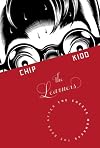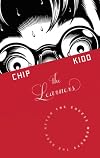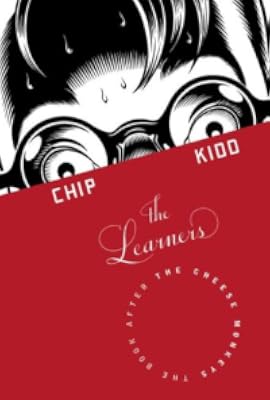
The Learners
by Chip Kidd
On This Page
Description
A young graphic designer fresh out of college in the summer of 1961, Happy has just landed his first job at a wacky advertising firm filled with eccentric creative artists. Everything is going great until Happy is assigned to design a newspaper ad recruiting participants for an experiment in the Yale Psychology Department. Happy can't resist responding to the ad himself. Little does he know that the experience will devastate him, forcing a reexamination of his past, his soul, and the nature show more of human cruelty-chiefly his own. Written in sharp, witty prose and peppered with absorbing ruminations on graphic design, this stand-alone sequel to Chip Kidd's previous novel, The Cheese Monkeys, again shows that Kidd's writing is every bit as original, stunning, and memorable as his celebrated book jackets. show lessTags
Recommendations







Member Reviews
(Reprinted from the Chicago Center for Literature and Photography [cclapcenter.com]. I am the original author of this essay, as well as the owner of CCLaP; it is not being reprinted here illegally.)
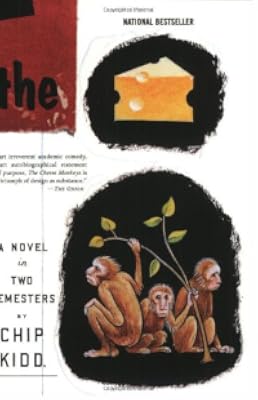
Any graphic designer worth their salt will already know who Chip Kidd is; he's the one who single-handedly transformed the subject of book design as we know it, the very first designer to regularly demand that his name appear on a book's dust jacket or copyright page. And in fact, back in 2001 Kidd caught the writing bug himself, and ended up putting out a small yet well-regarded novel entitled The Cheese Monkeys, set in the Modernist '60s and dealing with the noble frustrations of graphic design, specifically in a college setting during the show more years when the subject of design was first starting to be taken seriously by the academic community. I read and enjoyed The Cheese Monkeys myself, in fact, years before opening CCLaP which is why I've never done a write-up of it; so needless to say, I was happy to see that Kidd had actually written a sequel this year, entitled The Learners and putting our previous student hero now in New York and working his first corporate job.
So ask me how shocked and disappointed I was, then, to actually read The Learners last month and discover that something with Kidd and his writing has gone horribly, horribly wrong in the seven years since Cheese Monkeys; this novel is flat where the original was bubbly, fussy and pretentious where the original was charming and illuminating. And for the life of me, I can't figure out what the problem is either; maybe it's that the setting has moved from a college environment to a corporate one? Because, see, I have this clear recollection of Cheese Monkeys' obsessive fastidiousness about All Things Design to be a delightful treat, a warm love letter from Kidd to this industry he so obviously adores, full of the exact kinds of incisive yet obscure topics of the world that only designers seem to think about on a regular basis; but in The Learners, this fastidiousness just comes off as dysfunctionally nerdy, elitist horsesh-t, the exact kind of stuff you might hear some shaved-head black-glasses NPR Weenie spouting about in the corner of a cocktail party, that makes you just want to walk over and punch him as hard as you possibly can in the middle of his smug little Helvetica-worshipping face. (And yes, I mean both the typeface and the 2007 Gary Hustwit documentary, you f-cking nerd, and man, you really are looking for a punch in the face today, aren't you?) It was a real disappointment, even more of a frustrating experience by not being able to tell where exactly it all starts going wrong; unless you're a graphic designer at a corporate agency yourself, I recommend skipping the book altogether.
Out of 10: 4.4 show less
Any graphic designer worth their salt will already know who Chip Kidd is; he's the one who single-handedly transformed the subject of book design as we know it, the very first designer to regularly demand that his name appear on a book's dust jacket or copyright page. And in fact, back in 2001 Kidd caught the writing bug himself, and ended up putting out a small yet well-regarded novel entitled The Cheese Monkeys, set in the Modernist '60s and dealing with the noble frustrations of graphic design, specifically in a college setting during the show more years when the subject of design was first starting to be taken seriously by the academic community. I read and enjoyed The Cheese Monkeys myself, in fact, years before opening CCLaP which is why I've never done a write-up of it; so needless to say, I was happy to see that Kidd had actually written a sequel this year, entitled The Learners and putting our previous student hero now in New York and working his first corporate job.
So ask me how shocked and disappointed I was, then, to actually read The Learners last month and discover that something with Kidd and his writing has gone horribly, horribly wrong in the seven years since Cheese Monkeys; this novel is flat where the original was bubbly, fussy and pretentious where the original was charming and illuminating. And for the life of me, I can't figure out what the problem is either; maybe it's that the setting has moved from a college environment to a corporate one? Because, see, I have this clear recollection of Cheese Monkeys' obsessive fastidiousness about All Things Design to be a delightful treat, a warm love letter from Kidd to this industry he so obviously adores, full of the exact kinds of incisive yet obscure topics of the world that only designers seem to think about on a regular basis; but in The Learners, this fastidiousness just comes off as dysfunctionally nerdy, elitist horsesh-t, the exact kind of stuff you might hear some shaved-head black-glasses NPR Weenie spouting about in the corner of a cocktail party, that makes you just want to walk over and punch him as hard as you possibly can in the middle of his smug little Helvetica-worshipping face. (And yes, I mean both the typeface and the 2007 Gary Hustwit documentary, you f-cking nerd, and man, you really are looking for a punch in the face today, aren't you?) It was a real disappointment, even more of a frustrating experience by not being able to tell where exactly it all starts going wrong; unless you're a graphic designer at a corporate agency yourself, I recommend skipping the book altogether.
Out of 10: 4.4 show less
the follow-up to The Cheese Monkeys, The Learners explores Happy’s entrance into the professional world of graphic design/advertising and his sudden confrontation with the “real” world outside of academia.
it’s an odd book and one that i found confounding. the wit and snark is just under my bar for such things as i mostly find it sophomoric in its desire to one-up everything and everyone nearby. but Kidd doesn’t quite descend into the murky depths like a Sedaris where the wit actually becomes a prison shank delivered in a mean-spirited thrust. Kidd keeps his light-hearted and, well, witty.
the story seemed shallow to me at first, merely showing off the interior world of the crazily creative humans who work in the advertising show more field where they pit their ability to manipulate you into becoming interested in their client’s product against your ability to actually just live life and trust people. still, i liked the prose if not the message and, if i’m being totally honest, the edition of the book i have was very, very nice to hold and read. a physical demonstration of how design can be used effectively. it served as tangible support to the ephemeral content of the book. well done, Chip Kidd, in creating a kind of Zen koan of a reading experience.
however, a sudden curve in the road of the story occurs a fair way into the book and then things get interesting. the main character finds himself confronting some deep issues about death, living, friendship, and, yes, even killing. a surprisingly literarily profound turn for this book especially in light of the first book’s arc and overall message.
the interruptions in the flow by Content itself i found… interesting. i’m not quite sure what Kidd was getting at by doing that except to remind us that we readers might be participating in our own version of the psychology experiment that Happy participates in by reading this book. or perhaps Kidd just wanted us to think that he was being deep beyond most people’s ken thus recapitulating the theme of “our reality is made up of carefully and otherwise constructed façades.”
The Learners ends up being a somewhat dark parable about discovering who we really are and how we handle this. Also, that the world is much bigger than we often imagine and beyond our control no matter how much control we exert. show less
it’s an odd book and one that i found confounding. the wit and snark is just under my bar for such things as i mostly find it sophomoric in its desire to one-up everything and everyone nearby. but Kidd doesn’t quite descend into the murky depths like a Sedaris where the wit actually becomes a prison shank delivered in a mean-spirited thrust. Kidd keeps his light-hearted and, well, witty.
the story seemed shallow to me at first, merely showing off the interior world of the crazily creative humans who work in the advertising show more field where they pit their ability to manipulate you into becoming interested in their client’s product against your ability to actually just live life and trust people. still, i liked the prose if not the message and, if i’m being totally honest, the edition of the book i have was very, very nice to hold and read. a physical demonstration of how design can be used effectively. it served as tangible support to the ephemeral content of the book. well done, Chip Kidd, in creating a kind of Zen koan of a reading experience.
however, a sudden curve in the road of the story occurs a fair way into the book and then things get interesting. the main character finds himself confronting some deep issues about death, living, friendship, and, yes, even killing. a surprisingly literarily profound turn for this book especially in light of the first book’s arc and overall message.
the interruptions in the flow by Content itself i found… interesting. i’m not quite sure what Kidd was getting at by doing that except to remind us that we readers might be participating in our own version of the psychology experiment that Happy participates in by reading this book. or perhaps Kidd just wanted us to think that he was being deep beyond most people’s ken thus recapitulating the theme of “our reality is made up of carefully and otherwise constructed façades.”
The Learners ends up being a somewhat dark parable about discovering who we really are and how we handle this. Also, that the world is much bigger than we often imagine and beyond our control no matter how much control we exert. show less
I was enticed to read this by a granddaughter's summer reading list from her school, which in the category Visual Arts • Fiction, listed [Cheese Monkeys: A Novel in Two Semesters] by Chip Kidd. It happened that I'd acquired a book titled [The Learners] by the same Chip Kidd at a library sale a couple of years ago. The author's name—unknown to me at the time—prompted me to pull the book. A look at the front and back (there was no jacket) made me think, "Oh, this could be fun!" and drop it in my tote. Seeing Kidd's name on the reading list reminded me that I had a book by him languishing in the stacks. I retrieved it and googled Kidd.
Yumpin' yiminy, Kidd's not only a native of Shillington, PA, the birth home of John Updike, but is show more primarily a graphic designer, creating countless book and jacket designs (several Updike books included). No wonder the cover of [The Learners] got my attention.
This digressive intro led me into a tale of a fledgling graphic designer, nicknamed Happy, fresh out of college, who seeks employment at a small ad agency in New Haven (think Yale) exactly because it was the agency that first employed the design professor who most influenced him. He's actually hired and begins learning real-life graphic design know-how (some of which he records in his story). One ad he lays out—all type, destined for the local newspaper—solicits participants in a study of "memory and learning".
As the story progresses, Happy reconnects with a college friend, someone he lost touch with when she dropped out of school. He's shocked to learn that she died within days of their reconnection, an apparent suicide. When he gets a cryptic letter from her, he's disbelieving, puzzled, and suspicious. He has reason to believe she participated in the "study" and that the experience led to her death. As he works through this, we get to know more about the ad agency, the creative and not-so-creative types who do the work, and most importantly about that "study". If you didn't already know, you'll learn from the author's note at the end that "all details regarding Professor Stanley Milgram's 1961 'obedience' experiments are historically accurate (including all of the language in the recruitment ad)."
Though I started the read as a kind of lark, I think it paid off. Not perfect in every regard, [The Learners] both entertained and informed me. I give it a thumb up. show less
Yumpin' yiminy, Kidd's not only a native of Shillington, PA, the birth home of John Updike, but is show more primarily a graphic designer, creating countless book and jacket designs (several Updike books included). No wonder the cover of [The Learners] got my attention.
This digressive intro led me into a tale of a fledgling graphic designer, nicknamed Happy, fresh out of college, who seeks employment at a small ad agency in New Haven (think Yale) exactly because it was the agency that first employed the design professor who most influenced him. He's actually hired and begins learning real-life graphic design know-how (some of which he records in his story). One ad he lays out—all type, destined for the local newspaper—solicits participants in a study of "memory and learning".
As the story progresses, Happy reconnects with a college friend, someone he lost touch with when she dropped out of school. He's shocked to learn that she died within days of their reconnection, an apparent suicide. When he gets a cryptic letter from her, he's disbelieving, puzzled, and suspicious. He has reason to believe she participated in the "study" and that the experience led to her death. As he works through this, we get to know more about the ad agency, the creative and not-so-creative types who do the work, and most importantly about that "study". If you didn't already know, you'll learn from the author's note at the end that "all details regarding Professor Stanley Milgram's 1961 'obedience' experiments are historically accurate (including all of the language in the recruitment ad)."
Though I started the read as a kind of lark, I think it paid off. Not perfect in every regard, [The Learners] both entertained and informed me. I give it a thumb up. show less
http://www.iwilldare.com/2008/03/15/the-learners-an-unworthy-sequel/
As much as it pains me to say it, I was really disappointed in Chip Kidd’s The Learners, a follow-up to his phenomenal book Cheese Monkeys.
The Learners picks up with Happy, the main character from Cheese Monkeys all graduated from State and trying to get a job at Spear, Rakoff & Ware in New Haven, Connecticut the same ad agency where Happy’s professor and idol Winter Sorbeck got his start. However, the Happy in this new novel doesn’t feel like the same character from the earlier novel. In fact, none of the characters feel real. They’re all drawn with broad strokes, known for a few quirks but never given any real depth.
As much as it pains me to say it, I was really disappointed in Chip Kidd’s The Learners, a follow-up to his phenomenal book Cheese Monkeys.
The Learners picks up with Happy, the main character from Cheese Monkeys all graduated from State and trying to get a job at Spear, Rakoff & Ware in New Haven, Connecticut the same ad agency where Happy’s professor and idol Winter Sorbeck got his start. However, the Happy in this new novel doesn’t feel like the same character from the earlier novel. In fact, none of the characters feel real. They’re all drawn with broad strokes, known for a few quirks but never given any real depth.
Oh, what to write about this book? First of all, I did enjoy reading it, although I'm not sure that "enjoy" is the correct word. I was caught up in Happy's story from the beginning. I know that this novel is the sequel to The Cheese Monkeys which I read so long ago that I remember nothing of its story at all, but I do remember not liking it that much. However, this book was different. I would describe it as captivating.
It is the story of a new college graduate who is intent on working for an advertising agency in which a former college professor of his had been employed. By luck, he does land a job there with some very colorful characters which the reader gets to know throughout the story.
Happy is a bittersweet name for the show more protagonist who gets caught up in many dark moments, including a reunion with a former classmate, an experiment which affected both of their lives, and an embarrassing moment when Happy tried to reveal his idea for a new ad to an important prospective client.
This book fooled around a bit with type which I loved, but it also had "intermissions" which I could not quite figure out so I skipped their relevance to the story. I also am not sure if I understood the ending. I'd love to hear how others interpret what happened at that time. By that, I mean the "ultimate" outcome. show less
It is the story of a new college graduate who is intent on working for an advertising agency in which a former college professor of his had been employed. By luck, he does land a job there with some very colorful characters which the reader gets to know throughout the story.
Happy is a bittersweet name for the show more protagonist who gets caught up in many dark moments, including a reunion with a former classmate, an experiment which affected both of their lives, and an embarrassing moment when Happy tried to reveal his idea for a new ad to an important prospective client.
This book fooled around a bit with type which I loved, but it also had "intermissions" which I could not quite figure out so I skipped their relevance to the story. I also am not sure if I understood the ending. I'd love to hear how others interpret what happened at that time. By that, I mean the "ultimate" outcome. show less
this was a random “snatch off the endcap at the library” book. i have very spotty luck with this approach. this time, however, i was most pleasantly gratified by the results of my choice.
an engaging blend of strange elements, this novel is amusing and poignant, visually interesting and a tactile treat. i am a great sucker for the heft of a book in the hand, and this one was a winner. the pages are heavy with a sensuous weave. the typeface is not only pleasing to the eye, but has a voice of its own within the tale. moreover text, type, form, and content are all characters in this strange and moving tale. i found myself utterly absorbed and completely entertained.
nominally the first person narrative of an ad-man circa 1960 (Mad Men: show more The Zeitgeist) it is also social and literary criticism and a work of art. one that is utterly self-conscious, but no less artful for that.
an easy read that was wholly rewarding.
recommended. show less
an engaging blend of strange elements, this novel is amusing and poignant, visually interesting and a tactile treat. i am a great sucker for the heft of a book in the hand, and this one was a winner. the pages are heavy with a sensuous weave. the typeface is not only pleasing to the eye, but has a voice of its own within the tale. moreover text, type, form, and content are all characters in this strange and moving tale. i found myself utterly absorbed and completely entertained.
nominally the first person narrative of an ad-man circa 1960 (Mad Men: show more The Zeitgeist) it is also social and literary criticism and a work of art. one that is utterly self-conscious, but no less artful for that.
an easy read that was wholly rewarding.
recommended. show less
I loved this book, as I loved The Cheese Monkeys. I thought it was perfect. His books are not like other books. I also spend a lot of time thinking about the Millgram experiments and what I would do, so you might say this book was written for me. I can't wait for the next sequel. . . I want the main character to come out, stop pining after these older men, and find a nice boyfriend. Maybe Himillsy's brother?
Members
- Recently Added By
Lists

Recommend the 20 best books you've read in the last five years
2,168 works; 608 members

Books Read in 2020
4,379 works; 123 members
Author Information

31+ Works 4,657 Members
Chip Kidd has designed book jackets for Alfred A. Knopf for over a decade. His work has been featured in "Vanity Fair", "Print", "Entertainment Weekly", "The New Republic", "Time", "The New York Times", "Graphis", "New York", and "ID" magazine. He lives in New York City. (Publisher Provided) Chip Kidd was born in 1964. He is an author, editor and show more graphic designer. He has become known for his book covers. He is the associate art director at Knopf, an imprint of Random House. He first joined the Knopf design team in 1986, when he was hired as a junior assistant. Turning out jacket designs at an average of 75 a year. Kidd also supervises graphic novels at Pantheon, and in 2003 he collaborated with Art Spiegelman on a biography of cartoonist Jack Cole, Jack Cole and Plastic Man: Forms Stretched to Their Limits. His design for Michael Crichton's Jurassic Park novel was carried over into marketing for the film adaptation. Oliver Sacks and other authors have contract clauses stating that Kidd design their books. Publishers Weekly described his book jackets as "creepy, striking, sly, smart, unpredictable covers that make readers appreciate books as objects of art as well as literature." USA Today also called him "the closest thing to a rock star" in graphic design today, while author James Ellroy has called him the world's greatest book-jacket designer. Kidd is as a fan of comic book media, particularly Batman, and has written and designed book covers for several DC Comics publications, including The Complete History of Batman, Superman, and Wonder Woman, The Golden Age of DC Comics: 365 Days, and Jack Cole and Plastic Man. He also designed Mythology: The DC Comics Art of Alex Ross and wrote an exclusive Batman/Superman story illustrated by Ross for the book. In 2014 his title, Go: A Kidd's Guide to Graphic Design, made The New York Times Best Seller List. (Bowker Author Biography) show less
Awards and Honors
Awards
Distinctions
Common Knowledge
- Canonical title
- The Learners
- Original publication date
- 2008-02
- People/Characters
- Happy; Milbourne "Sketchy" Spear; Thomas Skikne; Mildred Mitchell Rakoff; Preston Ware; Nicholas Rakoff (show all 12); Stanley Milgram; Dick Stankey; Himillsy Dodd; Levin Dodd; Leonard J. Plupp; Dietlinde Preech
- Important places
- New Haven, Connecticut, USA
- First words
- I was in the shower when I realized where I'd gone wrong.
- Quotations
- In order to maintain proper proportions, some of the type must be reduced to 7 points, widely regarded as the absolute minimal for legibility (a theory with which those over fifty years of age may strenuously disagree).
I had to precisely record exactly how much time I spent on each job and for whom, so the billable hours were charged to the right client for the right amount...There were times when for reasons of technical complication I was... (show all) working on two jobs at once. What to do then?
“Bill ‘em both the same.”
“Gotcha.”
This, when I thought about it, was as ingenious as it was unethical, and I came to learn that most ad agencies do it. And nearly all law firms.
“Almost forty years in the business. Two kids still in college. That’s how they thank him.” - Last words
- (Click to show. Warning: May contain spoilers.)Eye um HABBY. AH-GGEN!!
- Blurbers
- Burroughs, Augusten; Bloom, Amy; Meltzer, Brad
Classifications
Statistics
- Members
- 314
- Popularity
- 102,171
- Reviews
- 22
- Rating
- (3.59)
- Languages
- English
- Media
- Paper, Audiobook, Ebook
- ISBNs
- 11
- ASINs
- 7