
Stars in My Pocket Like Grains of Sand
by Samuel R. Delany
On This Page
Description
In a universe where information flows freely, lack of knowledge can be cataclysmic With a burst of radiation to the brain, an angry young man is transformed into a dim-witted slave-suitable only for the most brutal work. But the tragedy of Rat Korga is the prologue to the story of Marq Dyeth, an "industrial diplomat," who travels from world to world in this exciting, sprawling future, solving problems that come with the spread of "General Information." The greatest fear in this future is show more Cultural Fugue, a critical mass of shared knowledge that can destroy life over the surface of an entire world in hours. In this dizzyingly original novel, information is perilous, but without it a human is only a rat in a cage. This is the book in which, a decade before the fact in 1984, Delany predicted the Internet. This ebook features an illustrated biography of Samuel R. Delany including rare images from his early career. show lessTags
Recommendations


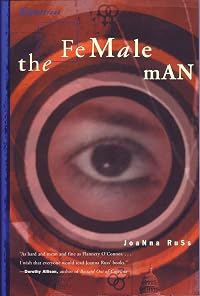


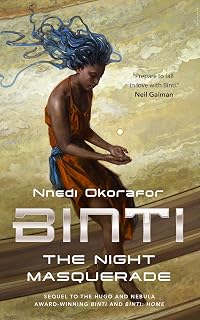



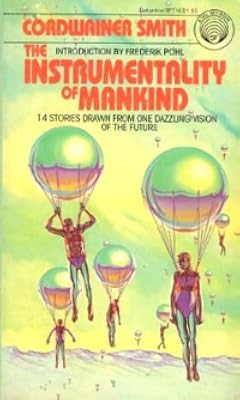





























Member Recommendations

Member Reviews
This is one of the furthest-out-there science fiction books I have ever read. It presupposes fundamental shifts in human culture, especially gender relations. Hlepful hint: Delany uses "woman" and "she" to refer to male-identifying humans. "He" is only used when referring to a male-identifying human object of desire. Our cultural fascination with locating political perspectives on a left-right spectrum is satirized with a system that classifies them by color. The protagonist goes on an odyssey that, by means not entirely explained, threatens the order of several societies. I had the privilege of posing a question to Mr. Delany; he described the novel as a reflection of notions of difference in contemporary America, based I imagine on show more his identity as a gay Black male. If you want the same old thing, pass this by. If you want a cold-water bath in sci-fi, give it a read. show less
In the very distant future, the government of the planet Rhyonon is gently persuading the uneducated and slow-witted Korga to undergo Radical Anxiety Treatment (RAT) in order to purge him of his tendencies toward lawlessness and, subtly, homosexuality. The procedure is over in the blink of an eye when they finally get the okay from him, and he finds himself working as slave labor though he doesn't care one way or the other how he got there or what he's doing. Years pass with very little outside world contact, and while working in an underground tunnel, his whole world literally collapses around him, burying him under dirt and machinery as his former world is destroyed.
In another part of the universe, Marq Dyeth, an intelligent show more industrial diplomat traveling the different worlds, first hears of the destruction of an entire planet and wonders at the possibility of survivors. When he tries to search the Web for information, all records of the planet have been deleted, as if the planet never existed in the first place. Marq almost succeeds in distancing himself from further thoughts of the destroyed world when a distant friend reveals to him that someone did survive the destruction. And that someone is a perfect erotic match for Marq.
In this engrossing novel by Samuel Delany, these two characters -- Marq Dyeth and Rat Korga -- try to understand their singular attraction to each other in a universe of open sexuality, where gender doesn't come into play unless two beings become intimate, and where multiculturalism of not only differing genders but differing species is commonplace. But their being together also threatens to brink Marq's world to the brink of a Cultural Fugue which could bring about the end of his world.
I'm not a big fan of sci-fi books -- with the exception of Philip K. Dick and Kurt Vonnegut -- and I attempted another of Dealny's books a few years ago, finally setting it aside as I could not follow a word of it. This book, however, kept me glued to the pages, feeling Korga's amazement when he started to read the information cubes and did not want to stop learning, marveling at the elaborate dinner (and dance, if you will) that Marq's "family" throws for the unappreciative Thants, and smiling at how closely to two dissenting factions in the novel's universe -- the conservative Family and the liberal Sygn -- resemble almost two much the society in which we on Earth live. Stars in My Pocket Like Grains of Sand truly is a remarkable book. show less
In another part of the universe, Marq Dyeth, an intelligent show more industrial diplomat traveling the different worlds, first hears of the destruction of an entire planet and wonders at the possibility of survivors. When he tries to search the Web for information, all records of the planet have been deleted, as if the planet never existed in the first place. Marq almost succeeds in distancing himself from further thoughts of the destroyed world when a distant friend reveals to him that someone did survive the destruction. And that someone is a perfect erotic match for Marq.
In this engrossing novel by Samuel Delany, these two characters -- Marq Dyeth and Rat Korga -- try to understand their singular attraction to each other in a universe of open sexuality, where gender doesn't come into play unless two beings become intimate, and where multiculturalism of not only differing genders but differing species is commonplace. But their being together also threatens to brink Marq's world to the brink of a Cultural Fugue which could bring about the end of his world.
I'm not a big fan of sci-fi books -- with the exception of Philip K. Dick and Kurt Vonnegut -- and I attempted another of Dealny's books a few years ago, finally setting it aside as I could not follow a word of it. This book, however, kept me glued to the pages, feeling Korga's amazement when he started to read the information cubes and did not want to stop learning, marveling at the elaborate dinner (and dance, if you will) that Marq's "family" throws for the unappreciative Thants, and smiling at how closely to two dissenting factions in the novel's universe -- the conservative Family and the liberal Sygn -- resemble almost two much the society in which we on Earth live. Stars in My Pocket Like Grains of Sand truly is a remarkable book. show less
This is such an interesting book. If you try and canter through it, chasing the plot, you'll ride straight by all of the interest it holds. Taking it that way, a feeling of the book being something ofan aimless ramble is understandable and could lead to frustration in those who enjoy this type of reading. It can feel like there is something missing that should be compelling one through the novel. But this really rewards taking one's time. It comes across as quite an indulgent work on Delaney's part, both stylistically and because he wants to give you the whistle-stop grand tour of this setting taking in as many ideas, places and cultures as possible, then, in turns he also wants to show us the minutiae of how his characters exist in it show more through their interaction with each other and all of the said devised cultural and physical realities. It really pays to indulge these parts of the book in kind, allowing yourself to build a place for your mind amongst the books six thousand or world's such that when the promised narrative beats are reached, they are all the more engrossing - the inevitable coming together of the mutual "perfect erotic objects" Marq Dyeth and Rat Korga, some distance into the book; the dragon hunt; the concluding chapter and epilogue. These are where Delaney's style feels strongest and are a joy to read. The other frustration with this novel that can't go unencumbered is that it was originally part one of two, but Delaney has confirmed that the second part will not be written. Whilst the book stands alone perfectly adequately, the last quarter really gives the impression of teetering on the verge of even greater things to come so it's a shame we'll never see it. show less
I had long wanted to read this famous book — a space fantasy far from my usual choices of fiction reading; it's good to break routine once in a while, as industrial diplomat and star traveler Marq Hyeth (the narrator of most of this book) might say. And it was not at all what I expected. Which is good, I guess. I wanted surprises and got them.
As I did expect, it is fantastical and ironic. But it is not light comedy. It is a story contrived to reflect on complicated, unresolved philosophical questions, with dark hints about the answers: how the brain really works and how its processes can be disrupted; the construction of memories, creating myths; the varied ways of negotiating our sexual obsessions, and, finally (finally!) time, space show more and death.
The setting: Millennia from now, when humans and other intelligent beings from other planets (some of them with 6 legs, multiple tongues, wings and metallic claws) have achieved relative peace in their competition to colonize the 6,200 or more known worlds in the universe, a big (7'4") 19-year old social misfit, homosexual and long drug user in a world that discourages that sort of thing volunteers for Radical Anxiety Termination to turn him into a "rat", an anxiety-less and thus ambition- and curiosity-less human used as a slave by the more-or-less corrupt state industries. His partial recovery of his mental faculties and belated discovery of emotion, described mainly by the short, stocky interworld traveler and industrial diplomat (ID) Marq Hyeth, his perfect love object, is the central story around which we witness many other relationships, experiences and memories. And hovering over all of it are two massive, possibly related conflicts which may threaten them all: first, an internal rivalry among the federated worlds between a fundamentalist political-ideological movement called the Family (apparently the inventors of Radical Anxiety Termination) who want everyone and everything to be controlled and orderly and invent exquisite punishments for those who are not, and the more tolerant, laid-back, open-to-experimentation Sygn; and beyond them, outside any known federation, a mysterious and immensely powerful system of beings who offer no communication to the others, the Xlv, whose intentions are unknown but, if hostile, may be spell disaster.
The book is full of invention, with new worlds and new sorts of intelligent beings and new technologies with strange names appearing in every chapter, almost on every page. Which often makes it very difficult to figure just who is having sex with whom, and how they're doing it, or what's really going on in the dinner parties. (There's a lot of explicit, sloppy sex, but unless you're attracted to six-legged evelmi with shiny scales, or have an opportunity to stroll or float through a love-park on one of the Sygn controlled worlds, it will be beyond reach for you.)
My favorite parts include the long first section, before Marq Hyeth even appears, where we witness the brain-zapping in the Radical Anxiety Termination Institute and its consequences — which include the inability to take in new information from the General Information (GI) network which other humans and evelmi (those six-legged, winged- beings with all the tongues) use to learn new languages or access whatever data they want. This is because, as the high-ranking interworld official Japril explains,
"It's precisely those 'anxiety' channels which Radical Anxiety Termination blocks that GI uses both to process into the brain the supportive contextual information in the preconscious that allows you to make a conscious call for anything more complex than names, dates, verbatim texts, and multiplication tables; and it also uses them to erase an information program in such a way that you can still remember the parts of it you actually used consciously." (Pp. 161-162 in my edition.)
Wow! So all that we would give up if we lost all anxiety. That is a heavy thought. If I were a rat, i.e. if I had been subjected to blockage of my "anxiety" channels, I might be able to repeat that paragraph but I would never fathom its meaning. The novel is full of rather surprising, often profound, usually wittily stated observations.
Another delight is the dragon-hunting chapter. I won't tell you more. You just have to experience what happens in Dyethshome when you go on a dragon hunt. The final chapter comes as somewhat of a relief from all the interminable invention and learning of new creatures, habits, worldscapes. For here Marq Dyeth recalls his earlier life, which helps bring some coherence to the jarring, seemingly chaotic space travels we have just gone through. show less
As I did expect, it is fantastical and ironic. But it is not light comedy. It is a story contrived to reflect on complicated, unresolved philosophical questions, with dark hints about the answers: how the brain really works and how its processes can be disrupted; the construction of memories, creating myths; the varied ways of negotiating our sexual obsessions, and, finally (finally!) time, space show more and death.
The setting: Millennia from now, when humans and other intelligent beings from other planets (some of them with 6 legs, multiple tongues, wings and metallic claws) have achieved relative peace in their competition to colonize the 6,200 or more known worlds in the universe, a big (7'4") 19-year old social misfit, homosexual and long drug user in a world that discourages that sort of thing volunteers for Radical Anxiety Termination to turn him into a "rat", an anxiety-less and thus ambition- and curiosity-less human used as a slave by the more-or-less corrupt state industries. His partial recovery of his mental faculties and belated discovery of emotion, described mainly by the short, stocky interworld traveler and industrial diplomat (ID) Marq Hyeth, his perfect love object, is the central story around which we witness many other relationships, experiences and memories. And hovering over all of it are two massive, possibly related conflicts which may threaten them all: first, an internal rivalry among the federated worlds between a fundamentalist political-ideological movement called the Family (apparently the inventors of Radical Anxiety Termination) who want everyone and everything to be controlled and orderly and invent exquisite punishments for those who are not, and the more tolerant, laid-back, open-to-experimentation Sygn; and beyond them, outside any known federation, a mysterious and immensely powerful system of beings who offer no communication to the others, the Xlv, whose intentions are unknown but, if hostile, may be spell disaster.
The book is full of invention, with new worlds and new sorts of intelligent beings and new technologies with strange names appearing in every chapter, almost on every page. Which often makes it very difficult to figure just who is having sex with whom, and how they're doing it, or what's really going on in the dinner parties. (There's a lot of explicit, sloppy sex, but unless you're attracted to six-legged evelmi with shiny scales, or have an opportunity to stroll or float through a love-park on one of the Sygn controlled worlds, it will be beyond reach for you.)
My favorite parts include the long first section, before Marq Hyeth even appears, where we witness the brain-zapping in the Radical Anxiety Termination Institute and its consequences — which include the inability to take in new information from the General Information (GI) network which other humans and evelmi (those six-legged, winged- beings with all the tongues) use to learn new languages or access whatever data they want. This is because, as the high-ranking interworld official Japril explains,
"It's precisely those 'anxiety' channels which Radical Anxiety Termination blocks that GI uses both to process into the brain the supportive contextual information in the preconscious that allows you to make a conscious call for anything more complex than names, dates, verbatim texts, and multiplication tables; and it also uses them to erase an information program in such a way that you can still remember the parts of it you actually used consciously." (Pp. 161-162 in my edition.)
Wow! So all that we would give up if we lost all anxiety. That is a heavy thought. If I were a rat, i.e. if I had been subjected to blockage of my "anxiety" channels, I might be able to repeat that paragraph but I would never fathom its meaning. The novel is full of rather surprising, often profound, usually wittily stated observations.
Another delight is the dragon-hunting chapter. I won't tell you more. You just have to experience what happens in Dyethshome when you go on a dragon hunt. The final chapter comes as somewhat of a relief from all the interminable invention and learning of new creatures, habits, worldscapes. For here Marq Dyeth recalls his earlier life, which helps bring some coherence to the jarring, seemingly chaotic space travels we have just gone through. show less
I definitely wasn’t in the right frame of mind for this book, as the whole time I was terribly worried about my Nana being ill in hospital. When preoccupied by worry, I either need fast-paced plot-driven fiction or dense non-fiction to act as a distraction. ‘Stars in My Pocket’ is a meandering sci-fi novel of ideas, with a great deal more world-building than plot. It has aged pretty well and remains interesting and original, with many striking details. I liked the drama of the dinner party scene; the details of alien cultures were a real strength. The concept of ‘Cultural Fugue’ was highly intriguing. I was less invested in the two main characters, who are apparently each other’s perfect erotic object. I imagine this says show more something about my priorities, but: so what? The pursuit of Rat Korga by curious crowds was much more interesting. The trouble was, the narrative read like a series of carefully imagined set pieces, all vivid and strange yet not sewn together securely enough. This wouldn’t necessarily bother me normally, however I’m not at my best right now. The experience of reading a book can of course be heavily dependent on how you feel at the time. show less
After enjoying Delany's Babel-17, I really wanted to like this novel. However, I think that it was partly sabotaged by timing: I started to read this so soon after reading his book About Writing that I couldn't help but critique this book... and using his own criteria for whether to keep reading a book, I found this one lacking. I might return to it later, when his literary criticisms aren't so fresh in my mind, but I can't separate the two right now. ~ DNF @11%
Very clever: default term for people is 'women' and the related pronouns are feminine, subscripts for certain terms like 'job', creatures with multiple tongues say multiple things at the same time; but some ideas are too clever for me to understand, and I just wanted to get to the end of the book to see if anything was concluded or happened. And then I see that the novel is half of a diptych, with the second half never published. (There is a quote, as if it were a common expression on Velm millenia in the future from "Hello, Young Lovers" from The King and I.)
A quote I liked:
"stupidity: a process, not a state. A human being takes in far more information than he or she can put out. 'Stupidity' is a process or strategy by which a human, show more in response to social denigration of the information she or he puts out, commits him or herself to taking in no more information than she or he can put out. (Not to be confused with ignorance, or lack of data.) Since such a situation is impossible to achieve because of the nature of mind/perception itself in relation to the functioning body, a continuing downward spiral of functionality and/or informative dis-semination results," and he understood why! "The process, however, can be reversed," .... [p. 31]
As I understand the first few sentences, stupidity is a behavior imposed on you by others who do fairly listen to you. Not sure I get the rest.
Another quote:
"The greatest rudeness on my home world---in our particular geosector of it, at any rate, among the particular people we associate with, from our particular range of acquaintances in 17---is to act in such a way as to compel rudeness from others." [p. 311] show less
A quote I liked:
"stupidity: a process, not a state. A human being takes in far more information than he or she can put out. 'Stupidity' is a process or strategy by which a human, show more in response to social denigration of the information she or he puts out, commits him or herself to taking in no more information than she or he can put out. (Not to be confused with ignorance, or lack of data.) Since such a situation is impossible to achieve because of the nature of mind/perception itself in relation to the functioning body, a continuing downward spiral of functionality and/or informative dis-semination results," and he understood why! "The process, however, can be reversed," .... [p. 31]
As I understand the first few sentences, stupidity is a behavior imposed on you by others who do fairly listen to you. Not sure I get the rest.
Another quote:
"The greatest rudeness on my home world---in our particular geosector of it, at any rate, among the particular people we associate with, from our particular range of acquaintances in 17---is to act in such a way as to compel rudeness from others." [p. 311] show less
Members
- Recently Added By
Lists

Best Science Fiction Novels
816 works; 430 members
Survey of Classic Science Fiction
171 works; 48 members

Black Authors
386 works; 28 members

20th Century Literature
1,161 works; 55 members

Recommended Speculative Fiction by Women and People of Color
298 works; 45 members

What Makes This Book So Great
102 works; 16 members
LGBTQ+ Speculative Fiction
821 works; 51 members

Speculative Fiction to Read
706 works; 32 members

Good LGBT fiction for LGBT folk and friends
553 works; 55 members

Books You Couldn't Finish
202 works; 32 members

Arthur C. Clarke Award Winners and Shortlisted Books
219 works; 14 members

Books Read in 2016
4,666 works; 199 members

Books With the Most Memorable Titles
478 works; 158 members

Maybe This Year? Books to Look Forward To
414 works; 9 members
Favorite Science Fiction
458 works; 224 members
Talk Discussions
Past Discussions
"Stars In My Pocket Like Grains of Sand" Group Discussion in Group Reads - Sci-Fi (September 2009)
Author Information

200+ Works 29,029 Members
Samuel R. Delany Jr. was born in Harlem, New York on April 1, 1942. He is a science fiction and short story writer. His first novel, The Jewels of Aptor, was published in 1962. He has written more than 20 novels and collections of short stories, memoirs, and critical essays. He has received numerous awards including the Nebula Award for best novel show more for Babel-17 in 1966 and The Einstein Intersection in 1967, the Nebula Award for best short story for Aye, and Gomorrah and Time Considered as a Helix of Semi-Precious Stones, the Hugo Award for best short story for Time Considered as a Helix of Semi-Precious Stones in 1970 and for his non-fiction book, The Motion of Light in Water, and the Bill Whitehead Award for Lifetime Achievement in Gay Literature in 1993. He is as a professor in the department of English at the University at Buffalo, Buffalo, New York. (Bowker Author Biography) Samuel R. Delany is a professor of English & Creative Writing at Temple University in Philadelphia. (Publisher Provided) show less
Some Editions
Awards and Honors
Work Relationships
Common Knowledge
- Original title
- Stars in My Pocket Like Grains of Sand
- Original publication date
- 1984-12
- People/Characters
- Marq Dyeth; Rat Korga; Clym; Japril; Santine Dyeth; Shoshana Dyeth (show all 16); George Thant; Thadeus Thant; JoBonnot; Nea Thant; Egri Dyeth; Large Maxa Dyeth; Small Maxa Dyeth; Ollivet't Doru; V'vish; the Old Hunter
- Important places
- Velm; Dyethshome; Morgre; Rhyonon; Free-Kantor; Nepiy
- Dedication
- For Frank Romero
- First words
- "Of course," they told him in all honesty, "you will be a slave."
His big-pored forehead wrinkled, his heavy lips opened (the flesh around his green, green eyes stayed exactly the same), the ideogram of incomprehension... (show all) among whose radicals you could read ignorance's determinant past, information's present impossibility, speculation's denied future. - Last words
- (Click to show. Warning: May contain spoilers.)When I awoke again, it would be day.
- Blurbers
- Michael Bishop; Ursula K. Le Guin
- Original language
- English
- Canonical DDC/MDS
- 813.54
- Canonical LCC
- PS3554.E437
Classifications
Statistics
- Members
- 1,515
- Popularity
- 15,293
- Reviews
- 23
- Rating
- (3.93)
- Languages
- English, German
- Media
- Paper, Audiobook, Ebook
- ISBNs
- 16
- ASINs
- 9