On This Page
Description
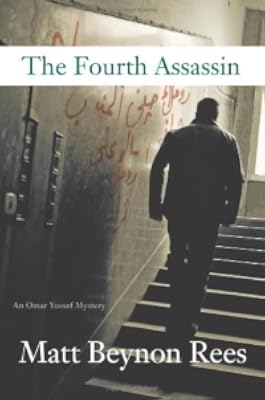
This eagerly awaited follow-up to 'The Bethlehem Murders' finds our teacher-turned-detective in one of the deadliest areas in the Middle East - the Gaza Strip.Tags
Recommendations









Member Reviews
In this second book about Omar Yussef/Abu Ramiz, he has reason to travel from his home in Bethlehem to the misery of the occupied Gaza Strip. When he enters Gaza, a storm arises in both the figurative and the literal sense; the sand is as ever-present and intrusive to Abu Ramiz as is the violence and corruption and, although both overwhelms him, he manages to overcome his own fears and stands by his personal morals even in the face of danger. His morals are what attracted me to him in the first book (The Collaborator of Bethlehem) and it's really what makes him one of my favorite characters - although his body is weak and he is quite vulnerable, he can not watch the injustices (as he admits to having done in his youth), but needs to show more act. He may be physically weak, but, as we find out at the nail-biting resolution of this book, there is absolutely nothing amiss with his mental faculties - what a clever, clever man! show less
Frankly I found this a very depressing read, and knowing that reality probably mirrors this fictitious tale in many of its grisly dimensions was very bitter to contemplate.
This is the second Omar Yussef mystery and it plays out in Gaza, a dump in every sense of the word according to the protagonists. The dirt, the sandstorms, the corruption, the religious zealotry, the garbage, the ruins, and so many deaths and corpses are the order of the day in that terrible place.
Omar Yussef comes to Gaza as part of a UN group. He is investigating with his UN boss the arrest of a colleague who is also a part time lecturer at Al-Azhar University. This innocuous beginning quickly spirals into something sinister as one UN man gets kidnapped and another show more is assasinated. Soon the corpses pile up among Palestinians rival factions from one killing to another revenge. I lost track of the motives, the agendas and the rivalries. What is left is the deep sense of futility as corrupt politicians fight it out and squabble over this pile of garbage that is Gaza. In this story Israeli violence and hostility do not exist; it is all about Palestinian internal strife. The violence between rival factions is extreme and almost mindless, and the distasteful part is that you cannot even dismiss LAW wielding fighters as far-fetched. Just because the events take place in Gaza, the craziest and the most mindless violence is possible.
A woman in the story says: "Sometimes I think that the only Palestinians who do not weep are the dead ones".
I was saddened by a little boy, who showed Omar Yussef the doves he is raising on the roof, an innocent child who would soon be struck by tragedy and grief. Nobody remains innocent for long in this environment. Yet people laugh and joke, they exchange wisecracks in the face of death and enjoy a distinct gallows humor, which rang very true. Those Palestinians are tough, and they can put up with a lot of suffering. Omar Yussef says: "I am Palestinian" by way of explanation of his tough nature and tolerance of hardship, but even he was pleased to leave the dust of Gaza, its graves and graveyards behind. show less
This is the second Omar Yussef mystery and it plays out in Gaza, a dump in every sense of the word according to the protagonists. The dirt, the sandstorms, the corruption, the religious zealotry, the garbage, the ruins, and so many deaths and corpses are the order of the day in that terrible place.
Omar Yussef comes to Gaza as part of a UN group. He is investigating with his UN boss the arrest of a colleague who is also a part time lecturer at Al-Azhar University. This innocuous beginning quickly spirals into something sinister as one UN man gets kidnapped and another show more is assasinated. Soon the corpses pile up among Palestinians rival factions from one killing to another revenge. I lost track of the motives, the agendas and the rivalries. What is left is the deep sense of futility as corrupt politicians fight it out and squabble over this pile of garbage that is Gaza. In this story Israeli violence and hostility do not exist; it is all about Palestinian internal strife. The violence between rival factions is extreme and almost mindless, and the distasteful part is that you cannot even dismiss LAW wielding fighters as far-fetched. Just because the events take place in Gaza, the craziest and the most mindless violence is possible.
A woman in the story says: "Sometimes I think that the only Palestinians who do not weep are the dead ones".
I was saddened by a little boy, who showed Omar Yussef the doves he is raising on the roof, an innocent child who would soon be struck by tragedy and grief. Nobody remains innocent for long in this environment. Yet people laugh and joke, they exchange wisecracks in the face of death and enjoy a distinct gallows humor, which rang very true. Those Palestinians are tough, and they can put up with a lot of suffering. Omar Yussef says: "I am Palestinian" by way of explanation of his tough nature and tolerance of hardship, but even he was pleased to leave the dust of Gaza, its graves and graveyards behind. show less
Omar Yussef, history teacher at a UN school in Bethlehem and somewhat reluctant amateur detective, travels to the Gaza strip to help with a routine school inspection. As soon as he arrives he learns that one of the teachers at the school has been arrested because he accused the university of selling degrees to army officers so they can gain promotion. Despite being warned off Yussef starts to investigate the teacher's arrest but soon becomes embroiled in a violent power struggle between competing groups in Gaza who all treat each other and any innocent bystanders unlucky enough to be in the way as little more than pawns.
If bravery is defined as taking action in spite of the fear you feel then Omar Yussef must be the bravest hero of them show more all. He faces constant danger and death threats and in this book he doesn't have the benefit of his extensive family connections to offer any protection (Gaza may as well be a million miles from his native Bethlehem). It's clear that Yussef is afraid of the danger but he feels such a moral obligation to do the right thing that he acts despite his fear. But I don't want the description of him as extraordinarily brave to make him sound as if he's somehow unreal because he's a terrifically believable character: an ageing, slightly vain, former drunk who loves his family, his homeland (whatever that means) and history and who refuses to wallow in all the inertia-inducing rhetoric and mythology about the occupation of Palestine.
As with Rees' first book the other significant character here is the place. This is a story that could not have been set anywhere other than Palestine which is, once again, depicted in all its stark despair. Vengeances both personal and political, corruption. violence and a seemingly endless obsession with the past abound. Yussef's moral strength and respect for all life is all the more admirable because he's surrounded by people who have little of either quality. The casual way in which people are killed throughout the book is breathtaking, especially when you know that Rees has based scenes in the book on the many real events he covered during his years as a journalist in the region.
Often when fiction has a 'message' or gets political I feel like I'm being preached at and disengage angrily. That didn't happen with this book. Rather than feeling like I've been lectured to I feel as if I've been given the gift of a glimpse of reality in the Middle East that no amount of news- watching could ever provide. A couple of days before I finished the book I read Rees' explanation for writing the series and his notion, that he can be more truthful in writing fiction than he ever could while writing news, makes perfect, twisted sense. It also helps explains why reading The Saladin Murders is an emotionally intense but satisfying and, dare I say, rewarding experience. show less
If bravery is defined as taking action in spite of the fear you feel then Omar Yussef must be the bravest hero of them show more all. He faces constant danger and death threats and in this book he doesn't have the benefit of his extensive family connections to offer any protection (Gaza may as well be a million miles from his native Bethlehem). It's clear that Yussef is afraid of the danger but he feels such a moral obligation to do the right thing that he acts despite his fear. But I don't want the description of him as extraordinarily brave to make him sound as if he's somehow unreal because he's a terrifically believable character: an ageing, slightly vain, former drunk who loves his family, his homeland (whatever that means) and history and who refuses to wallow in all the inertia-inducing rhetoric and mythology about the occupation of Palestine.
As with Rees' first book the other significant character here is the place. This is a story that could not have been set anywhere other than Palestine which is, once again, depicted in all its stark despair. Vengeances both personal and political, corruption. violence and a seemingly endless obsession with the past abound. Yussef's moral strength and respect for all life is all the more admirable because he's surrounded by people who have little of either quality. The casual way in which people are killed throughout the book is breathtaking, especially when you know that Rees has based scenes in the book on the many real events he covered during his years as a journalist in the region.
Often when fiction has a 'message' or gets political I feel like I'm being preached at and disengage angrily. That didn't happen with this book. Rather than feeling like I've been lectured to I feel as if I've been given the gift of a glimpse of reality in the Middle East that no amount of news- watching could ever provide. A couple of days before I finished the book I read Rees' explanation for writing the series and his notion, that he can be more truthful in writing fiction than he ever could while writing news, makes perfect, twisted sense. It also helps explains why reading The Saladin Murders is an emotionally intense but satisfying and, dare I say, rewarding experience. show less
I happened to start reading this just before the current conflict in Gaza hit the front page. This book helped me conceptualize the power struggles there. In this series, Israel exists only as a dragon against whom you can prove your manhood or advance your own agenda -- The Israelis never have names or faces, the Palestinians' greatest enemies are each other, and peace would rob warlords of their power. Omar Yussef is an Everyman who speaks truth to power and wrests small victories from the midst of huge defeats. The overall concept is great. The execution is pretty good. Throughout most of the book, I was riveted. The writing was very polished. The last few chapters, however, were a little rushed -- I had trouble picturing the action show more of the final scenes and I really didn't understand the role of the cemetery caretaker and the final funeral. show less
One of the more interesting literary trends of recent years is the notable increase in the number of novels, mysteries and stories set in the Middle East and told from the points-of-view of those born to the region. Some of this fiction is written by citizens of that part of the world and some of it by Westerners who have spent significant segments of their own lives there. Regardless of the author’s origin, however, the best of this new fiction presents memorable insights into everyday Muslim culture that are seldom as memorably obtainable from histories or other nonfiction written about the area.
Matt Beynon Rees, himself from Wales, but living in Jerusalem, has written one of the better ones with A Grave in Gaza, the second novel in show more his Omar Yussef mystery series.
Omar Yussef, in his mid-fifties, is the principal of a U.N. sponsored refugee school on the West Bank where he also teaches history. As the novel opens he is accompanying his boss, a U.N. employee from Sweden, on what is to be an inspection tour of U.N. schools in Gaza. But some things are not to be and, because the two men discover almost immediately upon their arrival in Gaza that a local U.N. schoolteacher has been arrested on trumped-up spying and collaboration charges, the inspection tour is forgotten in their efforts to gain the teacher’s release before he is tortured or killed by those who hold him.
Yussef is a relatively simple man who has a keen sense of right and wrong, a man who loves his wife and grandchildren, and who feels a strong personal obligation to seek justice in a world gone mad, just the world he finds in Gaza. What starts as a simple quest to free a fellow teacher he has never met, becomes much more complicated when Yussef ignores a warning that there is no such thing as a “single, isolated crime (in Gaza)” and that his insistence upon freeing his colleague will anger and threaten some powerful and ruthless men who are willing to do whatever it takes to stop Yussef’s snooping.
In a matter of days, violence becomes the order of the day and Omar Yussef desperately struggles to make sense of the several, almost tribal, factions that compete to dominate what passes for local government in Gaza while trying to stay alive long enough to free both the schoolteacher and his Swedish boss who has by now been kidnaped by unknown gunmen.
A Grave in Gaza is a wonderfully atmospheric novel, especially in terms of the prolonged dust storm that dominates the area, and almost the story itself, during most of Yussef’s stay in Gaza. It leaves the reader with a feel for what everyday life in Gaza must be like for those who simply desire to live normal lives with their families amidst a society dominated by crime, corruption, violence, and a religious war that uses their children as disposable, human explosives. Some will consider A Grave in Gaza to be a political novel, some a mystery, and others will call it a thriller. However they categorize the book, most readers will agree that Rees has written a first rate novel and will look forward to the third Omar Yussef mystery.
Rated at: 5.0 show less
Matt Beynon Rees, himself from Wales, but living in Jerusalem, has written one of the better ones with A Grave in Gaza, the second novel in show more his Omar Yussef mystery series.
Omar Yussef, in his mid-fifties, is the principal of a U.N. sponsored refugee school on the West Bank where he also teaches history. As the novel opens he is accompanying his boss, a U.N. employee from Sweden, on what is to be an inspection tour of U.N. schools in Gaza. But some things are not to be and, because the two men discover almost immediately upon their arrival in Gaza that a local U.N. schoolteacher has been arrested on trumped-up spying and collaboration charges, the inspection tour is forgotten in their efforts to gain the teacher’s release before he is tortured or killed by those who hold him.
Yussef is a relatively simple man who has a keen sense of right and wrong, a man who loves his wife and grandchildren, and who feels a strong personal obligation to seek justice in a world gone mad, just the world he finds in Gaza. What starts as a simple quest to free a fellow teacher he has never met, becomes much more complicated when Yussef ignores a warning that there is no such thing as a “single, isolated crime (in Gaza)” and that his insistence upon freeing his colleague will anger and threaten some powerful and ruthless men who are willing to do whatever it takes to stop Yussef’s snooping.
In a matter of days, violence becomes the order of the day and Omar Yussef desperately struggles to make sense of the several, almost tribal, factions that compete to dominate what passes for local government in Gaza while trying to stay alive long enough to free both the schoolteacher and his Swedish boss who has by now been kidnaped by unknown gunmen.
A Grave in Gaza is a wonderfully atmospheric novel, especially in terms of the prolonged dust storm that dominates the area, and almost the story itself, during most of Yussef’s stay in Gaza. It leaves the reader with a feel for what everyday life in Gaza must be like for those who simply desire to live normal lives with their families amidst a society dominated by crime, corruption, violence, and a religious war that uses their children as disposable, human explosives. Some will consider A Grave in Gaza to be a political novel, some a mystery, and others will call it a thriller. However they categorize the book, most readers will agree that Rees has written a first rate novel and will look forward to the third Omar Yussef mystery.
Rated at: 5.0 show less
Omar Yussef travels with a UN official and a crotchety Scottish military man to find out why a school teacher has been dismissed. Omar Yussef ends up deeply entangled in the messy and corrupt politics of Gaza and a plan to smuggle a powerful weapon in through tunnels. I found this book angrier than his first, and somehow less satisfying because there is less about Palestinian society that balances the greed and corruption (the graciousness of language, the importance of family, etc) that were so well brought out in The Collaborator of Bethlehem. Still, a valuable contribution to the genre from an underrepresented perspective.
A really good good book detailing a jailing of a UN employee the kidnapping of another UN employee and various attempted murders on the main character, who is also employed by the UN but is a Palestinian from Bethlehem.
The book takes place in the Gaza Strip in around 2010 and it was a explosive disaster even then
The author knows his subject and the area well as he was a middle east correspondent for 10 years in Israel for Time magazine. The book was a great intro to what a mess this part of the world is and why.
The book takes place in the Gaza Strip in around 2010 and it was a explosive disaster even then
The author knows his subject and the area well as he was a middle east correspondent for 10 years in Israel for Time magazine. The book was a great intro to what a mess this part of the world is and why.
Members
- Recently Added By
Author Information

23+ Works 1,343 Members
Matt Rees is the Jerusalem bureau chief for Time magazine. In 2003 he won a Henry Luce Award for Reporting for his coverage of the battle in Jenin during the current intifada. He has also written for Men's Journal, Newsweek, The Scotsman, and The Jerusalem Post. He lives in Jerusalem
Series

Common Knowledge
- Canonical title
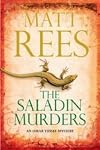
- The Saladin Murders
- Original title
- The Saladin Murders
- Alternate titles
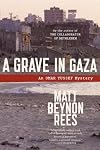
- A Grave in Gaza
- People/Characters
- Omar Yuseff
- Important places
- Gaza Strip
- Disambiguation notice
- A Grave in Gaza is the U.S. title, in the U.K. this was published as The Saladin Murders.
Classifications
Statistics
- Members
- 254
- Popularity
- 127,563
- Reviews
- 19
- Rating
- (3.92)
- Languages
- 8 — Danish, Dutch, English, French, German, Norwegian (Bokmål), Norwegian, Spanish
- Media
- Paper, Audiobook, Ebook
- ISBNs
- 21
- ASINs
- 5