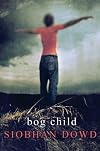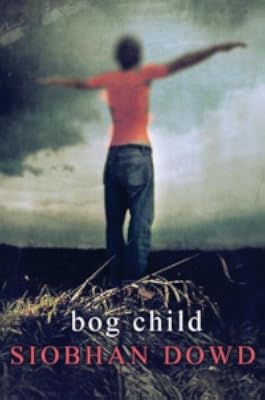
Bog Child
by Siobhán Dowd
On This Page
Description
In 1981, the height of Ireland's "Troubles," eighteen-year-old Fergus is distracted from his upcoming A-level exams by his imprisoned brother's hunger strike, the stress of being a courier for Sinn Fein, and dreams of a murdered girl whose body he discovered in a bog.Tags
Recommendations






Member Reviews
When the narrator first read the background of the 1981 Irish Hunger Strikes I thought, hell no, I'm not up for reading or listening to anything this heavy. Maybe it was the lilting Irish narrator (fab job) or the exquisite layering of the three storylines but I fell in love a bit. The time period is handled seemlessly and the story within a story about the doomed Iron Age Bog Child is heart breaking.
I read this when I was in high school and it was absolutely heart-wrenching.
That is the one thing about Dowd's writing that you have to know. It will make you care about people and then break your heart. But I loved this book, Dowd writes a really masterful, very serious book without making difficult topics inaccessible. Her characters, felt, at the time, for me, very relatable and I really felt their struggle.
Her books have always been readable, despite how dark they are. In this book we follow a protagonist called Fergus whose brother is currently undergoing a hunger strike. There's other themes, sexuality, belonging, loneliness, the isolation of adolescence all captured in this book.
As a teenager, finding books for me to read was show more really hard because I didn't want to read about young dystopian women who were feminists but had no female friends, respected no female characters and spent their time in a love triangle. Or a young teenaged boy at school who desperately wanted X Girl to be his girlfriend but she couldn't be because he never communicated literally anything to her.
(No disrespect meant, but when I was young I was always hungering for books that weren't so easy as the current YA ones on the market. YA was just becoming a thing and it was really light and superficial at first.)
I wanted books that treated me with respect, and Dowd's did that. show less
That is the one thing about Dowd's writing that you have to know. It will make you care about people and then break your heart. But I loved this book, Dowd writes a really masterful, very serious book without making difficult topics inaccessible. Her characters, felt, at the time, for me, very relatable and I really felt their struggle.
Her books have always been readable, despite how dark they are. In this book we follow a protagonist called Fergus whose brother is currently undergoing a hunger strike. There's other themes, sexuality, belonging, loneliness, the isolation of adolescence all captured in this book.
As a teenager, finding books for me to read was show more really hard because I didn't want to read about young dystopian women who were feminists but had no female friends, respected no female characters and spent their time in a love triangle. Or a young teenaged boy at school who desperately wanted X Girl to be his girlfriend but she couldn't be because he never communicated literally anything to her.
(No disrespect meant, but when I was young I was always hungering for books that weren't so easy as the current YA ones on the market. YA was just becoming a thing and it was really light and superficial at first.)
I wanted books that treated me with respect, and Dowd's did that. show less
Dowd’s previous novel, ‘A Swift Pure Cry’, was published in 2006 and received an extremely positive reception. It won the 2007 Branford Boase Award and the Eilis Dillon Award, and it was short listed for the Carnegie Medal and the Booktrust Teenage Prize. Her second novel was also very well received, so when I tentatively chose Dowd’s third story for children off the shelf, I knew it had a lot to live up. Could it deliver? The question is particularly potent because the work was published posthumously, the author having passed away in August 2007. Would this be a gripping read or a punishing plod?
The premise of ‘Bog Child’ is immediately intriguing: boy finds body preserved in a peat bog. Who was it? How did they die? Why show more did they die? And, crucially, when? However, this incident does not form the dramatic crux of the storyline, which follows a young Irish boy through an important summer in his life, in which the discovery of this child is significant in many ways.
As the advertised storyline is so dramatic, it is fortunate that Dowd does not make us wait impatiently to meet this ‘child’. At the start of chapter one, we join Fergus and his Uncle Tally on an illicit turf cutting mission early some morning. These are characters we can engage with immediately: they know what they are doing is wrong, but it seems to be a kind of victimless wrong that vividly evokes the difficulties in their lives. It is not long before Fergus finds ‘the child that time forgot’: a small body curled up in the bog. He initially assumes that the IRA are involved – welcome to Ireland in the early 1980s – but the pathologist dates the body back to the Iron age. Within pages, Fergus is hearing the voice of the girl he calls ‘Mel’ as she tells him her story.
Gradually, Mel’s history is revealed through a series of dreams Fergus experiences. Although the girl’s tale is a sad and often interesting one, it is never clear why or how this message is getting across to Fergus. The sections about Mel are in italics to separate her voice from his, but there seemed to be no physical or spiritual connection between them – Mel is not a ghost, reaching out from the past to explain herself, she is simply a disembodied voice. I found this detracted from my enjoyment slightly because the story seemed to be simply ‘slotted in’ to the modern day timescale. However, these histories are not as disjoined as my personal criticism might make them sound. Indeed, thematically, the two stories both explore love, politics and sacrifice – perhaps unsurprisingly when the setting is Northern Ireland at the height of the Troubles – and do so in a surprisingly gentle way.
Fergus McCann is a typical teenager who is struggling with the political divisions in Ireland. He’s about to take his A levels, which will be his key to escaping from Northern Ireland and the weight of politics, and this should be where his concentration lies. However, as the novel progresses his attention is diverted by several characters and events as he tries to move towards this goal.
Most crucially for Fergus, his brother Joe, a political prisoner, has become involved in the hunger strike sweeping Long Kesh. Their mam is distraught their but da is proud, and so Fergus finds himself torn between them. Can his family cope with this, or will the trauma pull them apart? Dowd successfully conveys how politics can become part of the domestic fabric of life. The family are depicted as being simultaneously able to interact normally, but also terribly aware of the shifting sands beneath them as Joe’s strike continues.
Meanwhile, the discovery of the bog child leads Fergus to develop what seems to be his first romantic interest. Cora is the daughter of the archaeologist investigating Mel’s case, and her developing relationship with Fergus is convincing, if slightly sketchy in places, due to the way time is handled in the novel. Dowd has separated the story into sections which focus on a few days in Fergus’ life, so the reader has to imagine the bits of life that happen ‘inbetween’. This helps to create a realistic texture to the work as a whole.
As if this wasn’t enough to tax one seventeen year old boy, (who is also trying to take his driving test,) Fergus finds himself inexorably swept into illicit activity that could threaten the very future he is building…
The characters and their interactions with each other are convincing in this slow burning tale of one boy and one girl’s attempts to keep the peace in their own homes and communities. While not quite un-put-down-able, the story is very readable and will raise some issues – about how to treat preserved bodies, and how far to respect other people’s wishes, in particular – which will mean you will be thinking about the characters involved long after you turn the final page.
The ending is possible to guess, although the final twists happen very quickly and might have been given some more space to unfold. The reversals are convincing and the final mood is slightly elegiac, which is in keeping with the sense that this is Fergus’ last summer as a child.
Overall, this is a well realised account of a busy summer in a troubled society. show less
The premise of ‘Bog Child’ is immediately intriguing: boy finds body preserved in a peat bog. Who was it? How did they die? Why show more did they die? And, crucially, when? However, this incident does not form the dramatic crux of the storyline, which follows a young Irish boy through an important summer in his life, in which the discovery of this child is significant in many ways.
As the advertised storyline is so dramatic, it is fortunate that Dowd does not make us wait impatiently to meet this ‘child’. At the start of chapter one, we join Fergus and his Uncle Tally on an illicit turf cutting mission early some morning. These are characters we can engage with immediately: they know what they are doing is wrong, but it seems to be a kind of victimless wrong that vividly evokes the difficulties in their lives. It is not long before Fergus finds ‘the child that time forgot’: a small body curled up in the bog. He initially assumes that the IRA are involved – welcome to Ireland in the early 1980s – but the pathologist dates the body back to the Iron age. Within pages, Fergus is hearing the voice of the girl he calls ‘Mel’ as she tells him her story.
Gradually, Mel’s history is revealed through a series of dreams Fergus experiences. Although the girl’s tale is a sad and often interesting one, it is never clear why or how this message is getting across to Fergus. The sections about Mel are in italics to separate her voice from his, but there seemed to be no physical or spiritual connection between them – Mel is not a ghost, reaching out from the past to explain herself, she is simply a disembodied voice. I found this detracted from my enjoyment slightly because the story seemed to be simply ‘slotted in’ to the modern day timescale. However, these histories are not as disjoined as my personal criticism might make them sound. Indeed, thematically, the two stories both explore love, politics and sacrifice – perhaps unsurprisingly when the setting is Northern Ireland at the height of the Troubles – and do so in a surprisingly gentle way.
Fergus McCann is a typical teenager who is struggling with the political divisions in Ireland. He’s about to take his A levels, which will be his key to escaping from Northern Ireland and the weight of politics, and this should be where his concentration lies. However, as the novel progresses his attention is diverted by several characters and events as he tries to move towards this goal.
Most crucially for Fergus, his brother Joe, a political prisoner, has become involved in the hunger strike sweeping Long Kesh. Their mam is distraught their but da is proud, and so Fergus finds himself torn between them. Can his family cope with this, or will the trauma pull them apart? Dowd successfully conveys how politics can become part of the domestic fabric of life. The family are depicted as being simultaneously able to interact normally, but also terribly aware of the shifting sands beneath them as Joe’s strike continues.
Meanwhile, the discovery of the bog child leads Fergus to develop what seems to be his first romantic interest. Cora is the daughter of the archaeologist investigating Mel’s case, and her developing relationship with Fergus is convincing, if slightly sketchy in places, due to the way time is handled in the novel. Dowd has separated the story into sections which focus on a few days in Fergus’ life, so the reader has to imagine the bits of life that happen ‘inbetween’. This helps to create a realistic texture to the work as a whole.
As if this wasn’t enough to tax one seventeen year old boy, (who is also trying to take his driving test,) Fergus finds himself inexorably swept into illicit activity that could threaten the very future he is building…
The characters and their interactions with each other are convincing in this slow burning tale of one boy and one girl’s attempts to keep the peace in their own homes and communities. While not quite un-put-down-able, the story is very readable and will raise some issues – about how to treat preserved bodies, and how far to respect other people’s wishes, in particular – which will mean you will be thinking about the characters involved long after you turn the final page.
The ending is possible to guess, although the final twists happen very quickly and might have been given some more space to unfold. The reversals are convincing and the final mood is slightly elegiac, which is in keeping with the sense that this is Fergus’ last summer as a child.
Overall, this is a well realised account of a busy summer in a troubled society. show less
"In the midst of life, we are in death."
We suffer more from the sins of omission than the sins of commission.
I really came into this book pretty unaware. I don't read a lot of books that take place in Ireland and I don't know a lot of Ireland's history,
especially from the 1980's.
So, the slang and the references to history were a little lost to me at first, and it took me about 100 pages to really get into the book. But, I'm so glad I did.
An amazing story - multiple stories really. about a "child time forgot." Buried in the bog, that preserves many things - a body is found in almost pristine condition. And Fergus, just a young boy of an average family, is the one who found her. And his life is forever changed.
Partly a war story, a show more history story, a love story, a story about family and friends, loyalty and betrayal - and how we are all bound by the choices and promises we make. And by our trespasses not forgiven. Fergus, Mel, Cora, Joe, Mam, Da, Owain, Michael, Felicity & Uncle Tally. Even Rur. Just a full cast of characters that all have to play their part. show less
We suffer more from the sins of omission than the sins of commission.
I really came into this book pretty unaware. I don't read a lot of books that take place in Ireland and I don't know a lot of Ireland's history,
especially from the 1980's.
So, the slang and the references to history were a little lost to me at first, and it took me about 100 pages to really get into the book. But, I'm so glad I did.
An amazing story - multiple stories really. about a "child time forgot." Buried in the bog, that preserves many things - a body is found in almost pristine condition. And Fergus, just a young boy of an average family, is the one who found her. And his life is forever changed.
Partly a war story, a show more history story, a love story, a story about family and friends, loyalty and betrayal - and how we are all bound by the choices and promises we make. And by our trespasses not forgiven. Fergus, Mel, Cora, Joe, Mam, Da, Owain, Michael, Felicity & Uncle Tally. Even Rur. Just a full cast of characters that all have to play their part. show less
Fergus and his uncle discover the preserved body of a child buried in the peat. Soon, he is not only following the excavation but in over his head with The Troubles (early 1980s) in his home in Northern Ireland. His brother Joe is in prison and on hunger strike; he's being blackmailed into delivering mysterious packets back and forth across the border; he's got his studies and tests that will affect his hopes for college; and he's falling for Cora, the daughter of the woman in charge of the archaeology dig. Most surprising is the mystery of the little bog child who begins to invade his dreams.
An interesting look at how The Troubles affected families in Northern Ireland - something I remember hearing about on the news all the time(!) show more when I was a teenager. I didn't think the story of the bog child meshed very well with Fergus' story, however - it just kind of felt like it was running parallel without really contributing much. It was still a pretty good story, though. show less
An interesting look at how The Troubles affected families in Northern Ireland - something I remember hearing about on the news all the time(!) show more when I was a teenager. I didn't think the story of the bog child meshed very well with Fergus' story, however - it just kind of felt like it was running parallel without really contributing much. It was still a pretty good story, though. show less
The late Siobhan Dowd was a beautiful writer of stories for young adults and this coming of age story is excellent. It is set in the border region of Northern Ireland in the 1980s, when political prisoners were on hunger strike. Not everyone was on the same side and there was dissension even among family members. The added twist of a body found in the bog where turf was being cut, was oddly out of place. The body was of a young woman who appeared to have been killed 2000 years previously. Presumably Dowd intended the old politics and the new would somehow be viewed as corresponding, equally brutal, but it just seemed like an odd mixture.
On a study break from preparing for his A-level exams, Fergus accompanies his uncle Tally on a peat-digging trip when they find the body in the bog. Police argue about which side of Ireland's north-south border the body is on and therefore who is responsible for handling this apparent murder case--but then the body is determined to be much older than any open murder case, possibly Iron Age. Fergus gets deeply involved in trying to unravel the mystery of who the girl was (as well as getting deeply involved with the archeologist's daughter, Cora), while trying desperately not to get involved with the other circumstances. The year is 1981, and Ireland is in the midst of the Troubles. Fergus's brother is on a hunger strike as a political show more prisoner, and his brother's friend coerces Fergus into ferrying small parcels back and forth across the border. This is a dramatic summer that will change everything.
The writing is sparsely beautiful; there is not a wasted word or plot thread here, and while the plot unfolds slowly, it is compelling and suspenseful from beginning to end. Major characters are richly developed; minor characters are developed enough to be distinct and realistic. There is a clear sense of the time and place, and this may be the only flaw in this excellent novel: the setting is so well-integrated into the plot that the reader would be helped by knowledge of Ireland's recent history, because many elements are not well-explained for those who have no background. Readers may puzzle over some of these details, but most can be understood in context, and any lingering questions can be addressed with minimal research. While the writing and some of the plot threads are accessible to bight middle-schoolers, this is a title that will do well in the hands of motivated high-school readers and adults. show less
The writing is sparsely beautiful; there is not a wasted word or plot thread here, and while the plot unfolds slowly, it is compelling and suspenseful from beginning to end. Major characters are richly developed; minor characters are developed enough to be distinct and realistic. There is a clear sense of the time and place, and this may be the only flaw in this excellent novel: the setting is so well-integrated into the plot that the reader would be helped by knowledge of Ireland's recent history, because many elements are not well-explained for those who have no background. Readers may puzzle over some of these details, but most can be understood in context, and any lingering questions can be addressed with minimal research. While the writing and some of the plot threads are accessible to bight middle-schoolers, this is a title that will do well in the hands of motivated high-school readers and adults. show less
Members
- Recently Added By
Published Reviews
ThingScore 100
The last novel of the late Siobhan Dowd and winner of the Cilip Carnegie Medal, Bog Child is a spectacular demonstration that books for younger readers can handle the big themes. It's a historical novel, set in a Northern Irish border town in 1981, and focalised through Fergus, teenage son of a Fenian family. He finds the body of a girl buried in a peat bog – not, as he first thinks, a show more victim of the Troubles, but an Iron Age girl who might have been murdered, or ceremonially sacrificed.
At night the girl comes to Fergus in his dreams, and gradually unfolds her story to him; by day, he has to contend with his parents' quarrelling, growing tension in his community over the Troubles, his brother dying on hunger strike in prison, A-levels and first love.
The weighty themes are leavened by humour and sympathy for characters on both sides of the divide, and the plot is full of surprises. It doesn't pull its punches, but ultimately the message is of hope, forgiveness and reconciliation. In one sense it's a novel about death – and Dowd must have known how ill she was with cancer when she was writing it – but it is suffused with a love of life. show less
At night the girl comes to Fergus in his dreams, and gradually unfolds her story to him; by day, he has to contend with his parents' quarrelling, growing tension in his community over the Troubles, his brother dying on hunger strike in prison, A-levels and first love.
The weighty themes are leavened by humour and sympathy for characters on both sides of the divide, and the plot is full of surprises. It doesn't pull its punches, but ultimately the message is of hope, forgiveness and reconciliation. In one sense it's a novel about death – and Dowd must have known how ill she was with cancer when she was writing it – but it is suffused with a love of life. show less
added by VivienneR
Lists

Carnegie Medal books I've read (shortlist and winners)
86 works; 17 members

Tim's Not Spammy List
14 works; 1 member

Carnegie Medal Winners In Order
85 works; 1 member

Fiction (Non-Fantasy) by Irish Authors Set in Ireland
87 works; 3 members
Author Information

10+ Works 3,769 Members
Siobhan Dowd was born on February 4, 1960. She received a degree in Classics at Lady Margaret Hall, Oxford University and an MA with Distinction in Gender and Ethnic Studies at Greenwich University. After a short stint in publishing, she joined the writer's organization PEN. Initially she was a researcher for its Writers in Prison Committee, but show more eventually she became Program Director of PEN American Center's Freedom-to-Write Committee in New York City. After seven years, she returned to the United Kingdom and co-founded an English PEN's readers and writers program, which takes authors into schools in socially deprived areas, as well as prisons, young offender's institutions and community projects. She has written novels, short stories, columns and articles, and edited two anthologies. Her first novel, A Swift Pure Cry, was published in March 2006 and won the Eilis Dillon award in Ireland for a first-time children's author and the Branford Boase Award. Her other novels are The London Eye Mystery, which won NASEN/TES Special Educational Needs Children's Book Award, Bisto Book of the Year prize, and Salford Children's Book Award; Bog Child; and Solace of the Road. She died of breast cancer on August 21, 2007 at the age of 47. Before her death, she set up the Siobhan Dowd Trust, where all the proceeds from her literary work will be used to assist disadvantaged children with their reading skills. (Bowker Author Biography) show less
Awards and Honors
Awards
Distinctions
Notable Lists
Work Relationships
Is contained in
Common Knowledge
- Original publication date
- 2008
- People/Characters
- Fergus McCann; Thaddeus 'Tally' McCann; Michael Rafters; Mel; Cora O'Brien; Felicity O'Brien (show all 7); Owain Jenkins
- Important places
- Drumleash, Northern Ireland, UK (fictional); Ireland
- Important events
- The Troubles
- Epigraph
- The bog lay in the bright, slanting morning light, the dew-drops sparkling like millions of diamonds. A large crowd of the local inhabitants had already gathered... They were tightly grouped in a ring around a dark-coloured h... (show all)uman head, with a tuft of short-cropped hair, which stuck up clear of the dark brown peat. Part of the neck and shoulders was also exposed. we were clearly face to face once again with one of the bog people.
P.V. Glob, The Bog People - Dedication
- For my three sisters, Oona, Denise, Enda - my love as ever.
- First words
- They'd stolen a march on the day.
- Last words
- (Click to show. Warning: May contain spoilers.)He turned away and walked across the deck to the other side.
Classifications
Statistics
- Members
- 852
- Popularity
- 32,150
- Reviews
- 48
- Rating
- (3.88)
- Languages
- 8 — Dutch, English, Estonian, French, German, Italian, Slovenian, Swedish
- Media
- Paper, Audiobook, Ebook
- ISBNs
- 30
- ASINs
- 5