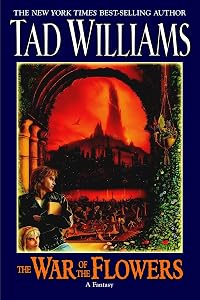
The War of the Flowers
by Tad Williams
On This Page
Description
When his music career becomes stagnant, Theo Vilmos seeks solace in a secluded cabin in the woods where he discovers an old book written by his great-uncle that transports him into the terrifying world of Faerie.Tags
Recommendations




Member Recommendations
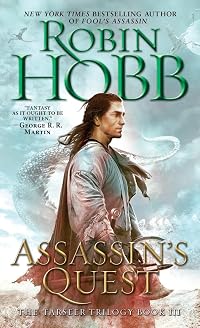
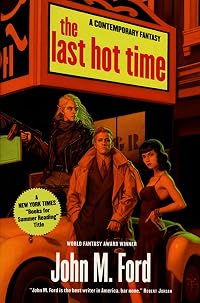
Tithe by Holly Black
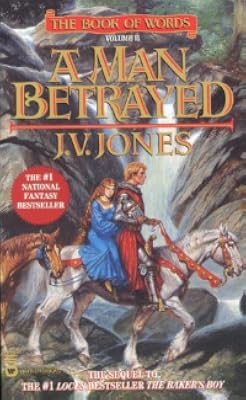
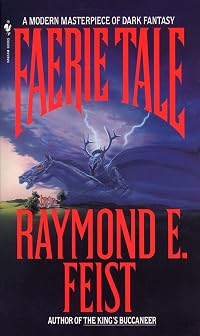
Jannes Both novels does the "modern faerie" thing, but in very different ways. Both manages a genuine sense of awe and magic, which is rare enough in fantasy today, so they're well worth checking out.
Cecrow Classic urban fantasy, featuring a musician protagonist.
Member Reviews
I love this book. Loved it when I first read it nine years ago, and love it just as much upon re-reading it today. I'm in awe of the way Tad Williams wrote such a complex story without ever losing a single plot thread. The way everything connected in the end is nothing short of pure genius. There are so many characters to keep track of, each with their own personality, history, and way of speaking -- and Williams does it beautifully. The thing I like most about reading fantasy is the way great epic fantasy parallels our lives. Sure, it might be set in a strange world and populated by odd beings, but at its heart, a fantasy story is about us. We can see ourselves reflected in the really good ones, and War of the Flowers is definitely show more such a book. It tackles subjects like prejudice, slavery, corruption, and oppression -- yet it does so delicately, under the guise of a fast-paced adventure story. Tad Williams is truly one of the masters of the genre, and this is by far his best work. show less
I had this book sitting around for literally years, and had tried starting it once or twice previously before getting into it this time. It doesn't have to do with the writing itself, I think; it was probably because of the mood I was in at those times. The beginning of the book, like the first 150 pages or so, are also quite bleak; you get a sense of and empathize with how trapped the lead character, Theo, feels in his life, and it's not a fun place to be.
Then the scene moves to Faerie, where there's a lot of world-building and character development, chases and lulls, etc. The story comes alive there, and since Theo is on the run for a lot of it, it's good that Williams gets across a real sense of urgency. Faerie as a place with its show more own rules that Theo isn't really aware of comes off nicely, and the main supporting cast is generally quite good. I liked the plot, and how it played out. The falling apart of a fairly feudal society seen through the eyes of someone who doesn't really know the problems with the system is pretty interesting.
I had some problems with the pacing at points, though; there are lulls in the book, and there's a part which is ultimately like one conversation with bricks of exposition for a couple of characters that really, I think, could have been better spread out over a couple of chapters. Which isn't to say I didn't like the exposition-giving character (to name who it is would be a spoiler); in fact, I think that's the most interesting character in the book.
Stylistically, Williams is quite good, I think, and as I said, I liked most of the characters. I didn't really like the love interest subplot; it wasn't tacked on, but I didn't really buy it, either.
The book is a fairly quick read once you get into it, especially for a 800+ page novel, but the beginning isn't fun. If you know that going in, I think it's better, so if you're in the mood for it, it's worth a try. show less
Then the scene moves to Faerie, where there's a lot of world-building and character development, chases and lulls, etc. The story comes alive there, and since Theo is on the run for a lot of it, it's good that Williams gets across a real sense of urgency. Faerie as a place with its show more own rules that Theo isn't really aware of comes off nicely, and the main supporting cast is generally quite good. I liked the plot, and how it played out. The falling apart of a fairly feudal society seen through the eyes of someone who doesn't really know the problems with the system is pretty interesting.
I had some problems with the pacing at points, though; there are lulls in the book, and there's a part which is ultimately like one conversation with bricks of exposition for a couple of characters that really, I think, could have been better spread out over a couple of chapters. Which isn't to say I didn't like the exposition-giving character (to name who it is would be a spoiler); in fact, I think that's the most interesting character in the book.
Stylistically, Williams is quite good, I think, and as I said, I liked most of the characters. I didn't really like the love interest subplot; it wasn't tacked on, but I didn't really buy it, either.
The book is a fairly quick read once you get into it, especially for a 800+ page novel, but the beginning isn't fun. If you know that going in, I think it's better, so if you're in the mood for it, it's worth a try. show less
Two features stand out -- this is an urban fantasy read, but not here in our world, but in 'the city' of the fae. After his mother's death Theo Vilmos, a singer, inherits a journal from his great uncle, Eamonn Dowd. The journal, which he thinks is a work of fiction, is about traveling to a city in fairyland that Dowd names New Erewhon. A city, strange and yet familiar. Theo is aware that, at 30, he is still struggling to grow up; he has always felt incapable of understanding what is expected of him socially although until now he's never examined himself, but after his girlfriend loses a baby and breaks up with him and his mother dies . . . he's ready. THEN he is catapulted into the fae world accompanied by a tiny sprite with a sharp show more tongue who saves his life and chased by a worse-than-zombie creature WHERE it turns out the bad guys of the elite Flowers want to destroy the mortal world in order to suck all the power out of it into theirs . . . etcetera, plot plot plot . . . and they also really want Theo for some reason. Theo continues to be dense and self-absorbed (unthinkingly, he is not a bad guy) his progress is frustratingly slow but later you realize there is a good reason why. What I enjoyed most were all the varied creatures of fairyland from sprites and nixies to goblins and ogres. The Flower Lords are awful stuck up beautiful elven fairy types, of course, but not all of them, of course. Lots of fun, not Williams' best, but a good read. ***1/2 show less
Derivative. Reminds me rather unfortunately of [a:Christopher Golden|4522|Christopher Golden|http://d202m5krfqbpi5.cloudfront.net/authors/1207236514p2/4522.jpg]'s the Veil trilogy, and Terry Brooks' Landover series, neither of which I enjoyed.
Bear with my summation, so that I may explain the multitude of ways in which this book alternately irritated and bored me.
30-something Theo is lead singer in a garage band, contemplating changing his life as his girlfriend has a baby on the way. Except, of course, he's not going to change it tonight, despite generally disliking his bandmates; he's going to go home late without returning her calls and sneak in. Asshat. He discovers sneaking doesn't matter, as she's been bleeding out in the bathroom show more after a miscarriage. Although he tries to support her, she breaks up with him and her mom whisks her away. Its the first bud of sympathy I develop for him. He takes refuge with his mom, who is dying of cancer, and she states "I never loved you like I should." The seedling of sympathy inches a little taller, and even sprouts a leaf. She dies, he goes through her things and discovers a mysterious safety deposit book holding a book written by his great uncle. 'Hey,' he thinks, 'I'll read it.' To his surprise, it's all about his uncle's adventures in Fairyland. Perhaps it's a fiction book.' Well, maybe it's worth something,' he thinks and keeps reading.
Meanwhile, he decides to sell mom's house, live off the proceeds and go find himself in a cabin in the woods. 'Good idea,' I think. 'Time to focus on some personal growth.' Then one night he gets really drunk at a bar, drives home (ass) and wakes up to discover Tinkerbell Applecore the sprite hanging out in his room. They start talking but are rudely interrupted by Big Body-snatching Evil knocking on the door (very polite Big Evil). Evil, of course, realizes the bathroom window is open, so heads there next. Dumbass opens the door to the bathroom to verify Big Evil has indeed entered the house, thus forcing Applecore to fight on his behalf because he's too stupid stunned to react. She opens a door to Fairyland, he goes through it and pulls her with, spoiling her intentions about where they would land in Fairyland.
Part two: Fairyland. Every trope you've ever read. First we had the trash-talking-adorable-Tinkerbell stereotype (which might have been funny the first time someone thought of it twenty years ago), followed by the I'm-not-the-one-to-answer-questions trope, which leads to the take-action-before-you-understand-consequences device. Action starts off with the faceless-band-of-thugs-chasing-me contrivance, which continues the no-time-for-questions ruse. Then there's the mysterious/sexy-stranger-saves-me-on-the-train device (the only acceptable example of this is in North by Northwest), a beautiful goth-looking chick that you just know is destined for him after a misunderstanding, just to round out the tropey-tropes.
Character-wise, Theo remains an ass. Despite being told early on that his saying, "Jesus Christ" all the time is physically offensive to the fae (causes them pain), and despite not having a shred of evidence as to his Christianess, every other exclamation is some version of "Jesus," or even "goddamn." Applecore tells him about ten times, but he still doesn't listen. As I said, an ass. Meanwhile, all this time he's carrying around his uncle's little guide to fairyland travelogue, but he doesn't bother to open it because he's too frustrated and tired of not understanding anything (!?!). He gets the hots for the fairy on the train and gets pissy with Applecore for ruining his chances, despite earlier suspicion and dislike of nearly every creature in Fairyland--especially the ugly ones. He's so sure a ogre is hitting on him that he thinks he's being kind when he says that he doesn't like her type when she was just trying to be nice. Any sympathy generated in his rough beginning is soundly stomped into dust by this time. Applecore says it best when she says, "hey, if I wasn't working for the good guys, I would consider joining the bad side after meeting you."
Plot and characterization aside, how was it? Well, it rather picked up around page 300 or so when it stopped focusing so much on the whiny lead and started focusing on the plot, when a small alliance of fairy houses makes a bid to take control of the fae world and ours. Then it goes into some oddness about the goblin revolution, and suddenly the tone is quite serious. I might have kind of liked that part if I didn't have to read about Theo, who suddenly looks inside and discovers a heart that grows three sizes at the end.
Overall: Quite possibly beyond redemption, except for one or two phrases and the singularly interesting idea of a 'goblin's tale'--it will always have a hole in it.
Much like this one.
Cross posted at: http://clsiewert.wordpress.com/2013/07/22/the-war-of-the-flowers-by-tad-williams... show less
Bear with my summation, so that I may explain the multitude of ways in which this book alternately irritated and bored me.
30-something Theo is lead singer in a garage band, contemplating changing his life as his girlfriend has a baby on the way. Except, of course, he's not going to change it tonight, despite generally disliking his bandmates; he's going to go home late without returning her calls and sneak in. Asshat. He discovers sneaking doesn't matter, as she's been bleeding out in the bathroom show more after a miscarriage. Although he tries to support her, she breaks up with him and her mom whisks her away. Its the first bud of sympathy I develop for him. He takes refuge with his mom, who is dying of cancer, and she states "I never loved you like I should." The seedling of sympathy inches a little taller, and even sprouts a leaf. She dies, he goes through her things and discovers a mysterious safety deposit book holding a book written by his great uncle. 'Hey,' he thinks, 'I'll read it.' To his surprise, it's all about his uncle's adventures in Fairyland. Perhaps it's a fiction book.' Well, maybe it's worth something,' he thinks and keeps reading.
Meanwhile, he decides to sell mom's house, live off the proceeds and go find himself in a cabin in the woods. 'Good idea,' I think. 'Time to focus on some personal growth.' Then one night he gets really drunk at a bar, drives home (ass) and wakes up to discover Tinkerbell Applecore the sprite hanging out in his room. They start talking but are rudely interrupted by Big Body-snatching Evil knocking on the door (very polite Big Evil). Evil, of course, realizes the bathroom window is open, so heads there next. Dumbass opens the door to the bathroom to verify Big Evil has indeed entered the house, thus forcing Applecore to fight on his behalf because he's too stupid stunned to react. She opens a door to Fairyland, he goes through it and pulls her with, spoiling her intentions about where they would land in Fairyland.
Part two: Fairyland. Every trope you've ever read. First we had the trash-talking-adorable-Tinkerbell stereotype (which might have been funny the first time someone thought of it twenty years ago), followed by the I'm-not-the-one-to-answer-questions trope, which leads to the take-action-before-you-understand-consequences device. Action starts off with the faceless-band-of-thugs-chasing-me contrivance, which continues the no-time-for-questions ruse. Then there's the mysterious/sexy-stranger-saves-me-on-the-train device (the only acceptable example of this is in North by Northwest), a beautiful goth-looking chick that you just know is destined for him after a misunderstanding, just to round out the tropey-tropes.
Character-wise, Theo remains an ass. Despite being told early on that his saying, "Jesus Christ" all the time is physically offensive to the fae (causes them pain), and despite not having a shred of evidence as to his Christianess, every other exclamation is some version of "Jesus," or even "goddamn." Applecore tells him about ten times, but he still doesn't listen. As I said, an ass. Meanwhile, all this time he's carrying around his uncle's little guide to fairyland travelogue, but he doesn't bother to open it because he's too frustrated and tired of not understanding anything (!?!). He gets the hots for the fairy on the train and gets pissy with Applecore for ruining his chances, despite earlier suspicion and dislike of nearly every creature in Fairyland--especially the ugly ones. He's so sure a ogre is hitting on him that he thinks he's being kind when he says that he doesn't like her type when she was just trying to be nice. Any sympathy generated in his rough beginning is soundly stomped into dust by this time. Applecore says it best when she says, "hey, if I wasn't working for the good guys, I would consider joining the bad side after meeting you."
Plot and characterization aside, how was it? Well, it rather picked up around page 300 or so when it stopped focusing so much on the whiny lead and started focusing on the plot, when a small alliance of fairy houses makes a bid to take control of the fae world and ours. Then it goes into some oddness about the goblin revolution, and suddenly the tone is quite serious. I might have kind of liked that part if I didn't have to read about Theo, who suddenly looks inside and discovers a heart that grows three sizes at the end.
Overall: Quite possibly beyond redemption, except for one or two phrases and the singularly interesting idea of a 'goblin's tale'--it will always have a hole in it.
Much like this one.
Cross posted at: http://clsiewert.wordpress.com/2013/07/22/the-war-of-the-flowers-by-tad-williams... show less
Theo is a musician who has been trying to break into the big time for years, living with his girlfriend who is pregnant. When she loses the baby, his girlfriend and then his mother his life is thrown into chaos. Then he finds his uncle's diary which suggests that there's another world beside our our, a world of faerie.
It's not a bad book but it's also a story that could have been shortened without any real loss of plot or story. It's quite an interesting story of another world and uses the stories of Faerie quite well.
It's not a bad book but it's also a story that could have been shortened without any real loss of plot or story. It's quite an interesting story of another world and uses the stories of Faerie quite well.
First let me say, I like Tad Williams. This is the second book of his I've read (the first was Tailchaser's Song, also a good read) and I did enjoy it. As another reviewer once said, Tad Williams' books breathe. His descriptions are vivid, his characters are real. That being said, this book ain't perfect.
The book starts out introducing us to the great under-achiever Theo Vilmos. Theo Vilmos is a musician in yet another in a long line of "not terribly successful Northern California rock bands," as the cover blurb put it. His bandmates are kids a decade younger than his thiry years and his pregnant girlfriend Cat thinks he's irresponsible. When Cat loses the baby, Theo's life is on the rocks. She dumps him from her hospital bed leaving show more him with a feeling like his world is falling apart and a mouthful of nasty words. So Theo moves back into his mother's house and gets a 'real' job, but life isn't done giving him little surprises as he finds out his mother has cancer. After her death, Theo finds himself a cabin in the woods and that's where life gives him the biggest surprise of all.
After an incident in his cabin with an undead corpse and a sprite, Theo finds himself in the realm of Faerie and in a whole lot of trouble. He's in a world he doesn't understand and there don't seem to be too many people looking out for his safety, the foul-mouthed fairy sprite Applecore being the reluctant exception. The book becomes pretty fast paced after Theo's arrival and we begin to learn all about this new and dangerous Faerie and the government corruption that pervades all major political machinations and makes the lower class fairies resentful.
When you think fairies, you usually start thinking cutesy little flying people named after fruits and pretty flowers and you think it's all fairy dust and happiness. The author does a good job with overcoming that popular association and making the fairies seem amoral, alien, ruthless, and in some cases very sinister.
The players are all well characterized and represented, the villains included. It's a common disappointment when I'm reading traditional fantasy books to come across villains that are evil simply to be evil and that have no real motivation to want to destroy the world other than because it seems like a good idea at the time. The villains here have motivations for their actions and some part of me thought as I was reading this that were I in their position, I might have seriously considered doing what they're doing. The means they use make you a little less sympathetic to their cause as the book goes on however and this might be a good time to mention that if you were personally deeply affected by the tragedy of 9/11, you may want to skip this one. As the author states in his acknowledgement in the very front of the book, he tried to avoid any uncanny similarities to 9/11 after the fact, but the event in the book that resembles 9/11 had been a major plot point in drafts predating the tragedy. It's a very grim part of the book and a major event in the plot, so be aware of that before you decide to read this.
The things I didn't like - the fact that the protagonist changes throughout from a shallow, irresposible sort of loser to a more grown up kind of guy is really shoved into the reader's face as though to make sure we didn't miss it even as obvious as it was. That bugged me. Also, when Theo arrives in Faerie, the way the natives reacted to him and treat him really angered me. Some of the things that ocurred seem to go along the lines of proving to us again how shallow Theo was, but his actions didn't strike me as anything other than what a normal human being in that situation would do. The things that were dubbed shallow by the other characters were understandable reactions to people and things Theo had no experience with and didn't understand. I found this an annoyance rather than anything that added to the story.
Specific things I liked - Applecore, for one. She's my favorite character from this book because she brought a sarcastic bite to every situation and a humor that was always welcome in some of the grim parts of the book. Also, one particular villain, the Terrible Child, was deliciously creepy. Characters were well-written, descriptions were well-done, this interpretation of the world of Faerie was wonderful and imaginative. I enjoyed this book overall enough to buy it and I recommend it. show less
The book starts out introducing us to the great under-achiever Theo Vilmos. Theo Vilmos is a musician in yet another in a long line of "not terribly successful Northern California rock bands," as the cover blurb put it. His bandmates are kids a decade younger than his thiry years and his pregnant girlfriend Cat thinks he's irresponsible. When Cat loses the baby, Theo's life is on the rocks. She dumps him from her hospital bed leaving show more him with a feeling like his world is falling apart and a mouthful of nasty words. So Theo moves back into his mother's house and gets a 'real' job, but life isn't done giving him little surprises as he finds out his mother has cancer. After her death, Theo finds himself a cabin in the woods and that's where life gives him the biggest surprise of all.
After an incident in his cabin with an undead corpse and a sprite, Theo finds himself in the realm of Faerie and in a whole lot of trouble. He's in a world he doesn't understand and there don't seem to be too many people looking out for his safety, the foul-mouthed fairy sprite Applecore being the reluctant exception. The book becomes pretty fast paced after Theo's arrival and we begin to learn all about this new and dangerous Faerie and the government corruption that pervades all major political machinations and makes the lower class fairies resentful.
When you think fairies, you usually start thinking cutesy little flying people named after fruits and pretty flowers and you think it's all fairy dust and happiness. The author does a good job with overcoming that popular association and making the fairies seem amoral, alien, ruthless, and in some cases very sinister.
The players are all well characterized and represented, the villains included. It's a common disappointment when I'm reading traditional fantasy books to come across villains that are evil simply to be evil and that have no real motivation to want to destroy the world other than because it seems like a good idea at the time. The villains here have motivations for their actions and some part of me thought as I was reading this that were I in their position, I might have seriously considered doing what they're doing. The means they use make you a little less sympathetic to their cause as the book goes on however and this might be a good time to mention that if you were personally deeply affected by the tragedy of 9/11, you may want to skip this one. As the author states in his acknowledgement in the very front of the book, he tried to avoid any uncanny similarities to 9/11 after the fact, but the event in the book that resembles 9/11 had been a major plot point in drafts predating the tragedy. It's a very grim part of the book and a major event in the plot, so be aware of that before you decide to read this.
The things I didn't like - the fact that the protagonist changes throughout from a shallow, irresposible sort of loser to a more grown up kind of guy is really shoved into the reader's face as though to make sure we didn't miss it even as obvious as it was. That bugged me. Also, when Theo arrives in Faerie, the way the natives reacted to him and treat him really angered me. Some of the things that ocurred seem to go along the lines of proving to us again how shallow Theo was, but his actions didn't strike me as anything other than what a normal human being in that situation would do. The things that were dubbed shallow by the other characters were understandable reactions to people and things Theo had no experience with and didn't understand. I found this an annoyance rather than anything that added to the story.
Specific things I liked - Applecore, for one. She's my favorite character from this book because she brought a sarcastic bite to every situation and a humor that was always welcome in some of the grim parts of the book. Also, one particular villain, the Terrible Child, was deliciously creepy. Characters were well-written, descriptions were well-done, this interpretation of the world of Faerie was wonderful and imaginative. I enjoyed this book overall enough to buy it and I recommend it. show less
I thought War of the Flowers was lame for the first chapter or so (which deals with a loser rock-&-roll musician first dealing with his girlfriend having a miscarriage, then his mother ill and dying...), then I changed my mind - once Faerie came into the picture, and William's quirky world-building skills were given the chance to shine... A remarkable picture of a glamorous yet corrupt land, where, in imitation of humanity, fairies cut off their own wings, enslave one another, and will do anything in the pursuit of power... much like our own land. Constantly on the run from terrifying monsters and any number of plotting and amoral lords of the land, Theo Vilmos must find his true identity and a place for himself....
Members
- Recently Added By
Lists

Best Fantasy Novels
821 works; 361 members

Best Urban Fantasy
634 works; 78 members

Faerie Mythology
87 works; 12 members
Book Worlds We'd Like To Visit
322 works; 158 members
Author Information

130+ Works 54,767 Members
Tad Williams Tad Williams grew up in Palo Alto, California. He didn't go off to college after high school, he was more interested in living on his own and supporting himself. Williams therefore began a long string of collectively bad part time jobs. He stacked tiles, made tacos, sold shoes, peddled insurance, collected loans not all at the same show more time and worked at other things in his free moments, such as writing, as well as, several years in a rock band, hosting a radio talk show, making commercial and uncommercial art, acting, and others DAW was the first to publish Williams, accepting "Tailchaser's Song," which became an big success. It never occurred to Williams that his books wold not sell and indeed they have not stopped selling since the beginning. (Bowker Author Biography) show less
Awards and Honors
Distinctions
Series
Belongs to Publisher Series
DAW Book Collectors (1255)
Work Relationships
Common Knowledge
- Canonical title
- The War of the Flowers
- Original title
- The war of the flowers
- Alternate titles*
- Elfenrijk
- Original publication date
- 2003
- People/Characters
- Theo Vilmos
- Dedication
- This book is dedicated with great love to my wife,
Deborah Beale, who makes my life worth living in more
ways than I can count, let alone list here.
A good marriage and a loving family may not be the
easiest t... (show all)hings in the world to create, but I find it hard to
believe there is anything more worth the effort.
It is a Great Adventure, and I share mine
with a wonderful woman.
Deb, you are my personal fairytale ending. - First words
- A single flower, a hellebore, stood in a vase of volcanic glass in the middle of the huge desk, glowing almost radioactively white in the pool of a small, artful spotlight.
- Last words
- (Click to show. Warning: May contain spoilers.)One day at a time.
- Original language*
- Englisch
*Some information comes from Common Knowledge in other languages. Click "Edit" for more information.
Classifications
Statistics
- Members
- 2,552
- Popularity
- 7,506
- Reviews
- 33
- Rating
- (3.82)
- Languages
- 7 — Czech, Dutch, English, French, German, Hungarian, Polish
- Media
- Paper, Ebook
- ISBNs
- 22
- ASINs
- 13