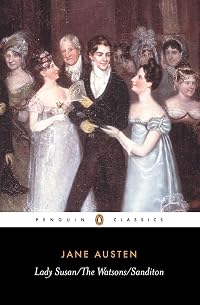
Lady Susan / The Watsons / Sanditon
by Jane Austen
On This Page
Description
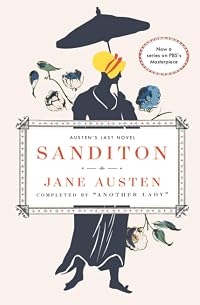
Brought to you by Penguin.This Penguin Classic is performed by award-winning actress Emilia Fox who is best known for her starring role in the long running BBC drama Silent Witness. She has also won acclaim for her performances in Strangers, Pride and Prejudice and Delicious. This definitive recording includes an Introduction by Margaret Drabble.
These three short works show Austen experimenting with a variety of different literary styles, from melodrama to satire, and exploring a range of show more social classes and settings. The early epistolary novel Lady Susan depicts an unscrupulous coquette, toying with the affections of several men. In contrast, The Watsons is a delightful fragment, whose spirited heroine Emma Watson finds her marriage opportunities limited by poverty and pride. Written in the last months of Austen's life, the uncompleted novel Sanditon, set in a newly established seaside resort, offers a glorious cast of hypochondriacs and speculators, and shows an author contemplating a the great social upheavals of the Industrial Revolution with a mixture of scepticism and amusement.
Margaret Drabble's introduction examines these three works in the context of Jane Austen's major novels and her life, and discusses the social background of her fiction. This edition features a new chronology.
Jane Austen (1775-1817) was extremely modest about her own genius but has become one of English literature's most famous women writers. Austen began writing at a young age, embarking on what is possibly her best-known work, Pride and Prejudice, at the age of 22. She was also the author of Sense and Sensibility, Persuasion, Northanger Abbey and Mansfield Park.
'In [Sanditon] she exploits her greatest gifts, her management of dialogue and her skill with monologue. The book feels open and modern ... as vigorous and inventive as her earlier work'
Carol Shields
. show less
Tags
Recommendations





Member Reviews
This definitely shouldn't be your introduction to Jane Austen, and imagine it would only be picked up by avid fans like myself having read and reread her six mature completed novels and hungry for more. Lady Susan, which feels truncated, is a very early epistolary novel, and The Watsons was abandoned and Sandition left incomplete upon Austen's death. (And incidentally, if you have the version with an introduction with Margaret Drabble, you might want to read it aftewards--she gives too much away.)
Lady Susan, which starts this volume, is really a novella, not a novel--it's only 23,021 words. It was written in 1794 when Austen was still in her teens. I found it hard to get into at first. Unlike her mature, completed novels, this is an show more epistolary novel told in letters, not third-person narration. The story feels thin compared to those other works as a result, although about halfway through we got more of a sense of scenes, with actual dialogue. It's not that I don't find it worth reading. This is very different in tone than Austen's other novels--her titular heroine is a villain--a catty and malicious adulteress trying to force her daughter Frederica into a marriage of convenience. But if I weren't an Austen fan, I doubt I'd have persisted in reading it far enough for the fascination of Lady Susan's machinations to take hold, although take hold they did. The ending nevertheless feels abrupt to me. (I understand Phyllis Ann Karr did a third person narrative adaptation of the story. Particularly since she's an author I've liked, I'd love to read that. Sadly it's long out of print.)
The Watsons is an abandoned novel of about 17,500 words written in Austen's largely "silent" middle period after Sense and Sensibility and Price and Prejudice but before Mansfield Park and Emma and Persuasion. The protagonist in this novel, Emma Watson, is very likable. Like Fanny Price, she's someone who was raised away from her birth family by a rich relation--except she had expectations of being an heiress, which were disappointed by her rich aunt marrying again, throwing her back to her original family. Her family is respected enough to be able to mix with the best families, including a Lord interested in Emma, and comfortable enough to have a servant, but in the circles they run around in are considered "poor." Only nineteen, Emma has a lot more confidence than Fanny Price, and a lot less snobbishness than her namesake Emma Woodhouse. She endeared herself to me when she goes to the rescue of a ten-year-old boy stood up at a dance. I'm only sorry there wasn't more, and we had to leave Emma soon after a ball parting from her brother and his wife. I'm sure that if Jane Austen had been able to complete this novel, I'd be rating it five or four stars as an equal to Pride and Prejudice or Emma. As it is, this had me running to read Joan Aiken's "continuation" Emma Watson immediately afterwards hungry for more--but was, alas, disappointed. I'm afraid I'll just have to be happy with what Austen left us.
Sanditon was left uncompleted by Jane Austen's death, and I loved what I read to pieces, even more than The Watsons, and can only mourn that her death left Sanditon forever incomplete. It had such possibilities! I really liked our heroine Charlotte Heywood, with her obvious intelligence, lack of pretension and good sense. In the eleven chapters of 26,000 or so words we have left to us, Lady Denham and the three Parker hypochondriac siblings strike me as brilliant comic creations. Then there's Sir Edward Denham, who models himself after rakes like Richardson's Lovelace and schemes to seduce, and if not, abduct, Clara, his rival for Lady Denham's inheritance. Then there's Miss Lambe, "a young West Indian of large fortune," who is "about seventeen, half mulatto, and chilly and tender." What an interesting character to find in an Austen novel! After my experience with Aiken's Watsons completion, I didn't expect much from the 1975 completion by "Another Lady" For what it's worth, I loved it. No, I'm not saying she's Austen's equal. But she tacked on her story seamlessly from where Austen ended, developed the characters very nicely, seemed to get the period details right, and I ended reading the story with a smile.
This book gets only three and a half stars because I can't imagine anyone but us hardcore Austen fanatics or scholars wanting to read incomplete novels and an unpolished bit of juvenalia, and these can't compare to her mature novels. But I did love reading these. show less
Lady Susan, which starts this volume, is really a novella, not a novel--it's only 23,021 words. It was written in 1794 when Austen was still in her teens. I found it hard to get into at first. Unlike her mature, completed novels, this is an show more epistolary novel told in letters, not third-person narration. The story feels thin compared to those other works as a result, although about halfway through we got more of a sense of scenes, with actual dialogue. It's not that I don't find it worth reading. This is very different in tone than Austen's other novels--her titular heroine is a villain--a catty and malicious adulteress trying to force her daughter Frederica into a marriage of convenience. But if I weren't an Austen fan, I doubt I'd have persisted in reading it far enough for the fascination of Lady Susan's machinations to take hold, although take hold they did. The ending nevertheless feels abrupt to me. (I understand Phyllis Ann Karr did a third person narrative adaptation of the story. Particularly since she's an author I've liked, I'd love to read that. Sadly it's long out of print.)
The Watsons is an abandoned novel of about 17,500 words written in Austen's largely "silent" middle period after Sense and Sensibility and Price and Prejudice but before Mansfield Park and Emma and Persuasion. The protagonist in this novel, Emma Watson, is very likable. Like Fanny Price, she's someone who was raised away from her birth family by a rich relation--except she had expectations of being an heiress, which were disappointed by her rich aunt marrying again, throwing her back to her original family. Her family is respected enough to be able to mix with the best families, including a Lord interested in Emma, and comfortable enough to have a servant, but in the circles they run around in are considered "poor." Only nineteen, Emma has a lot more confidence than Fanny Price, and a lot less snobbishness than her namesake Emma Woodhouse. She endeared herself to me when she goes to the rescue of a ten-year-old boy stood up at a dance. I'm only sorry there wasn't more, and we had to leave Emma soon after a ball parting from her brother and his wife. I'm sure that if Jane Austen had been able to complete this novel, I'd be rating it five or four stars as an equal to Pride and Prejudice or Emma. As it is, this had me running to read Joan Aiken's "continuation" Emma Watson immediately afterwards hungry for more--but was, alas, disappointed. I'm afraid I'll just have to be happy with what Austen left us.
Sanditon was left uncompleted by Jane Austen's death, and I loved what I read to pieces, even more than The Watsons, and can only mourn that her death left Sanditon forever incomplete. It had such possibilities! I really liked our heroine Charlotte Heywood, with her obvious intelligence, lack of pretension and good sense. In the eleven chapters of 26,000 or so words we have left to us, Lady Denham and the three Parker hypochondriac siblings strike me as brilliant comic creations. Then there's Sir Edward Denham, who models himself after rakes like Richardson's Lovelace and schemes to seduce, and if not, abduct, Clara, his rival for Lady Denham's inheritance. Then there's Miss Lambe, "a young West Indian of large fortune," who is "about seventeen, half mulatto, and chilly and tender." What an interesting character to find in an Austen novel! After my experience with Aiken's Watsons completion, I didn't expect much from the 1975 completion by "Another Lady" For what it's worth, I loved it. No, I'm not saying she's Austen's equal. But she tacked on her story seamlessly from where Austen ended, developed the characters very nicely, seemed to get the period details right, and I ended reading the story with a smile.
This book gets only three and a half stars because I can't imagine anyone but us hardcore Austen fanatics or scholars wanting to read incomplete novels and an unpolished bit of juvenalia, and these can't compare to her mature novels. But I did love reading these. show less
A long-time Austen fan, I'd long meant to read her unpublished (in her lifetime, anyway) works, but kept putting it off, not knowing what to expect. As it turns out, I enjoyed the experience even more than I'd hoped. Lady Susan is such a turn from Austen's morally upright and good hearted heroines, you never know if you are rooting for or against her, but it is FUN. The two unfinished works, The Watsons and Sanditon have that bittersweet tang of wishing you could know what Austen would have ultimately done with them, but I thoroughly enjoyed getting to glimpse them just the same.
Although the Watsons and Sanditon are incomplete, Austen is just as sparkling in these works as in her six other masterpieces.
Lady Susan is an absolute horror- I love the hypocrisy that she shows in her letters; the honeyed tones with which she wheedles an invite out of her brother-in-law followed by a letter to her best friend where she expresses her true feelings on said relatives. And no one but Susan would dare evaluate her friend's husband as 'too old to be agreeable, and too young to die' !
Sanditon was humourous from the start, as we are introduced to Mr Parker, obsessed with promoting his home town as a resort. There was a lot of potential for a fascinating story, with numerous characters introduced; sadly Austen died before its show more completion.
In the Watsons I could see echoes of Pride and Prejudice as our poor heroine mixes with the wealthy but arrogant Tom Musgrave, and rejects his advances. Again this is unfinished (though Drabble's useful notes tell us the path Austen designed the story to take.)
If you love Austen's work you should absolutely read these too. show less
Lady Susan is an absolute horror- I love the hypocrisy that she shows in her letters; the honeyed tones with which she wheedles an invite out of her brother-in-law followed by a letter to her best friend where she expresses her true feelings on said relatives. And no one but Susan would dare evaluate her friend's husband as 'too old to be agreeable, and too young to die' !
Sanditon was humourous from the start, as we are introduced to Mr Parker, obsessed with promoting his home town as a resort. There was a lot of potential for a fascinating story, with numerous characters introduced; sadly Austen died before its show more completion.
In the Watsons I could see echoes of Pride and Prejudice as our poor heroine mixes with the wealthy but arrogant Tom Musgrave, and rejects his advances. Again this is unfinished (though Drabble's useful notes tell us the path Austen designed the story to take.)
If you love Austen's work you should absolutely read these too. show less
Lady Susan is a treat, with a deliciously wicked title character; it's slightly trashy and catty as hell and I really can't recommend it enough.
The Watsons is an abandoned novel of an impoverished woman of respectable family trying to find a suitable match; it's little more than a sketch and most of what's there looks like it would become parts of Austen's major novels. The unfinished Sanditon is a satirical look at a seaside resort and is much more polished than the other two works; it has the seeds of what could have been a masterpiece.
The Watsons is an abandoned novel of an impoverished woman of respectable family trying to find a suitable match; it's little more than a sketch and most of what's there looks like it would become parts of Austen's major novels. The unfinished Sanditon is a satirical look at a seaside resort and is much more polished than the other two works; it has the seeds of what could have been a masterpiece.
I own editions of these works, but this particular collection is worth having for a reason that will make me sound like a wimp: the two unfinished novels, "The Watsons" and "Sanditon," are finally, blessedly broken up into paragraphs. They only exist in draft form, and previous editors have simply presented the block text Austen left behind. Call me a wuss: I can't read a 30-page paragraph comfortably. Margaret Drabble sympathized with this sentiment and did the work to make these important works readable to a general audience.
That said: My opinion of "The Watsons" isn't much higher now than it was when I first read it years ago and felt horribly guilty about finding it dull. How can so many scholars have speculated with such furrowed show more brows on the possible deep psychological reasons as to why Austen abandoned this novel? She dropped it for the same reason plenty of writers leave plenty of unfinished drafts behind: it isn't particularly good, and the author was better off spending her time and energy elsewhere.
Until the last few pages, "The Watsons" reads like another early unfinished piece by Austen, "Catharine, or The Bower." Not that the two have any particular plot points in common, but they both feel like imitations of Austen's favorite writer, Fanny Burney. The heroines have no distinct personalities, but rather exist to serve as observers of the foibles and inconsistencies of the characters around them.
Only toward the very end of the draft does "The Watsons" show signs of having been written by a genius. There are sly digs such as this line: "Female economy will do a great deal, my Lord, but it cannot turn a small income into a large one." And this character description easily stands the test of the two hundred years that have passed since Austen first jotted it down:
"Robert Watson was an attorney at Croydon, in a good way of business; very well satisfied with himself for the same, and for having married the only daughter of the attorney to whom he had been the clerk, with a fortune of six thousand pounds. --Mrs. Robert was not less pleased with herself for having had that six thousand pounds, and for being now in possession of a very smart house in Croydon, where she gave genteel parties, and wore fine clothes."
"Not less pleased with herself for having had that six thousand pounds" is perfect -- but it doesn't change the fact that the previous dozens of pages consist of such uninspired, conventional prose as:
"A week or ten days rolled quietly away after this visit, before any new bustle arose to interrupt even for half a day, the tranquil and affectionate intercourse of the two sisters, whose mutual regard was increasing with the intimate knowledge of each other which such intercourse produced."
Yes, it's Austen. It's still a yawn.
"Lady Susan," a much earlier work, is far more mature. The characters leap off the page, and even the virtuous ones are not the pictures of perfection Austen despised. Lady Susan herself is brilliant -- a glittering portrait of pure malice.
Drabble, the editor of this particular collection, says that Austen "liked 'Lady Susan' well enough to make a fair copy of it, and not well enough to pursue its publication." That's misleading. Austen revisited this story, coolly harvested it for organs, and brought it to mature perfection in "Mansfield Park." There was no point in "pursuing publication" of this short work once she decided to give the world the same story in the form she preferred: third-person prose, rather than the novel in letters that "Lady Susan" is.
"Sanditon" is the novel Austen was working on when she died at the age of 42. (Yes, her mother and siblings all outlived her by *decades.* Yes, the one child who didn't inherit the family trait of longevity was the sole genius of the bunch. Yes, I'm bitter.) The fact that Austen didn't live long enough to finish this novel, let alone the others she would have written, is matter of intense regret for many reasons that I don't have the heart to detail here.
One that I'd like to point out is that "Sanditon" has a black character -- Austen's first and only. An heiress, no less. She's desirable in the small town the novel's named for because she's young, single, and rich, and described by Austen as "chilly and tender," with "a maid of her own." If Austen had finished this novel, we would have been able to read contemporary reviews responding to this character, whose interest to the *other* characters lies solely in whether she can be persuaded to buy Lady Denham's expensive asses' milk as treatment for her illness. (Unlike almost every other character in this work, Miss Lambe is not a hypochondriac.)
I would very much have liked to see what the public response would have been to Austen including a black character in a novel set in her own Regency England *and not treating that like any kind of big deal.* According to this article (http://www.victoriaspast.com/BlackLinks/blackhst.htm), there were between 20,000 and 40,000 black people living in England at the very beginning of the 19th century. Most of them were very poor. I find it fascinating that Austen decided, as always, to stick to her own social class when it came to her writing, but saw no reason why that shouldn't include a character of color -- and one who *isn't* defined simply by being "the black character." In the few pages Austen lived to complete of this novel, Miss Lambe is presented as one of the few characters who doesn't (literally) buy into the ridiculous extremes of self-medicating that the other characters do. She steadily resists attempts to lure her into spending some of her considerable fortune on costly quackery. She has a lady's maid -- a very expensive servant that only one of Austen's main characters could afford. And that description: "chilly and tender." Where was *that* going to lead this seventeen-year-old? Who *was* Miss Lambe?
Sadly, Austen didn't live long enough to tell us. show less
That said: My opinion of "The Watsons" isn't much higher now than it was when I first read it years ago and felt horribly guilty about finding it dull. How can so many scholars have speculated with such furrowed show more brows on the possible deep psychological reasons as to why Austen abandoned this novel? She dropped it for the same reason plenty of writers leave plenty of unfinished drafts behind: it isn't particularly good, and the author was better off spending her time and energy elsewhere.
Until the last few pages, "The Watsons" reads like another early unfinished piece by Austen, "Catharine, or The Bower." Not that the two have any particular plot points in common, but they both feel like imitations of Austen's favorite writer, Fanny Burney. The heroines have no distinct personalities, but rather exist to serve as observers of the foibles and inconsistencies of the characters around them.
Only toward the very end of the draft does "The Watsons" show signs of having been written by a genius. There are sly digs such as this line: "Female economy will do a great deal, my Lord, but it cannot turn a small income into a large one." And this character description easily stands the test of the two hundred years that have passed since Austen first jotted it down:
"Robert Watson was an attorney at Croydon, in a good way of business; very well satisfied with himself for the same, and for having married the only daughter of the attorney to whom he had been the clerk, with a fortune of six thousand pounds. --Mrs. Robert was not less pleased with herself for having had that six thousand pounds, and for being now in possession of a very smart house in Croydon, where she gave genteel parties, and wore fine clothes."
"Not less pleased with herself for having had that six thousand pounds" is perfect -- but it doesn't change the fact that the previous dozens of pages consist of such uninspired, conventional prose as:
"A week or ten days rolled quietly away after this visit, before any new bustle arose to interrupt even for half a day, the tranquil and affectionate intercourse of the two sisters, whose mutual regard was increasing with the intimate knowledge of each other which such intercourse produced."
Yes, it's Austen. It's still a yawn.
"Lady Susan," a much earlier work, is far more mature. The characters leap off the page, and even the virtuous ones are not the pictures of perfection Austen despised. Lady Susan herself is brilliant -- a glittering portrait of pure malice.
Drabble, the editor of this particular collection, says that Austen "liked 'Lady Susan' well enough to make a fair copy of it, and not well enough to pursue its publication." That's misleading. Austen revisited this story, coolly harvested it for organs, and brought it to mature perfection in "Mansfield Park." There was no point in "pursuing publication" of this short work once she decided to give the world the same story in the form she preferred: third-person prose, rather than the novel in letters that "Lady Susan" is.
"Sanditon" is the novel Austen was working on when she died at the age of 42. (Yes, her mother and siblings all outlived her by *decades.* Yes, the one child who didn't inherit the family trait of longevity was the sole genius of the bunch. Yes, I'm bitter.) The fact that Austen didn't live long enough to finish this novel, let alone the others she would have written, is matter of intense regret for many reasons that I don't have the heart to detail here.
One that I'd like to point out is that "Sanditon" has a black character -- Austen's first and only. An heiress, no less. She's desirable in the small town the novel's named for because she's young, single, and rich, and described by Austen as "chilly and tender," with "a maid of her own." If Austen had finished this novel, we would have been able to read contemporary reviews responding to this character, whose interest to the *other* characters lies solely in whether she can be persuaded to buy Lady Denham's expensive asses' milk as treatment for her illness. (Unlike almost every other character in this work, Miss Lambe is not a hypochondriac.)
I would very much have liked to see what the public response would have been to Austen including a black character in a novel set in her own Regency England *and not treating that like any kind of big deal.* According to this article (http://www.victoriaspast.com/BlackLinks/blackhst.htm), there were between 20,000 and 40,000 black people living in England at the very beginning of the 19th century. Most of them were very poor. I find it fascinating that Austen decided, as always, to stick to her own social class when it came to her writing, but saw no reason why that shouldn't include a character of color -- and one who *isn't* defined simply by being "the black character." In the few pages Austen lived to complete of this novel, Miss Lambe is presented as one of the few characters who doesn't (literally) buy into the ridiculous extremes of self-medicating that the other characters do. She steadily resists attempts to lure her into spending some of her considerable fortune on costly quackery. She has a lady's maid -- a very expensive servant that only one of Austen's main characters could afford. And that description: "chilly and tender." Where was *that* going to lead this seventeen-year-old? Who *was* Miss Lambe?
Sadly, Austen didn't live long enough to tell us. show less
Lady Susan, The Watson’s, Sanditon is an omnibus volume of Jane Austen’s earlier works. She is much more cutting here than in her later, better-known volumes. Lady Susan is a complete beast of a woman: conniving, manipulative, and thoroughly selfish. She attempts to marry her daughter to a much older man, completely against the girl’s will, and tries to match herself up with a true catch. This being Austen, all does end well; the rather mean delight is in seeing Lady Susan fail.
The Watsons is the weakest of the three stories here. Emma Watson has to return to her father’s home after living with a wealthy aunt. The story is unfinished, so we can appreciate Emma’s chagrin at the behavior of her siblings, but that’s show more all.
Sanditon is full of delicious characters. Lady Denham, in particular, stands out as an unbelievably vain woman who has to be the most important person at all times. The thin plot involves the development of a seaside resort. Although Austen didn’t live to finish the book, it’s clear that this would have been a lighthearted look at the foibles of those attempting to be just a bit more significant than they really are.
Edit show less
The Watsons is the weakest of the three stories here. Emma Watson has to return to her father’s home after living with a wealthy aunt. The story is unfinished, so we can appreciate Emma’s chagrin at the behavior of her siblings, but that’s show more all.
Sanditon is full of delicious characters. Lady Denham, in particular, stands out as an unbelievably vain woman who has to be the most important person at all times. The thin plot involves the development of a seaside resort. Although Austen didn’t live to finish the book, it’s clear that this would have been a lighthearted look at the foibles of those attempting to be just a bit more significant than they really are.
Edit show less
Will you walk into my parlour?” said the Spider to the Fly, | "‘Tis the prettiest little parlour that ever you did spy.”
... "Oh no, no,” said the little Fly, “to ask me is in vain, | For who goes up your winding stair can ne’er come down again.”
Are tweets the modern equivalent of Lady Susan's letters?
5 Jul | Lady Susan Vernon seems a nice woman: very family oriented, recently widowed, keen to have daughter well educated. What’s not to like? Hmm?
5 Jul | Ah. Lady Susan presents different face when writing to friend Mrs Alicia Johnson: outrageous flirt, cruel mother, muckstirrer. Worrabitch!
6 Jul | Lady Susan’s sister-in-law, Catherine Vernon, thinks her own husband gullible and Lady Susan manipulative. Who’s the show more unreliable narrator?
6 Jul | Catherine V’s brother Reginald hears reports that Lady Susan is an ‘accomplished Coquette’ and ‘distinguished Flirt’. You just fear for him.
6 Jul | Lady Susan foists herself on her brother- and sister-in-law for Christmas. No love lost between the two women but they play the game.
6 Jul | Letter 7 very revealing. Lady S thinks daughter Frederica stupid, with ‘nothing to redeem her’, but must be married off to vapid Sir James.
6 Jul | What tangled webs she weaves! Lady S now intent on ensnaring poor Reginald de Courcy. Indulged as a child, she’s now a spoilt sociopath.
7 Jul | Reginald’s sister and parents very concerned about man-eating gold-digging Lady S, but fly in spider’s web does not control his own destiny.
7 Jul | OMG Lady S’s daughter’s got wind of plans to marry her off to young fogey Sir James and has run away from school! Caught. And now expelled.
7 Jul | So, now Frederica’s at her uncle and aunt’s house with her mother. Turns out she’s pretty, not stupid, but shy. And ogling Reginald. Oops.
7 Jul | Consternation! Ardent Sir James has followed Frederica. The young girl turns for help to Reginald, object of her ma’s regard. Cue uproar!
7 Jul | Halfway through tweeting review of Austen’s Lady Susan, recalling Jane writing this was only a year or so older than 16-year-old Frederica.
8 Jul | Lady S’s machinations could blow up in her face but she deftly averts disaster: Reginald’s assuaged, Catherine managed, Sir James sent home.
8 Jul | The merry widow’s ‘gay and triumphant’ again, plans her wedding to Reginald and Frederica’s to Sir James. But Frederica *sad face* still.
8 Jul | Self-congratulating Lady S resolves to punish all who defy her, Frederica, Reginald and Catherine; plans return to London for capital fun.
8 Jul | Frederica left behind with aunt and uncle while Lady S intends shenanigans in Town with wife-cheater Manwaring and/or Reginald de Courcy…
9 Jul | After a few weeks in the country playing games with people’s lives and feelings Lady S removes to London, where affairs start to unravel.
9 Jul | As in the best farces the action comes thick and fast: Lady S, persona non grata with some and over-familiar with others, hears bad news.
9 Jul | Reginald hears of Lady S’s affair with a married man and dumps her; friend Alicia is forbidden contact with her. Can anything else go wrong?
We don’t know what title Jane Austen would have intended to give this novel if it had been published in her lifetime; but when it eventually appeared more than half-a-century after her death it was called Lady Susan after the character who sits at the centre of a web of intrigue, tweaking the threads of everyone she comes into contact with. I find it extraordinary that Austen, who probably began this in 1793 when only eighteen, was able to so convincingly portray such an attractive but utterly ruthless widow in her mid-thirties. This she achieved despite being not much older than Frederica, the unhappy daughter of Lady S.
Whilst we abhor the crimes of the selfish protagonist of Patricia Highsmith’s The Talented Mr Ripley we are fascinated by his close shaves and perhaps secretly thrilled by his successes. It helps that many of his dupes are painted as rather less than likeable and that Ripley’s desires are largely aesthetic. Lady Susan’s dupes, although they are bland and usually weak, are however largely innocent, and her desires for wealth, status and the thrill of the chase can seem merely venal in comparison. We want her to fail in her machinations because, despite her famous beauty, youth and quick tongue, she has no redeeming features that we can really empathise with.
As it stands the novel has rather an abrupt ending. It may be that Austen, having concocted forty-one letters purporting to be from some half-dozen correspondents, found that she had fallen out of love with her coquette and simply stopped the tale. Or that she was unsure how to take the tale further. It’s surmised that in 1805 she did a fair copy of her teenage novel and added the perfunctory conclusion that her posthumous readers find less than satisfying, with indications that loose strands may or may not be tied up. It’s interesting that the authorial voice intrudes here, as it certainly does at the very end both Pride and Prejudice and Northanger Abbey: it’s as though she can’t resist adding her ironic asides, all the while with a twinkle in her eye.
Pretty much everybody, having done their homework, describes this as an epistolary novel, adding that the fashion for such novels was nearing its end in the late 1700s. Even Stevenson, setting his Treasure Island in the 18th century, included correspondence from Squire Trelawney to flesh out Jim Hawkins’ narrative in order to give a period flavour to his adventure story. As a technique for displaying characters’ motivations and thoughts, authentic voices and dissembling utterances, friendships and formalities it can often be more effective than the all-knowing third-person narrative. Can texts, tweets and social network messages ever match the colourful verbosity of longhand missives? Their impact is very different, of course, though we mustn’t imagine that because they lacked instant messaging the Regency period wasn’t capable of several posts a day, with replies often within daylight hours.
What is crystal clear is that Austen’s wit, trenchant commentary, plot handling and surgical dissection of manners were all fully formed before she was twenty. Though critics agree that it’s not in the same league as her mature works it’s still a matter of wonder that Austen was setting so high a standard of excellence in novel-writing. And Lady Susan, while not exactly a Black Widow spider, is still for me one of the great comedic creations; it’s all the more remarkable that, where a lesser talent would ensure that natural justice was done and Lady Susan had her come-uppance, this young writer chose to make her monster survive to ensnare more victims.
http://wp.me/p2oNj1-rK show less
... "Oh no, no,” said the little Fly, “to ask me is in vain, | For who goes up your winding stair can ne’er come down again.”
Are tweets the modern equivalent of Lady Susan's letters?
5 Jul | Lady Susan Vernon seems a nice woman: very family oriented, recently widowed, keen to have daughter well educated. What’s not to like? Hmm?
5 Jul | Ah. Lady Susan presents different face when writing to friend Mrs Alicia Johnson: outrageous flirt, cruel mother, muckstirrer. Worrabitch!
6 Jul | Lady Susan’s sister-in-law, Catherine Vernon, thinks her own husband gullible and Lady Susan manipulative. Who’s the show more unreliable narrator?
6 Jul | Catherine V’s brother Reginald hears reports that Lady Susan is an ‘accomplished Coquette’ and ‘distinguished Flirt’. You just fear for him.
6 Jul | Lady Susan foists herself on her brother- and sister-in-law for Christmas. No love lost between the two women but they play the game.
6 Jul | Letter 7 very revealing. Lady S thinks daughter Frederica stupid, with ‘nothing to redeem her’, but must be married off to vapid Sir James.
6 Jul | What tangled webs she weaves! Lady S now intent on ensnaring poor Reginald de Courcy. Indulged as a child, she’s now a spoilt sociopath.
7 Jul | Reginald’s sister and parents very concerned about man-eating gold-digging Lady S, but fly in spider’s web does not control his own destiny.
7 Jul | OMG Lady S’s daughter’s got wind of plans to marry her off to young fogey Sir James and has run away from school! Caught. And now expelled.
7 Jul | So, now Frederica’s at her uncle and aunt’s house with her mother. Turns out she’s pretty, not stupid, but shy. And ogling Reginald. Oops.
7 Jul | Consternation! Ardent Sir James has followed Frederica. The young girl turns for help to Reginald, object of her ma’s regard. Cue uproar!
7 Jul | Halfway through tweeting review of Austen’s Lady Susan, recalling Jane writing this was only a year or so older than 16-year-old Frederica.
8 Jul | Lady S’s machinations could blow up in her face but she deftly averts disaster: Reginald’s assuaged, Catherine managed, Sir James sent home.
8 Jul | The merry widow’s ‘gay and triumphant’ again, plans her wedding to Reginald and Frederica’s to Sir James. But Frederica *sad face* still.
8 Jul | Self-congratulating Lady S resolves to punish all who defy her, Frederica, Reginald and Catherine; plans return to London for capital fun.
8 Jul | Frederica left behind with aunt and uncle while Lady S intends shenanigans in Town with wife-cheater Manwaring and/or Reginald de Courcy…
9 Jul | After a few weeks in the country playing games with people’s lives and feelings Lady S removes to London, where affairs start to unravel.
9 Jul | As in the best farces the action comes thick and fast: Lady S, persona non grata with some and over-familiar with others, hears bad news.
9 Jul | Reginald hears of Lady S’s affair with a married man and dumps her; friend Alicia is forbidden contact with her. Can anything else go wrong?
We don’t know what title Jane Austen would have intended to give this novel if it had been published in her lifetime; but when it eventually appeared more than half-a-century after her death it was called Lady Susan after the character who sits at the centre of a web of intrigue, tweaking the threads of everyone she comes into contact with. I find it extraordinary that Austen, who probably began this in 1793 when only eighteen, was able to so convincingly portray such an attractive but utterly ruthless widow in her mid-thirties. This she achieved despite being not much older than Frederica, the unhappy daughter of Lady S.
Whilst we abhor the crimes of the selfish protagonist of Patricia Highsmith’s The Talented Mr Ripley we are fascinated by his close shaves and perhaps secretly thrilled by his successes. It helps that many of his dupes are painted as rather less than likeable and that Ripley’s desires are largely aesthetic. Lady Susan’s dupes, although they are bland and usually weak, are however largely innocent, and her desires for wealth, status and the thrill of the chase can seem merely venal in comparison. We want her to fail in her machinations because, despite her famous beauty, youth and quick tongue, she has no redeeming features that we can really empathise with.
As it stands the novel has rather an abrupt ending. It may be that Austen, having concocted forty-one letters purporting to be from some half-dozen correspondents, found that she had fallen out of love with her coquette and simply stopped the tale. Or that she was unsure how to take the tale further. It’s surmised that in 1805 she did a fair copy of her teenage novel and added the perfunctory conclusion that her posthumous readers find less than satisfying, with indications that loose strands may or may not be tied up. It’s interesting that the authorial voice intrudes here, as it certainly does at the very end both Pride and Prejudice and Northanger Abbey: it’s as though she can’t resist adding her ironic asides, all the while with a twinkle in her eye.
Pretty much everybody, having done their homework, describes this as an epistolary novel, adding that the fashion for such novels was nearing its end in the late 1700s. Even Stevenson, setting his Treasure Island in the 18th century, included correspondence from Squire Trelawney to flesh out Jim Hawkins’ narrative in order to give a period flavour to his adventure story. As a technique for displaying characters’ motivations and thoughts, authentic voices and dissembling utterances, friendships and formalities it can often be more effective than the all-knowing third-person narrative. Can texts, tweets and social network messages ever match the colourful verbosity of longhand missives? Their impact is very different, of course, though we mustn’t imagine that because they lacked instant messaging the Regency period wasn’t capable of several posts a day, with replies often within daylight hours.
What is crystal clear is that Austen’s wit, trenchant commentary, plot handling and surgical dissection of manners were all fully formed before she was twenty. Though critics agree that it’s not in the same league as her mature works it’s still a matter of wonder that Austen was setting so high a standard of excellence in novel-writing. And Lady Susan, while not exactly a Black Widow spider, is still for me one of the great comedic creations; it’s all the more remarkable that, where a lesser talent would ensure that natural justice was done and Lady Susan had her come-uppance, this young writer chose to make her monster survive to ensnare more victims.
http://wp.me/p2oNj1-rK show less
Members
- Recently Added By
Lists

Lesser known books of well known authors
39 works; 17 members

Reading LIst
648 works; 1 member

I Can't Finish This Book
189 works; 22 members
Author Information

716+ Works 317,792 Members
Jane Austen's life is striking for the contrast between the great works she wrote in secret and the outward appearance of being quite dull and ordinary. Austen was born in the small English town of Steventon in Hampshire, and educated at home by her clergyman father. She was deeply devoted to her family. For a short time, the Austens lived in the show more resort city of Bath, but when her father died, they returned to Steventon, where Austen lived until her death at the age of 41. Austen was drawn to literature early, she began writing novels that satirized both the writers and the manners of the 1790's. Her sharp sense of humor and keen eye for the ridiculous in human behavior gave her works lasting appeal. She is at her best in such books as Pride and Prejudice (1813), Mansfield Park (1814), and Emma (1816), in which she examines and often ridicules the behavior of small groups of middle-class characters. Austen relies heavily on conversations among her characters to reveal their personalities, and at times her novels read almost like plays. Several of them have, in fact, been made into films. She is considered to be one of the most beloved British authors. (Bowker Author Biography) show less
Some Editions
Series
Belongs to Publisher Series
Work Relationships
Common Knowledge
- Canonical title
- Lady Susan / The Watsons / Sanditon
- Original title
- Lady Susan; Sanditon; The Watsons
- Original publication date
- 1871 (Lady Susan) (Lady Susan); 1871 (The Watsons) (The Watsons); 1925 (Sanditon) (Sanditon)
- People/Characters
- Lady Susan Vernon; Charles Vernon; Catherine Vernon; Alicia Johnson; Sir James Martin; Maria Manwaring (show all 105); Mr. Manwaring; Frederica Vernon; Mrs. Manwaring; Miss Summers; Mr. Johnson; Lady C. De Courcy; Reginald De Courcy; Mr. Smith; Frederic Vernon; Sir Reginald De Courcy; James; Mr. Wilson; Emma Watson; Elizabeth Watson; Mary Edwards; Tom Musgrave; Mr. Purvis; Penelope Watson; Margaret Watson; Dr. Harding; Mrs. Shaw; Robert Watson; Jane Watson; Miss Osborne; Mrs. Edwards; James; Samuel Watson; Mr. Curtis; Mr. Tomlinson; Mr. Edwards; Mr. Turner; Mrs. O'Brien; Captain Hunter; Captain O'Brien; Lord Osborne; Lady Osborne; Fanny Carr; Mr. Howard; Mrs. Blake; Charles Blake; Colonel Beresford; Mr. James; Mr. Styles; Mr. Norton; Jack Stokes; Dr. Richards; Betty; Mr. Marshall [The Watsons]; Mr. Hemmings; Mr. Heywood; Tom Parker; Mary Parker; Mrs. Heywood; Charlotte Heywood; Lady Denham; Sir Harry Denham; Sir Edward Denham; Esther Denham; Clara Brereton; Mary Parker jr.; Mrs. Hillier; Mr. Hillier; Mr. Stringer; Andrew; Sidney Parker; William Heeley; Susan Parker; Diana Parker; Arthur Parker; Mrs. Sheldon; Mrs. Whitby; Mrs. Mathews; Miss E. Mathews; Miss H. Mathews; Dr. Brown; Mrs. Brown; Richard Pratt; Lieutenant Smith; Captain Little; Jane Fisher; Miss Fisher; Miss Scroggs; Mr. Hanking; Mr. Beard; Mr. Gray; Mrs. Davis; Miss Merryweather; Mr. Morgan; Mr. Woodcock; Sam; Mrs. Griffiths; Miss Capper; Fanny Noyce; Mr. Darling; Mrs. Darling; Miss Lambe; Mrs. Dupuis; Miss Beaufort; Letitia Beaufort
- Important places
- Langford, England, UK; Churchill, England, UK; London, England, UK; Stanton, England, UK; Surrey, England, UK; Sanditon, England, UK (show all 7); Willingden, England, UK
- Related movies
- Love & Friendship (2016 | IMDb); Sanditon (2014 | IMDb); Sanditon (2019 | IMDb)
- First words
- Lady Susan: My dear brother, I can no longer refuse myself the pleasure of profiting by your kind invitation when we last parted, of spending some weeks with you at Churchill, and therefore if quite convenient to you and Mrs.... (show all) Vernon to receive me at present, I shall hope within a few days to be introduced to a sister whom I have so long desired to be acquainted with.
The Watsons: The first winter assembly in the town of D. in Surrey was to be held on Tuesday October the thirteenth, and it was generally expected to be a very good one; a long list of country families was confidently run ove... (show all)r as sure of attending, and sanguine hopes were entertained that the Osbornes themselves would be there.
Sanditon: A gentleman and lady travelling from Tonbridge towards that part of the Sussex coast which lies between Hastings and Eastbourne, being induced by business to quit the high road, and attempt a very rough lane, were ... (show all)overturned in toiling up its long ascent half rock, half sand. - Quotations
- 'Who can endure a cabbage patch in October?'
'But you know,' (still looking back) 'one loves to look at an old friend, at a place where one has been happy.' - Last words
- (Click to show. Warning: May contain spoilers.)Lady Susan: For myself, I confess that I can pity only Miss Manwaring, who coming to town and putting herself to an expense in clothes, which impoverished her for two years, on purpose to secure him, was defrauded of her due by a woman ten years older than herself.
(Click to show. Warning: May contain spoilers.)The Watsons: Emma was of course un-influenced, except to greater esteem for Elizabeth, by such representations--and the visitors departed without her.
(Click to show. Warning: May contain spoilers.)Sanditon: It was impossible not to feel him hardly used; to be obliged to stand back in his own house and see the best place by the first constantly occupied by Sir Harry Denham. - Original language
- English
Classifications
Statistics
- Members
- 2,296
- Popularity
- 8,683
- Reviews
- 37
- Rating
- (3.63)
- Languages
- 8 — English, Finnish, French, German, Italian, Polish, Portuguese, Spanish
- Media
- Paper, Audiobook, Ebook
- ISBNs
- 39
- UPCs
- 2
- ASINs
- 19