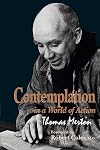
Contemplation in a World of Action
by Thomas Merton
On This Page
Description
The spiritual and psychological insights of these essays were nurtured in a monastic milieu, but their issues are universally human. Thomas Merton lays a foundation for personal growth and transformation through fidelity to "our own truth and inner being." His main focus is our desire and need to attain "a fully human and personal identity." This classic is a newly restored and corrected edition and the inaugural volume of Gethsemani Studies in Psychological and Religious Anthropology, a show more series of books that explores, through the twin perspectives of psychology and religion, the dynamics and depths of being fully human. "When I speak of the contemplative life I do not mean the institutional, cloistered life, . . . I am talking about a special dimension of inner discipline and experience, a certain integrity and fullness of personal development . . . . Discovering the contemplative life is a new self-discovery. One might say it is the flowering of a deeper identity on an entirely different plane . . ." --Thomas Merton, from the book show lessTags
Recommendations


















Member Reviews
"When I speak of the contemplative life I do not mean the institutional, cloistered life . . . I am talking about a special dimension of inner discipline and experience, a certain integrity and fullness of personal development. . . . Discovering the contemplative life is a new self-discovery. One might say it is the flowering of a deeper identity on an entirely different plane. . . ." —Thomas Merton, from the book
Ratings
Members
- Recently Added By
Author Information

398+ Works 38,298 Members
Born in France, Thomas Merton was the son of an American artist and poet and her New Zealander husband, a painter. Merton lost both parents before he had finished high school, and his younger brother was killed in World War II. Something of the ephemeral character of human endeavor marked all his works, deepening the pathos of his writings and show more drawing him close to Eastern, especially Buddhist, forms of monasticism. After an initial education in the United States, France, and England, he completed his undergraduate degree at Columbia University. His parents, nominally friends, had given him little religious guidance, and in 1938, he converted to Roman Catholicism. The following year he received an M.A. from Columbia University and in 1941, he entered Gethsemani Abbey in Kentucky, where he remained until a short time before his death. His working life was spent as a Trappist monk. At Gethsemani, he wrote his famous autobiography, "The Seven Storey Mountain" (1948); there he labored and prayed through the days and years of a constant regimen that began with daily prayer at 2:00 a.m. As his contemplative life developed, he still maintained contact with the outside world, his many books and articles increasing steadily as the years went by. Reading them, it is hard to think of him as only a "guilty bystander," to use the title of one of his many collections of essays. He was vehement in his opposition to the Vietnam War, to the nuclear arms race, to racial oppression. Having received permission to leave his monastery, he went on a journey to confer with mystics of the Hindu and Buddhist traditions. He was accidentally electrocuted in a hotel in Bangkok, Thailand, on December 10, 1968. (Bowker Author Biography) show less
Classifications
- Genres
- Religion & Spirituality, Nonfiction, General Nonfiction
- DDC/MDS
- 248.8 — Religion Christian practice & observance Christian experience, practice, life Christian Living for specific groups
- LCC
- BX2435 .M46 — Philosophy, Psychology and Religion Christian Denominations Christian Denominations Catholic Church Monasticism. Religious orders
- BISAC
Statistics
- Members
- 384
- Popularity
- 81,932
- Reviews
- 1
- Rating
- (4.11)
- Languages
- English, German, Portuguese (Portugal)
- Media
- Paper, Ebook
- ISBNs
- 10
- ASINs
- 7